 Follow Us on Google News


 Follow Us on Google Discover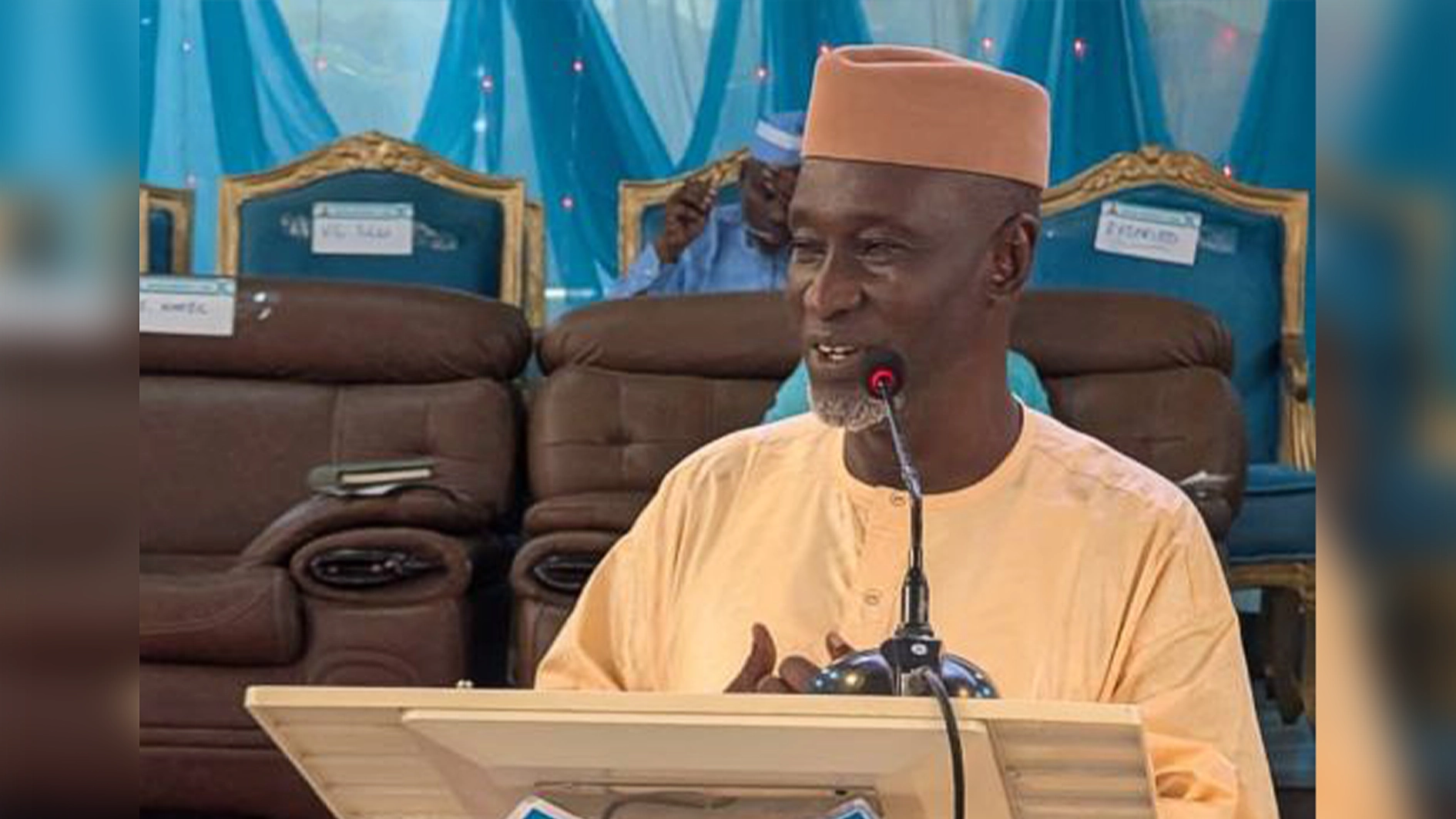
…as Jibrin receives 26 beneficiaries
Executive Secretary of the National Commission for Mass Literacy, Adult and Non-Formal Education (NMEC), Prof. Musa Maitafsir, has emphasised the importance of generating homegrown data to guide the country’s education sector, instead of depending on externally sourced statistics.
Maitafsir stated this yesterday in Abuja at a one-day stakeholders meeting with Directors of State Agencies for Education (SAME) on ‘Enhancing strategic collaboration between SAME and NMEC for the eradication of illiteracy, advancement of vocational and skills-acquisition education and improved data credibility in the non-formal education sub-sector’.
He expressed strong reservations about reliance on data from international organisations like the World Bank and the United Nations Educational, Scientific and Cultural Organisation (UNESCO), noting that such reports often present Nigeria in an unfavourable light.
Maitafsir argued that these external assessments do not always capture the full realities and progress within the country’s education sector.
He maintained that it is time for Nigeria to take ownership of its data narrative by prioritising credible, locally generated statistics.
According to him, institutions within the country possess the capacity and contextual understanding needed to produce more accurate and balanced data that reflect on-the-ground realities.

He advocated for greater reliance on data produced by key national bodies like the Universal Basic Education Commission (UBEC), and the National Bureau of Statistics (NBS).
In their separate presentations, the Acting Director, Network Department, Dr Babajide Williams, and the Director, Literacy Department, Dr John Edeh, urged participants to embrace professionalism, accuracy, and consistency in data collection and reporting processes, stressing that reliable data remain the backbone of effective policy formulation and implementation.
They emphasised the need for participants to adopt modern data management tools and methodologies that would enhance efficiency, reduce errors, and ensure uniformity across states.
According to them, building technical capacity at all levels is essential to achieving a credible and functional data system for the education sector.
Meanwhile, beneficiaries of foreign-sponsored postgraduate students under the Barau I. Jibrin Education Foundation, yesterday, returned from India after the successful completion of their studies.
The 26 Kano indigenes, who have excelled in their specialised fields, including Cyber Security and Forensic Science, Artificial Intelligence and Machine Learning, justified the human investment opportunity extended by the Deputy President of the Senate, Barau Jibrin.
Hosting the scholars to a warm reception on arrival at Mallam Aminu Kano International Airport, Jibrin expressed satisfaction with the academic excellence attained by the first batch of the foreign-trained scholars in India.
Represented by his Chief of Staff, Prof. Bashir Mohammad Fagge, the Deputy Senate President restated that the investment in the scholars is expected to enhance human capital development and productivity in Kano and Northern Nigeria.
Jibrin is optimistic that the impact of the new capacity would fill the gap and deficit in the areas of specialisation and reduce unemployment.
He described the scholarship as a strategic investment that enables access and widens the scope for postgraduate studies to brilliant students, and breaks barriers to greater heights.
Jibrin encouraged the beneficiaries to prepare for the next phase of the initiative, which would focus on PhD programmes, stressing the need for continuous academic advancement.
In his remarks, Chairman of the All Progressives Congress (APC) in Gari Local Council, Shitu Madaki, congratulated the graduates on their achievement.
He urged them to apply the knowledge and skills acquired toward the development of Kano State and Nigeria as a whole.
Speaking on behalf of the graduates, Aliyu Ibrahim expressed their appreciation to the DSP, assuring him that they would not let him down.

