 Follow Us on Google News


 Follow Us on Google Discover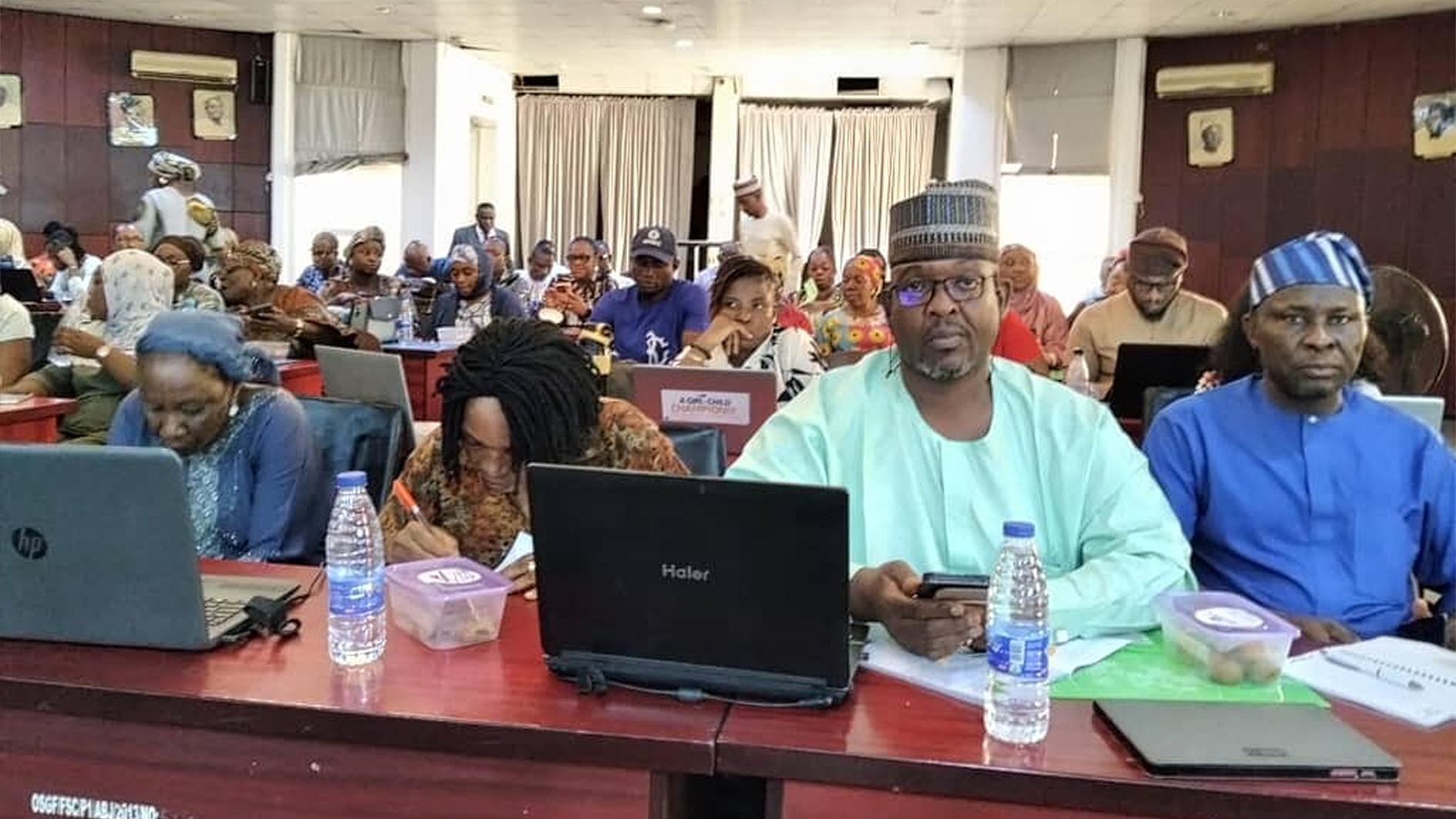
Nigeria’s push to eradicate adult illiteracy is taking a decisive digital turn, as the National Commission for Mass Literacy, Adult and Non-Formal Education (NMEC) declares that chalkboards and traditional classrooms alone can no longer meet the demands of a fast-evolving world.
Speaking at a capacity-building workshop in Abuja on Thursday, NMEC Executive Secretary, Prof Musa Maitatsir, said the era of analogue literacy delivery is effectively over, urging facilitators across the country to embrace digital tools or risk leaving millions of learners behind.
“The Fourth Industrial Revolution is no longer coming; it is here,” Maitatsir said, framing the workshop as a “turning point” in Nigeria’s literacy campaign.
Represented by the Director of Literacy and Development at the Commission, Dr John Ede, he stressed that smartphones, learning platforms, and Artificial Intelligence tools have become the “new blackboards and chalks,” capable of breaking longstanding barriers to education.
The Guardian reports that the training, designed to equip facilitators with skills in e-learning content creation, virtual classroom delivery, and data-driven teaching methods, is part of a broader strategy to digitise adult education nationwide. Participants were introduced to Google Classroom, Moodle, and WhatsApp Business, alongside emerging tools like AI-powered personalised learning systems.
According to Prof Maitatsir, the shift is not merely about technology but access. He painted a picture of a reimagined learning landscape where a rural learner in Sokoto can attend classes remotely, a trader in Lagos can practise literacy skills on her phone, and a herder in Borno can receive lessons in local languages through audio content.

“This is not science fiction; this is the future we must create today,” he said.
The initiative builds on earlier efforts supported by the UNESCO Institute for Lifelong Learning under the Global Alliance for Literacy, which piloted digital modules for Nigerian educators. The current programme, however, signals a nationwide scale-up, with trained facilitators expected to cascade knowledge across all 36 states and the Federal Capital Territory.
Despite the optimism, Maitatsir acknowledged significant structural hurdles, including poor internet connectivity, limited access to smartphones, and unreliable electricity in many communities.
To address these gaps, he disclosed that NMEC is exploring partnerships with telecom operators to provide subsidised or zero-rated data for literacy programmes, alongside the development of offline-compatible applications.
He emphasised that technology would not replace the human element of adult education but rather enhance it. “The best digital facilitator is still the one who understands the learner’s story,” he said, urging participants to combine empathy with innovation.
The Executive Secretary said the workshop aligns with the human capital development goals of the administration of Bola Tinubu and global targets under the Sustainable Development Goals, particularly inclusive and equitable quality education.
Maitatsir challenged facilitators to take ownership of the transition, describing them as the “bridge between policy and practice” whose commitment would determine the success of Nigeria’s digital literacy drive.
In her intervention, a resource person, Prof Blessing Anyikwa of the University of Lagos, underscored the need for facilitators to move beyond basic digital awareness to practical application, noting that the effectiveness of the initiative would depend on how well instructors translate technology into meaningful learning experiences for adults.
Prof Anyikwa also highlighted the role of continuous training and peer learning among facilitators, urging participants to see the workshop as the beginning of a long-term transformation rather than a one-off event. She noted that adult learners often require flexible and personalised approaches, which digital platforms can provide if properly utilised.

