 Follow Us on Google News


 Follow Us on Google Discover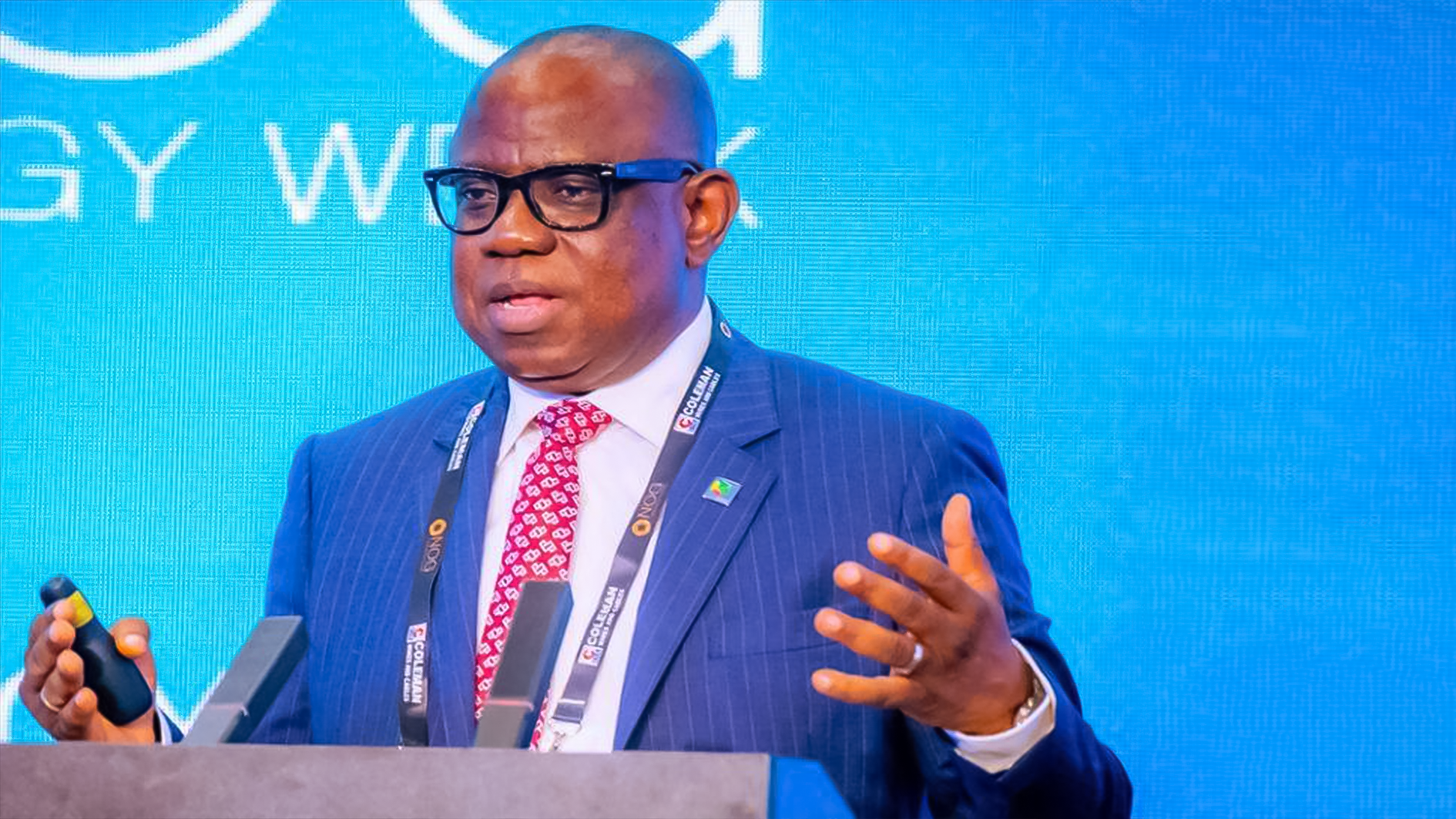
Nigeria’s state oil firm, Nigerian National Petroleum Company Limited (NNPC Limited) has again renewed its refinery rehabilitation strategy, signing a new Memorandum of Understanding (MoU) with Chinese partners in a bid to restart and expand the long-troubled Port Harcourt and Warri refineries, where $2.4 billion was recently sunk for Turnaround Maintenance (TAM).
The agreement, signed in Jiaxing, China, with Sanjiang Chemical Company Limited and Xingcheng (Fuzhou) Industrial Park Operation and Management Co. Ltd., introduces the prospect of a Technical Equity Partnership (TEP).
The model, according to a statement signed by the company, signals a shift away from purely contractor-led rehabilitation towards deeper operational and financial collaboration.
This latest move follows years of costly interventions that have yielded little sustained output. Under approvals granted in 2021 by Nigeria’s Federal Executive Council, the government committed $1.5 billion to Port Harcourt, $897.6 million to Warri, and $740.7 million to Kaduna, bringing total planned spending to over $3.1 billion. Yet, the tangible impact of the roughly $2.4 billion already deployed on Port Harcourt and Warri remains difficult to discern.
Contracts awarded to global engineering firms, including Tecnimont SpA and Daewoo Engineering and Construction, were expected to deliver technical credibility. However, the projects have been plagued by delays, cost overruns, and weak operational outcomes, raising questions about execution capacity within Nigeria’s refining ecosystem
Although mechanical completion milestones were declared on Port Harcourt’s 60,000 barrels-per-day unit in 2023 and Warri’s 78,000 bpd facility in 2024, both refineries only operated briefly after a relaunch in late 2024 before shutting down again by May 2025.

Group Chief Executive Officer, Bashir Bayo Ojulari, described the agreement as a “significant milestone,” noting that it reflects months of engagement and a shared vision for long-term profitability.
MEANWHILE, in a significant boost to Nigeria’s national coffers, the NNPCL has reported a 60 per cent surge in remittances to the Federation Account, which stood at N2.88 trillion in March, up from N1.80 trillion in February 2026.
This follows the Executive Order No. 9 signed by President Bola Tinubu in February to stop NNPCL from deducting 30 per cent for the Frontier Exploration Fund (FEF) and 30 per cent for management fees from profits.
The order mandates that all royalty, tax, and profit oil/gas be remitted directly to the Federation Account to maximise government revenue.
The company also reported a staggering surge in its bottom line, with profit after tax soaring by over 100 per cent from N136 billion in February to N276 billion for March.
According to the company’s monthly report summary for March, it also recorded an increase in total revenue, which stood at N2.77 trillion in the period, up from N2.68 trillion recorded in February 2026.
The report showed an increase in crude oil production from 1.27 million barrels per day to 1.32 million barrels per day in March, while condensate production remained at the same volume as in February (0.24 mbpd). However, the company recorded a drop in the value of crude oil sales in the period at N17.27 mmbbls, representing a drop from N22.09 mmbbls in February.
Gas production also increased in the period from 7,748 mmscf/d in February to 7,731 mmscf/d in March.
The company stated that it has continued to strengthen production resilience by executing restoration plans focused on improving asset reliability, resolving evacuation constraints, and implementing other targeted recovery initiatives.

