 Follow Us on Google News
 Follow Us on Google Discover
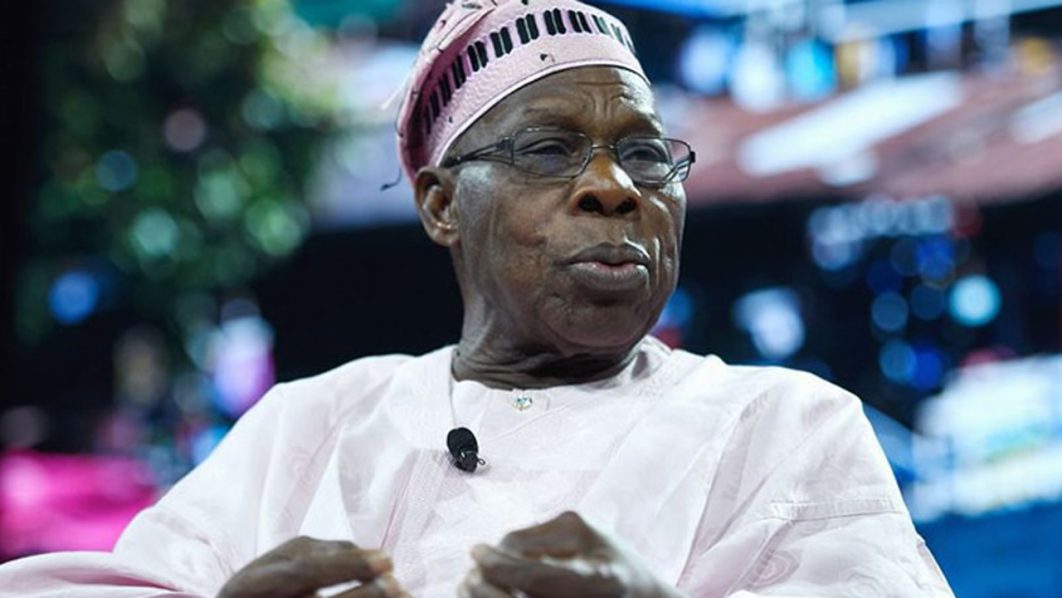
Amaechi: Nigeria today worse than during military regime
Former President Olusegun Obasanjo has stressed the need for the President Bola Tinubu-led administration to learn from past experiences and build on the progress made by his predecessors, noting that this is the only way to address the crisis bedeviling the country.
[ad]
According to him, the telecommunications sector is one of such good areas that need to be prioritised if government is interested in improving the economy, emphasising that it has always remained a powerful enabler of growth since inception.
Obasanjo gave the advice yesterday during the ‘exaugural’ lecture to mark the exit of Dayo Oketola as Editor of the Punch newspaper. The event also witnessed the unveiling of the book, ‘The Catalyst: Nigerian Tech Evolution through a Journalist’s Lens,’ authored by Oketola.
Obasanjo recalled that during his administration, between 1999 and 2007, he was one of the few Nigerian leaders who prioritised and used the advantage of the telecommunications evolution to make the country better.
He said: “When the mobile telephone age came, my predecessor in office was trying to give it away to their friends at $3 million, then we said what we will do is to auction it to anybody and the three that came in first, paid $280 million for what was about to be given away for $3 million. Besides that, we achieved competition because the three of them, MTN, Glo and Econet at that time were competing and later came the fourth one, Etisalat that paid $450 million.”
However, former Rivers State governor, Rotimi Amaechi, gave a damning verdict against the current civilian administration noting that Nigeria’s current state of affairs is worse than during the military regime. Speaking at the event, he said Nigeria has continued to experience unprecedented socio-economic realities in recent times, with inflation and fuel prices soaring to astronomical heights since the current Tinubu-led administration took over in May 2023.

Referring to previous statements made by journalists at the event recounting their experiences from the past, Amaechi, a member of the ruling All Progressives Congress (APC) who contested for the presidential ticket of the party but lost to Tinubu, said: “I heard some journalists say ‘we lived in the trenches’. Which trenches? During the military regime? Is that time worse than now?”
[ad]
In his remarks, President, Nigerian Guild of Editor, Eze Anaba, congratulated the author, describing him as a respected and seasoned editor the country has ever produced.
He said: “This book is a testimonial to Oketola’s years of journalism, capturing insights and untold experiences that have shaped his career. For an editor whose schedule is very tight and works round the clock, writing this book is very commendable.”
The Lagos State Commissioner for Information and Strategy, Gbenga Omotoso, who represented the Minister of Information and National Orientation, Mohammed Idris, said that the book is worth every shelf, commending Dayo’s efforts to promoting good journalism and impacting in the next generations of journalists.
In reviewing the book, Convener, Centre for Social Media Research, Akin Olaniyan, said that the book, which has 14 chapters, is a 366-page book that provides insightful exploration of the Nigeria telecommunications sector through the blending of narrative and detailed industry analysis.
He noted that the book has in total five themes which include: Technological innovation and national development, strategic planning and governance in the successful implementation of projects, role of telecommunications investment in national development, investigating the failure of satellite projects due to poor managing and infrastructure and AI and the future of technology in the area of 3G to 5G revolution and its impacts in healthcare, agriculture etc.
Speaking on the exaugural topic: ‘Print Journalism in Peril: Challenging Times for Newspapers Editors’, Oketola acknowledged that the industry is facing significant challenges which stemmed from drop in readership, low revenue generation and wrong perceptions about having young editors.
While describing the negative perceptions against young editors in the media industry as a traditionalist thinking, he said that the years of experience which is seen as the only criteria to becoming editor of a newspaper is long gone, adding that the young editors are bringing fresh perspectives which is reshaping the industry to remain relevance.
He said: “Age is indeed just a number and capability is not solely determined by the length of time one has spent in the Industry, instead leadership is shaped by dedication, creativity, hardwork and also the grace of God.”
[ad]

