 Follow Us on Google News


 Follow Us on Google Discover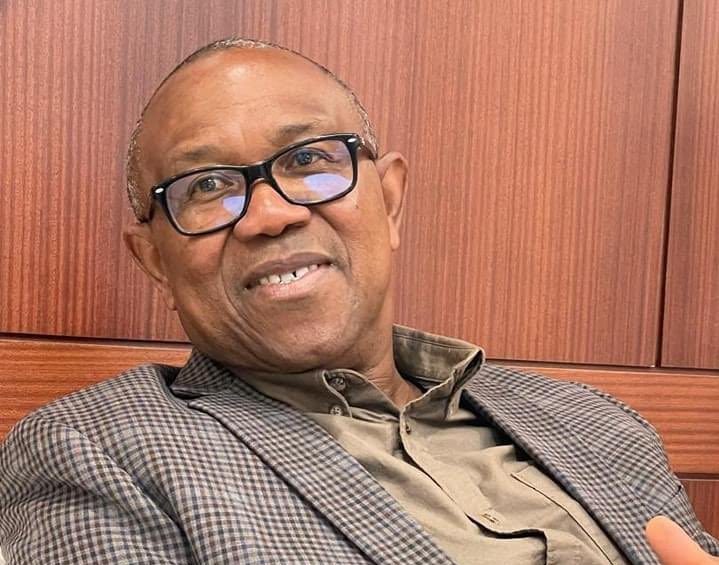
Former Labour Party presidential candidate Peter Obi has raised alarm over Nigeria’s mounting debt burden, warning that the country is veering into a fiscal crisis with long-term consequences for future generations.
Obi’s comments, issued Tuesday via his verified X handle, follow the National Assembly’s recent approval of new borrowing requests totalling approximately ₦37.2 trillion for the 2025–2026 fiscal cycle.
The approvals include $21 billion, €2.2 billion, ¥15 billion in foreign loans; ₦750.98 billion in domestic bonds; and a €65 million grant.
With the country’s public debt already standing at ₦149.39 trillion as of Q1 2025, the new borrowing would raise Nigeria’s total debt to ₦187 trillion, a figure Obi says could exceed ₦200 trillion by year’s end.
“As our GDP before rebasing was about ₦269.2 trillion (about $180 billion), the government has borrowed the equivalent of nearly 70% of our previous GDP,” Obi stated.
“Even after the rebasing… the government would have borrowed about 50.16% of the new GDP—the highest debt-to-GDP ratio in our history as a nation.”

He stressed that borrowing, while not inherently negative, has been misapplied under current fiscal policies.
“We are accumulating very exponential levels of unsustainable debt with little or nothing to show for it in critical areas such as education, healthcare, electricity generation, security of lives and property, and pulling people out of poverty,” he said.
Citing grim statistics, Obi pointed out that Nigeria’s public debt grew by ₦27.72 trillion year-on-year and ₦4.72 trillion quarter-on-quarter, with little corresponding development to justify the loans.
He highlighted that over 10,217 people were killed and 672 villages sacked in the last two years, even as security spending jumped from ₦2.98 trillion in 2023 to ₦4.91 trillion in 2025.
Infrastructure challenges persist, he said, with only 60,000 km out of 195,000 km of road network paved, while the national grid continues to deliver under 5,000 MW to more than 200 million Nigerians.
On human development, Obi drew attention to a Médecins Sans Frontières (Doctors Without Borders) report citing worsening child malnutrition in Northern Nigeria, especially in Katsina State, where 652 children have reportedly died from hunger-related causes.
“This is a country blessed with enormous resources, yet nobody should go to bed hungry. Still, a persistent deficiency in leadership has thrown the majority of our citizens into increasing multi-dimensional poverty,” he said.
Obi reiterated that borrowing must be tied to productive outcomes and transparency.
“Unfortunately, this current pattern of borrowing without accountability, without transparency, and without transformational impact is simply mortgaging the future of our children,” he warned.
He urged the federal government to adopt a more prudent economic management model, insisting that Nigeria must return to a disciplined and prudent economic management culture that involves cutting the cost of governance, blocking leakages, investing in human capital, and building a productive economy.
According to Obi, we must build a New Nigeria, where leadership is responsible, development is people-centred, and every kobo borrowed or spent delivers a measurable impact.

