 Follow Us on Google News


 Follow Us on Google Discover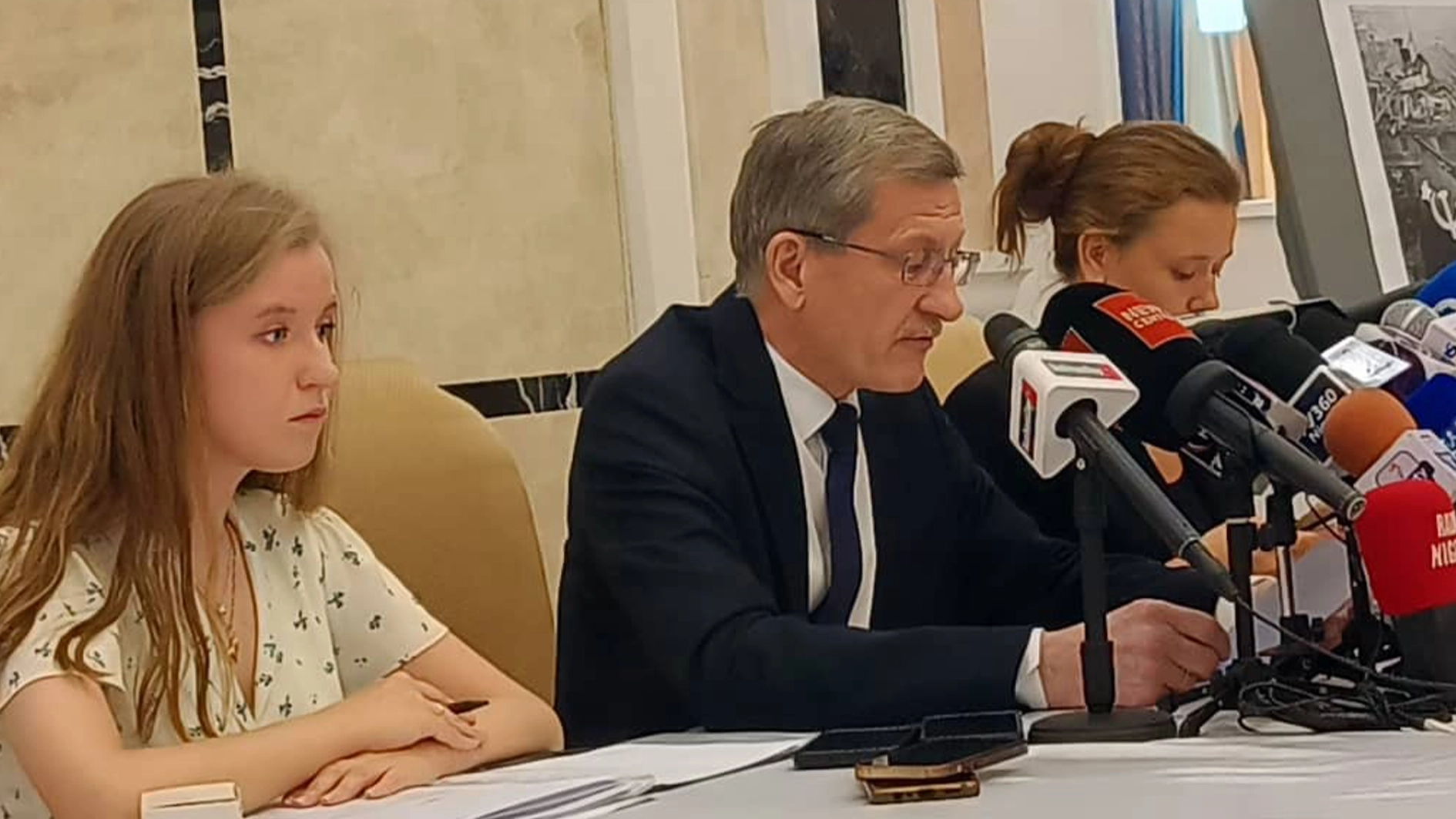
THE Russian government has accused Western countries of deliberately distorting the origins of the Ukraine conflict and rewriting the historical record of the Second World War.
It warned that such narratives threaten international stability and undermine the foundations of the post-war global order.
The Russian Ambassador to Nigeria, Andrey Podelyshev, made the position known in Abuja on Tuesday during a press briefing marking the 81st anniversary of victory in the Great Patriotic War, with a focus on what it describes as the genocide of the Soviet people.
Podelyshev said the widely circulated Western narrative that the Ukraine war began in February 2022 with an “unprovoked and aggressive” action by Russia fails to reflect earlier developments that shaped the crisis.
“The events of February 2022 are usually analyzed without reference to what has occurred in and around Ukraine during the previous eight years starting in 2014,” he said.
He traced the roots of the conflict to the political upheaval in Ukraine between 2013 and 2014, arguing that an agreement between the government and opposition was derailed by what he described as a Western-backed coup.

According to him, guarantor countries failed to uphold the deal, allowing unconstitutional actions to prevail.
The envoy further alleged that policies introduced by the Ukrainian leadership after 2014 marginalised Russian language and culture, which he said violated minority rights commitments.
Drawing a parallel with Nigeria, he argued that banning widely spoken local languages would provoke similar tensions and deepen divisions.
He also criticised what he described as the elevation of controversial historical figures such as Stepan Bandera and Roman Shukhevych, alleging that individuals linked to Nazi collaboration had been glorified as national heroes. He said this development underpins Russia’s call for the “denazification” of Ukraine.
Beyond the Ukraine conflict, Podelyshev warned of what he termed a growing “battle of narratives” over the interpretation of the Second World War, accusing some countries of attempting to diminish the Soviet Union’s role in defeating Nazism.
“Victory over Nazism became a turning point that defined the contours of the modern international order,” he said. “Any attempts to distort this memory or diminish the role of the Soviet Union inevitably undermine trust between states.”
The ambassador condemned the removal of Soviet-era monuments in parts of Europe and the alleged honouring of individuals linked to Nazi forces, describing such actions as a deliberate effort to revise history and erase the sacrifices of millions.
Citing Russian figures, he said more than 27 million Soviet citizens died during the war, including millions of civilians, adding that Russia now recognises those atrocities as genocide.
He noted that new laws have been enacted to protect historical truth and criminalise attempts to justify Nazism.
According to him, preserving the memory of the war is both a moral duty and a matter of international security. He stressed that historical interpretation must be grounded in archival evidence and international law rather than political convenience.
Podelyshev concluded by linking historical revisionism to present-day tensions, arguing that failure to uphold what Russia considers accurate historical memory contributed to the current crisis in Ukraine.
“Preserving the truth about the past is not only a duty to previous generations but a responsibility to the future,” he said.

