 Follow Us on Google News


 Follow Us on Google Discover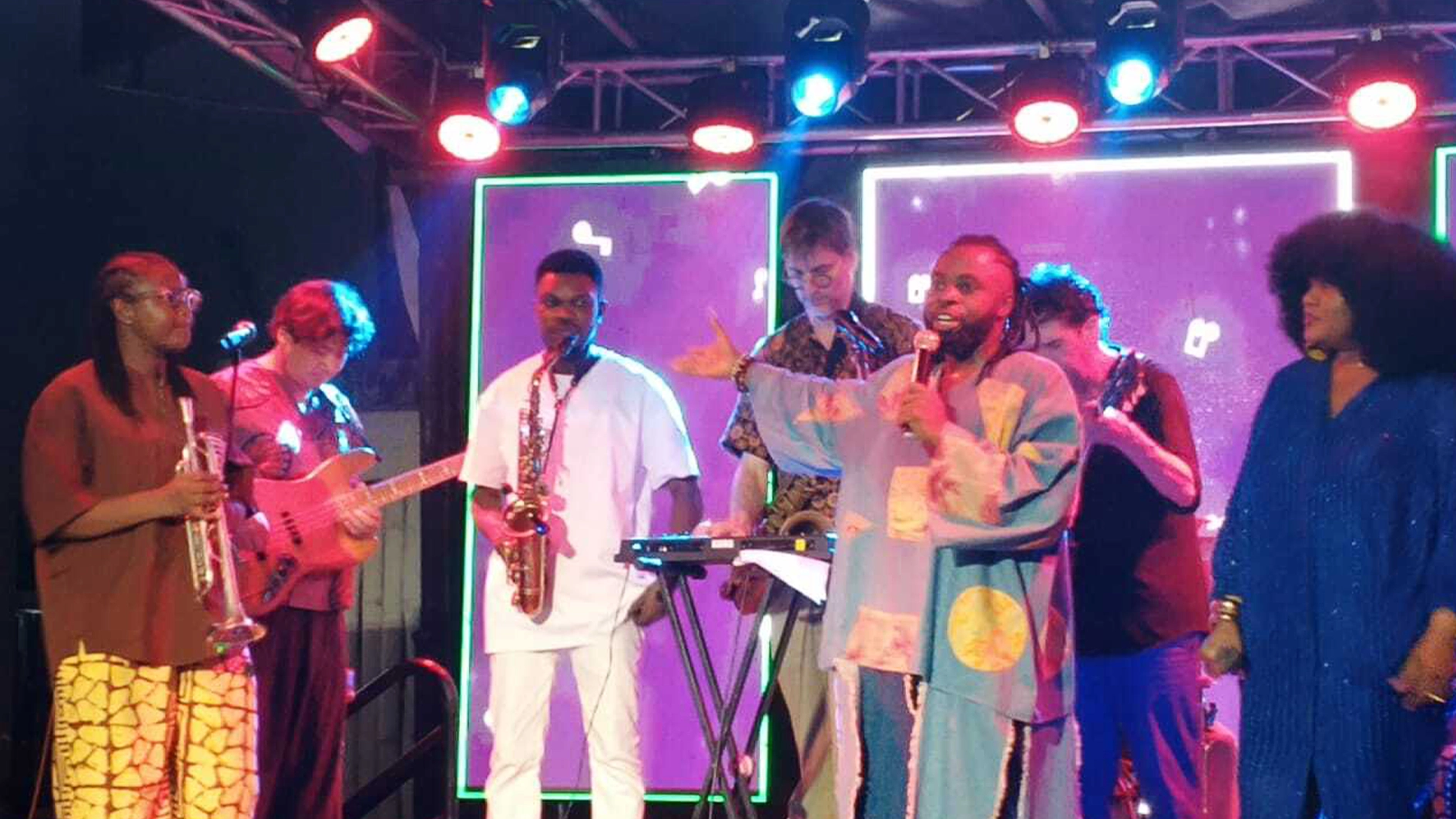
African jazz artiste and founder of the Abuja International Afro Jazz Festival, Tosin Salako, has called for greater investment in Nigeria’s music industry, describing music as a powerful tool for national transformation, unity and economic growth.
It said that music transcends language barriers and serves as a universal means of communication understood by people from different backgrounds.
Salako disclosed this in Abuja, during the Echoes of West Africa Tour 2026, a major cultural collaboration between France-based Collectif KOA and the Afro Jazz Festival.
The event, headlined by PMAI and Salako, also featured guest performances by Emita Testimony, Jessica Bongos and Odenose, attracting attention as one of the notable entertainment showcases of the year.
Speaking on the role of music in society, Salako said songs have the power to address social issues, inspire change, and connect people across ethnic and linguistic divides.
Salako said: “Music is a tool for global change and societal change. Everybody listens to music and everybody consumes music. From the North to the South, music connects people. It may be sung in English, Hausa or Yoruba, but music itself is universal and everyone understands it.”

He also stressed the importance of the creative sector to Nigeria’s economy, noting that genres such as jazz, indie, and pop are steadily growing alongside Afrobeat.
Salako explained that the Echoes of West Africa Tour was created as an artistic exchange between Nigeria and France, blending African jazz with South Asian jazz influences.
The musician urged government support for artists through investment and the creation of more live performance venues.
He added, “We decided to call it Echoes of West Africa because we both began from different cities in West Africa, exploring the sounds of the region. It is like a melting pot of two genres coming together. When we talk about the economy, the creative sector is one of the industries contributing to Nigeria’s GDP.
“We need more venues for live music. That is what grows the music culture of a city. Artists are paying to produce, promote, distribute, and handle everything themselves. So we need government support.”
Salako noted that the tour also serves as a platform for young performers, as emerging artists are given opportunities to open shows, gain experience, and build their careers, saying that, “This is how we develop the youth and empower them for the next phase of their careers.”
Guest performer at the event, Emita Testimony, praised Nigeria’s creative potential and called for more collaborations within the industry.
She said: “Nigeria is leading. We have the rhythm and what it takes. If we do more collaborations, we will achieve much more and conquer the world.”
Also speaking, the festival director of Collectif KOA, Christine Paulette Dumons, described the project as a cross-cultural exchange bringing together African sounds, European jazz and rock, as well as Asian traditional influences.
She expressed optimism that the collaboration would continue to grow through concerts, creative partnerships and future tours.
French bassist and composer, Alfred Vilayleck, said international collaboration is essential for the growth of music, noting that cultures evolve when artists meet and share ideas.
He praised Nigeria’s diverse music scene, saying its blend of local and global influences makes it unique.
With its themes of unity, cultural pride and artistic innovation, the Echoes of West Africa Tour 2026 is being described as a landmark event on Africa’s entertainment calendar.

