• Critics warn judgment may embolden presidential overreach
• CUPP faults ruling, says due process questions left unresolved
• Dissenting justice rejects suspension of elected officials
• Analysts divided over implications for federalism, separation of powers
• Legal experts debate precedent for future emergency declarations
• Opposition fears ruling could reshape power play ahead of 2027 polls
• Supporters insist decision reinforces constitutional order, crisis management
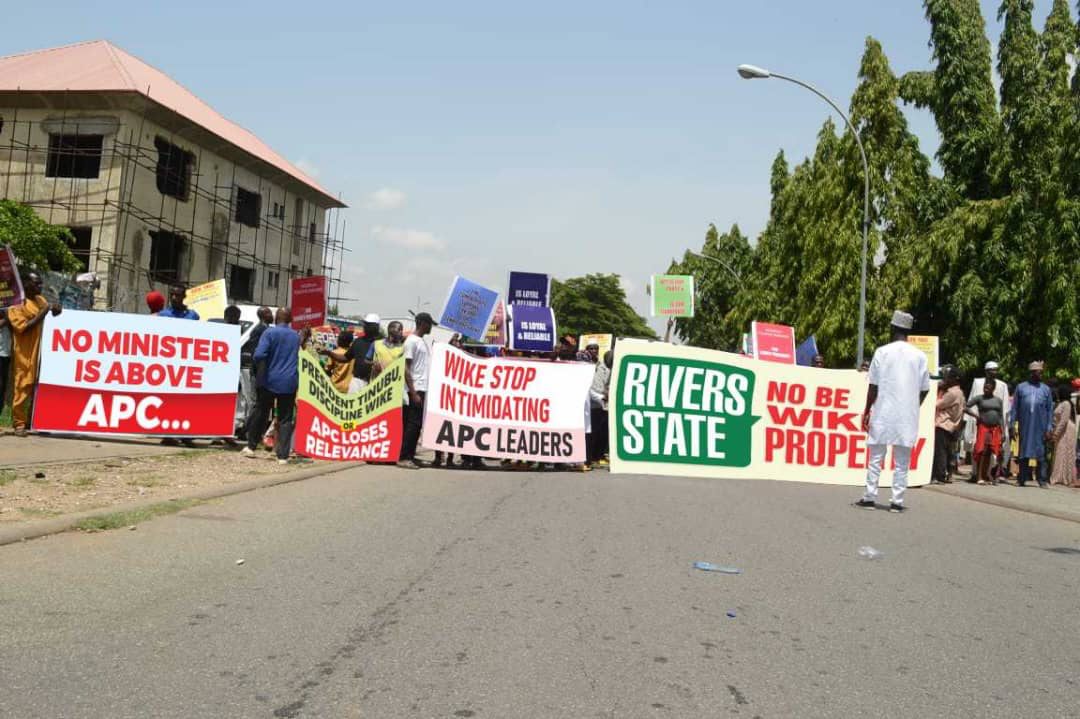
The Supreme Court’s verdict, which affirmed President Bola Tinubu’s constitutional authority to declare a state of emergency and suspend elected governors from office, may have closed the book on Rivers State’s emergency rule, however, the judgment has stirred unease, testing Nigeria’s federal balance and reviving fears that constitutional emergency powers could become a potent political tool in the run-up to 2027.
Recall that shortly after the President declared a state of emergency in Rivers State on March 18, 2025, and announced the appointment of a sole administrator to oversee the affairs of the state, some Peoples Democratic Party (PDP) governors approached the Supreme Court to challenge the propriety of the action. They sought a declaration that the President acted ultra vires by dismantling democratic structures, including the removal of the Governor, Mr Siminalayi Fubara, his deputy and the entire membership of the state legislature.
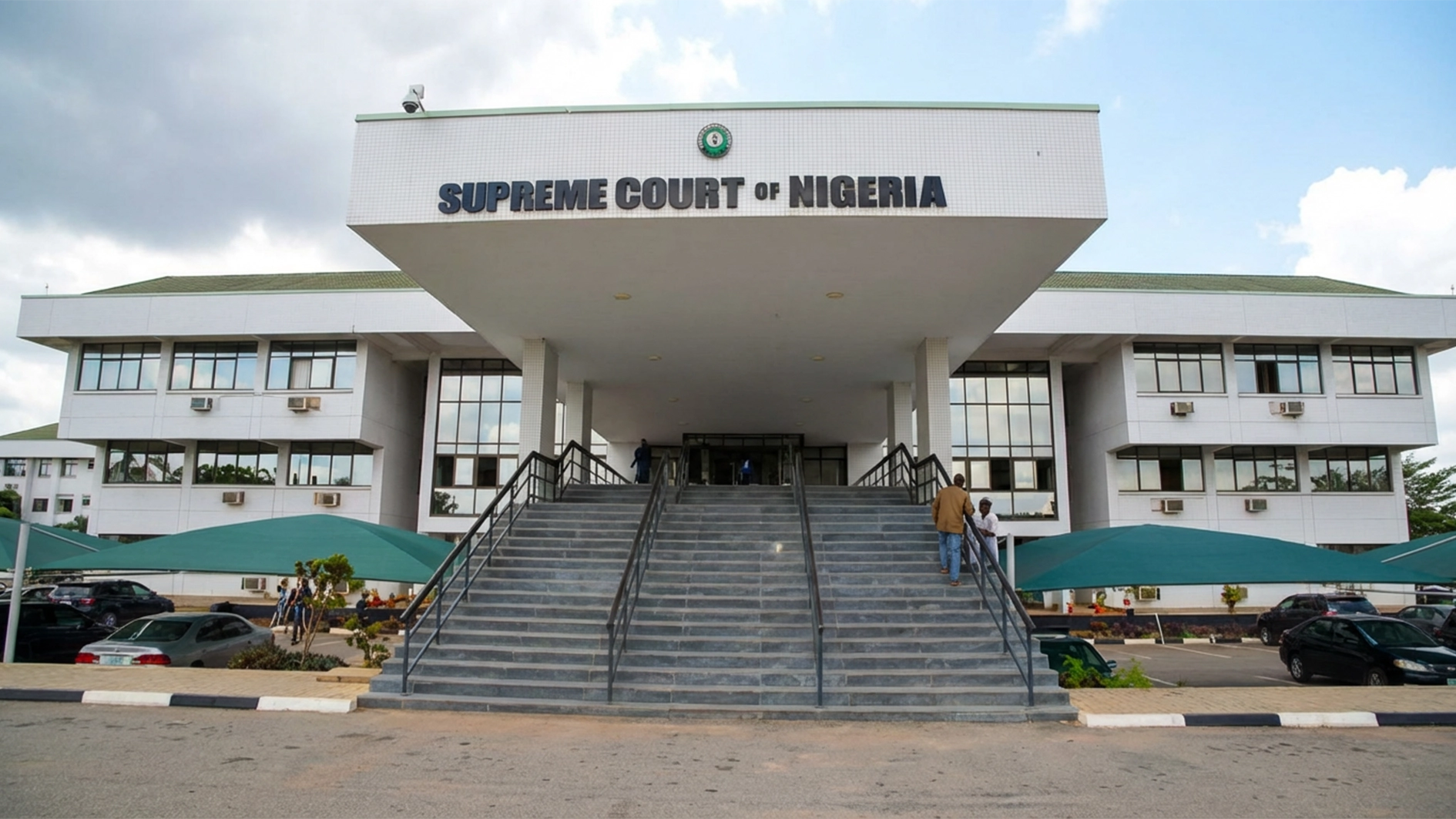
The apex court determined the matter in a split decision by a seven-member panel. In the majority judgment of six, read by Justice Mohammed Idris, the court held that the President acted in compliance with Section 305 of the 1999 Constitution, which empowers him to deploy extraordinary measures to restore normalcy where a state of emergency is declared.
However, no sooner had the divided judgment been delivered than sections of the polity seized on it to fuel growing anxieties about a potential erosion of democratic norms and the spectre of one-party dominance, offering varying interpretations of the court’s position on the highly sensitive political issue.
Stakeholders, including lawyers, civil society actors and politicians, have since taken divergent views. Reacting to the apex court judgment, Mr Peter Ameh, the National Secretary of the Coalition of United Political Parties (CUPP), stated that the ruling was primarily based on jurisdictional grounds, emphasising that the majority members of the panel struck out or dismissed the suit for lack of jurisdiction.
While contending that the judgment “buries federating units” and allows for the suspension of elected governors, he said the view shared by many Nigerians is that it amounts to an irresponsible centralisation of power.
“While the majority ruling interprets Section 305 broadly for ‘extraordinary measures’, the dissent and jurisdictional strike-out leave some ambiguity. It undeniably shifts power dynamics, raising valid concerns about democratic backsliding in Nigeria’s federal system,” he added.
Ameh remarked that the apex court did not find any actionable dispute between the plaintiff states and the Federation to invoke the court’s original jurisdiction. He noted, however, that some reports indicate the lead judgment also addressed the merits, affirming the President’s broad powers under Section 305 of the 1999 Constitution to take “extraordinary measures” during an emergency, including the temporary suspension of elected officials.
He contended that the judgment did not deeply engage with or invalidate the specific due process steps followed in the Rivers declaration, including whether National Assembly approval was properly obtained or whether the failure of the Governor or Deputy Governor to request it justified unilateral action.
According to the CUPP scribe, “The procedural challenges raised by the plaintiffs, such as compliance with constitutional prerequisites, were not substantively overturned on the merits in the majority ruling, as the case was resolved on preliminary objections.
“The dissenting justice, Obande Ogbuinya, agreed on the declarative power but rejected the suspension of elected officials. However, this did not prevail. Due process was raised but not centrally addressed or resolved in favour of stricter enforcement; the outcome effectively upheld the declaration without mandating stricter precedent steps.”
On the broader implications of the judgment for relations between the Presidency and state governors, Mr Ameh said that rather than empowering authoritarian rule, “the judgment significantly strengthens the Presidency’s authority in federal-state relations, particularly in crisis situations.”
He said, “By affirming, on the merits in some readings of the lead judgment, that the President can declare emergency rule under Section 305 and take ‘extraordinary measures’, explicitly including the temporary suspension of elected governors, deputies and state assemblies (limited in duration), it tilts the balance of power towards the federal executive.
“This expands presidential intervention powers beyond mere proclamation, allowing direct interference in state governance to ‘restore normalcy’. It reinforces unitary tendencies within our federal structure, giving the President a tool to override state autonomy in perceived breakdowns of law and order. The term ‘breakdown of law and order’ was also not defined, leaving room for political manipulation.
“In my view, I see this as ‘caging’ sub-national independence and burying true federalism, as it permits the suspension of democratically elected state leaders without impeachment processes (Sections 188, etc.). The dissent highlighted this risk, and my point of argument remains that emergency powers should not extend to suspending elected officials, as it undermines democracy.
“Overall, it signals greater central control, potentially deterring state defiance but raising concerns about abuse, especially in politically motivated crises like that of Rivers State.”
An X (formerly Twitter) user, Egi Nupe, noted that, as in the case of Plateau State when Governor Joshua Dariye was suspended, “the Supreme Court missed the opportunity to go into the merit of the case to expressly make a pronouncement and invalidate the power of the President suspending an elected Governor, due to a technical objection.”
However, the X user argued that a fair assessment is that the judgment can serve as a precedent for successive Presidents who may seek to exercise the power to declare a state of emergency.
“I have now read the judgment of the Supreme Court and the misleading report by some media houses. There’s nowhere in the judgment where the Supreme Court says the President can suspend or remove a Governor or House of Assembly.
“The Supreme Court confirms the power of the President to declare a state of emergency, subject to the approval of a two-thirds majority of the National Assembly and the provisions of the Constitution.
“The power of the President is not absolute. It does not extend to interference with state and legislative institutions, which means that the President cannot suspend or remove a Governor, Deputy Governor or State House of Assembly under the guise of exercising the power of a state of emergency,” he argued.
Judgment could haunt Nigeria’s democracy going forward
On his part, Dr Emma Jimo, a political science lecturer and public affairs analyst, said the Supreme Court judgment adequately addressed issues bordering on due process.
“The judgment asserts the constitutional superiority of the President’s powers over those of state governors where there are conflicting interests. The President continues to hold certain checks-and-balances roles for the stability of federalism,” he said.
A lawyer, political communicator, columnist and former media adviser to former governors, Dr Festus Adedayo, said the major implication of the judgment is that it could haunt Nigeria’s democracy going forward.
“Any President of Nigeria will likely rely on it to sack a sub-national government at his whim. The major lesson should be for the Nigerian Supreme Court. Of what use is an academic judgment that has no worth in the lives of litigants? To nourish the essence of democracy, especially legal interpretations of democratic logjams, there is a need for expedited judgments.
“As it is, there is the likelihood that the narrative of the Federal Government’s lordship over judicial pronouncements will become more pronounced, which is not healthy for our democracy,” he said.
For Dr (Mrs) Adebukola Ayoola, a lecturer at the University of Ilesa, it is difficult to locate the relevance of the judgment at this particular point in time.
“As if you say, for litigants — and maybe for the people — sometimes, instead of going to court, there may be political or diplomatic ways to approach such issues, rather than wasting time and resources in court. For the lawyers, you see, it has become like a trading stop for them.
“I say this from personal experience. You see them wasting the precious time of litigants to wear them out. And for every appearance, payments are made. For litigants, it is a discouraging experience,” she said.
A senior lawyer, Mr Abayomi Adekanmi, commended the judgment, saying it affirmed the President’s power to declare a state of emergency in any state of the federation. He noted that the power is conferred by Section 305(1)–(3)(a–g) of the 1999 Constitution of the Federal Republic of Nigeria.
Supporting the position of the apex court, Bankole Oluwajana, a lawyer and former National Vice Chairman of the APC in the South-West, said the judgment “could not have been otherwise.” He emphasised that if President Bola Tinubu had not acted promptly in declaring the state of emergency in Rivers State, the situation could have escalated into a full-blown crisis.
Oluwajana described critics of the emergency rule as “mere opposition voices seeking attention,” dismissing their concerns as politically motivated. He further argued that the Supreme Court’s ruling would not strain the relationship between the Presidency and state governors, contrary to claims by some commentators.
He cited Governor Siminalayi Fubara of Rivers State, noting that the governor himself acknowledged that President Tinubu’s intervention had prevented his party from abandoning him at a critical juncture.
On the broader implications of the ruling, Oluwajana said the judgment underscored the supremacy of the apex court and demonstrated how its decisions could avert protracted disputes over presidential powers, particularly in matters of emergency declarations. “The ruling reaffirms the enormous powers vested in the President by the Constitution,” he added.
While some analysts have argued that the judgment could have negative consequences for opposition parties as the nation heads towards the 2027 elections, Oluwajana dismissed such concerns. “I don’t think so,” he stated, insisting that the decision reinforces constitutional order rather than partisan advantage.
‘The matter had become largely academic’
The CUPP scribe, Ameh, frowned at the academic nature of the judgment, stressing: “The matter had become largely academic by December 2025, as the six-month emergency (declared March 18, 2025) expired around September 2025, with elected officials reinstated. The delay (suit heard in October, judgment reserved and delivered months later) highlights key lessons:
Timing is critical: Politically sensitive cases involving temporary measures (e.g. emergencies) often outrun litigation. Despite the fact that litigants seek expedited hearings, interim injunctions and alternative remedies early to prevent mootness, the court still went ahead to undermine the case through delay and the use of other technicalities.
This was an actionable dispute with the Federation, but the court denied other states the right to be heard in a matter whose outcome would affect them collectively. They had stronger locus standi, but the court looked the other way.
Political vs legal strategy: Delays were deployed by the court to the benefit of the executive. He cautioned that in politically charged matters, courts may decline intervention, leaving executive actions unchallenged in practice.
On the flipside, he argued that the judgment could have a chilling effect on opposition parties, particularly those controlling states seen as defiant towards the Federal Government, led by the APC under President Tinubu. By upholding broad emergency powers, including the suspension of opposition governors and assemblies, it provides a potential mechanism for the Presidency to neutralise strongholds ahead of 2027: for example, in crises framed as a “breakdown of law and order”.
Opposition parties (PDP, LP, NNPP, etc.) may become more cautious in intra-party or state-federal conflicts, avoiding escalations that could justify intervention and thus weaken multi-party democracy in Nigeria. They may also perceive a heightened risk of executive overreach, potentially unifying them against perceived authoritarianism but also weakening bold governance in opposition states.
“Conversely, it emboldens the ruling party to use emergencies as a tool in political rivalries. Ahead of 2027, this could discourage aggressive opposition campaigning in sensitive states or prompt pre-emptive alliances or compromise,” Ameh noted.
Judgment strengthens President’s authority, raises procedural questions
Also reacting, a legal practitioner, Abdullahi Wahab, said the apex court judgment on emergency rule did not explicitly address the issue of due process preceding the declaration of a state of emergency.
He explained, “Instead, it focused on the President’s constitutional powers under Section 305 of the 1999 Constitution, leaving some ambiguity on the procedural aspects.”
On the relationship between the Presidency and governors, Wahab noted that the judgment reinforces the President’s authority to declare a state of emergency and suspend elected officials, potentially straining ties with governors, particularly those from opposition parties.
Reflecting on the broader lessons, he noted that the ruling underscores the importance of constitutional clarity and the need for checks on executive power. “It also underscores the significance of judicial review in ensuring that executive actions align with the Constitution.
However, I believe the legislative arm can still do more to elaborate on the provisions of Section 305, so the President’s power over emergency rule is not absolute,” he added.
Regarding the potential impact on opposition strategies ahead of the 2027 elections, Wahab said, “The judgment might embolden the ruling party, affecting opposition tactics and dynamics. However, it is unlikely to significantly shift the political landscape, as opposition parties may continue to challenge perceived abuses of power.”