 Follow Us on Google News
 Follow Us on Google Discover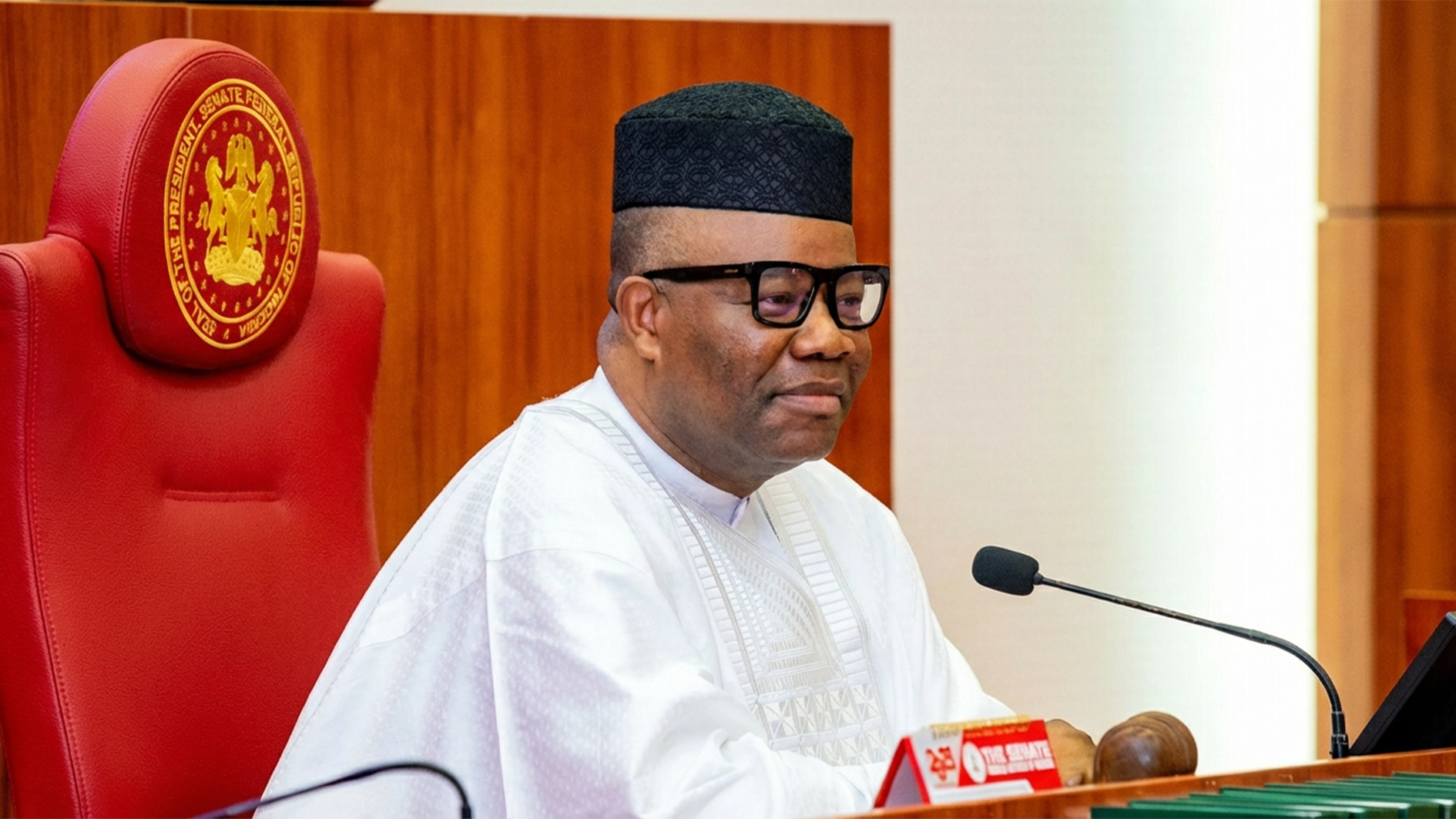
• We chose reform, discipline, progress, says President
President of the Senate, Godswill Akpabio, has suggested that the recent spike in insecurity across the country may be politically-motivated ahead of the 2027 general elections, even as he declared that Nigerians remain firmly behind President Bola Tinubu.
However, worried by the worsening insecurity, the Social Democratic Party (SDP) warned that the value placed on human life is eroding amid persistent violence and governance failures.
This was as the Resource Centre for Human Rights and Civic Education (CHRICED) said more than 1,000 citizens had been abducted across the country this year.
Akpabio, at the official commissioning of a major tax administration facility by the Nigeria Revenue Service (NRS) in Abuja, yesterday, said emerging security concerns should be viewed within the context of political activities gathering momentum across the country.
“You are seeing insecurity today. It is even increasing because elections are coming,” he said, alleging that some actors were deliberately sponsoring unrest to distract the administration.
Meanwhile, President Tinubu has reaffirmed his administration’s commitment to sweeping fiscal and economic reforms, declaring that Nigeria has “chosen reform, discipline and progress” as the pathway to long-term prosperity.

Speaking at the commissioning, the President said his government’s reform agenda was deliberate and anchored on restoring confidence in public institutions and strengthening the nation’s revenue base.
“On my inauguration day, I made a solemn pledge that we would move Nigerians from the dimness of uncertainty into the clear light of renewed hope,” Tinubu said. “Today, I stand before you to reaffirm that these words were not rhetoric.”
He described the event as more than the unveiling of a physical structure, noting that it represents a milestone in Nigeria’s broader journey towards economic stability and institutional renewal.
Describing the new headquarters as symbolic, the President said the facility “reflects a new standard of professionalism, transparency and efficiency” expected of revenue institutions.
Declaring the facility open, Tinubu reiterated his administration’s resolve to sustain reforms and deliver measurable progress.
“History will not judge us by what we say, but by what we do, by the institutions we strengthen and the discipline we sustain,” he said.
SDP, in a statement signed by its National Publicity Secretary, Rufus Aiyenigba, noted that Nigeria’s security situation deteriorated significantly since 2018, with communities across several regions repeatedly targeted by armed groups, kidnappers and other violent actors.
It said the crisis reflected more than criminal activity, describing it as a deeper failure of leadership, coordination and sustained political commitment to protecting citizens.
Accusing the Tinubu and All Progressives Congress (APC) administration of failing to effectively contain insecurity, the party argued that fragmented strategies and weak implementation allowed violence to persist.
It further criticised past policy responses to insecurity, including negotiations and amnesty measures with armed groups, saying such approaches had not resolved the crisis but encouraged further criminal activity.
Positioning itself as an alternative ahead of 2027, the SDP said it was advancing a “national rescue agenda”, focusing on rebuilding security architecture, strengthening accountability, and addressing socio-economic drivers of violence such as poverty and unemployment.
On his part, CHRICED Executive Director, Ibrahim Zikirullahi, during a briefing in Abuja, yesterday, warned that the country was drifting into a deeper crisis marked by escalating violence, weak governance responses, and declining public confidence in state institutions.
According to him, the scale and persistence of kidnappings across multiple regions reflected a dangerous breakdown in national security architecture.
Nigeria, he added, is increasingly becoming unsafe for citizens, with armed groups operating freely in several parts of the country despite ongoing security operations.
“Since January 2026, more than 1,000 Nigerians have been abducted. This is not just statistics; it reflects a nation under severe strain,” Zikirullahi said.
He said the situation amounts to an undeclared war against citizens, with insecurity spreading across the North-East, North-West, North-Central and parts of the South.
CHRICED called for a comprehensive overhaul of Nigeria’s security architecture, insisting that current strategies were no longer sufficient to address the scale of violence.
It asserted that the rising wave of kidnappings is linked to broader governance failures, including unemployment, poverty and weakening state institutions.

