 Follow Us on Google News


 Follow Us on Google Discover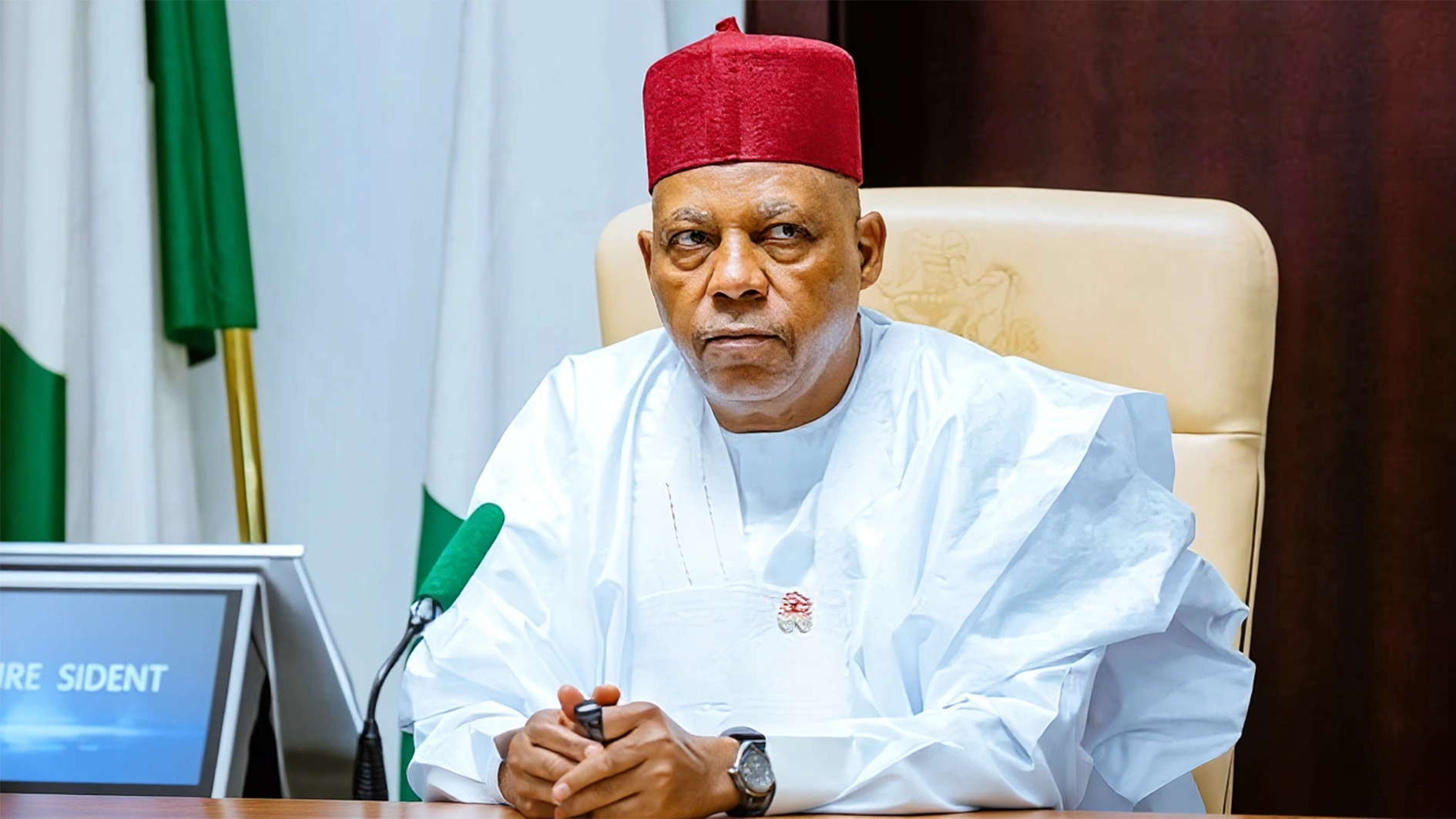
Vice President Kashim Shettima has reaffirmed Nigeria’s commitment to deepening bilateral relations and strategic cooperation with the Republic of Benin, describing both countries as partners bound by history, culture, trade and a shared responsibility for regional stability.
Shettima stated this yesterday in Cotonou, capital of the Republic of Benin, where he represented President Bola Tinubu at the inauguration of President Romuald Wadagni.
Speaking during the inauguration at the Presidential Palace, Shettima said the Tinubu administration “considers Nigeria’s relationship with the Benin Republic strategic to regional integration, democratic consolidation and economic growth” in West Africa.
According to him, Nigeria’s participation at the event underscores Tinubu’s commitment to solidarity, cooperation and mutually beneficial relations with neighbouring countries.
“Our presence here in Cotonou underlines President Tinubu’s unwavering and deep-seated commitment to strengthening ties with our neighbours,” Shettima stated.
He described the Nigeria-Benin relationship as one forged through centuries of cultural affinity, social interaction and economic interdependence that transcend modern political boundaries.

“Our border with the Benin Republic stretches across nearly 600 kilometres, spanning six Nigerian states, including Kebbi. Our cultural and historical ties run deep—we intermarry, and our communities overlap.
“There are Yoruba people on this side of the border just as there are in Nigeria. Benin has a Borgu Province, while we have a Borgu Local Council in Niger State. We are essentially one people tied to a common destiny,” he said.
The Vice President stressed the need for both countries to continue working together to strengthen democratic governance, peace and economic prosperity across the ECOWAS sub-region.
“Because of this, we must show solidarity, empathy and active support towards strengthening democracy in West Africa,” he added.
Shettima disclosed that trade relations between Nigeria and Benin stand at about $2 billion yearly, noting that nearly five million Nigerians reside in the Benin Republic out of the country’s estimated population of 15 million.
He said both countries have expanded collaboration in border security, grassroots governance, trade facilitation and infrastructure development as part of broader regional integration efforts under the Economic Community of West African States (ECOWAS) framework.
Shettima recalled that in August last year, Nigeria and Benin signed a Memorandum of Understanding (MoU) aimed at strengthening cooperation among local governments, traditional institutions and border communities to combat cross-border crimes and enhance socio-economic ties.
According to him, the agreement established direct cooperation between Nigerian border local government areas and neighbouring communities in Benin, particularly around border towns such as Seme, Igbokofi and Ilara.
Wadagni, the former finance minister of Benin, took over from his ex-boss, Patrice Talon.
The economist with a reputation as a technocrat was elected on April 12 with 94 per cent of the ballots.
His sole token opponent, Paul Hounkpe, was easily beaten, and Hounkpe’s party quickly joined forces with Wadagni’s party in the parliament.
The main opposition party, the Democrats, could not participate in the elections because insufficient endorsements and internal rifts.
“I will serve Benin with integrity, courage and commitment,” Wadagni said at his inauguration. “I will serve with the constant knowledge that power is never a personal privilege.”

