 Follow Us on Google News
 Follow Us on Google Discover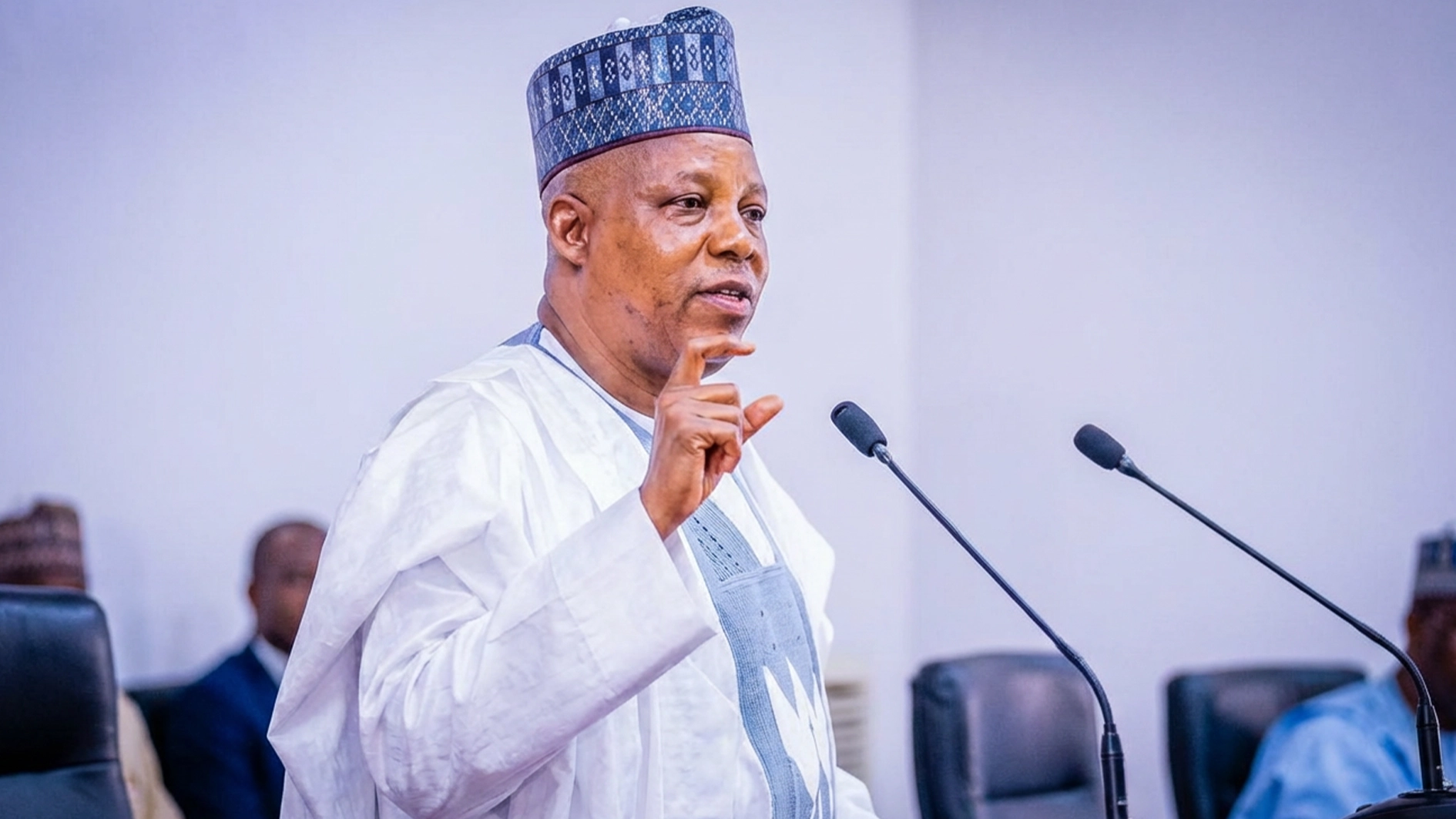
Vice president Kashim Shettima on Friday charged local government chairmen across the country to take ownership of the implementation of the Nutrition 774 (N-774) Initiative, describing them as the critical drivers of Nigeria’s campaign against malnutrition at the grassroots.
He also directed the Association of Local Governments of Nigeria (ALGON) to take an active role in strengthening Local Government Committees on Food and Nutrition, insisting that the committees must become functional centres for planning, coordination, implementation and accountability in every council.
Shettima gave the charge while receiving the National Executive Committee of ALGON on a courtesy visit at the Presidential Villa, Abuja.
He said President Bola Tinubu’s commitment to nutrition was not merely a policy aspiration but “a governance directive” that must be translated into concrete action across all tiers of government.
“The commitment of His Excellency, President Bola Ahmed Tinubu, to nutrition is a governance directive. Strengthening every tier of government is the pathway through which that directive becomes operational.
“National concern must become institutional action, institutional action must become measurable outcomes, and measurable outcomes must be reflected in healthier families, stronger communities, and children whose opportunities in life are no longer constrained by preventable malnutrition,” the Vice President said.

He stressed that strengthening Local Government Committees on Food and Nutrition would reinforce the country’s governance framework for nutrition, urging ALGON to ensure that every council establishes functional structures capable of delivering measurable improvements in nutritional outcomes.
“I believe that strengthening the Local Government Committees on Food and Nutrition presents an important opportunity to reinforce this governance framework. These committees should become centres of planning, coordination, implementation and accountability within every Local Government Area.
“I urge ALGON to drive this process with determination so that every council develops functional structures capable of delivering measurable improvements in nutrition at the community level,” he said.
Shettima noted that local government councils, being the closest tier of government to the people, occupy a strategic position in tackling malnutrition and other development challenges.
While commending state governments for their efforts to improve nutrition outcomes, he observed that the absence of a coherent nutrition agenda in many local government areas had weakened implementation where impact was needed most.
“Our state governments have made commendable contributions to improving nutrition outcomes. However, the absence of a coherent nutrition agenda across many LGAs has created a significant gap within the governance framework established by the National Policy on Food and Nutrition.
“That gap weakens implementation where impact matters most. National ambitions cannot flourish if they lose momentum before reaching the communities they were designed to serve,” he said.
Shettima maintained that the true measure of governance would be reflected in the quality of life of Nigeria’s children, adding that President Tinubu’s reforms were repositioning local governments to deliver services that respond to the needs of the people.
He further urged local government chairmen to remain committed to addressing grassroots challenges, saying history would judge public office holders not by the length of their tenure but by the quality of service they rendered.
According to him, tackling insecurity, poverty and youth restiveness at the local level would significantly accelerate national development and improve the well-being of Nigerians.
Shettima also commended ALGON for supporting the rollout of the Nutrition 774 Initiative, particularly its collaboration with the Nutrition Technical Team and development partners, as well as the ongoing validation of pilot local government areas.
He praised the association’s resolve to strengthen institutional collaboration, build capacity, improve monitoring and accountability, and sustain implementation across all 774 local government areas.
Earlier, the National President of ALGON, Bello Lawal, applauded President Tinubu for placing food security, nutrition, agriculture and human capital development at the heart of the Renewed Hope Agenda.
He described Nutrition 774 as a strategic platform for strengthening local food systems through increased agricultural productivity, reduced post-harvest losses, improved storage and processing capacity, support for household farming and the promotion of local value chains.
“On behalf of the Association of Local Governments of Nigeria, I assure Your Excellency that ALGON will continue to provide the leadership required to ensure that the objectives of Nutrition 774 translate into measurable improvements in the lives of our citizens,” Lawal said.
He appealed for the vice president’s support in securing the inclusion of nutrition services for pregnant women and children in the National Health Insurance Scheme benefit package under the Nutrition 774 Initiative.
Lawal also called for greater inclusion of ALGON and the 774 local government areas in national development programmes, while assuring that the association would intensify community awareness campaigns involving traditional rulers, religious leaders, women and youth groups to make nutrition a shared household and community responsibility.
He noted that LGAs witness firsthand the devastating impact of malnutrition and remain committed to making nutrition a development priority in every community across the country.

