 Follow Us on Google News


 Follow Us on Google Discover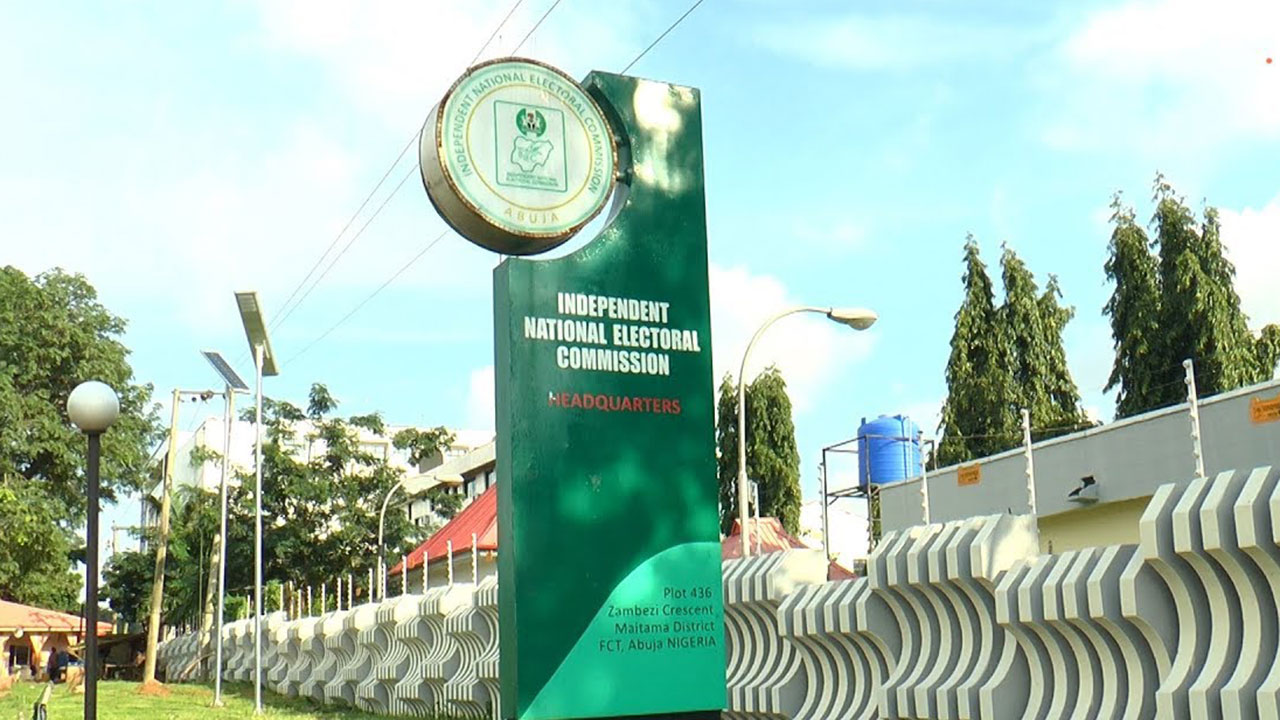
Ahead of the 2027 poll, pro-democracy activists have canvassed the need for the Independent National Electoral Commission (INEC) to take full control of its budgets and expenditures.
The Director of Programs at the Youth and Environmental Development Association (YEDA), Mr Abdullahi Sule, who stressed the need for INEC to handle appointments of its officials, proposed for local government elections to be conducted by INEC rather than the State Independent Electoral Commission (SIEC).
He spoke during the Subnational Strengthening Democracy Conference held in Kano State, a follow-up to the national-level initiative in Abuja, with the theme: Strengthening Nigeria’s Democracy – Pathways to Good Governance and Political Integrity.
[ad]
The conference, organised through a strategic partnership between Peering Advocacy and Advancement Centre in Africa (PAACA), African Centre for Leadership, Strategy & Development (Centre LSD), Centre for Democracy and Development (CDD), and Westminster Foundation for Democracy (WFD), brought together diverse stakeholders from academia, political parties, civil society organisations, traditional leaders, and governance experts to assess democratic progress and propose actionable reforms at the sub-national level.
Calling for the abolition of joint accounts between state and local governments, he argued that there is a need for improved transparency in governance, stronger legislative oversight, and mechanisms to enhance public accountability at all levels.

He stressed the need for the Judicial Service Commission and Legislative Service Commission, both at the federal and state levels, to be autonomous, especially regarding appointments and financing.
Furthermore, he called for regular consultations at constituency meetings at community levels and urged more investments in voter education, citizens’ rights, duties, and responsibilities.
[ad]
Sule also identified funding constraints and executive influence as challenges in Nigeria’s elections and insisted that granting INEC full financial and operational independence would enhance public trust in the electoral process.
In his welcome address, the Director of Strategy at the African Centre for Leadership, Strategy & Development (Centre LSD), Itia Otabor, called for the strengthening of institutions that protect democratic practices and for reforms in Nigeria’s political party system.
READ ALSO: SON certifies 29 firms for 62 products
Otabor expressed concern over weak institutions, poor internal party structures, and the lack of ideological consistency among political parties, arguing that without strong democratic institutions and well-structured parties, Nigeria’s democracy would remain unstable.
He said, “For democracy to thrive, institutions like the judiciary, electoral bodies, and anti-corruption agencies must be strengthened to function independently and effectively. Likewise, political parties must operate on clear ideologies rather than being mere platforms for power struggles.”
He highlighted the frequent internal crises within parties, which often lead to defections and electoral instability. Many parties in Nigeria lack strong internal democratic structures. Candidate selection processes are flawed, and party discipline is weak.
“If we must strengthen democracy, our parties must be well-organized and ideologically driven,” he added.
[ad]
In her remarks, the guest speaker, a social justice advocate, Prof. Rabia Salihu Sa’id of Bayero University, Kano, said that for Nigeria’s democracy to be truly participatory and accountable, internal party democracy must be reformed.
She also said voter participation must be encouraged, and citizen-led oversight functions must be strengthened. These elements are interconnected and crucial for building a more transparent, inclusive, and democratic Nigeria.
She highlighted the challenges to internal party democracy, including weak regulatory enforcement by INEC, the influence of political godfathers and elite dominance, the lack of internal conflict resolution mechanisms, and the limited participation of women, youth, and marginalised groups.
Meanwhile, a communique released at the end of the conference, which had several panel sessions, highlighted the challenges facing democracy at the subnational level, including weak institutions, lack of internal democracy among political parties, lack of political inclusivity, and limited citizen participation in decision-making processes.
[ad]
The communique, therefore, recommended that the executive, judiciary, legislature, traditional leaders, INEC, civil society organisations (CSOs), and media fortify democratic foundations, foster citizen engagement, and create pathways for credible and inclusive leadership.

