 Follow Us on Google News
 Follow Us on Google Discover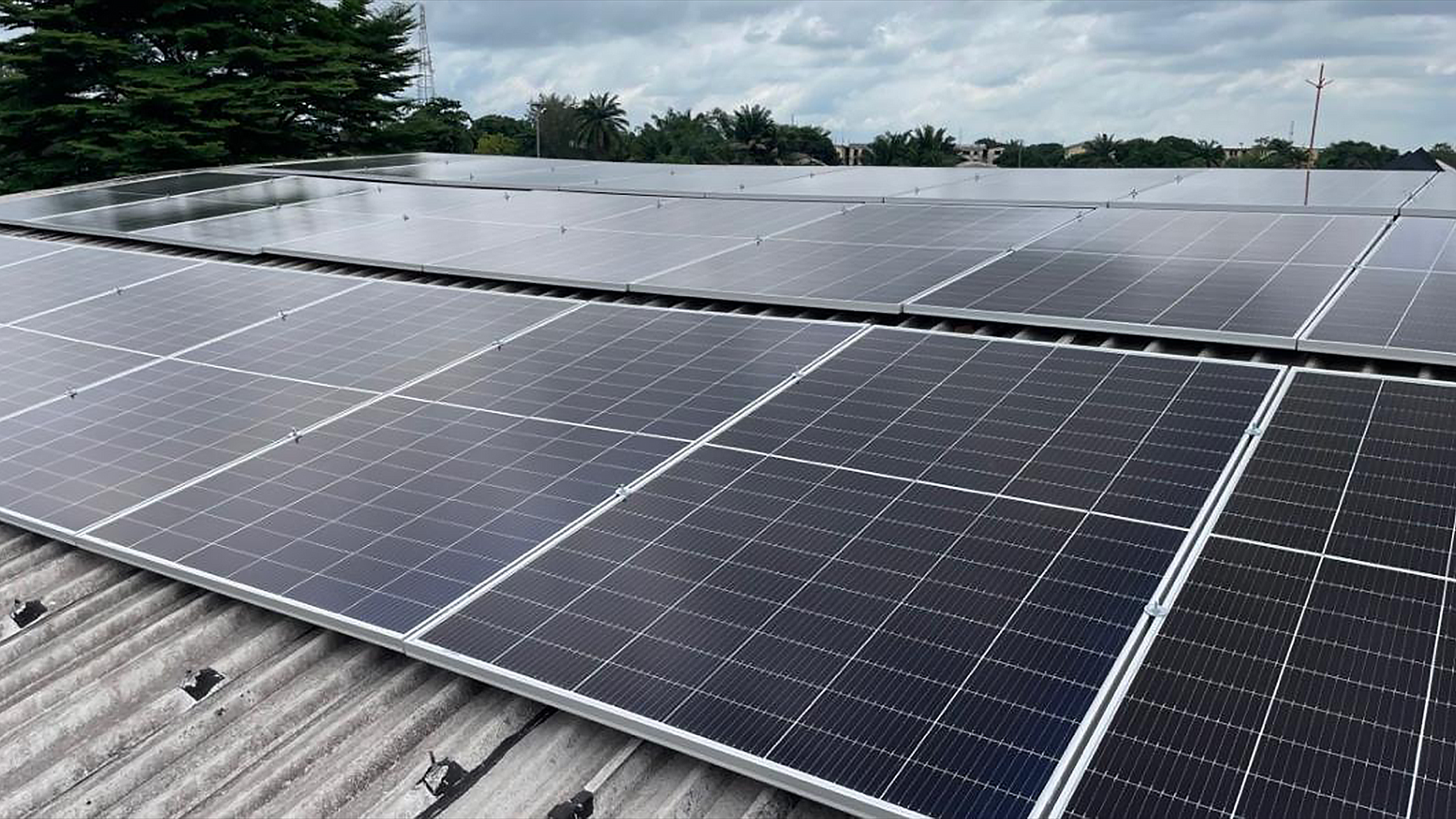
Stakeholders in Nigeria’s renewable energy sector have urged the Federal Government to suspend plans for an immediate ban on solar panel imports and instead adopt a phased transition strategy backed by a comprehensive national renewable energy roadmap.
They argued that the approach would safeguard energy access, strengthen local manufacturing and ensure the country builds sufficient production capacity before restricting imports.
The call was made on Wednesday at the Lagos Solar Forum, organised under the Solar Power Nigeria campaign by the Secure Energy Project, where government officials, private sector operators, civil society organisations, development partners and faith leaders met to discuss Nigeria’s clean energy future.
Speaking at the forum, the Nigerian Campaign Director of the Secure Energy Project, Joseph Ibrahim, said the organisation was engaging the government and industry stakeholders over the proposed policy, arguing that Nigeria is not yet ready to prohibit solar panel imports.
He said the campaign was established to identify policy bottlenecks slowing Nigeria’s transition to clean energy and support partners in addressing them through evidence-based recommendations.
According to him, discussions at the forum would culminate in a policy brief containing stakeholders’ recommendations for submission to the Federal Government.

Ibrahim said Nigeria currently has only two companies assembling solar panels from imported components, adding that the country lacks the manufacturing capacity required to sustain a blanket import ban.
He noted that demand for solar energy has risen sharply since the removal of petrol subsidy in 2023, while plans to phase out electricity subsidies are expected to further increase reliance on renewable energy.
He warned that banning imports before domestic capacity is developed would create shortages, push up prices and make solar systems unaffordable for millions of Nigerians.
He proposed a phased transition lasting between five and 10 years, modelled after Nigeria’s backward integration policy in the cement industry, under which imports would continue while government incentivises local manufacturing and investment.
“We need a comprehensive national renewable energy roadmap with clear short-, medium- and long-term targets. Local manufacturing capacity should be developed before any import ban is implemented,” he said.
Ibrahim also called for increased collaboration with universities and research institutions to improve local technology, boost manufacturing efficiency and strengthen Nigeria’s renewable energy value chain.
In his opening remarks, Senior Director of the Secure Energy Project, Chris Kiff, said the dialogue was designed to strengthen collaboration among stakeholders rather than create another standalone initiative.
He observed that although governments, development partners, private sector organisations and civil society groups were implementing valuable renewable energy programmes, many of the initiatives operated independently, limiting their collective impact.
Kiff said the forum aimed to provide a platform for stakeholders to identify existing efforts, exchange experiences and align their activities under a common framework capable of accelerating Nigeria’s energy transition.
He encouraged participants to build stronger partnerships, avoid duplication of efforts and develop coordinated solutions that would improve energy access and strengthen the sector’s collective voice in influencing public policy.
Executive Director of the Global Initiative for Food Security and Ecosystem Preservation (GIFSEP), Dr. David Michael Terungwa, described energy poverty as one of Nigeria’s biggest development challenges, saying unreliable electricity continued to undermine economic growth and trap millions of people in poverty.
He cited a 2025 World Bank report indicating that about 86.8 million Nigerians lack access to electricity, the highest figure globally.
According to him, the removal of fuel subsidy has increased the financial burden on households and businesses that depend on petrol generators, making solar energy an increasingly important alternative.
“Solar energy offers Nigeria a real opportunity to close its energy gap through clean, affordable and accessible power,” he said.
Terungwa, however, warned that Nigeria was not yet prepared for a blanket ban on solar imports because nearly all solar panels and accessories used in the country are imported.
He said implementing such a policy now would worsen energy poverty, slow renewable energy adoption and increase costs for households and businesses.
Instead, he urged the government to introduce incentives for local manufacturing, support domestic assembly, improve access to affordable financing for renewable energy systems and gradually build local production capacity before restricting imports.
He also urged state governments to leverage the opportunities created by the Electricity Act 2023 by developing state electricity markets and supporting decentralised renewable energy projects.
Presenting a review of Nigeria’s energy investment landscape, Daniel Awolaja, co-founder of the Africa Energy Tracker, said Nigeria had attracted about $100 billion in disclosed energy investments across 422 projects over the past decade, making it Africa’s second-largest recipient after South Africa.
Despite this, he said Nigeria continued to experience severe electricity shortages because investments in generation had not been matched by corresponding investments in transmission, distribution and energy storage infrastructure.
Awolaja noted that although Nigeria has an installed electricity generation capacity of about 14 gigawatts, only around five gigawatts are consistently delivered through the national grid, leaving nearly 90 million people without reliable electricity.
He added that privately owned petrol and diesel generators now produce several times more electricity than the national grid, underscoring the country’s dependence on self-generation.
According to him, about 92 per cent of disclosed energy investments over the past decade were directed to oil and gas, with comparatively little funding allocated to renewable energy and grid infrastructure.
Awolaja, however, said Nigeria possesses one of Africa’s most advanced policy and regulatory frameworks for decentralised renewable energy, including mini-grid regulations and climate legislation, but implementation has lagged behind policy ambition.
He called for greater investment diversification, improved financing for transmission and distribution networks and stronger implementation of existing policies to achieve sustainable electricity access.
Delivering the keynote address, the Senior Special Assistant to the President on Climate Technology, Olamide Fagbuji, described Nigeria’s energy transition as both an environmental necessity and a major economic opportunity.
He said expanding access to renewable energy would improve industrial competitiveness, create jobs, strengthen energy security and support sustainable development.
Fagbuji identified the Electricity Act 2023 as a landmark reform that decentralises electricity generation and distribution, empowers states to establish electricity markets and creates new opportunities for private sector participation.
He said Nigeria’s renewable energy ambitions should extend beyond electricity generation to include manufacturing, research, innovation, financing, battery storage, recycling and workforce development.
He also advocated stronger policy certainty, innovative financing mechanisms and investments in artificial intelligence, smart grids and technical education to support long-term sector growth.
Fagbuji urged government, the private sector, academia, civil society and development partners to deepen collaboration in expanding energy access, promoting industrialisation and building a resilient low-carbon economy.

