 Follow Us on Google News
 Follow Us on Google Discover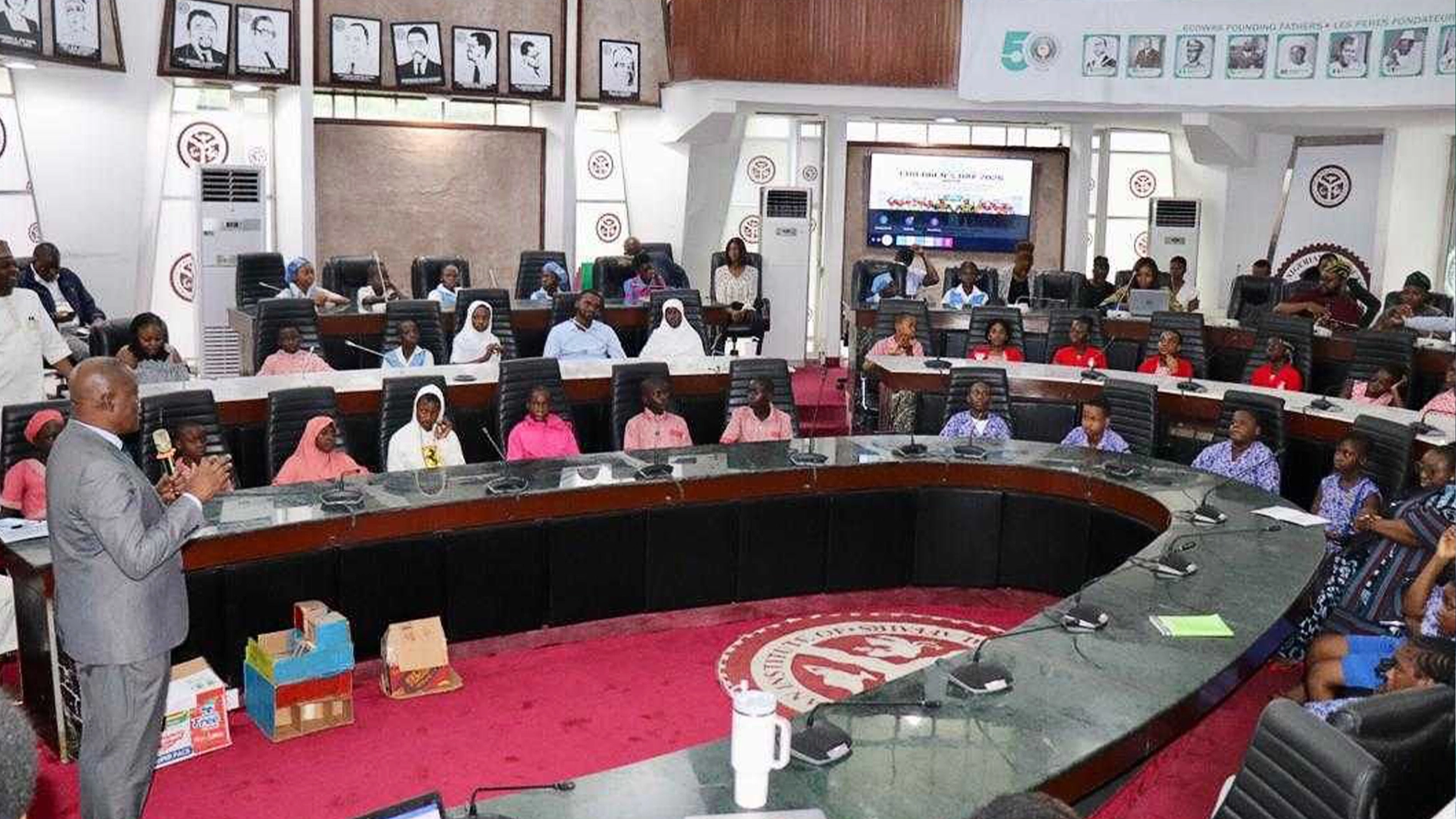
Stakeholders have called for stronger collaboration among governments, schools, security agencies, and international organisations to protect children from abduction, trafficking, and abuse across borders.
The call was made at a Children’s Day event organised by the Nigerian Institute of International Affairs (NIIA) themed: “Safe Schools, Secure Borders: International Cooperation Against Child Abduction”, in Lagos.
Director of Research, NIIA, Prof. Joshua Bolarinwa, said the event was not merely a celebration of children but also a moment for reflection on the growing threats facing children globally.
“Today, we do not gather merely to celebrate children, though they are indeed worthy of every celebration. We gather to confront a sobering reality that across our continent and around the world, children continue to be robbed of their innocence, their futures, and their freedom through the unconscionable act of abduction,” he said.
Prof. Bolarinwa lamented that schools, which should serve as sanctuaries of learning and safety, had increasingly become targets of terror and violence, while borders meant to define sovereignty had turned into channels for trafficking and exploitation.
He noted that the transnational nature of child trafficking and abduction makes international cooperation unavoidable, calling for stronger intelligence sharing, coordinated legal frameworks, regional security partnerships, and harmonised child protection laws across borders.
Head, International Law Unit, NIIA, Dr Rita Agu, speaking on “From Global Commitments to Local Action: Why Child Protection Laws Often Fall Short,” stressed that child protection goes beyond signing international agreements and passing laws, noting that implementation remains the biggest challenge.
She explained that despite global commitments such as the United Nations Convention on the Rights of the Child and the Sustainable Development Goals, many children still suffer abuse, neglect, violence, exploitation, bullying, and unsafe learning conditions.
According to her, weak implementation, lack of awareness, inadequate resources, and the culture of silence often prevent vulnerable children from getting help.
Dr Agu urged teachers, parents, and communities to become more proactive in identifying signs of abuse among children, including emotional withdrawal, fear, frequent injuries, poor academic performance, and unusual silence.
She also encouraged children to speak up whenever they feel unsafe and to report suspicious behaviour to trusted adults, insisting that protecting children must become a collective responsibility.
Senior Research Fellow at the NIIA Dr Philippa Osim Inyang, highlighted the growing role of international partnerships in combating child trafficking and cross-border abduction.
She noted that child abduction involves the unlawful removal or retention of children away from their lawful guardians, warning that trafficking networks, kidnappers, and online predators increasingly exploit weak borders and vulnerable communities.
Citing regional and international reports, Dr Inyang said children account for a significant percentage of trafficking victims across Africa, particularly in West and Central Africa.
According to her, once abducted children cross national borders, rescue operations become more complicated because local law enforcement agencies lose jurisdiction, making international cooperation essential.
She explained that mechanisms such as INTERPOL Yellow Notices, ECOWAS child protection systems, regional referral mechanisms, and cross-border intelligence sharing have become critical tools for locating and recovering missing children.
Dr Inyang also warned parents and schools against fake scholarship offers, fake sports recruitment schemes, and online grooming tactics increasingly used by traffickers to target children.
“Borders should function as shields for children, not escape routes for traffickers,” she said, while calling for stronger regional cooperation, technology-driven tracking systems, and greater community awareness to combat child abduction.

Director-General, NIIA, Prof. Eghosa Osaghae, welcoming the children assured them that their future was bright, adding that many of them had the potential to become governors, doctors, lawyers, diplomats, entrepreneurs, and global change-makers.
Prof. Osaghae urged the children to remain determined and hopeful despite prevailing challenges, stressing the importance of education in shaping a better future.
Also, research fellow, NIIA, Beauty Ogbologu, has said that safe schools are not a privilege but a minimum standard of child protection required under international law while stressing that children cannot effectively learn in environments threatened by violence, abduction, or armed conflict.
She explained that international legal instruments, including the United Nations Convention on the Rights of the Child (UNCRC), place a legal obligation on governments to guarantee children’s rights to education, dignity and protection from violence. According to her, Articles 19, 28 and 29 of the convention require states to provide safe learning environments where discipline respects the dignity of every child and supports their full development.
Ogbologu further noted that the Geneva Conventions, the Safe Schools Declaration and United Nations Security Council Resolution 2601 also reinforce the protection of schools during armed conflict.
She recalled that Nigeria endorsed the Safe Schools Declaration in 2015 and later hosted the Fourth International Conference on Safe Schools in 2021, commitments aimed at restricting military use of schools and ensuring safe access to education for children affected by insecurity.
Highlighting the growing global crisis, she cited UN reports indicating over 6,000 attacks on education between 2022 and 2023 across 79 countries, with more than 10,000 students and educators affected.
She warned that Nigeria’s school security crisis, once concentrated in the North-East, has expanded into other regions, leaving millions of children out of school.
Ogbologu called for stronger legal frameworks, early warning systems, psychosocial support, gender-responsive protection measures and increased political will to safeguard children’s right to education.
Lawyer, Alice Adeyi stressed that protecting children starts with simple but important actions such as children informing trusted adults about their movements, looking out for classmates, and speaking up whenever they feel unsafe.
She also highlighted the international response to the Chibok abduction, noting that global campaigns such as #BringBackOurGirls, INTERPOL alerts, and international cooperation demonstrated that protecting children is a shared global responsibility.

