 Follow Us on Google News
 Follow Us on Google Discover
‘Nigeria still about 75% analogue’ <em
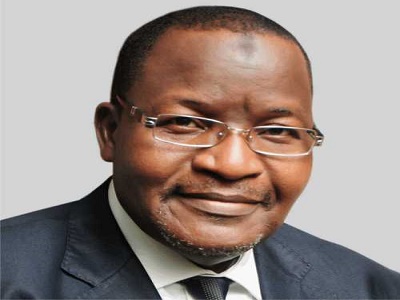
THOUGH the Nigerian Communications Commission (NCC) says it has sought support from the Nigerian Governors Forum (NGF) to tackle some of the challenges hindering the growth of the telecommunications sector, especially around achieving broadband penetration, some states may serve as major obstacles to the country’s plan of achieving a 30 per cent broadband penetration in 2018 through their indiscriminate tax systems.
Besides, the current state of electricity generation in the country, according to analysts, may also impact negatively on the target.
Investigations by The Guardian showed Nigeria was only able to achieve two per cent broadband penetration in 2015, after ending 2014 with eight per cent growth, meaning that the current penetration is around 10 per cent.
In 2015, despite increased investments in a submarine cable system and its upgrade, Nigeria ranked 130th out of the 189 member states of the International Telecommunications Union (ITU) surveyed by the body.
Indeed, it could be inferred that for the last five consecutive years, Nigeria’s five submarine fibre-optic cable systems expected to facilitate ubiquitous Internet and broadband services, are struggling to deliver.
The systems, which came in from different parts of Europe -Portugal, England and others- are MainOne, Glo1, West African Cable System (WACS), South Atlantic 3 (SAT3) and Africa Coast to Europe (ACE).
As at 2014, investments in submarine cable system across Africa were put at over $20 billion, with Nigeria accounting for about $7 billion including the logistics.
The Guardian’s investigations showed that Nigeria’s submarine cable system capacity utilisation rate is less than 10 per cent, despite these submarine cables, adjudged to have about 19.2 terabytes and over 340 gigabytes bandwidth lying at her shores.
Truly, these systems appear to be struggling in Nigeria because of the enormous challenges confronting business growth in the country, chief of which is exorbitant taxes by state and local government agents, especially on Right of Way (RoW) access.
The Guardian learnt that as at December 2015, the cost of obtaining RoW accounted for as high as 50 to 70 per cent of the total cost of deploying fibre across states of the federation.
For instance, a report has it that the cost of procuring RoW in a particular state in the south west for metro fibre deployment is as high as N6, 500 per metre.
According to a major Internet Service Provider in Abuja, who doesn’t want his name and his company mentioned, the case is even worse in some north eastern and south eastern states where the charges are between N12, 000 and N15, 000 per metre for RoW.
Early last year, the Osun State government was reported to have vowed to confiscate base stations of MTN Nigeria, over its failure to pay the RoW permit fees due to the state to the tune of N399 million.
Before she left office in May, as the Minister of Communications Technology, Dr. Omobola Johnson, had hinted that only a handful of states had signed a Memorandum of Understanding (MoU) with the ministry to become smart states. These include Lagos, Bayelsa, Cross River, Abuja, Ondo and Anambra.
She disclosed that to become a smart state, such a state would have among others significantly reduced RoW charges; standardised state levies and taxes on ICT infrastructure and consolidated licensing through the ‘Dig Once/Pay Once’ philosophy.
While urging other states to follow the example of Lagos, Johnson had also disclosed that the state reduced the cost of RoW by 85 per cent, while Bayelsa pegged its own at 50 per cent.
According to her, five other states equally reduced levies and taxes on telecommunications infrastructure by as much as 50 per cent and are creating a single agency that will collect fees on behalf of the government in those states.
The former minister stressed that unless more state governments signed a MoU with the ministry for the implementation of the Smart State initiative, Nigeria’s quest to become a digital economy may be derailed.
Besides the issue of multiple taxation and over-taxation, another challenge market watchers see that will pose a threat to Nigeria’s attaining broadband growth is the issue of electricity deficit.
Industry observers say that the current erratic electricity supply in the country would work against Nigeria’s broadband growth dream.
Nigeria is said to need about 160,000MW to meet national electricity demands for the about 160 million populace, but current generation capacity is put at just 4000MW.
For the Executive Director, Association of Nigerian Electricity Distribution Companies (ANED), Otunba Sunday Oduntan, the rule of thumb for any developing industrial nation is that at least one gigawatt (1000MW) of electricity generation and consumption is required for every one million population.
Comparing Nigeria with other countries, Oduntan says that Algeria with a population of about 40 million, has about 11,000MW generation; Egypt with about 90 million population generates 24, 000MW; United Kingdom with about 30 million population generates 120,000MW; South Africa with 60 million population has 40, 000MW, “and Nigeria with 160 million population generates a paltry 4000MW. This shows there is a huge deficit. We have not yet started and that is why we have low customer satisfaction. With the ideal rule of thumb Nigeria with a population of 160 million should be generating about 160,000MW”, he said.
On the challenge posed by erratic electricity supply to achieving nationwide broadband penetration, the Managing Director and Chief Executive Officer, MainOne Cables, Funke Opeke, told The Guardian that the electricity deficit was impacting negatively on the sector.
Opeke said so far electricity and onward distribution of capacity across the country had been very challenging.
She added that there was so much demand by Small Medium Enterprises (SME) consumers, large corporations, educational institutions and government establishments to have better access to information.
“But the challenge remains in getting the capacity here in Lagos to other parts of the country,” she said.
According to her, if a lot more energy is generated and effectively distributed and reliance on generators goes down from 100 per cent to about 25 per cent, it would save the firm and other operators millions of naira and ensure broadband penetration.
“We have seen the broadband revolution. We have seen reduction in prices of Internet; we have seen lower cost of international calls. The challenge of the global opportunity is really now to take more of these capacities to the hinterland and also to people in large urban areas, so that they would have more access to Internet information.”
Also at the weekend, in an interaction with journalists in Lagos, the Chairman of Zinox Group, Chief Leo Stan Ekeh, said the country was still 75 per cent analogue because of challenges confronting business development in the country, especially electricity.
Also, reacting, the President of the Association of Telecommunications Companies of Nigeria (ATCON), Lanre Ajayi told The Guardian that broadband service was expected to facilitate the provision of good health, education, agricultural services, adding that it would stimulate economic growth by facilitating cross-industry linkages and improving efficiency.
According to Ajayi, an engineer, Nigeria is yet to benefit from accessible broadband services provided by sub-sea cables due to infrastructural constraints.

