 Follow Us on Google News


 Follow Us on Google Discover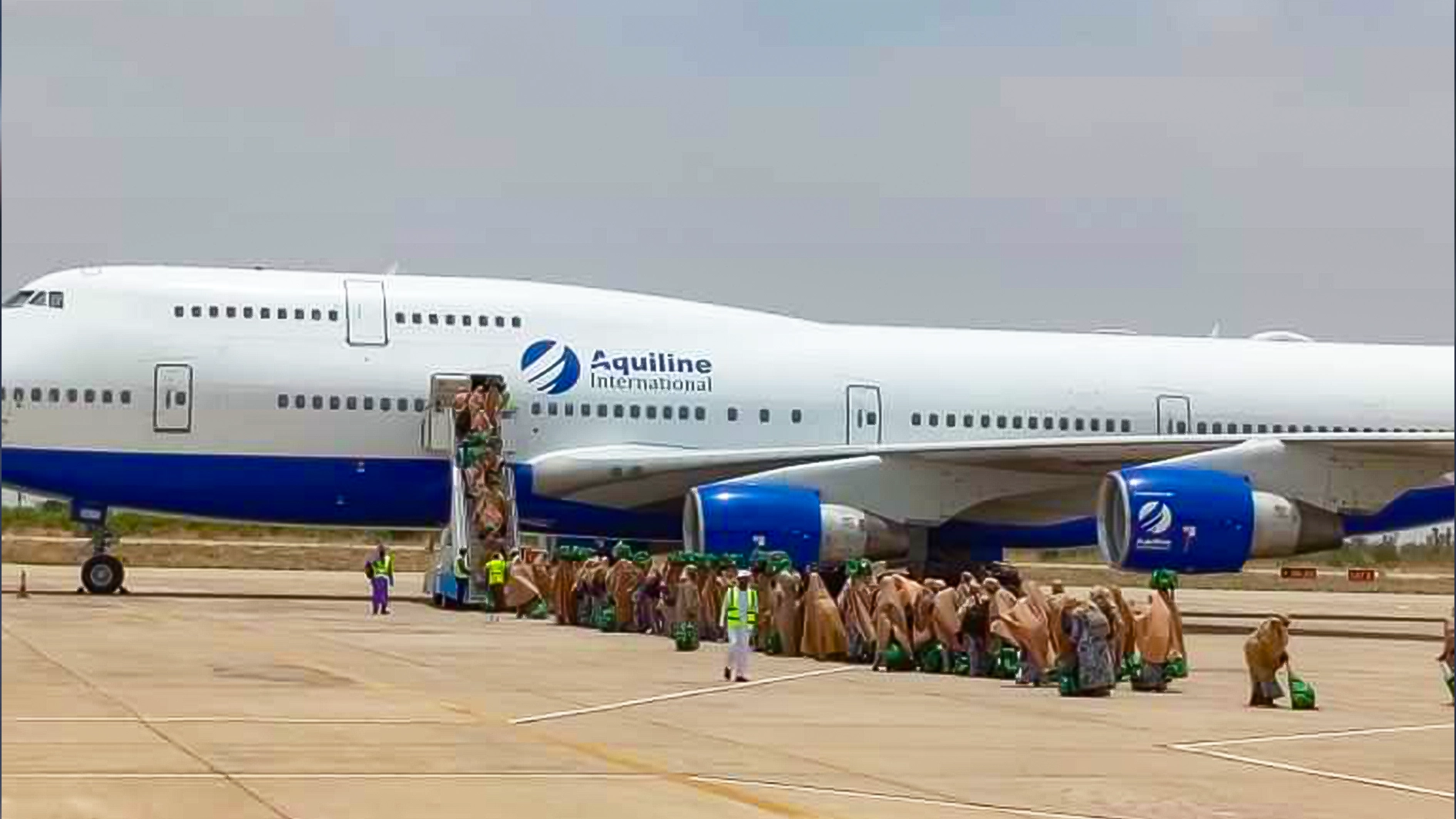
• S’Arabia launches multilingual Hajj health guide
• NAHCON warns on access to sacred area in Madinah
Hundreds of intending pilgrims from Ogun State for the 2026 hajj exercise were stranded for about four days at the newly commissioned Gateway International Airport, Iperu-Remo, after Saudi Arabian carrier, Flynas Airlines, reportedly declined to continue airlift operations from the facility.
This development came as the Saudi Arabian Ministry of Health and the Public Health Authority (Weqaya) launched a multilingual health awareness guide for the 1447 AH hajj season to help pilgrims prevent heatstroke, respiratory infections and other health complications, while the National Hajj Commission of Nigeria (NAHCON) warned that access to the Rawdah in Madinah would now depend strictly on approved bookings and space availability due to congestion and crowd control measures introduced by Saudi authorities.
The first batch of 345 pilgrims at the Gateway International Airport, Iperu-Remo, had earlier been airlifted on Sunday aboard a Max Air flight from the airport to Saudi Arabia.
However, subsequent flights were stalled, leaving hundreds of pilgrims stranded at the airport amid uncertainty over their departure arrangements.
The Guardian learnt that Flynas had informed officials of the National Hajj Commission of Nigeria (NAHCON) that it could no longer operate from the newly commissioned airport, although the exact reason for the decision was not immediately disclosed.

Following the development, the Ogun State Muslim Pilgrims Welfare Board directed the stranded pilgrims to relocate to the Murtala Muhammed International Airport (MMIA), Lagos, for onward airlift to Saudi Arabia.
Some of the affected pilgrims complained of worsening welfare conditions, saying they had spent funds meant for the pilgrimage on feeding, transportation and medications while waiting for updates.
One of the pilgrims, who identified herself simply as Fatimo, said many of them had already taken leave of their families and could no longer return home.
“I have almost exhausted all the money I have on me on food and drugs. We couldn’t go home because the plan was not for us to remain here this long, and nobody was saying anything to us,” she said.
She appealed to the Ogun State Government to move pilgrims to an airport capable of handling international operations if the Iperu airport was unsuitable for such flights.
Another pilgrim, who spoke anonymously for fear of victimisation, criticised the handling of the situation and urged authorities to prioritise aviation safety.
“We are not kids. If the airline said they cannot land there, let us move to Lagos where they can operate from. We have been suffering here for days,” the pilgrim said.
The pilgrim also complained about poor accommodation conditions and mosquito infestation, alleging that some intending pilgrims had fallen ill while waiting for transportation.
Tension was later eased after officials informed the pilgrims through a WhatsApp message on Wednesday that subsequent departures would take place from Lagos.
The second batch of pilgrims was eventually transported to Lagos on Thursday morning after spending about five days at Iperu.
Speaking on the development, the Executive Secretary of the Ogun State Muslim Pilgrims Welfare Board, Taiwo Ajibola, confirmed that Flynas withdrew from the operation at the last minute.
According to him, the airline cited technical issues for its inability to land at Gateway International Airport.
He added that the affected pilgrims had already been issued boarding passes in Lagos and that the aircraft was waiting at the Lagos airport.
Ajibola explained that although Max Air assisted with the first batch of pilgrims, Flynas later agreed to continue the operation from Lagos.
An official of Max Air, who declined to be named, confirmed that the airline airlifted the first batch of Ogun pilgrims from Gateway International Airport but did not explain why the operation did not continue for the second batch.
Also, the Saudi Arabian Ministry of Health and the Public Health Authority (Weqaya) have launched a health awareness guide in eight languages for the 1447 AH hajj season to help prevent exhaustion and heatstroke among pilgrims.
The guide, published in Arabic, English, French, Urdu, Persian, Indonesian, Turkish and Malay, is designed to support pilgrims from different countries throughout their pilgrimage.
In a statement, the Saudi health authorities said the initiative aligns with the Kingdom’s health sector transformation programme under Saudi Vision 2030.
Meanwhile, the National Hajj Commission of Nigeria has warned Nigerian pilgrims that access to the Rawdah, the sacred area inside the Prophet Muhammad’s Mosque in Madinah, is now strictly subject to space availability and approved bookings.
In a statement circulated to journalists yesterday, NAHCON said the restriction followed congestion and crowd management measures introduced by Saudi authorities.
The commission, however, assured pilgrims that officials of State Pilgrims’ Welfare Boards had been trained on procedures for booking Rawdah visits.
NAHCON urged pilgrims to remain patient, orderly and follow the guidance of their Ulama regarding the validity and acceptance of their hajj rites.
“Visiting the Rawdah is a blessed opportunity, but it is not a condition for the validity of Hajj, and Allah grants such opportunities according to His will,” the statement said.

