 Follow Us on Google News


 Follow Us on Google Discover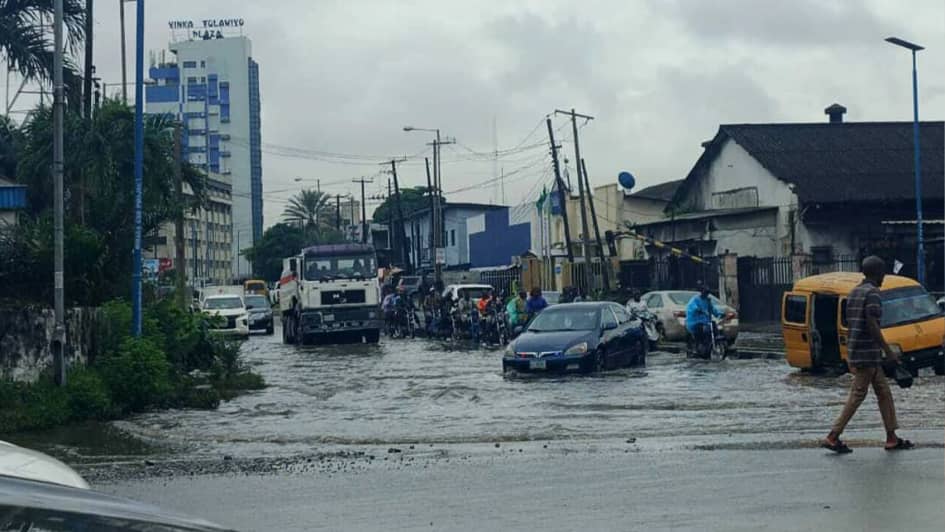
Vehicular movement at the Mile 2-Tin Can Island corridor as well as Ijora-Marine bridge has worsened by flooding and the presence of petroleum tankers, delaying the movement of commuters and other port users.
Petroleum tankers have continued to disrupt vehicular movement with their indiscriminately parking before accessing tank farms.
Despite the presence of Lagos State Traffic Management Authority (LASTMA), Federal Road Safety Corps (FRSC), the Nigerian Ports Authority (NPA) and the Nigerian Police Force to control traffic flow, tanker drivers have remained disorderly as they are not controlled under the electronic call up system as well as the lack of holding bays.
Petroleum tankers have turned the service lane at their parks, blocking access to other road users while creating disruptions for vehicles using the major roads with their indiscriminate parking.
These tankers are seen lined along the Apapa-Oshodi expressway from Coconut down to Kirikiri, Mile 2 and towards Cele Bus stop waiting to access the tank farms.
This, has however, affected the free flow of commercial vehicles and containers trucks conveying import and export cargo.

The situation has worsened as it continues to rain with the roads flooded, extended the traffic beyond Mile 2 down to Berger/Kirikiri corridor and Second Rainbow to Cele.
Speaking on the traffic situation, the General Secretary, the Association of Maritime Truck Owners (AMATO), Mohammed Sani, blamed the persistent gridlock on the Mile 2 corridor on the disorderly movement of petroleum tankers to depots.
Sani said traffic along the Tin Can Port corridor remains largely free-flowing, while the major obstruction is along the Mile 2 axis where tankers queue indiscriminately to access tank farms.
“There is free movement if you pass Coconut to Tin Can, but from Berger Gate down to Mile 2, the obstruction is caused by tankers,” he said.
The AMATO official called for the integration of petroleum tankers into a structured electronic call-up system similar to that used for container trucks, saying this would ensure orderly access to tank farms and eliminate indiscriminate parking along the roads.
Sani described the current approach to depot operations as disorganised, noting that tankers often queue in multiple lanes and block major highways while waiting to load petroleum products.
He noted that the resulting gridlock has made commuting difficult for residents and other road users, adding that public transport passengers are among those worst affected.
“There should be a call-up system so that tankers can come in an orderly manner. What we have now is a disorganised system of approaching the depots. They queue in single, double and triple lanes, blocking everywhere. If you see the passengers standing on the road, you will pity them,” he said.
Recall that tanker owners, through the National Association of Road Transport Owners (NARTO), had rejected integration into the electronic call up system at Apapa port due to the fees attached.
The National President, NARTO, Yusuf Othman, had stated that the petroleum tanker owners were already operating at a loss and would not take on any additional cost as charges for being integrated in the electronic call-up system.
A business owner, Chief Executive Officer, Harsecom Logistics Nigeria Limited, Haruna Omolajomo, said although traffic has eased in some sections compared to previous months, heavy rainfall has continued to create fresh bottlenecks, making access to parts of the corridor difficult.
According to him, the recent rains have made movement difficult, particularly around areas leading into the port corridor.
Describing his preferred route, Omolajomo said he passes through Coconut Road, Western Avenue and Ijora, where traffic remains but is relatively manageable compared to other sections.
The logistics operator said the congestion is taking a toll on businesses by delaying the movement of workers and disrupting daily operations.
Omolajomo cited his personal experience on Thursday, explaining that although he planned to arrive at his office by 10 a.m., he did not get there until about 12:30 p.m. because of the gridlock.
According to him, commuters currently encounter traffic at three major points along the corridor.
He identified the first congestion point around Barracks towards the National Stadium, the second before reaching Ijora, and the third between Marine Bridge and the Barracks area.
Omolajomo warned that unless the flooding and traffic challenges are addressed, businesses operating within the Apapa logistics corridor will continue to experience productivity losses and delays in the movement of people and goods.

