 Follow Us on Google News
 Follow Us on Google Discover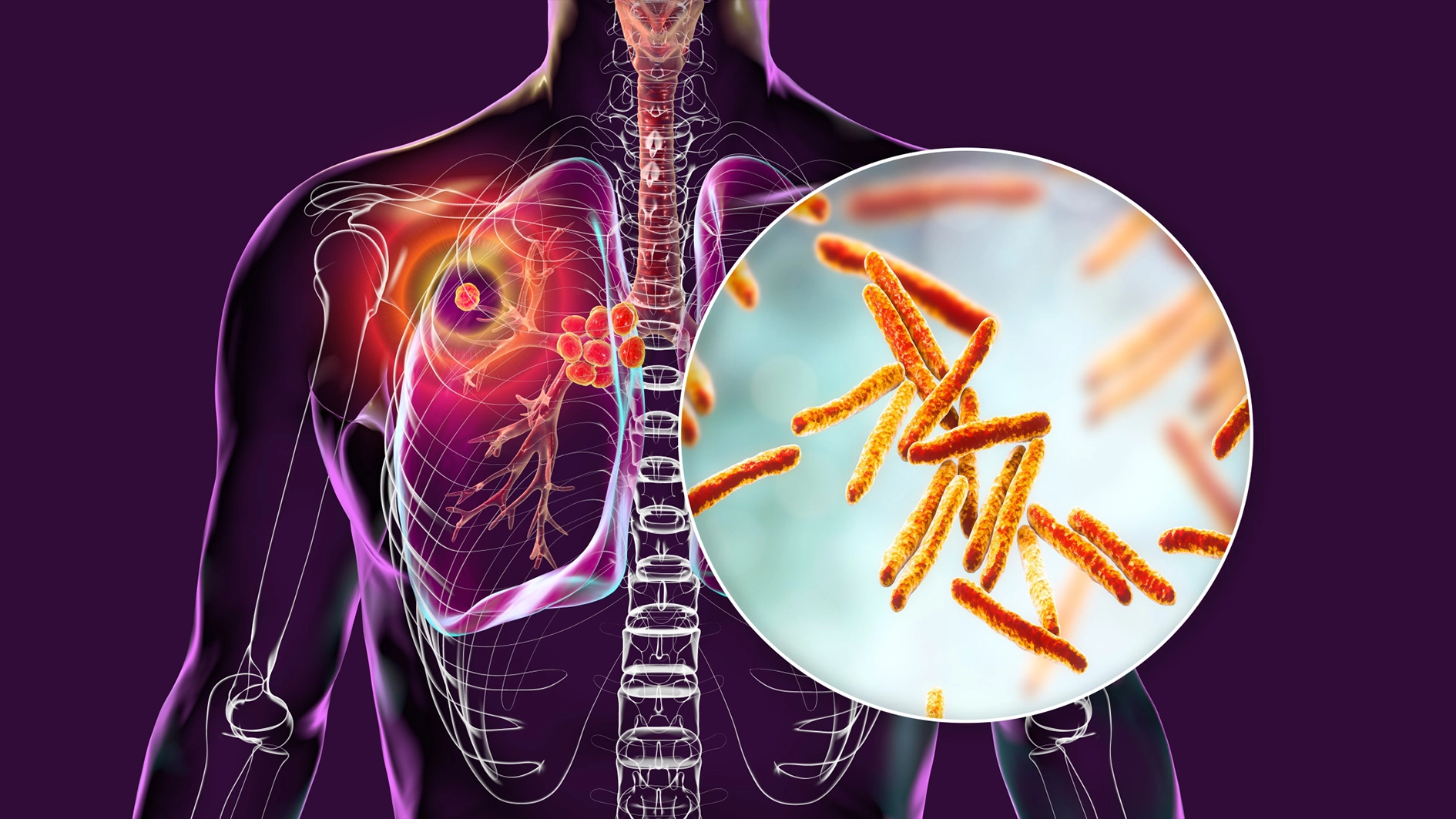
As countries mark World Tuberculosis (TB) Day today, experts have warned that a high funding gap, low awareness, malnutrition, stigma and discrimination are threatening disease control gains and the sustainability of Nigeria’s TB response.
According to the World Health Organisation (WHO), while Nigeria achieved a 63 per cent reduction in TB deaths between 2015 and 2024, incidence rates showed no overall decline, suggesting ongoing community transmission despite improved treatment outcomes.
The country recorded an estimated 510,000 new TB cases in 2024, translating to an incidence rate of 219 per 100,000 population.
TB, an airborne disease caused by a germ known as Mycobacterium tuberculosis, is the leading infectious killer disease in the world and among the top 10 causes of death globally.
Despite being both preventable and curable, about 1.9 billion people, representing one-quarter of the world’s population, carry the causative organism in a dormant state, according to the WHO.
Data from the Knowledge Network for Disease Control and Vigilance (KNCV) Nigeria shows that the country has a high triple burden of TB, drug-resistant TB (DR-TB), and HIV-associated TB, and is among the 10 countries with the highest number of missing TB cases globally.

The data further revealed that Nigeria ranks first in TB burden in Africa and sixth globally, accounting for about 4.6 per cent of the global TB burden. An estimated 15 Nigerians die every hour from TB, equivalent to about 360 deaths daily, 10,417 monthly and 125,000 yearly.
The country also faces a severe tuberculosis funding gap, with approximately 73 per cent of its 2025 national TB budget remaining unfunded.
Information obtained from the Federal Ministry of Health and Social Welfare showed that while the country required about $405 million to deliver comprehensive TB treatment and services in 2024, only 27 per cent of the amount was realised, leaving a 73 per cent funding gap.
Already, the Federal Government has earmarked about N73.4 billion for the procurement of TB drugs and other medical commodities to prevent a potential stock-out across the country.
Reliable sources told The Guardian that if nothing significant is done to secure domestic funding for TB medicines, Nigeria may experience a stock-out between May and June 2026.
However, at the Directly Observed Treatment (DOT) centre in Asokoro, Abuja, the facility’s TB focal person, Mrs Blessing Onuoha, disclosed that the centre currently has sufficient drugs for patients.
She explained: “For now, we don’t have a problem with drugs. Drugs are very much available. We only had serious drug scarcity after the U.S. government announced an aid cut. A lot of people who were newly diagnosed with TB could not get drugs for many weeks, and that increased the spread of TB. But right now, we have enough medication.”
Onuoha, however, said that the centre does not have a functional X-ray machine and often refers patients to Nyanya General Hospital and other imaging facilities. She appealed to the government to provide an X-ray machine to improve patient access.
A patient who accessed care at the TB DOT centre at the Lagos University Teaching Hospital (LUTH) said that both treatment and tests remain free at the centre.
The source, who commended the current TB programme at the centre, said diagnosis followed comprehensive testing and treatment commenced immediately, but expressed concern about the long-term sustainability of TB programmes, especially in light of funding shortfalls from donor countries.
For Justice Ejiga, a TB survivor, stigma and discrimination remain serious barriers to care, often preventing individuals from seeking diagnosis, adhering to treatment, and returning to normal life.
Narrating his experience, Ejiga said he lost his banking job after returning from four months of TB treatment. He argued that no one should be stigmatised for a disease that is treatable and curable, especially after completing treatment.
He recalled that he began experiencing persistent cough, fever and night sweats, and later noticed blood in his sputum. After testing positive for TB, he underwent four months of treatment before being discharged to continue care at home.
Ejiga said the experience took a heavy toll on his livelihood. “I suffered stigmatisation, and it was a deadly blow,” he said, explaining that he was unable to return to his banking job after treatment. According to him, his employer expressed concerns that other staff might believe they contracted the disease from him.
He maintained that such fears are unfounded, stressing that patients on treatment quickly become non-infectious and that those who have completed treatment cannot transmit the disease.
“No one deserves to die. No one deserves to be stigmatised for a disease that is curable and treatable,” he said, warning that stigma discourages people from seeking testing and treatment, thereby worsening the spread of TB.
According to the WHO, stigma and discrimination constitute a major, if not the most significant, barrier to ending the TB epidemic.
Stakeholders warn that ending stigma will facilitate early diagnosis, encourage more people to seek treatment, improve medication adherence, and reduce transmission within communities.
In an interview, Acting Board Chair of Stop TB Nigeria, Queen Ogbuji-Ladipo, said Nigeria remains among the countries with the highest TB burden globally. She emphasised the need for increased domestic resource mobilisation and sustained budgetary support for TB response.
She noted that with declining global health financing and constrained donor support, Nigeria must find ways to generate in-country resources to bridge the funding gap, which currently stands at about 70 per cent.
Ogbuji-Ladipo also identified stigma as a major challenge to TB control efforts, stressing that ending it would encourage infected persons to seek treatment without fear of discrimination.
The board chair noted that the Tuberculosis Anti-Discrimination Bill 2025 has passed first reading at the House of Representatives, adding that it seeks to hold accountable those who stigmatise people living with TB.
She explained that the mandate of the Stop TB Partnership includes high-level advocacy for domestic resource mobilisation to support government efforts to control TB to a level where it is no longer of public health significance.
Ogbuji-Ladipo added that progress has been made in the national response. She noted that the First Lady, Oluremi Tinubu, donated N2 billion to support TB control activities, and that the funds have been used to procure diagnostic tools, which have been distributed across the 36 states and the FCT.
She added: “We are also engaging the private sector and some of them have gone ahead to do something, maybe not donating cash, some of them have built DOT centres in health facilities.”
Also speaking with The Guardian, Deputy Director/Head of the Child and Adolescent TB Unit at the National Tuberculosis and Leprosy Control Programme (NTBLCP) at the Federal Ministry of Health and Social Welfare, Dr Urhioke Ochuko, observed that the country’s current TB incidence rate is 219 per 100,000 population, adding that an estimated 510,000 Nigerians had TB in 2024.
He highlighted the key factors predisposing people to TB in the country, including malnutrition, which contributes about 50,000 of the TB cases, diabetes contributing about 31,000, and HIV contributing about 21,000 TB cases in 2024.
He confirmed that drugs are currently available in DOT centres nationwide but observed that the major challenge facing TB response in Nigeria is the issue of stigma and low awareness, urging the media to come up with messages that will help to dispel stigma, myths and superstitions surrounding TB, as that will go a long way in helping people seek care when they have symptoms of the disease.
Ochuko noted that Nigeria has a huge funding gap for TB, adding that in 2024, an estimated $405 million was required for TB control, but only 27 per cent of that amount was available, leaving a 73 per cent gap.
He stated that the federal government is building a more sustainable model to ensure that, in the long run, the government takes ownership of the TB response and has inaugurated a Technical Working Group for AIDS, Tuberculosis and Malaria, which is working assiduously to see how domestic resources could be mobilised to transition Nigeria from being donor-dependent to ensuring that a significant proportion of funding comes from the government.
He said: “There is also the release of a $200 million to cushion the effect of the funding cut. That funding was the first step, made possible by the president’s magnanimity. The ATM Technical Working Group is striving very hard.
“The coordinating minister is also very supportive of seeing that the government can lead the response, so that even if we’re getting donors moving forward, their role will largely be supportive. I think that’s the way we are. The model that is actually being built is such that the government leads and the donors and partners follow.”
Ochuko pointed out that the area most affected by the U.S. aid cut was the community ad hoc staff supporting both facility and community initiatives.
He explained: “Before this time, USAID had a significant number of ad hoc staff who helped to do TB screening and follow-up of patients, both in the facilities and communities. That aspect of the response helped improve case finding, patient follow-up, contact investigation, and treatment adherence for those who had been commenced on treatment.
“That was one key aspect that was affected. Then the ACSM component was also affected, as we have a key partner helping us drive advocacy, communication, and social mobilisation. They also could not continue that drive because of the cut. But the government is responding. If the government is taking over the response, it therefore means that the existing government systems will have to absorb those aspects of the programme, which is what the ATM Technical Working Group and the SWAP team are charged with. They’ve been able to ensure that the existing government system gradually takes over those responsibilities.”
For his part, Professor of Microbiology at Ibrahim Badamasi Babangida University, Lapai, Niger State, Ibrahim Kolo, disclosed that the Directly Observed Treatment Schedule for TB patients is fully operational in many centres across Nigeria and provides free diagnosis and treatment.
He commended the progress in several locations but stressed that its continuity depends largely on sustained government support. He expressed hope that, with continued backing, Nigeria could still meet the 2030 TB targets.
Kolo, however, warned that TB remains a major public health concern due to low awareness levels. He explained that untreated individuals within households significantly increase the risk of transmission to family members, adding that delayed diagnosis continues to drive the spread of the disease.
He also raised concerns about drug resistance, attributing it largely to poor adherence to treatment. According to him, many patients discontinue medication once symptoms subside, despite the requirement to complete at least six months of treatment. This, he said, contributes to the emergence of resistant strains, which are more difficult and expensive to treat.

