 Follow Us on Google News
 Follow Us on Google Discover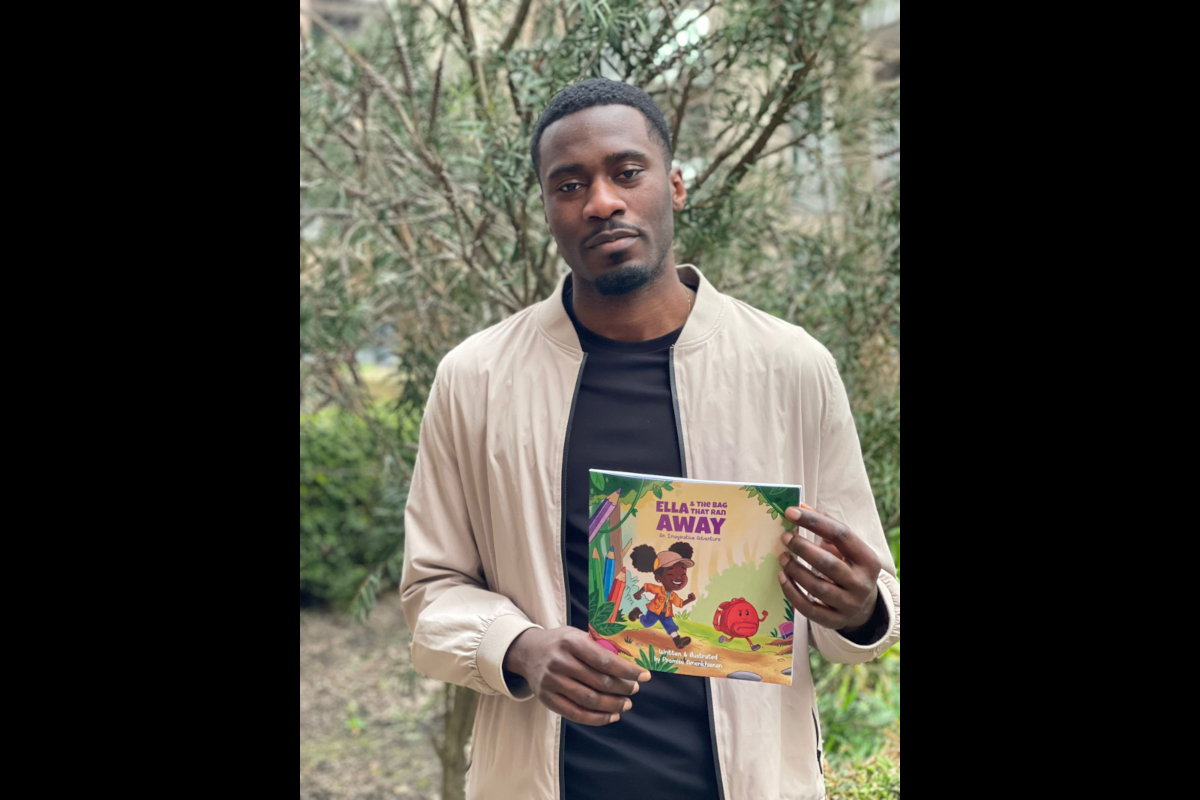
In a modest but growing corner of Nigeria’s creative economy, a quiet revolution is taking place, told not in headlines or press conferences, but in the pages of picture books. At the forefront of this movement is Promise Amenkhienan, a young illustrator and storytelling talent whose debut work is already drawing attention from educators and child literacy advocates across the country.
Amenkhienan’s first children’s book, Ella and the Bag That Ran Away: An Imaginative Adventure, marks what many in Nigeria’s early childhood education circles are calling an important arrival. The story follows a young girl whose school bag mysteriously runs away in the night, sending her on a spirited adventure to track it down. It is whimsical and character-driven, pitched at early readers, and it has already been adopted as reading material by several schools across Africa, a remarkable early vote of confidence from institutions that are selective about the texts they place in young hands.
“We introduced the book as part of our early reader programme and the response from the children has been wonderful,” said Mrs Sally Ohanenye, Head of Early Years at Amen Montessori Children’s house, Owerri. “The colourful illustrations draw them in immediately, and the story holds their attention in a way that very few locally produced books have managed. It is exactly the kind of material we have been looking for.”
That a debut work would find its way into school curricula so quickly is uncommon. It speaks not only to the quality of the storytelling, but to how acutely the book fills a gap that educators and parents have long acknowledged: the scarcity of African characters in the picture books available to Nigerian children.
The absence of Black and African representation in children’s literature is not a new concern globally, but its consequences are felt most acutely in the everyday classroom. When children consistently encounter stories populated by characters who bear no resemblance to themselves, in name, appearance, or cultural context, the implicit message can be quietly damaging to self-image and imagination alike. It is precisely this problem that Amenkhienan’s work begins to address.
“Every child deserves to have characters in stories that look like them,” Amenkhienan has said, articulating a creative philosophy that places representation not as an accessory to good storytelling, but as its foundation. For him, the work of illustration and narrative is inseparable from the work of affirming identity, of telling a child, through the medium of story, that their world is worth imagining.
This dual commitment to craft and to cultural purpose is what sets emerging talents like Amenkhienan apart from illustrators who treat children’s publishing as a purely commercial exercise. His illustrations carry a warmth and specificity that reflect genuine investment in the communities his characters inhabit. The figures on his pages are not generic proxies for diversity, but children rendered with the kind of particularity that makes young readers lean in with recognition.
Nigeria has a rich oral storytelling tradition, and a number of its authors, from Chinua Achebe to Chimamanda Ngozi Adichie, have shaped global literary culture. Yet the field of illustrated children’s books, especially those targeting early readers aged three to seven, has remained underdeveloped relative to the country’s storytelling heritage and the sheer scale of its young population. Nigeria is home to one of the largest concentrations of children on the African continent, yet the pipeline of locally produced, culturally resonant picture books has not kept pace.
It is into this gap that a new generation of illustrators and writer-illustrators is beginning to step. Amenkhienan represents one of the more promising of these emerging voices, not simply because he has produced a debut work of quality, but because the infrastructure around that work, including school adoption and early reader programming, suggests a creator who understands the ecosystem of children’s literacy, not just the craft of image-making.
The adoption of Ella and the Bag That Ran Away by schools across the continent is particularly telling. Institutions with an emphasis on child-led learning and carefully curated materials do not typically stock titles casually. The decision to use Amenkhienan’s book as a reading tool for early learners reflects a judgment that the work meets both literary and pedagogical standards, a meaningful endorsement for any debut author.
Observers of Nigeria’s creative sector note that the country’s talent in animation, illustration, and visual storytelling has been growing steadily, partly driven by a generation that came of age with access to digital tools and global design influences, but retained deep roots in local culture and narrative tradition. The question, for many, has been whether that talent would be channelled into commercially visible work that serves African audiences, or whether it would migrate, as so much creative capital does, toward markets in the Global North.
Amenkhienan’s focus on Nigerian children, Nigerian schools, and the representation of African characters suggests a deliberate choice to root his practice in the communities that shaped him. Whether that commitment can be sustained and whether it can reach the scale the need demands will depend in part on how Nigeria’s publishing, education, and creative support systems mature around talents like his.
For now, there is a little girl called Ella, a bag that ran away into the night, and classrooms across Africa where children are encountering, perhaps for the first time, a story that feels unmistakably like their own.
Promise Amenkhienan is a Nigerian illustrator and children’s book author. His debut title, Ella and the Bag That Ran Away: An Imaginative Adventure, is available through select African educational outlets and is currently in use as early reader material at schools across the continent.

