 Follow Us on Google News


 Follow Us on Google Discover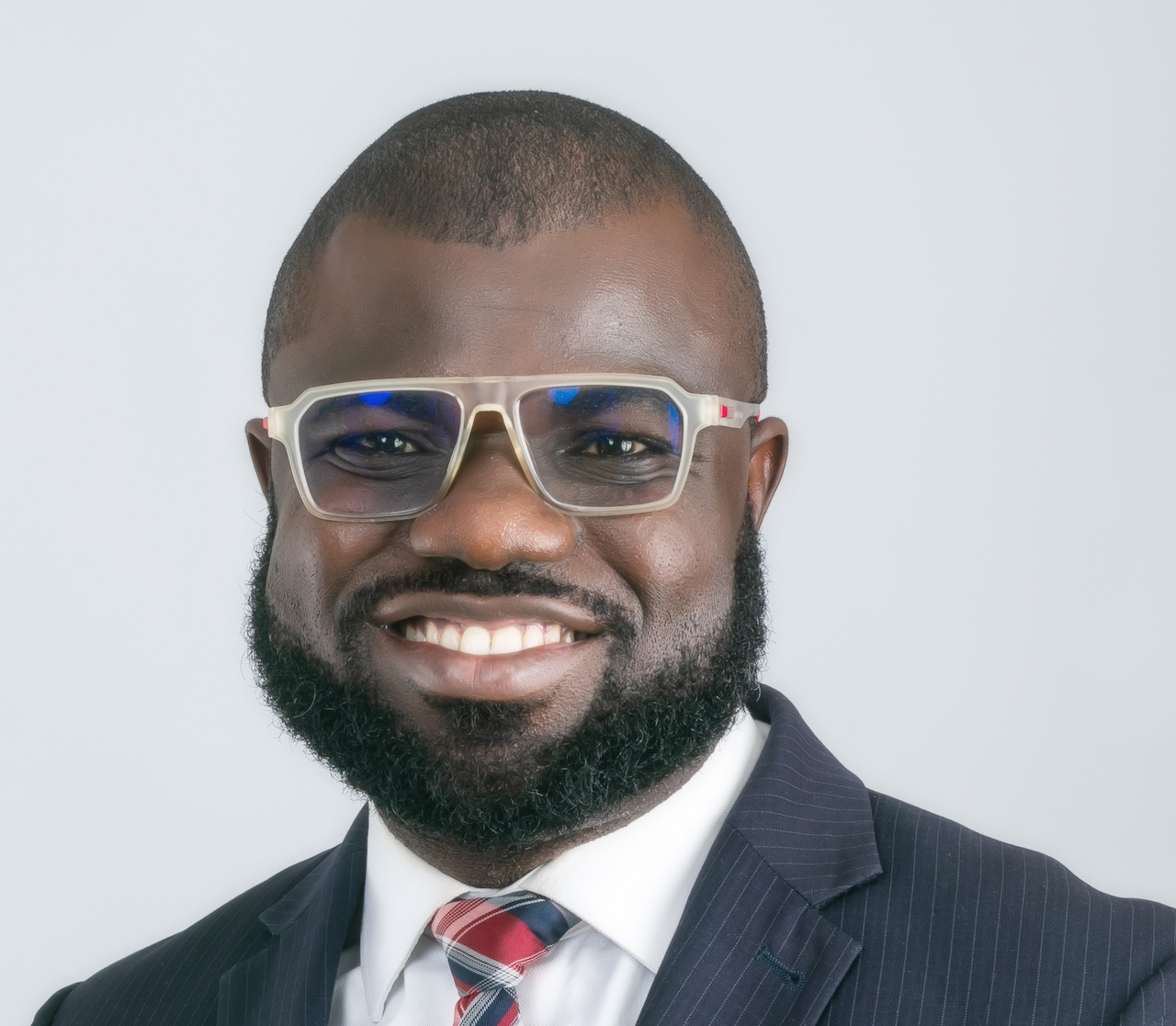

In the dynamic landscape of modern business, success often hinges on more than just innovative ideas and strong leadership, hence, in this interview, The Founding Partner of Nerdzfactory Company, A social innovation company based in Nigeria and Canada, Ademulegun ‘Ade’ Olowojoba with years of experience navigating the highs and lows of entrepreneurship shared valuable insights into how starting small, building relationships and resilience can impact the growth and sustainability of businesses
Can you share a little about your background?
My name is Ademulegun Olowojoba, I have degree in Mining Engineering from The Federal University of Technology Akure. I figured really fast from Uni that I prefer to spend more time with people, develop ideas and design projects than with oil wells, rocks and minerals which I was studying at the time so I already knew I wanted to do something different when I graduated from school.
[ad]
I started my career in Human Resources and then moved on to Project Managemenr and Corporate Social Responsibilitily. I had a brief spell at Microsoft where I managed community affairs and social investments for Microsoft in Nigeria and that job changed my life and exposed me to technology and innovation.

Tell us a bit about your Company
NerdzFactory Company is a social innovation and human development company. Our work is at the intersection of technology, economic advancement and social change. Over the last 7 years, we have worked with The National Government, Private Sector, The United Nations, International Government Development Agencies like The Foreign and Commonwealth Development Office, German Cooperation, United States Africa Development Foundation to mention a few in designing and co-creating projects that improve the economic outcomes of Africans and create prosperity. Our business runs across several verticals- We have a development consulting practise, we have a research and evaluation arm, we have a technology school that is fully accredited that is based in Lagos, we have a STEM education arm and a a Learning and Development practice. Our mission is to create prosperity for every individual, organization and institution across the globe.
Can you share the story of how you started NerdzFactory company?
I started NerdzFactory company in Q4 of 2017, while I was still on my last full time job. I registered the company at that time but I wasn’t exactly sure how I was going to start out, what I was going to start with, or how I was even going to cope without a job but the desire to go start something of my own got stronger.
I notified my employer in Q4 of 2017 that I was going to leave my role to focus on building my business, NerdzFactory from January 2018, which was exactly what I did. By the time I was starting out on 2 January 2018, I resumed my room with a table, a chair, and the laptop my last employer gave me. I needed #25,000 to pay my friend who was going to design the website at that time, because the website played a vital role in the product that I was starting out with and by the second week in January 2018, I was thinking about how I was going to make things work within the organisation. I would say that I had support from my previous employer because I remember in those final days in the last quarter of 2018, around October to November, I remember my then employer asking me, “You mentioned that you are going to start out something on your own, what do you plan to do?” And to be honest, I couldn’t really articulate it and he was like, “Yeah, I’ve been there, I have started a business and I know it could be really challenging especially in the early days. You are going to need support and by the way, we are still going to need you here. How about if we have a gentleman arrangement where you go start your practice but you come in here two times in a week, we don’t exactly know the scope of work that you would do for us, but we know that you are a problem solver, we will find problems that you can solve for us, and we put you on a monthly pay of 50,000 naira per month. Right?” And that was the biggest support that I had at that time.
[ad]
So, I made that decision to take the offer, I mean, to go to my previous place of work as a consultant two times in a week, which later became once in a week as I also became busy and needed to travel and spend more time building my business. That singular decision and that singular opportunity from my then employer was a life changer, It was a lifesaver because when I get the #50,000, I fuel my car, I buy food in my house. It is important to note that I had paid my rent in the last quarter before I left my job, and my rent is due in October 2018. I knew that I had almost one year to be able to fend for myself and find something that works and that could pay my rent. The rent for where I stay and where I was also having my office at the same time- my sitting room was my office.
I was living on the #50,000, while going for a lot of meetings. I needed to look very clean, even though I was putting on very cheap clothes, I needed to look the part. So I paid my dry cleaner, and that took like major part of that money but you know, it saved me and it kept me in business when things were challenging because I knew that at the end of the month, there was a steady #50,000 income.
I was building NerdzFactory from my room for 18 months. It wasn’t until after Q1 of 2019 that we got our first office space and at that time we landed our first gig from a bank, from one of the leading commercial banks in Nigeria. It was a big gig and we were able to move out from my house and move into an office then.
For the first few months of starting out, one thing I did was developing products for people around me and selling to people around. One major thing that I figured I could sell easily at that time was coding classes to people who wanted their kids to learn how to code. I matched them with instructors who could teach their children how to code, so that served as an aggregator because our very first product was codetutor.com.ng. We were matching people who wanted their kids to learn how to code and people who could teach them how to code and we were being paid while we paid the instructors a certain percentage from every transaction.
That was what I was selling in those first 18 months from my room and that was enough to put food on my table, and pay my basic bills in addition to whatever my previous employer was paying me. This was basically the routing before we closed our first big opportunity with a bank.
NerdzFactory has grown significantly since its inception. What were some of the biggest challenges you faced during this growth?
In our early days, one of the biggest challenges that I have had to face was not having enough courage that what I was doing will work out. I had a lot of fears, doubts and a whole lot of “what ifs”. One thing I say to myself then each time I have those fears and those thoughts is – “What if this does work? Well, I’m skilled, I can always dust my CV and agree with myself. This is not the first time I was going to run a business. I had run a business as a student and as a corp member, which really did not work out as I wanted. If this doesn’t work out, I will be humble enough to dust my CV and go look for a job”.
Prior to starting out, I have built a good level of reputation for myself, worked at Microsoft, and led some interesting projects so I knew it wasn’t going to be too challenging or too tough reintegrating back into the world of work if things didn’t work for me.
[ad]
For me, in those early stages, it was a question of validation. Don’t forget while I was starting out, I reached out to quite a number of people, I did a pitch deck and did presentations to known and interesting people within the startups and technology ecosystem in Nigeria. Some, I believe we had a great relationship, some we have done business together and some I had worked with. In several capacities and some had given their verbal support. Importantly, for some of them, I have also been in a capacity where I have supported their businesses either by working with them in my previous roles as vendors or whatever. So it was easy for them to at least verbally commit at that time.
Our toughest year was during Covid, a few of our relationships that could not give us business gave us access to other businesses and validations, and my pastor church in Nigeria was really supportive, he gave a lot of verbal support as I took him along.
What were the key steps you took to expand your practice beyond local boundaries?
Speaking about how we have been able to expand our practice beyond the shores of Nigeria, I have a simple role to life and business – “bite more that you can chew and find people or develop the capacity to be able to chew what you have beaten” and this could be in many forms, it could be that you have taken a very big bite and now you find other people to cut that bite into smaller chunks for them to chew alongside you.
So I would say it’s important to first have a vision that is beyond your local environment. It’s a future dream – we have not moved out of my room where I have always imagined and dreamt of myself ruining a practice outside the shores of Nigeria and outside the shores of Africa. I have always had that vision and I believe such vision forces one to increase his/her capacity. For me, my dream and vision has also contributed to how we do things from day one. This also includes preparing yourself even when the opportunity is not there and I strongly believe that the opportunities would eventually come.
For us as an organisation, the first thing is building ourselves and developing our capacity. If I have a client who’s saying I am running this project in Nigeria, and we want to scale it to six or seven other countries, would you be willing, would you be interested, or do you have the resources to make it happen in those other countries? Of course I would say yes before I would think about it. Do I really have people in those countries? I would say yes, and then I’ll go figure out a way to get people to collaborate with in those countries.
[ad]
It is important to note that there should also be opportunities to be mobile – Mobility. Sometimes you travel to different places and you do actually see opportunities in those particular places clothed in challenges. I strongly believe that every business, the moment you start achieving a level of success in your natural climate, in your immediate environment, you need to begin to think about how to win other markets. How do you penetrate and gain entry into other markets?
And for me, the interesting thing that I have seen in Nigeria is that while it may be really competitive in Nigeria, there are quite a number of other countries across the continent that are not as competitive as Nigeria but we go to these places, we go for vacation, we go for tourism to some of these places and we don’t think business because it sort of, shut our minds but guess what there are opportunities in there, sometimes we are forced to believe some of these places are poor, they are not going to be afford but that is not true.
Sometimes it is about thinking about a new product to create for that particular market. Typically as Nigerian, the entire West Africa is an opportunity for any tribe in Nigerian business so you look at Gambia, Sierra Leone, Ghana among others.
What strategies did you implement to overcome financial constraints during the early stages?
There are a number of strategies that I implemented to overcome financial challenges. As a business owner I need to realise that the day you run out of cash as a business owner, it’s trouble.
[ad]
When I started business originally, I would make really nice presentations. I would go for meetings with top executives, banks, corporations, put on nice ties, and speak really nice English. I did that for three months. After three months, I made zero naira in income. It was then I realised that I was majoring on the minor and minoring on the major because I didn’t have anything. And I spent three months spending money that I didn’t have, spending it to prepare for meetings, to buy fuel and all of that. So what I did was, I was selling B2B. I was trying to sell to clients, and to the corporate markets.
But the challenge is it takes a longer time to sell, to develop that particular market.
While I was targeting the corporate clients, I started selling to individuals, B2C, (business to customers or business to consumers) That’s one-on-one, selling to different people – small products, small services. From the little money here and there, then I realised that I could also give offerings. Offer my services and, or develop services or products that people would require monthly. So what it means is
As a business owner, you really just need to do whatever it is legally within the confines of ethics to keep you afloat. So there are different things that you can do, there are different problems that you can solve. It’s just about listening per time, to see what you can do, to put food on your table while you’re waiting for quests and the big breaks, waiting for the clients to come in. And it’s important to see your business as something that you need to guard jealously, so that you’re not giving up your dreams so easily, just on the altar of putting food on your table, or making ends meet.
So for some people, it might even be them taking up a job, or taking up a part-time job, or taking up a weekend job, or some might be taking ushering gigs. I mean, whatever it is, within the confines of ethics, to put food on your table while you build your dreams. And of course, I was doing all sorts of different things, then it got to a point where I knew that I then needed to focus on the core business, on the core things I was offering, because at that point, I knew that I needed to go beyond survival.
[ad]
Mind you, I had survived up until that point. If I hadn’t survived up until that point by doing those things like all the different things that I used to do, to remain financially afloat, we would have died as a business. And there would not have been any business to build on the core, or to build on or expand or focus on.
How important was networking and building strategic partnerships in your journey?
The importance of networking and building strategic partnerships cannot overemphasise. I see beyond networking because I call it relationship building. There is a rule – the rule of four people. That is you’re always four people away from whoever it is that you want to meet.
So for me, every opportunity to build relationships, every opportunity to meet a new person, every opportunity to invest in relationships for me is very pivotal. The successes we have had today, to be honest, we owe it to a lot of relationships we made along the way from getting clients and one client refers you to another client or mentions you somewhere. For me, it is extremely important to build relationships, invest in relationships, show kindness to people not necessarily because you want something in return from them, but just be genuinely kind to people. Also, when you do a job where you have the opportunity to work with people, with organisations, it is important to make a lasting impression, do your best, put in excellence,
Strategic partnerships also come when you have opportunities to partner with other organisations or other businesses, the value of that partnership is not necessarily just in the naira and dollar that you are being offered immediately. I have walked into rooms and they want to do business with us and the reason why they are trying to do business with us is because they see the different organisations we have worked with.
[ad]
For instance, there is an international government of a country that we implemented a project for in our early days and I will say that is our first big break. When it comes to working with international clients then that was our first big break. Guess what, we have done similar projects with similar international governments of other countries five or 10 times in size. Why? Because of that particular project and partnership. So as of today, each time when I go through some of our records and the work we have done, I will be like, how come this project looks big to me when we did it then? It is not big after all but guess what it is just as a result of those partnerships we have gotten all these opportunities, we have been in rooms where normally we would never have gone to.
I will say it is extremely important to build network, involve partnerships. To build network not necessarily because of what you want to get but because you also deliberately want to improve the quality of the people that you interact with on a daily basis because eventually it does affect the quality of your own life and there is a popular saying that says “show me the five closest people to you and I will tell you the tragedy of your life in another five or ten years”.
As a leader, you’ve had conversations with world leaders about education and opportunities for young people. What are some key insights from these discussions?
By virtue of work that I do, I have been privileged to share tables and platforms with global leaders, past heads of states both across Africa and Europe. I have also shared platforms with about five past head of states of different countries, different leaders of different institutions, from the European Union to some notable billionaires and one key thing we all see to discuss is improving and increasing the investment that goes into education and that goes into developing potentials of young people across the globe and Insights.
There are a number of insights that I have been able to get from some of these discussions and one is, sometimes you believe that people should know better. The truth is people act based on their level of knowledge. Sometimes people don’t know better. How do you then get people to do better? Sometimes it is sitting with them and dialoguing with them on the need to do better, on what you think they can do better and how they can do it better and the challenges.
[ad]
Another thing that I would say is, stand up to speak for the things that you believe in. Don’t be afraid to speak the things that you believe in and then it is always important to follow through. Every year, everyday people make tons of commitments but do they get to implement those things? It is important to set up accountability platforms to ensure that we do what we say we are going to do and that people are tracking to see if we are doing what we set we are going to do
What advice would you give to aspiring entrepreneurs looking to build a global business?
My advice for aspiring entrepreneurs looking to build a global business from limited resources is there will always be the challenge of limited resources. It’s been from time immemorial and there will always be that particular challenge. First thing is you need to fix your mindset. You need to take off every limitation from your mindset.
You want to start a business and you need $100,000 and because you don’t have $100,000, you decided to do nothing. No, you can’t do that. Start with what you have. When you start with what you have, eventually you will get what you don’t have.
What we are doing today at NerdzFactory started with me just making that decision that I was going to take that leap and what did I have at that time? I had a room and a sitting room, I had a laptop from my previous employer.
I had a #50,000 monthly pay from my then employer and I had ideas and I had a few contacts here and there. I took a list of what I had. Of course what I didn’t have, I didn’t have an office, I didn’t have money and I didn’t have a good phone. I didn’t have a lot of things but I just decided to start with what I had and that simple step of starting with what I had at that time has changed my entire life. It’s always important to focus on what you have.
You want to start a business, and first thing you’re looking at you get a really nice office. No! Start from the simple opportunities that you see around you. As a matter of fact there are businesses that you make that you can do today that you don’t even need inventory, that you don’t even need to have a startup cost.
When I started out, we were connecting parents with coding instructors for their children. That’s not what I really wanted to do. But that was the available opportunity. It’s important that people learn about how to maximize the available opportunity.
If you learn to do that at some point you would have developed your problem-solving ability and then gather enough resources to move to your next phase in business.
[ad]

