A forum of renowned resource persons has cautioned that except African political leaders respect their constitutions and stop the practice of widespread democratic backsliding, it would be difficult to halt the spate of coup d’état been witnessed in the continent.
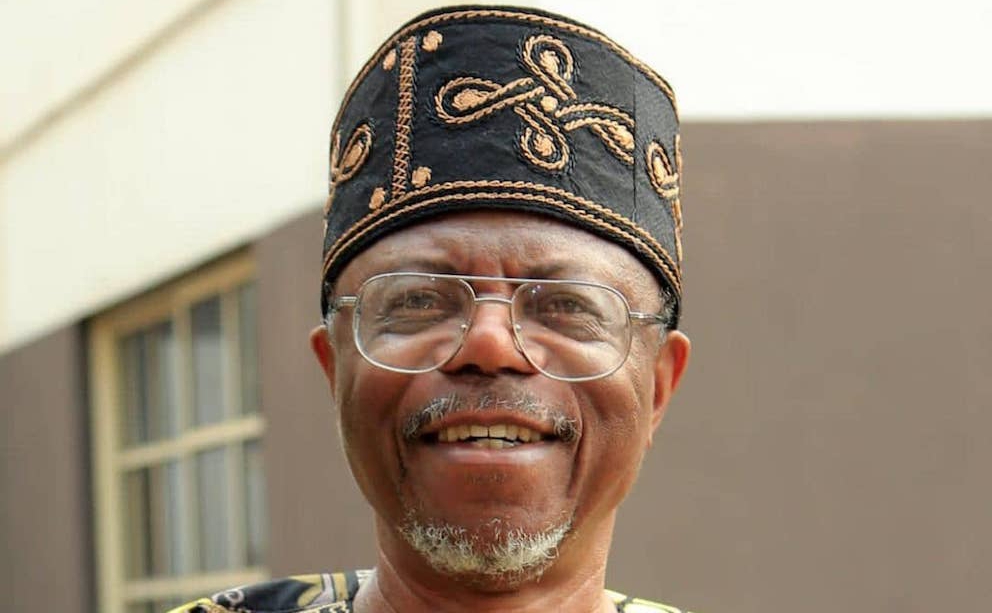
The resource personalities made this assertion while featuring on the globally-viewed Toyin Falola Interview Series where they formed a panel of discussants. The panel, led by foremost historian, Professor Toyin Falola, consisted of Colonel Festus Aboagye, a UNDP consultant on Disarmament in South Sudan; Dr. Mary Owusu, a historian of ancient and modern Africa; Dr. Vladimir Antwi-Danso, an expert in International Security, Geo-politics, and Regional Economic Cooperation and Integration; Dr. Biodun J. Ogundayo, a Professor of French and Comparative Literature at the Bradford Campus of the University of Pittsburgh, PA, and His Royal Majesty, King Fuankem Achankeng, a conflict scientist and professor at the University of Wisconsin Oshkosh.
The event held on Sunday and viewed on many online platforms had millions of participants drawn from many African countries and beyond. In their various interventions, the panelists and members of the audience noted that the current wave of coups in Africa should be checked and a more inclusive democratic ethos enshrined in various countries of the continent.
Responding to Professor Falola’s inquiry about what should be done to countries where leaders have held on to power for decades, Colonel Aboagye stated that: “We must confront democratic backsliding; enhance civilian oversight, promote professionalism within the military; foster dialogue and cooperation between civilian and military actors; strengthen legal frameworks for promoting respect for democratic norms; improve civil-military education; encourage community engagement to foster mutual trust and understanding; address socioeconomic factors; strengthen regional cooperation; the threat of punitive actions and military intervention should be a last resort.”
On the threat of secessionist tendencies in some African countries with special reference to Biafra, Oduduwa Republic and Ambazonia, King Fuankem Achankeng argued that: “In the case of Ambazonia, there is a problem which the Europeans failed to decolonise. The problem of Ambazonia was caused by the United Nations and Britain. UNGA resolutions say that ‘grant independence to all colonial peoples and countries.’ The same independence that was granted to Ghana, Nigeria, Burkina Faso, when it came to the turn of British Cameroons, the UN and Britain acceded to the independence by joining. That was a major flaw in comparison to the Biafran and Oduduwa Republic cases in Nigeria.
If we lump all these cases together, we might be making an error. In conflict studies we have a theory that each conflict is unique. I think the conflict of Ambazonia is about completing the decolonisation of that territory which has had a separate identity from World War I. it was a league of nations’ mandated territory. It existed between the two wars. British-Cameroon was a separate entity. The problem arose in 1960 when Cameroon had her independence and British-Cameroon was not a part. The people are saying that the UN and Britain must come back to finish the job.”
Antwi-Danso noted that there is an economic dimension to the crisis. According to him, “The economic dimension is because the political structure and pillars that would ensure the economic uplift of these countries are themselves weak and un-enterprising. Uniting Africa can be the answer to these crises. Integration creates the necessary apertures for rapid economic development. The synergies of countries are brought together and thereby there is a larger market; it creates opportunities at the world market. It creates conditions for exploiting your own resources.”
Sharing Antwi-Danso’s sentiments, Owusu told the gathering that: “We are seeing at a front political dividend in terms of democracy, and on the other hand, Africans are not feeling the economic dividend of this democracy. Therefore, there is widespread unhappiness among the ordinary people which can be said for all of these areas we have talked about. What is new here is that we have different actors and a different timeframe.”
Ogundayo appealed that the humanitarian disaster brewing from the impasse should be addressed as soon as possible. “I appeal with our presidents and leaders in ECOWAS for compassion for the people of Niger. I respect whatever decisions you take even though I disagree but for the sake of compassion please let in food and medicine. We can sit on any international forum and have endless debates about democracy and the rest but it is also important to put ourselves in the shoes of the people living in Niger Republic who have no hand in whatever is happening now and who really have never had a hand. Whatever we are doing to Niger in terms of sanctions has reverberations in the rest of Africa. There are real life consequences to whatever decisions are taken in diplomatic corridors,” he pleaded.