 Building automation is evolving—but many systems still leave professionals frustrated by complexity.
Managing multiple control systems—HVAC, lighting, security—often means juggling disconnected platforms, manual data entry, and inefficient workflows. Engineers struggle with rigid, outdated interfaces, while facility managers face steep learning curves.
How do we make automation both accessible and sustainable?
It starts with user-focused design—that’s where Jing Qiang comes in.
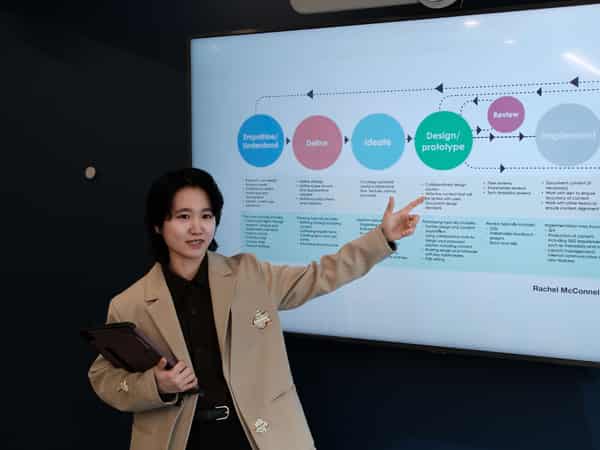
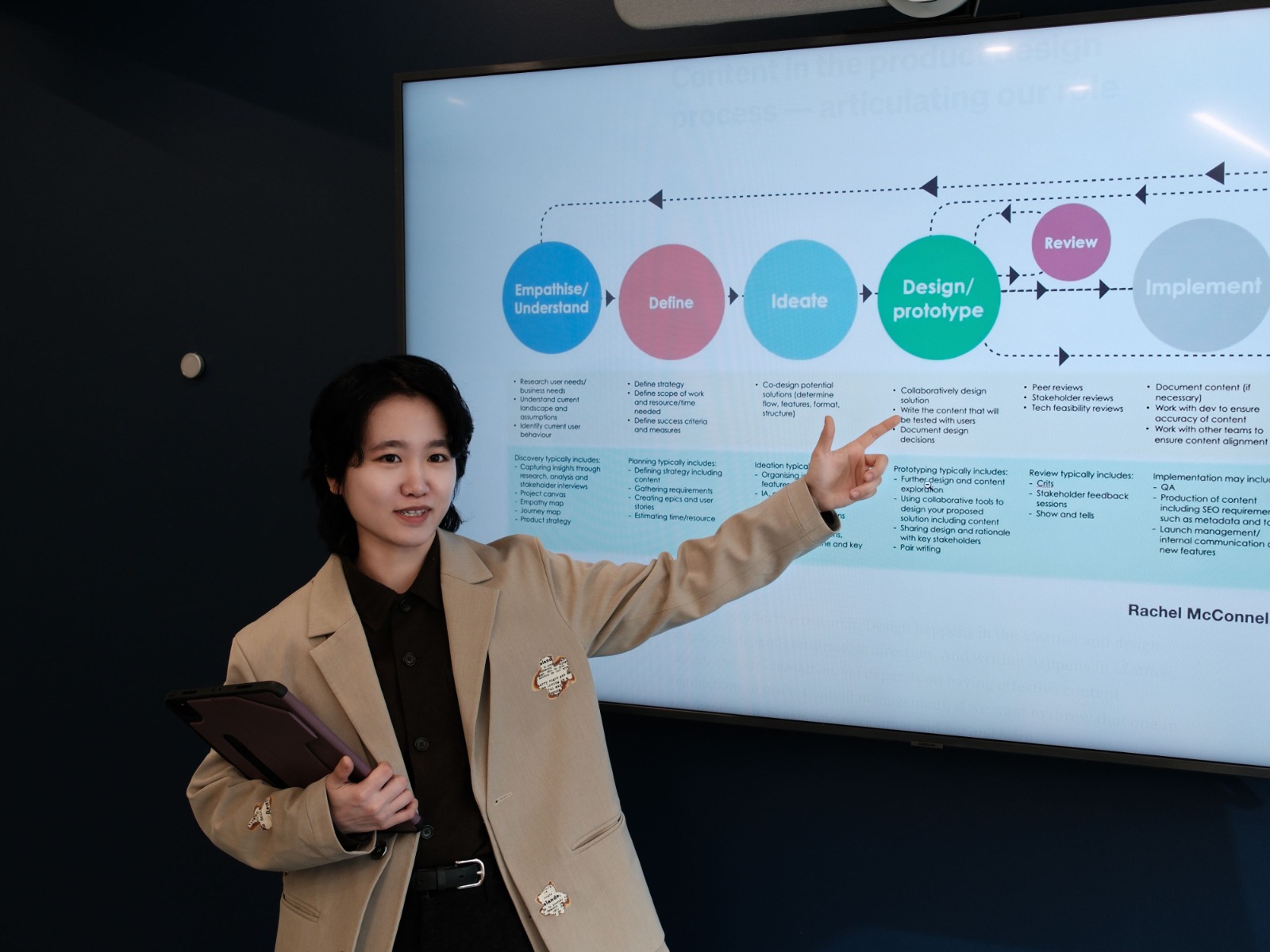
Jing’s expertise spans architecture, urban design, and sustainability. With a Master of Urban Design from Washington University and eight years of experience developing solutions to help people interact with their surroundings, she thrives on solving real-world challenges.
At PassiveLogic, Jing blends architectural expertise with a deep understanding of human-centered design to make automation tools more practical and accessible. As a lead designer, she creates inclusive systems that remove barriers, simplify decision-making, and put control where it belongs—in the hands of the people who use them daily.
With PassiveLogic, she’s proving that real innovation isn’t about technology alone—it’s about who gets to use it. Too many automation tools are built for engineers, leaving out the people who manage buildings daily. Jing is changing that, simplifying workflows so architects, designers, and building managers can make more informed, sustainable decisions, no matter their technical background.
Her sustainability and urban design background has made Portfolio a tool that reshapes how professionals interact with intelligent building systems. By tackling industry challenges—integrating multiple automation platforms, reducing manual data handling, improving outdated system interoperability, and lowering the learning curve for non-technical users—Jing ensures her solutions are practical and built for real-world application.
The Visionary Behind Portfolio
PassiveLogic’s mission is to simplify and improve sustainable building management, creating more intelligent systems for many users. Portfolio is their breakthrough project management platform, connecting professionals while advancing global sustainability goals.
A Unified Hub for Diverse Needs
Portfolio creates a central online space where building owners, operators, architects, engineers, contractors, and installers collaborate effortlessly. Combining project management, ESG compliance monitoring and real-time analytics simplifies complex workflows, making automation accessible for every user.
As lead designer, Jing Qiang built Portfolio’s architecture, workflows, and user experience to be robust and intuitive.
Working closely with PassiveLogic’s CEO, she developed a streamlined project management interface, an advanced notification system for real-time collaboration, and role-based access controls for secure teamwork. She ensured that the Portfolio prioritizes usability, inclusivity, and accessibility.
Unlike traditional tools that leave users struggling, Portfolio’s intuitive interface adapts to engineers and hands-on technicians, ensuring accessibility across all skill levels.
Jing applied skeuomorphic design principles to achieve this, making digital interactions feel as natural as working with physical controls. By replicating familiar objects—buttons, switches, and dials—within the interface, she reduced the learning curve for professionals accustomed to hands-on work.
Instead of abstract menus or complex commands, Jing adopted visual cues that feel familiar, which reduces retraining needs, lowers errors and allows users to engage effortlessly with automation tools.
This approach is particularly crucial in building automation, where many professionals interact more with physical equipment than digital software. By bridging the gap between digital tools and real-world expertise, Portfolio eliminates frustrations in adjusting HVAC settings, monitoring energy use, and troubleshooting performance issues.
Real-Time Insights and ESG Compliance
Another clear example of Jing’s user-driven approach is the multi-functional status-tracking panel, which simplifies and intuitively monitors real-time performance.
Jing applied skeuomorphic design to enhance usability, using interactive dials, colour-coded performance maps, and an interactive timeline to simplify data interpretation. Building managers can track efficiency trends, detect system anomalies, and generate automated ESG reports without technical hurdles. Instead of navigating complex tables, users interact with visualized system insights, reducing audit time and improving decision-making.
By prioritizing intuitive data visualization, Jing transformed compliance monitoring into a seamless, real-time experience, empowering professionals of all skill levels to manage building performance efficiently.
Achievements That Redefine Excellence
Jing’s design philosophy has delivered tangible results. Portfolio’s streamlined workflows cut setup complexity and improve decision-making, reducing installation time by up to 90%—a significant shift in an industry known for time-consuming deployments.
Her work on Portfolio, the central hub for PassiveLogic’s automation ecosystem, directly supports the Hive Autonomous Platform by integrating project management, system monitoring, and real-time collaboration tools. This seamless connectivity enables Hive to optimize building performance more efficiently, contributing to a 30% reduction in energy use—demonstrating how user-centered design enhances sustainability at scale.
Portfolio has earned prestigious recognition, including the iF Design Award and Red Dot Design Award, which confirm its success in turning complex automation into an accessible, intuitive system and celebrate Jing Qiang’s user-driven innovation and its lasting impact on building automation.
Shaping the Future of Building Automation
Jing Qiang’s story highlights how design can transform industries. By embedding inclusivity and innovation into the foundation of building automation, she paves the way for future advancements. Her work on PassiveLogic’s Portfolio proves that thoughtful design can simplify operations, drive sustainability, and enhance collaboration across diverse professional roles.
Beyond addressing immediate challenges, Jing’s vision redefines what’s possible in building automation. Her contributions’ effects extend beyond energy efficiency and cost savings. They are shaping a more inclusive, intelligent, and environmentally responsible future.
Discover Portfolio’s impact on PassiveLogic’s website and explore how you can contribute to a more sustainable future today.
About the Author:
Sophia Lane is a New York-based technology journalist who covers innovation, sustainability, and design. The author completed her studies at Columbia University and published posts showing industry-wide transformative change. In her free time from writing, she organizes artistic shows demonstrating how design will create tomorrow’s urban environments.