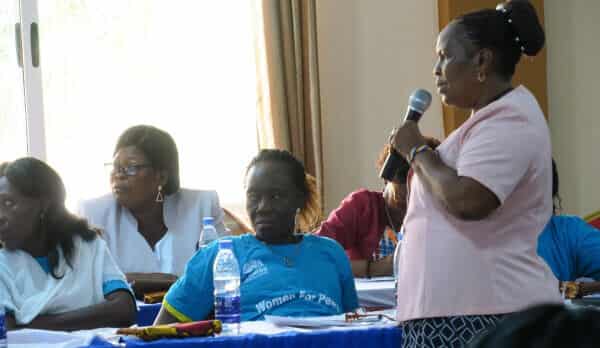
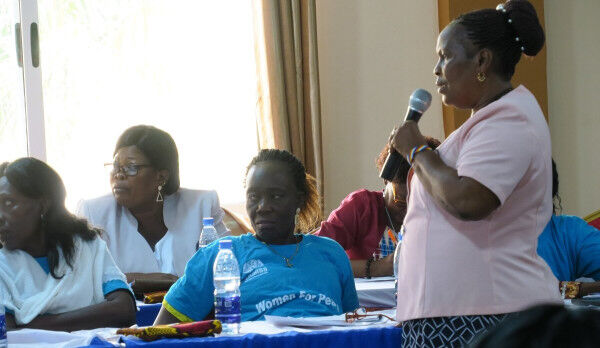
Dinidari Africa, one of Nigeria’s leading organisations in women’s political participation, in partnership with United Nations (UN) Women and the Government of Norway, yesterday, launched an essential project, tagged: ‘Women’s Empowerment in Politics,’ to include more women in political process.
It said that the aim is to work hand in hand with political parties to mitigate low representation of women in political decision-making processes by creating and adopting a gender-responsive work plan for political parties, as well as canvass for establishment of women’s wings in political parties.
Dinidari Africa, in a statement by its Project Lead, Agnes Arong, bemoaned alarming statistical disparity in women to men political candidates, and its negative impact on policies intended to balance representation in all spheres of governance.
She said: “Nigeria is plagued by low representation of women in political decision-making processes. Currently, women’s political representation in Nigeria is abysmally low with 7.9 per cent and 3.6 per cent in the Senate and House of Representatives respectively, the lowest figures for sub-Saharan Africa.
“The last two political cycles have seen a regression in numbers, which, in 2015 stood at 6.4 per cent and 6.7 per cent in the higher and lower chambers of the National Assembly. Furthermore, women make up 16 per cent of ministerial appointments, and in state legislatures, only 4.43 per cent of representatives are women.
“The Women Political Empowerment in Nigeria Project is a three-month project targeted at creating a network of women political leaders and key partners, who would be working to support a reversal of the low representation of women in politics. It is also aims at capacity building for women leaders across political parties.”
Recall that, in a meeting with Kaduna State Inter-Party Advisory Council Chairman, Mr. Mikailu Abubakar, the UN Women representative, Ms. Chundung Dauda, expressed urgent need to address the decline of women’s participation in politics with the North West as one of the regions with lowest female political representation in Nigeria.
She emphasised that the true effect of the project would be seen in the 2027 elections, as women would be more knowledgeable of their political capacity and impact.