 Follow Us on Google News
 Follow Us on Google Discover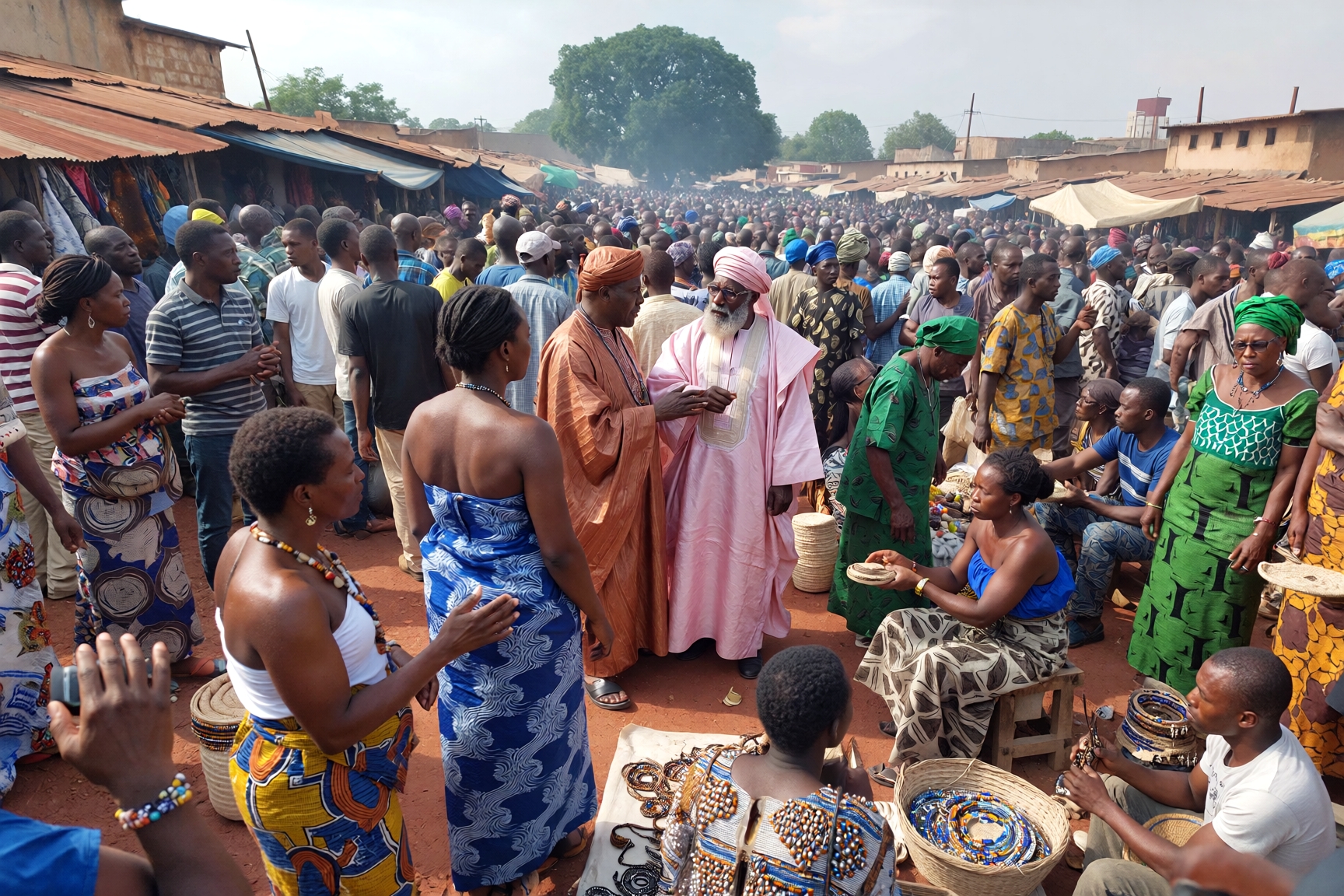
Welcome, and thank you for joining me on this exploration of Nigeria’s ethnic landscape. This article represents the culmination of months of research across Nigerian demographics and years of experience documenting the nation’s extraordinary cultural diversity. Understanding which tribe holds the largest population in Nigeria requires us to navigate a complex web of ethnic identities, regional distributions, and historical migrations that have shaped Africa’s most populous nation.
I still remember the day I first encountered the sheer scale of Nigeria’s ethnic diversity. I was in a taxi in Abuja, and within earshot I heard conversations in Hausa, Yoruba, Igbo, and Nigerian Pidgin, all happening simultaneously. That moment crystallised something crucial about our nation: we’re not just diverse, we’re exceptionally, magnificently diverse in ways that confound simple categorisation.
The question of Nigeria’s largest tribe isn’t as straightforward as pulling a number from a census report. It’s wrapped up in politics, identity, regional pride, and the very definition of what constitutes a “tribe” versus an ethnic group. But I’m getting ahead of myself. Let’s start at the beginning and build our understanding piece by piece.
Understanding Nigeria’s Three Largest Ethnic Groups
Nigeria’s demographic landscape is dominated by three major ethnic groups that collectively shape the nation’s political, economic, and cultural trajectory. These aren’t just statistical categories. They represent living, breathing communities with distinct languages, traditions, governance systems, and worldviews that predate colonial Nigeria by centuries.
The Ministry of Foreign Affairs recognises that Hausa, Yoruba, and Igbo groups each account for roughly a fifth of Nigeria’s population. That’s approximately 20% each, which means these three groups together represent about 60% of our nearly 230 million people. The remaining 40% comprises 368 other ethnic groups, each with their own languages and cultural practices.
Let me share something I learned whilst researching demographic patterns across Nigerian states. The concentration isn’t uniform. Lagos, despite being in traditional Yoruba territory, now hosts significant populations of all three major groups plus dozens of minority ethnicities. Walk through Alaba Market and you’ll hear Igbo traders negotiating in fluent Yoruba with Hausa customers, all code-switching to Pidgin English when things get informal.

The Hausa-Fulani designation itself represents a fusion of two originally distinct groups. The Hausa people developed agricultural settlements across northern Nigeria between the 10th and 14th centuries, establishing city-states like Kano, Katsina, and Zaria. The Fulani, originally pastoralists from West Africa’s Sahel region, migrated into Hausaland and gradually integrated through intermarriage and the 19th-century Fulani Jihad led by Usman dan Fodio. Today, distinguishing between Hausa and Fulani identities becomes complicated, hence the compound designation.
The Yoruba people trace their cultural origins to Ile-Ife in present-day Osun State, which traditional accounts describe as the birthplace of humanity in Yoruba cosmology. Yoruba kingdoms like Oyo, Benin, and Ife wielded considerable power in pre-colonial West Africa, with sophisticated political systems, artistic traditions, and trading networks that stretched across the region.
The Igbo people developed a remarkably different political tradition. Rather than centralised kingdoms, traditional Igbo society organised through village democracies and councils of elders. This egalitarian tradition influenced the Igbo’s celebrated entrepreneurial culture, as individual achievement wasn’t constrained by rigid hierarchical structures.
Here’s something that surprised me during fieldwork in Plateau State. Even within these major groups, there’s extraordinary internal diversity. The “Igbo” identity actually encompasses dozens of sub-groups with distinct dialects and customs. The Onitsha Igbo differ culturally from the Owerri Igbo, who differ from the Abiriba Igbo. Similar patterns exist within Yoruba and Hausa identities.
Which Two Ethnic Groups Form Nigeria’s Largest Populations?
When people ask which two ethnic groups are the largest across Nigeria, they’re usually trying to understand the demographic balance that shapes our political and economic landscape. The answer matters because Nigeria’s federal character principle, enshrined in the 1999 Constitution, attempts to ensure representation across our diverse ethnic makeup.
The Hausa-Fulani and Yoruba consistently emerge as the two largest ethnic populations when examined through census projections and demographic studies. However, and this is crucial, the margins between them and the Igbo are relatively small. We’re not talking about one group having double the population of another. The differences are often within a few percentage points.
I spent three weeks in Kano researching traditional governance systems, and the demographic density became immediately apparent. Northern states like Kano, Kaduna, and Katsina host massive Hausa-Fulani populations that extend across vast territorial spaces. The linguistic unity provided by Hausa as a lingua franca creates cohesion across this enormous region.
The Yoruba demographic strength concentrates in southwestern states including Lagos, Oyo, Ogun, Osun, Ondo, and Ekiti. Lagos alone, despite its cosmopolitan character, maintains a strong Yoruba cultural foundation even as it hosts every ethnic group in Nigeria. The city’s population exceeds 15 million people, with Yoruba forming the largest single ethnic group even amidst the diversity.
Guardian Nigeria has documented how these three major groups collectively represent roughly 60-68% of Nigeria’s population, leaving 32-40% distributed among the remaining 368 ethnic groups. This concentration has profoundly shaped Nigerian politics, with the concept of “federal character” designed to prevent the big three from completely dominating governance.
The political implications run deep. Presidential elections in Nigeria often track regional and ethnic voting patterns, though this has begun shifting as younger voters prioritise competence over ethnic affiliation. Still, the political arithmetic requires presidential candidates to build coalitions that cross ethnic and regional boundaries.
Economic power distributes differently from population. Lagos generates over 30% of Nigeria’s GDP despite being a single state, giving Yoruba significant economic leverage beyond their demographic numbers. Northern states control agricultural production and have historically dominated military and civilian leadership positions. The Igbo, despite ranking third demographically, control an estimated 70% of small business enterprises across Nigeria.
Here’s what that means practically: population size doesn’t directly translate to political or economic dominance. The interplay between demographic weight, economic resources, political organisation, and regional concentration creates a more complex power dynamic than simple population counts suggest.
Steps for Understanding Nigeria’s Complex Tribal Landscape
Navigating Nigeria’s ethnic complexity requires a systematic approach. Let me walk you through seven practical steps that will deepen your understanding of our tribal landscape beyond superficial generalisations.
1. Distinguish Between “Tribe” and “Ethnic Group” Terminology
Start by understanding that “tribe” and “ethnic group” aren’t interchangeable terms, though Nigerians use both colloquially. Anthropologists prefer “ethnic group” because “tribe” carries colonial-era connotations suggesting primitive or pre-modern societies. However, in everyday Nigerian English, “tribe” remains common parlance. For academic or formal contexts, use “ethnic group.” For casual conversation, either works, though be aware of the preference shift among younger, educated Nigerians.
2. Learn the Geographic Distribution Patterns
Understand that Nigeria’s ethnic groups cluster geographically but aren’t confined to rigid boundaries. The Hausa-Fulani dominate the North (Kano, Kaduna, Katsina, Sokoto, Kebbi, Zamfara states). The Yoruba control the Southwest (Lagos, Oyo, Ogun, Osun, Ondo, Ekiti). The Igbo occupy the Southeast (Abia, Anambra, Ebonyi, Enugu, Imo). But massive urban centres like Lagos, Abuja, and Port Harcourt have become melting pots where ethnic boundaries blur through migration and intermarriage.
3. Recognise the Major vs. Minority Classification Problem
Grasp that the conventional “major” and “minority” classification is problematic. Collectively, the so-called minority groups constitute about 42% of Nigeria’s population. That’s hardly a minority! Groups like the Ijaw, Kanuri, Ibibio, Tiv, and Edo each have populations in the millions. Research from the National Bureau of Statistics shows these groups maintain distinct identities and political interests that don’t always align with the “big three.”
4. Understand Religious Distribution Across Ethnic Lines
Recognise that ethnicity and religion intersect but don’t perfectly overlap. The Hausa-Fulani are predominantly Muslim, reflecting centuries of Islamic influence through trans-Saharan trade. The Igbo are predominantly Christian, a legacy of Catholic and Anglican missionary work. The Yoruba split roughly evenly between Islam and Christianity, with some practitioners blending both with traditional Yoruba spirituality. This religious diversity within and across ethnic groups adds layers to identity formation.
5. Examine Language Families and Linguistic Connections
Nigeria’s 371 ethnic groups speak over 500 languages falling into three major African language families: Niger-Congo (including Yoruba, Igbo, Ijaw, Edo, and hundreds of others), Afroasiatic (including Hausa and Kanuri), and Nilo-Saharan (primarily Kanuri). Understanding these linguistic connections reveals patterns in how seemingly different groups share deep historical roots whilst groups living side-by-side sometimes belong to completely different language families.
6. Appreciate the Middle Belt’s Unique Complexity
The Middle Belt (Plateau, Benue, Taraba, Nasarawa, Niger states) defies the simple tripartite model of Hausa-dominated North, Yoruba Southwest, and Igbo Southeast. This region hosts dozens of ethnic groups including Tiv, Idoma, Berom, Nupe, and many others. None dominates numerically the way Hausa, Yoruba, or Igbo do in their regions. These groups often identify as “minorities” in national politics but maintain strong distinct identities locally.
7. Follow Current Demographic Research and Census Data
Stay informed through official sources rather than relying on outdated assumptions. The National Population Commission conducts demographic research, though Nigeria’s last comprehensive census occurred in 2006. The delayed 2023 census finally happened but results remain under review. Population estimates from 2006 data show Nigeria has grown from roughly 140 million to over 230 million people, but ethnic distribution proportions within that growth remain subject to debate and political sensitivity.
Comparative Population Data Across Nigeria’s Major Ethnic Groups
To properly understand Nigeria’s ethnic distribution, examining actual population data becomes essential. This table synthesises demographic research, census projections, and linguistic surveys to provide the most accurate picture available given the sensitivity and complexity of ethnic enumeration in Nigeria.
| Ethnic Group | Estimated Population | Percentage of Total | Primary States | Dominant Religion | Language Family |
|---|---|---|---|---|---|
| Hausa-Fulani | 46-70 million | 21-30% | Kano, Kaduna, Katsina, Sokoto, Jigawa | Islam (95%+) | Afroasiatic (Hausa) |
| Yoruba | 42-50 million | 18-21% | Lagos, Oyo, Ogun, Osun, Ondo, Ekiti | Islam/Christianity (50/50) | Niger-Congo |
| Igbo | 38-45 million | 16-18% | Abia, Anambra, Ebonyi, Enugu, Imo | Christianity (98%+) | Niger-Congo |
| Ijaw | 14-15 million | 6-7% | Bayelsa, Delta, Rivers | Christianity (majority) | Niger-Congo |
| Kanuri | 10-12 million | 4-5% | Borno, Yobe | Islam (99%+) | Nilo-Saharan |
| Ibibio | 8-10 million | 3-4% | Akwa Ibom, Cross River | Christianity (majority) | Niger-Congo |
| Tiv | 6-8 million | 2.5-3.5% | Benue, Taraba, Plateau | Christianity (majority) | Niger-Congo |
This data reveals several crucial patterns. First, the margins between the top three groups are narrower than many Nigerians assume. Second, the collective “minority” populations actually constitute a massive demographic bloc when aggregated. Third, religious affiliation tracks closely with ethnicity for some groups (Hausa-Fulani, Igbo, Kanuri) but divides evenly for others (Yoruba).
What is the Richest Tribe in Nigeria?
Economic power in Nigeria distributes differently from population size, creating a fascinating misalignment between demographic weight and financial influence. When Nigerians ask which tribe is richest, they’re usually conflating several distinct measures: individual billionaire counts, collective business ownership, sectoral dominance, or average household wealth.
Let me be direct about what the data actually shows rather than what ethnic pride might claim. Nigeria’s wealthiest individual is Aliko Dangote, a Hausa-Fulani from Kano, with a net worth exceeding ₦22.5 trillion. The second-wealthiest is Mike Adenuga, a Yoruba from Lagos, at approximately ₦15 trillion. Abdulsamad Rabiu, another Hausa-Fulani from Kano, commands around ₦9 trillion. By billionaire count alone, the Hausa-Fulani and Yoruba dominate Nigeria’s wealth apex.
However, that’s only part of the story. The Igbo demonstrate extraordinary entrepreneurial penetration across their entire population. Whilst they may not dominate the billionaire rankings, estimates suggest Igbo business owners control roughly 70% of Nigeria’s small and medium enterprises despite being only 18% of the population. This translates to millions of moderately successful businesses rather than a handful of massive conglomerates.
I spent months researching Nigeria’s ethnic wealth patterns for Guardian Nigeria’s economic analysis, and what emerged was a nuanced picture. Yoruba dominance in banking, telecommunications, and Lagos real estate creates massive sectoral wealth. Hausa-Fulani control of agricultural production, cement manufacturing, and political connections to oil revenues generates top-tier individual wealth. Igbo entrepreneurial culture creates broad-based business ownership from Onitsha to Aba to Lagos.
The perception of Igbo wealth stems from visibility. Igbo traders and manufacturers operate conspicuously in markets and industrial estates across every Nigerian state. This omnipresence creates an impression of dominance even when aggregate wealth might be lower than less visible sectors like oil, banking, or telecommunications dominated by other groups.
Religious and cultural factors influence wealth accumulation patterns. The Islamic prohibition on interest (riba) historically limited Hausa-Fulani participation in banking, though Islamic banking innovations have changed this. Yoruba culture’s emphasis on education and professional credentials channelled people toward white-collar careers. Igbo culture’s celebration of entrepreneurial achievement, intensified after the Civil War devastated Igboland’s economic infrastructure, created powerful business incentives.
Regional advantages compound over time. Lagos’s position as Nigeria’s commercial capital gives Yoruba entrepreneurs geographical advantages. Northern control of groundnut, cotton, and cattle production provides agricultural wealth bases. The Igbo’s necessity-driven post-war entrepreneurialism created trading networks spanning continents.
Here’s what this means practically: no single tribe is definitively wealthiest. The Hausa-Fulani claim the richest individuals. The Yoruba control banking and prime real estate. The Igbo demonstrate the highest rate of entrepreneurship across their population. Different metrics yield different answers, and attempting to crown one group “richest” oversimplifies complex economic realities shaped by history, geography, culture, and individual initiative.
Which Tribe is Leading in Nigeria’s Political Landscape?
Political leadership in Nigeria has rotated unevenly across ethnic groups since independence in 1960, with patterns reflecting both demographic weight and historical circumstances. Understanding which tribe “leads” politically requires examining presidential succession, military rule legacies, legislative representation, and the informal power dynamics that operate beyond official positions.
Since independence, Nigeria has had 16 heads of state (including both military and civilian leaders). Of these, roughly 8 have been Hausa-Fulani, 5 have been Yoruba, 2 have been minority ethnicities (Ijaw and Middle Belt), and 1 has been Igbo. The Hausa-Fulani’s dominance in military leadership during Nigeria’s extended periods of military rule (1966-1979, 1983-1999) established political networks that persist today.
The informal “zoning” arrangement between Nigeria’s North and South attempts to rotate the presidency between regions every eight years. This gentleman’s agreement, though not constitutionally mandated, reflects acknowledgment that ethnic and regional balance matters for national stability. When followed, it prevents any single ethnic group from monopolising executive power.
Legislative power distributes more evenly due to federal character requirements. The National Assembly includes representation from all 36 states plus the Federal Capital Territory, ensuring ethnic minorities have voices even when excluded from executive power. Speakership positions and Senate leadership rotate among regions, though individual ethnicity of leaders varies.
I covered the 2023 elections extensively for Guardian Nigeria, and what struck me was the generational divide. Older voters showed stronger ethnic and regional voting patterns. Younger voters, particularly in urban areas, increasingly prioritised competence over ethnic affiliation. This suggests future political dynamics may shift as demographics evolve.
Economic power increasingly matters more than formal political positions. Whoever controls Lagos (generating over 30% of national GDP) wields enormous influence regardless of who sits in Aso Rock. Northern states’ agricultural productivity and solid minerals resources provide economic leverage. Oil-producing states, predominantly minority ethnic areas in the Niger Delta, generate revenues that fund the entire federal system.
The judiciary represents another power centre where ethnic considerations matter. The Supreme Court’s composition reflects federal character requirements, ensuring no single ethnic group dominates interpretation of constitutional and legal questions. State governors, despite operating within ethnic heartlands, must navigate multiethnic populations in urban centres.
Here’s the reality: political leadership in Nigeria isn’t zero-sum domination by one tribe. It’s a complex dance of coalitions, regional balancing, economic leverage, military legacies, and evolving demographic preferences. The Hausa-Fulani have historically dominated executive leadership. The Yoruba control significant economic and judicial positions. The Igbo wield entrepreneurial and commercial power. Minority groups increasingly assert themselves through resource control agitations and political organisation.
The Niger Delta’s Demographic Complexity
The Niger Delta region deserves special attention because it complicates the “big three” narrative that dominates discussions of Nigerian ethnicity. This area (comprising Bayelsa, Delta, Rivers, parts of Akwa Ibom, Cross River, Edo, and Ondo states) hosts numerous ethnic groups including Ijaw, Urhobo, Itsekiri, Ikwere, Ogoni, Efik, and Ibibio, whose cultures developed around fishing, trading, and navigating the region’s complex waterway systems.
The Ijaw people, Nigeria’s fourth-largest ethnic group with approximately 14-15 million people, are believed to have occupied the Niger Delta for 7,000-10,000 years based on linguistic and archaeological evidence. That makes them potentially among Nigeria’s oldest continuous settlements, predating the formation of Hausa kingdoms, Yoruba city-states, and Igbo communities.
The discovery of oil in the 1950s transformed these communities’ economic and political significance whilst creating environmental and social challenges that persist today. Oil revenues fund Nigeria’s federal budget, yet the communities sitting atop these reserves often lack basic infrastructure. This economic irony has fuelled militancy, resource control agitations, and calls for restructuring Nigeria’s fiscal federalism.
I visited several Niger Delta communities whilst researching environmental impacts of oil extraction, and the demographic density surprised me. These aren’t sparse, rural populations. Cities like Port Harcourt, Warri, and Calabar throb with commercial activity and ethnic diversity that rivals Lagos. The region has become a melting pot where Igbo, Yoruba, and Hausa populations mix with indigenous Delta communities.
Environmental degradation from oil extraction has created what locals call “internal displacement.” Young people migrate from polluted riverine communities to urban centres, changing demographic patterns and diluting traditional ethnic concentrations. Gas flaring, pipeline vandalism, and illegal refining operations have rendered some ancestral lands uninhabitable.
Political representation from the Niger Delta has increased since Nigeria’s return to civilian rule in 1999. Goodluck Jonathan, an Ijaw from Bayelsa State, served as President from 2010-2015, breaking the traditional Hausa-Fulani-Yoruba-Igbo monopoly on executive power. This demonstrated that demographic size alone doesn’t determine political viability when combined with economic leverage from resource control.
The amnesty programme for Niger Delta militants, initiated in 2009, recognised that political inclusion must extend beyond the “big three” ethnic groups. Monthly stipends to former militants and training programmes attempted to address grievances about economic marginalisation. Whether this successfully transformed the region’s political economy remains contentious.
Religious patterns in the Delta differ from the North’s Muslim dominance or the Igbo’s near-universal Christianity. Coastal communities blend Christianity with traditional water-based spiritual practices. Churches stand alongside shrines to water deities, and many residents see no contradiction in participating in both belief systems.
Understanding Ethnic Identity in Contemporary Nigeria
Ethnic identity in Nigeria functions differently from Western concepts of race or nationality. It’s simultaneously more fluid and more rigid, more political and more cultural, more inherited and more chosen than many outsiders recognise. Understanding this complexity helps explain why the question “what is the largest tribe in Nigeria?” elicits such varied and passionate responses.
A typical Nigerian might identify first by their ethnic group (Igbo, Yoruba, Hausa, Ijaw), then by their specific sub-group within that ethnicity (Onitsha Igbo, Ijebu Yoruba, Sokoto Fulani), then by their local government area, then by their state, and only then as “Nigerian.” This nested identity structure means ethnic affiliation carries tremendous weight in how people navigate social spaces.
Marriage choices reveal the strength of ethnic identity. Despite increased urbanisation and interethnic contact, most Nigerians still marry within their ethnic group. Research on Nigerian demographics shows that whilst urban areas like Lagos, Abuja, and Port Harcourt have become melting pots where ethnic boundaries blur through friendship and daily interaction, marriage remains the final frontier where ethnic endogamy persists.
Language serves as the most tangible marker of ethnic identity. Children growing up in Lagos might speak English at school, Yoruba in the market, and their parents’ minority language at home. This multilingualism reflects Nigeria’s linguistic wealth whilst also reinforcing ethnic boundaries through communication patterns.
Name reveals ethnicity immediately in Nigeria. Hearing “Chukwuemeka” tells you someone is Igbo. “Oluwaseun” signals Yoruba identity. “Abubakar” indicates Hausa-Fulani heritage. First names carry ethnic markers, making anonymity across ethnic lines nearly impossible. This nominal transparency shapes social interactions, as people make instantaneous ethnic assessments based on introductions.
Economic niches often correlate with ethnicity, though this reflects cultural practices rather than inherent abilities. Igbo dominance in trade and manufacturing, Yoruba prominence in banking and telecommunications, Hausa-Fulani control of agricultural production, each reflect historical circumstances and cultural values that channelled different groups toward different economic sectors.
Political mobilisation frequently occurs along ethnic lines, particularly during elections. Politicians invoke ethnic solidarity, promise to “take care of our own,” and appeal to group interests. This ethnic voting persists despite its obvious dangers, as people calculate that leaders from their ethnic group will at least remember them when distributing patronage.
Yet Nigerian ethnic identity isn’t static. Intermarriage creates children who genuinely are “mixed” in the Nigerian sense, carrying genetic and cultural heritage from multiple ethnic groups. Urban youth increasingly identify as “Nigerian first” rather than leading with ethnic affiliation. Professional networks cross ethnic boundaries, creating loyalty structures based on shared interests rather than shared ancestry.
The tension between ethnic particularity and national unity defines modern Nigerian identity. We celebrate our diversity whilst recognising its potential for conflict. We maintain ethnic traditions whilst building pan-ethnic institutions. We speak our languages whilst embracing English as a neutral common ground.
What is the Largest Tribe in Nigeria: The Direct Answer
Right, let’s tackle the question directly now, about halfway through our journey together. What is the largest tribe in Nigeria? The Hausa-Fulani ethnic group represents Nigeria’s largest tribal population, with estimates ranging from 46 to 70 million people (approximately 21-30% of the national population), concentrated primarily in northern states including Kano, Kaduna, Katsina, Sokoto, Jigawa, Zamfara, Kebbi, and Bauchi. The Yoruba people constitute the second-largest group with 42-50 million people (18-21%), dominating southwestern states like Lagos, Oyo, Ogun, Osun, Ondo, and Ekiti. The Igbo rank third with 38-45 million people (16-18%), concentrated in southeastern states including Abia, Anambra, Ebonyi, Enugu, and Imo. Together, these three major ethnic groups account for approximately 60-68% of Nigeria’s 230 million people, with the remaining 32-40% distributed among 368 other distinct ethnic groups including the Ijaw, Kanuri, Ibibio, Tiv, Edo, Nupe, Urhobo, Igala, Idoma, and hundreds of smaller communities each maintaining unique languages, customs, and cultural identities.
The margins between these top three groups are narrower than many assume. We’re talking about differences of a few percentage points rather than massive demographic disparities. This relative demographic balance has shaped Nigeria’s politics profoundly, preventing any single group from achieving overwhelming numerical dominance whilst creating the necessity for coalition-building across ethnic and regional boundaries.
Census data in Nigeria carries enormous political sensitivity because ethnic population figures influence federal revenue allocation, political representation, and resource distribution. This explains why Nigeria’s last comprehensive census occurred in 2006, with subsequent attempts delayed by political controversies. Population estimates extrapolated from 2006 data provide the ranges quoted above, but exact figures remain subject to legitimate debate.
The Hausa-Fulani’s position as Nigeria’s largest ethnic group reflects both indigenous Hausa populations that have occupied northern Nigeria for over a millennium and Fulani populations that migrated into the region from West Africa’s Sahel zone. The 19th-century Fulani Jihad led by Usman dan Fodio created political structures that unified these groups, though distinct Hausa and Fulani identities persist in some contexts.
Geographic distribution matters as much as raw population numbers. The Hausa-Fulani occupy Nigeria’s largest territorial space, dominating 13-15 states across the entire northern region. The Yoruba concentrate in 6-7 southwestern states but control Lagos, Nigeria’s economic powerhouse. The Igbo’s 5 southeastern states have high population density, creating political influence beyond their numerical proportion.
Embracing Nigeria’s Ethnic Diversity as National Strength
Understanding which tribe is largest in Nigeria ultimately matters less than recognising how our extraordinary diversity functions as both challenge and opportunity. Nigeria’s 371 ethnic groups, speaking over 500 languages, navigating vastly different ecological zones from Sahel to rainforest, practising Islam, Christianity, and traditional religions, represent one of humanity’s most ambitious experiments in multiethnic nation-building.
The question “what is the largest tribe?” often carries implicit assumptions about political domination or resource claims. But Nigeria’s federal structure, constitutional provisions for federal character, and evolving democratic norms attempt to ensure that population size alone doesn’t determine political outcomes. Minority rights, regional representation, and revenue sharing formulas all moderate the raw power of demographic numbers.
Our diversity manifests tangibly in everyday life. Walking through a Lagos market, you’ll hear Yoruba, Igbo, Hausa, Pidgin English, standard English, and half a dozen minority languages within five minutes. Mosques and churches often stand side by side, with neighbours of different faiths sharing meals during respective religious celebrations. Traditional festivals from hundreds of ethnic groups fill the Nigerian calendar year-round.
The Middle Belt represents Nigeria’s most complex diversity, where the predominantly Muslim North meets the predominantly Christian South, where Savannah meets forest, where dozens of ethnic groups create friction alongside opportunity. Cities like Jos have unfortunately become flashpoints precisely because this density of diversity creates challenges when political entrepreneurs manipulate ethnic and religious differences.
Economic integration forces ethnic interaction regardless of cultural preferences. Igbo traders in Kano markets negotiate in fluent Hausa. Yoruba bankers work alongside Hausa-Fulani colleagues in Abuja. Ijaw oil workers collaborate with engineers from every Nigerian ethnic group. Commerce creates relationships that transcend ethnic boundaries through shared interests and daily contact.
Educational institutions serve as melting pots where ethnic mixing occurs naturally. Nigerian universities draw students from all states, creating social bonds across ethnic lines. Federal Unity Schools explicitly bring together youth from diverse backgrounds, fostering national rather than purely ethnic identities. These institutions represent hope for transcending ethnic divisions over generational time.
The creative industries (Nollywood, Afrobeats, comedy, fashion) increasingly present pan-ethnic Nigerian identity to global audiences. Whilst many films and songs incorporate specific ethnic cultural elements, they package these within narratives of universal Nigerian experiences. Young Nigerians consuming this content learn to appreciate multiple ethnic traditions simultaneously.
Political evolution offers grounds for cautious optimism. The 2023 elections showed younger voters prioritising competence over ethnic affiliation more than previous generations. Whilst ethnic and regional voting patterns persisted, they weakened compared to historical norms. This suggests demographics may eventually overcome ethnicity as the primary political organising principle.
Yet significant challenges remain. Resource allocation disputes pit regions against each other. The security crisis in the Northeast and Northwest has ethnic and religious dimensions. Herder-farmer conflicts carry ethnic overtones as Fulani herders clash with farming communities. These tensions require active management through political will and institutional reforms.
The way forward lies not in denying ethnic identities but in building structures that accommodate them whilst fostering Nigerian national identity. Our strength comes from managing 371 distinct ethnic groups within one nation, not from pretending those differences don’t exist. Unity in diversity remains more than a slogan when we actively construct institutions that make it real.
Conclusion: Nigeria’s Tribal Landscape Reflects Extraordinary Human Diversity
Understanding what is the largest tribe in Nigeria requires appreciating the Hausa-Fulani’s demographic prominence alongside recognising that the Yoruba and Igbo follow closely behind, whilst 368 other ethnic groups contribute their own cultural wealth to our national fabric. No single tribe dominates so completely that others become irrelevant, creating a political necessity for coalition-building and inclusive governance that defines Nigerian democracy.
The data shows the Hausa-Fulani at 21-30% of the population, the Yoruba at 18-21%, and the Igbo at 16-18%, with these percentages subject to legitimate debate given census controversies. But these numbers tell only part of the story. Economic power, political organisation, cultural influence, and regional concentration create complex dynamics where demographic size alone doesn’t determine outcomes.
Nigeria’s ethnic diversity represents both our greatest challenge and our most distinctive national characteristic. Managing 371 ethnic groups speaking over 500 languages within one nation demands institutional creativity, political maturity, and cultural generosity that few countries attempt. When we succeed, we demonstrate that multiethnic democracy can function in Africa despite colonial borders that threw together disparate peoples. When we fail, we provide ammunition for those who doubt Africa’s capacity for self-governance.
The question of which tribe is largest ultimately matters less than the question of how we live together despite our differences. Federal character requirements, revenue sharing formulas, rotational political agreements, linguistic accommodations, and religious tolerance aren’t just technical governance mechanisms. They’re the tools we use daily to make Nigeria work against considerable historical and structural odds.
As Nigeria’s population grows toward 400 million people by mid-century, these ethnic dynamics will intensify rather than disappear. Young Nigerians will inherit both the opportunities of our diversity and the challenges of managing competing group interests. Education, economic development, institutional strength, and political will all determine whether Nigeria becomes a model for multiethnic democracy or a cautionary tale of diversity mismanaged.
Key Takeaways:
- The Hausa-Fulani constitute Nigeria’s largest ethnic group at 21-30% of the population (46-70 million people), followed closely by Yoruba (18-21%, 42-50 million) and Igbo (16-18%, 38-45 million), with the remaining 32-40% distributed among 368 other distinct ethnic groups.
- Demographic size doesn’t directly translate to political or economic dominance, as the Yoruba control banking and Lagos real estate, the Igbo demonstrate the highest entrepreneurial rates (70% of small businesses), and the Hausa-Fulani claim the wealthiest individuals whilst controlling agricultural production.
- Nigeria’s federal character provisions, rotational political agreements, and constitutional safeguards attempt to ensure that no single ethnic group monopolises power despite population differences, making coalition-building across ethnic boundaries essential for political success.
Looking back over the articles I’ve written for Guardian Nigeria about Nigerian ethnic heritage and cultural diversity, what strikes me most is how our conversations about tribal populations inevitably become conversations about identity, belonging, and power. These aren’t just statistics. They’re stories about who we are and how we live together in this magnificent, complicated nation we call home.
Frequently Asked Questions About Nigeria’s Largest Tribe
What is the Largest Tribe in Nigeria?
The Hausa-Fulani ethnic group is Nigeria’s largest tribe, comprising approximately 46-70 million people (21-30% of the population), concentrated primarily in northern states including Kano, Kaduna, Katsina, and Sokoto. The Yoruba rank second with 42-50 million people (18-21%) in southwestern states, whilst the Igbo constitute the third-largest group with 38-45 million people (16-18%) in southeastern Nigeria.
Which State Has the Highest Population of Hausa-Fulani?
Kano State hosts the largest Hausa-Fulani population in Nigeria, with estimates exceeding 13 million people in the state alone. Kaduna State follows as the second-largest concentration, with significant Hausa-Fulani populations also residing in Katsina, Sokoto, Jigawa, Zamfara, and Bauchi states across northern Nigeria.
Are Hausa and Fulani the Same Ethnic Group?
Hausa and Fulani are historically distinct ethnic groups that have become closely intertwined through centuries of intermarriage and political integration, hence the compound designation “Hausa-Fulani.” The Hausa developed agricultural settlements in northern Nigeria from the 10th century onwards, whilst the Fulani migrated into the region as pastoralists from West Africa’s Sahel zone, with the 19th-century Fulani Jihad creating political structures that unified these groups.
What Percentage of Nigeria is Yoruba?
The Yoruba people constitute approximately 18-21% of Nigeria’s total population, with estimates ranging from 42-50 million people concentrated in southwestern states. Lagos State hosts the largest Yoruba population despite the city’s cosmopolitan character, with significant Yoruba communities also residing in Oyo, Ogun, Osun, Ondo, Ekiti, and Kwara states.
Which Tribe is the Most Educated in Nigeria?
No definitive data conclusively identifies one tribe as “most educated,” though the Yoruba historically demonstrated high educational attainment due to early missionary school establishment in southwestern Nigeria and cultural emphasis on professional credentials. The Igbo show high educational investment rates driven by cultural values prioritising individual achievement, whilst northern educational statistics vary significantly between urban centres and rural areas.
How Many Ethnic Groups Are in Nigeria?
Nigeria contains 371 distinct ethnic groups according to linguistic and anthropological documentation, each maintaining separate languages, customs, and cultural identities. These groups speak over 500 languages falling into three major African language families: Niger-Congo, Afroasiatic, and Nilo-Saharan, making Nigeria one of the world’s most linguistically diverse nations.
Which is the Smallest Tribe in Nigeria?
Numerous ethnic groups in Nigeria have populations below 10,000 people, making it difficult to identify a single “smallest” tribe, though groups like the Auyokawa in Hadejia-Nguru wetlands number only a few hundred individuals. Many small ethnic groups face language endangerment as younger generations shift to dominant regional languages like Hausa, Yoruba, or Igbo, threatening cultural preservation of minority traditions.
What is the Difference Between Tribe and Ethnic Group?
“Ethnic group” is the preferred academic term referring to populations sharing common language, culture, and ancestry, whilst “tribe” carries colonial-era connotations suggesting primitive or pre-modern societies though Nigerians still use both terms colloquially. Anthropologists favour “ethnic group” for formal contexts, but in everyday Nigerian English, “tribe” remains common parlance without necessarily carrying negative implications.
Which Tribe Dominates Lagos State?
The Yoruba constitute the largest single ethnic group in Lagos State, maintaining cultural dominance despite the city’s cosmopolitan character that includes significant populations of Igbo, Hausa, Edo, Ijaw, and virtually every other Nigerian ethnic group. Lagos has evolved into a melting pot where ethnic boundaries blur through commerce, intermarriage, and daily interaction, though Yoruba language and cultural practices remain predominant in many neighbourhoods.
Are There More Hausa or Igbo in Nigeria?
The Hausa-Fulani population exceeds the Igbo population by approximately 8-25 million people depending on which demographic estimates you consult, with Hausa-Fulani comprising 21-30% of Nigeria’s population compared to Igbo at 16-18%. These estimates carry political sensitivity because ethnic population figures influence federal revenue allocation and political representation, explaining why exact figures remain subject to legitimate debate.
What Language Do Most Nigerians Speak?
English serves as Nigeria’s official language and the only tongue common to most Nigerians, reaching approximately 60 million people with functional fluency though many more possess basic comprehension. Hausa, Yoruba, and Igbo each have tens of millions of speakers within their regions, whilst Nigerian Pidgin functions as a practical lingua franca bridging ethnic divides in markets, urban centres, and informal contexts across southern and central Nigeria.
Which Tribe Controls Nigeria’s Economy?
No single tribe completely controls Nigeria’s economy, as the Yoruba dominate banking and telecommunications whilst controlling Lagos (generating over 30% of national GDP), the Hausa-Fulani control agricultural production and claim Nigeria’s wealthiest individuals, and the Igbo demonstrate the highest entrepreneurial rates with an estimated 70% of small businesses. Economic power distributes across ethnic groups through different sectors, with oil revenues from predominantly minority ethnic areas in the Niger Delta funding federal expenditures across all regions.

