 Follow Us on Google News


 Follow Us on Google Discover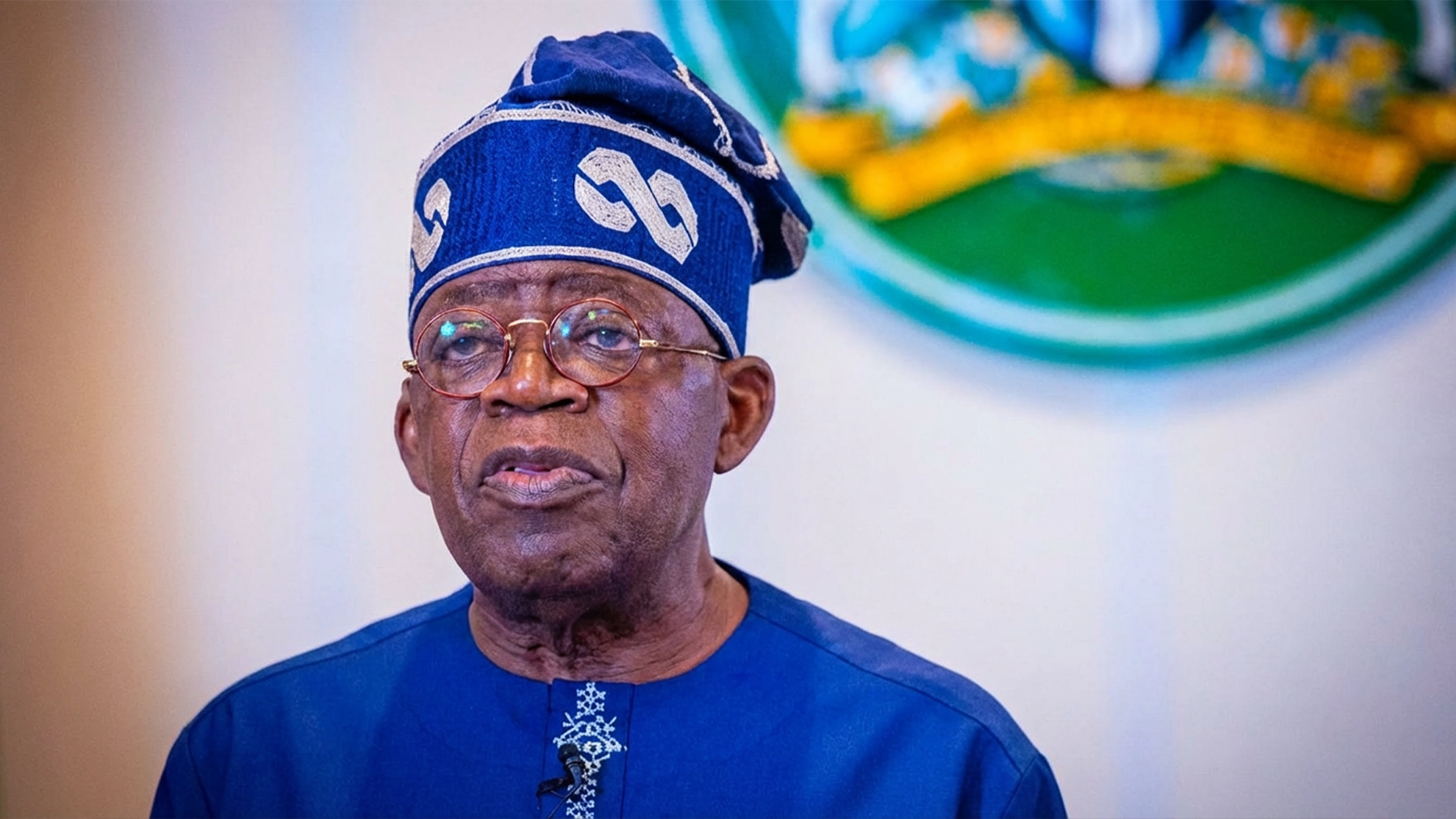
Following surge in terrorist attacks in Nigeria, President Bola Ahmed Tinubu on November 26, 2025, declared a nationwide security emergency and ordered additional recruitment into the Armed Forces, with the police getting approval to recruit an additional 20,000 officers, bringing the total of new recruits into the force to 50,000.
In the 2026 Appropriation Act, the Defence/Security sector got the lion share with an allocation of over N5 trillion to acquire more hardware and also address recurrent expenses. Also, Nigeria has deepened its collaboration with the U.S., leading to the setting up of a newly established Joint Working Group and a comprehensive cooperation framework aimed at dismantling terrorist networks and protecting vulnerable communities in the country.
The renewed partnership includes direct operational support and the physical presence of U.S. troops in Nigeria. So, about 200 U.S. troops are in the country, though the military high command said they are on ground only for training and advisory roles, not as combatants.
On the strength of this partnership, the U.S. and Nigeria carried out joint airstrikes on terrorists’ corridors in Sokoto State on the eve of the 2025 Christmas.
In spite of these measures taken by the Federal Government to checkmate insecurity across the country, especially in the northern region, the attacks on both soft targets and military locations continue unabated.
Terrorists have recently conducted major attacks in Kwara, Niger, Borno, Yobe, Plateau and Benue states, resulting in mass kidnappings and killings, including Commanding Officers and soldiers.

On April 9, terrorists attacked a military location at Benisheikh, a border town between Borno and Yobe states, killing the Brigade Commander, 29 Task Force, Brig.-Gen. Oseni Braimah; one other officer and two soldiers, according to information released by the military. Three days later, a Commanding Officer, proceeding to troops’ location to personally assess the situation in Mongunu, also in Borno State, encountered an Improvised Explosive Device (IED) planted by insurgents which severely affected his vehicle, leading to his death.
To address the menace, security experts have urged the Federal Government not to concentrate only on kinetic approach but to hold the leadership of the security sector accountable, and also tackle the root cause of insurgency, banditry and kidnappings. They also advised against relying so much on a third party–the U.S.–to fight the terrorists, saying that “no external party will defeat insecurity for Nigeria.”
“Hold both the political appointees as well as the security sector leadership accountable. There are two aspects of accountability–operational accountability and then financial accountability. For operational accountability, you have to be able to measure their performance. If you appoint an Inspector-General of Police, his role is clearly spelt out in the constitution,” Dr. Kabir Adamu, a security expert, said.
Adamu added: “If internal security improves under him (IGP) in a clear, verifiable manner using metrics, then we clap for him. If it doesn’t improve, then we tell him, excuse us, and bring somebody who is competent.”
Adamu, who is the Managing Director of Beacon Security and Intelligence Limited, said there are 42 organisations under the security sector which must be measured under operational accountability.
For the military, he expressed worries that there have been ongoing operations that are not being measured–Operation Hadin Kai (OPHK) in the North East, Operation Fansan Yamma (OPFY) in the North West; and Operation Enduring Peace (OPEP) in Plateau State.
Adamu said some of these operations have spanned more than 10 years, and alleged that they are not being measured, noting that the nation has been sinking money into a basket that has holes because nobody knows the exit strategy of these operations and what they are meant to achieve.
“The President should have a dashboard in his office that he has access to, that will show him which of these organisations is working and which one is not. And what even surprises me is that there is already a system in place under the SGF that is headed by the presidential advisor on policy and coordination. But that system has to go to the President. He has to be able to use that output, the ministerial performance measurement output, so that the ones that are not doing well, he pulls them to account. So that’s for operational accountability,” he said.
Adamu also alleged that there is the lack of financial accountability in the security sector, citing the over N5 trillion allocated to the sector in the 2026 budget, the highest in recent times.
“Our national security apparatus lacks accountability. It lacks focus. So, until we change this, until we have cohesion between the federal and state governments, and until we activate the local government system and make sure we have governance that addresses the basic challenges of the average Nigerian, no foreign party will come and address these issues–insurgency, banditry and kidnappings–for us,” he said.
Adamu cautioned against relying on the U.S., stressing that they have their own challenges to address. “The U.S. cannot solve our problem. No matter how they want to, they can’t. They also have their own challenges. After they deployed here, the Iran war started, so their attention at the moment is on Iran as well. The U.S., yes, they have intelligence, they have capabilities that can benefit us. But as I said, you can’t build on a faulty foundation.”
He, however, noted that though U.S. troops are in the country, it was too early to measure their performance.
A counter-terrorism specialist at Ohio University in the U.S., Dolapo Oyedokun, noted that military pressure alone will not deliver lasting peace, urging the government to turn its focus on the root causes fueling recruitment and resilience among groups like Boko Haram, ISWAP, and Lakurawa.
Oyedokun identified the root causes as endemic poverty, youth unemployment, illiteracy and long-standing neglect of certain regions. He said without addressing these underlying issues through targeted development, new fighters will continue to emerge even as others are neutralised.
“Equally vital is genuine community involvement. Traditional rulers, religious leaders, and local residents must be actively partnered with, not just consulted. Affected communities hold the most valuable intelligence and can form the backbone of early-warning systems if they feel truly protected and included,” he said.
Oyedokun commended the Tinubu administration for adopting a firm, no-nonsense posture towards the terrorists. “This government has intensified military operations and rejected dialogue with bandits and jihadists.”
He said the strategic collaborations with the U.S. on intelligence, training, and advisory support have strengthened operational capacity, enabling the armed forces to repel attacks and neutralise fighters in recent months, adding: “If we are going to be truthful, this militarised approach has sent a clear signal that violence will be met with decisive force.”
Oyedokun urged residents in the areas hardest hit by insecurity to be patient, saying that the challenges resulted from decades of weak governance and socio-economic failures.
“With sustained whole-of-government action, stronger community intelligence-sharing and public support, Nigeria can gradually turn the tide. The road ahead requires endurance, but a balanced strategy combining kinetic pressure with serious root-cause interventions offers the most credible path to enduring stability.”
During a recent visit to Yobe State, the Chief of Army Staff (COAS), Lt.-Gen. Waidi Shaibu, said the military was adjusting its operational strategies to effectively respond to emerging threats and sustain gains recorded across various theatres.
Shaibu reaffirmed the determination of the Nigerian Army to defeat all security threats confronting the nation with the continued support of the citizens, acknowledging recent operational challenges, including attacks on troops’ positions.
He, however, assured that the Nigerian Army remains steadfast and undeterred in carrying out its constitutional mandate.
According to him, the Army is constantly adapting its approaches to match changing dynamics. He urged state governments to enhance their support for troops engaged in frontline operations.

