 Follow Us on Google News


 Follow Us on Google Discover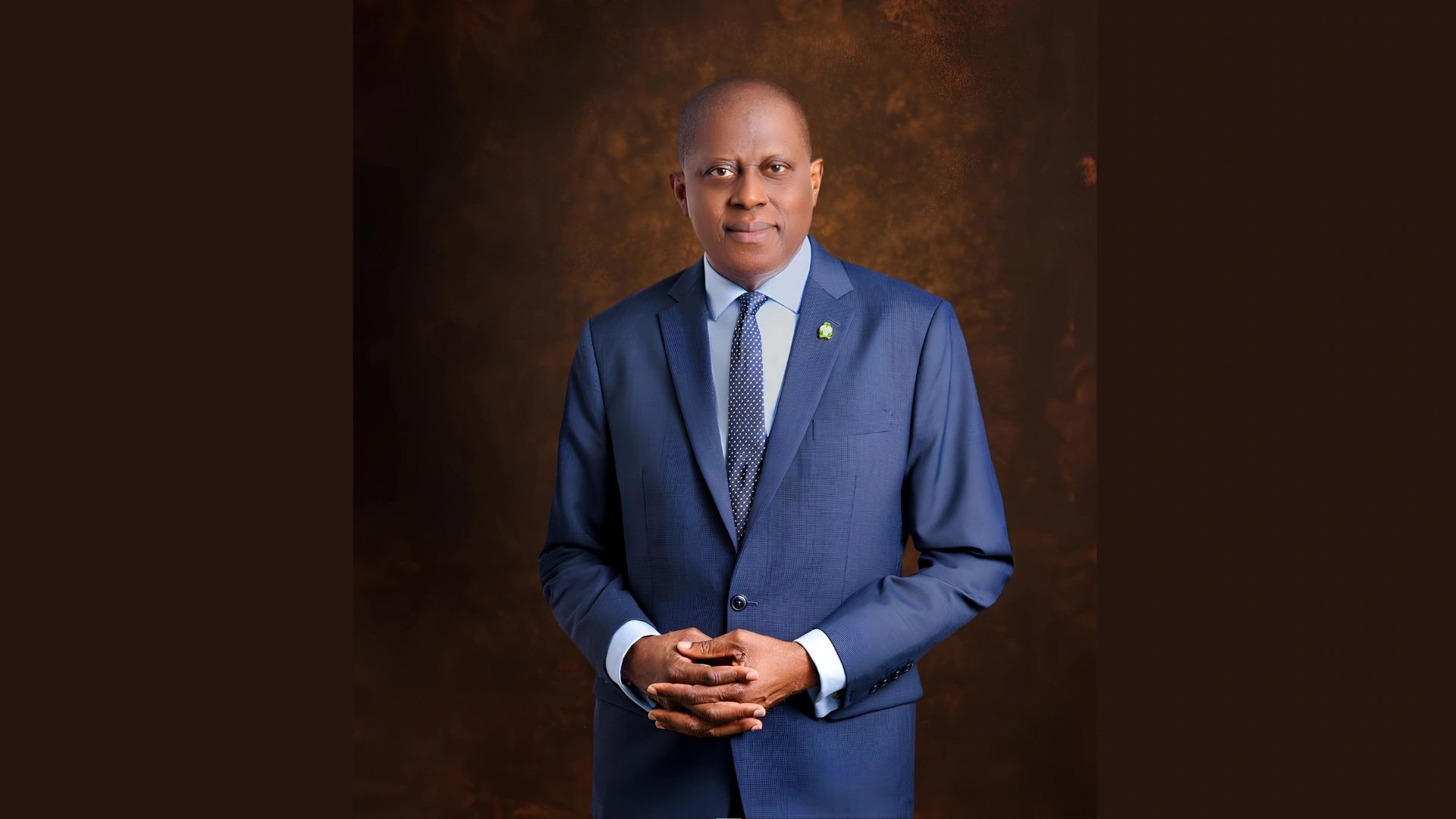
AS inflation and unemployment bear their fang against Africa as a continent, yet silent opportunities are unfolding before its eyes.
In the midst of these hidden opportunities, Africans are currently experiencing the miseries reflected in higher fuel prices and prohibitive fertiliser costs that are geometrically influencing the higher cost of food, as witnessed in the inflation figures in the last two months.
With the United States and Israel’s war against Iran starting on February 28, 2026, when U.S. and Israeli forces launched joint airstrikes designated as ‘Operation Epic Fury,’ the resurgence of inflation in Nigeria coincidentally began in March when the figure rose from 15.06 per cent in February 2026 to 15.38 per cent in March 2026.
Since March 2026, the pump price of Motor Premium Spirit (PMS) has jerked up to more than N1,300 per litre from N750 per litre on average; inflation maintained an upward trajectory, reaching a six-month high of 15.93 per cent before marginally slipping to 15.91 per cent when the warring nations declared a temporary ceasefire.
The undulations clearly show that the Nigerian economy is directly tied to the apron of the global supply chain.
While the continent slipped into despair and helplessness, the conflict could have been turned into an opportunity to reposition and redirect its fortunes.

The Director General of the World Trade Organisation (WTO),Dr Ngozi Okonjo-Iweala and the Governor of the Central Bank of Nigeria (CBN), Yemi Cardoso, are convinced that African countries ought to have seized the opportunity offered by the changing global economic landscape to reposition the continent as a competitive destination for investment, manufacturing and innovation.
Speaking at the Seventh Africa Emerging Markets Forum in Abuja, both leaders argued that geopolitical tensions, changing trade patterns, technological disruption and shifting global capital flows, while creating uncertainty, also present Africa with one of its greatest opportunities in decades to strengthen regional integration, reflected and economic resprices ande.
In his keynote address, Cardoso said the global economy was undergoing a profound transformation marked by intensified trade, more selective investment flows and the rapid emergence of artificial intelligence, requiring African countries to rethink their development strategies.
“The question is no longer whether the global order is changing, but how we turn that change from a source of vulnerability into a source of growth and shared prosperity,” he said.
He identified three major trends shaping Africa’s future: the fragmentation of global trade, increasingly cautious international capital and the rise of artificial intelligence.
According to him, the reorganisation of global supply chains through near-shoring and friend-shoring presents Africa with an opportunity to expand regional trade and manufacturing.
Despite the launch of the African Continental Free Trade Area (AfCFTA), Cardoso noted that trade among African countries still accounts for only about 16 per cent of the continent’s total trade, underscoring the need to dismantle barriers through improved transport infrastructure, harmonised customs procedures and faster cross-border payment systems.
He also warned that global investors are becoming more selective, saying countries seeking investment must demonstrate policy consistency, transparency and institutional credibility.
“The era of abundant liquidity chasing returns regardless of risk is over. Investors now have more choices and less tolerance for uncertainty,” he said.
Cardoso argued that African economies should rely less on foreign capital by mobilising domestic savings, pension funds, insurance assets and diaspora investments to finance development.
He described credibility as “a national economic asset,” stressing that investors must have confidence in government policies beyond political cycles.
On artificial intelligence, the CBN governor said Africa must become a producer rather than merely a consumer of technology by investing in reliable electricity, digital infrastructure, affordable connectivity and skills development for young people.
Drawing from Nigeria’s recent reforms, Cardoso said the Central Bank had restored focus on its core mandate by unifying the foreign exchange market, ending monetary financing of fiscal deficits, strengthening transparency in the FX market and tightening monetary policy where necessary.
He said those difficult reforms had begun to produce results.
“Inflation has moderated from its high levels despite the energy shock, external buffers have strengthened, and the financial system is safer and better capitalised,” he said.
Cardoso identified four pillars necessary for Africa’s long-term prosperity: macroeconomic stability, a truly integrated continental market, patient long-term investment and the development of human capital, particularly women and young people.
“No nation has industrialised under persistently high inflation and an unstable exchange rate,” he said.
He urged African leaders to prepare young people for an AI-driven economy while expanding opportunities for women, saying, “Africa cannot fly with one wing.”
During a fireside conversation that followed, Okonjo-Iweala said the post-Second World War global economic order was facing its greatest test in decades but rejected suggestions that globalisation was ending.
“What we are seeing is not the end of globalisation but its transformation from cooperative to competitive interdependence,” she said.
She explained that multinational companies were actively searching for alternative production locations, creating an opportunity for African countries to attract manufacturing and industrial investment.
However, she cautioned that Africa would only benefit if governments implemented the necessary reforms.
“If we can get our house in order, we are capable of attracting these supply chains. It will not fall on our lap,” she said.
Okonjo-Iweala urged African countries to move beyond exporting raw materials by developing regional value chains capable of processing the continent’s abundant critical minerals into higher-value products.
“For Africa, instead of the extract-and-export model, the goal should be higher value, higher productivity growth driven by the development of sub-regional value chains,” she said.
She also described the AfCFTA as one of Africa’s strongest economic instruments and urged governments to increase trade within the continent significantly.
“Why can’t we move from 20 per cent trade among ourselves? Even if we could double over the next five or six years, let’s trade among ourselves,” she said.
The WTO chief commended the Central Bank of Nigeria for restoring confidence through monetary and exchange rate reforms. Still, she emphasised that macroeconomic stability must ultimately improve the lives of ordinary Nigerians.
“I want to commend the Central Bank Governor of Nigeria on the work that he and his team have done on currency and monetary policy stabilisation. Nigerians have to feel the dividends of reform in the real economy,” she stated.
She also urged governments to improve governance, reduce bureaucratic bottlenecks and strengthen institutions to attract investment, arguing that domestic investors must lead the way.
“You cannot really attract foreign investment if your own domestic investors are not investing in the country,” she said.
Okonjo-Iweala said Nigeria carries a special responsibility because of its size and economic influence across Africa.
“Nigeria bears a great responsibility. We need to grow, develop and create jobs not just for ourselves,” she said.
Despite growing global uncertainty, both Cardoso and Okonjo-Iweala expressed optimism that Africa could emerge stronger by sustaining reforms, strengthening institutions, deepening regional integration and investing in productive sectors.
They argued that with its vast natural resources, youthful population and expanding market, Africa has the potential to become a major force in the global economy if leaders act decisively and collaboratively.

