 Follow Us on Google News


 Follow Us on Google Discover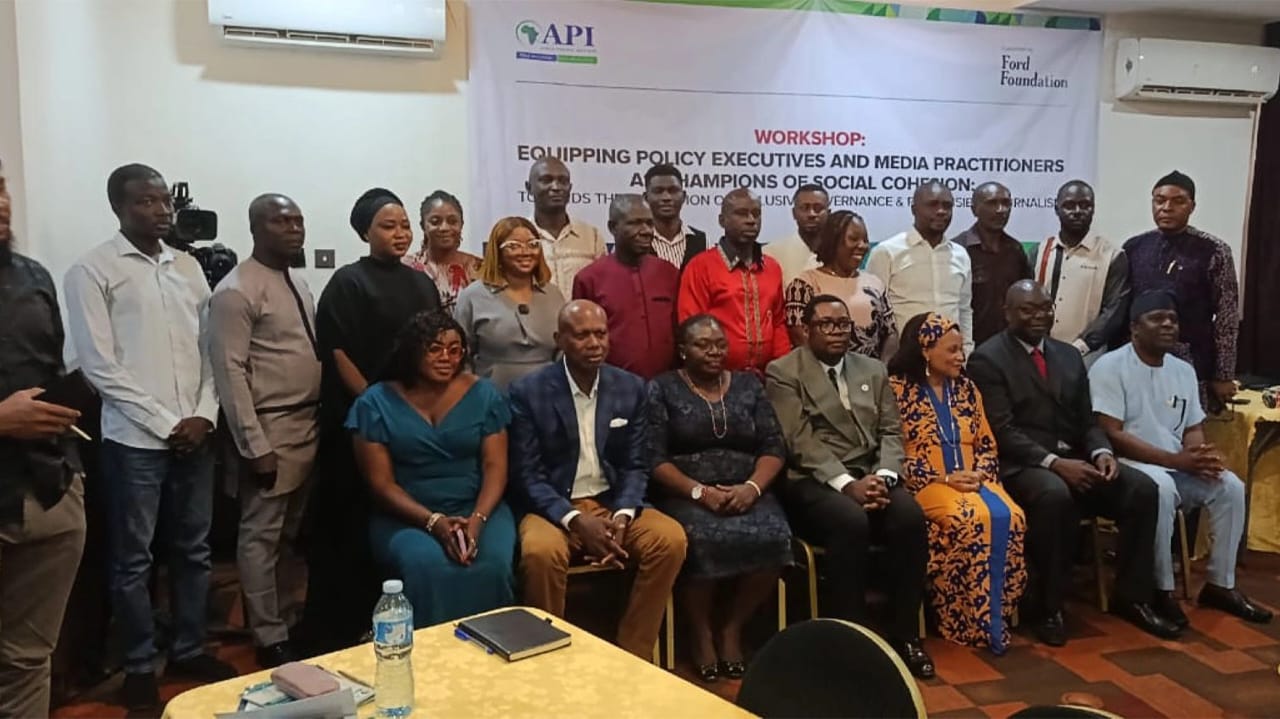
The Africa Polling Institute (API) and development experts have attributed the rising wave of kidnappings, violent crimes and insecurity in Nigeria to weak social cohesion, warning that growing distrust among citizens and institutions is eroding national unity and peaceful coexistence.
The experts made the observation at a two-day workshop for policy executives and media practitioners in Abuja themed, “Equipping Media Practitioners as Champions of Social Cohesion Towards the Promotion of Responsible Journalism.”
According to the Executive Director of API, Prof. Bell Ihua, many of the country’s security and governance challenges stem from a breakdown in social cohesion, which has weakened trust among citizens and between the people and public institutions.
He said the increasing incidence of kidnappings, mob justice and other violent crimes reflects a society where shared values, social trust and inclusion have deteriorated.
“Why will a fellow citizen kidnap another fellow citizen and take them to the forest and torture them? It tells you that if the right investments had been made in those citizens years ago, they probably would not be doing what they are doing today,” Ihua said.
He noted that the tendency of citizens to resort to jungle justice rather than rely on the legal system is another indication of declining trust in state institutions.

“You see citizens witness a crime and immediately say, ‘bring tyre, let’s lynch.’ It is a symptom of weak social cohesion. Why do citizens not trust the judicial system or the institutions of the state? These are all indicators of weak social cohesion,” he added.
Ihua explained that social cohesion is built on shared national identity, trust in government, social justice and active civic participation, stressing that governments must deliberately pursue policies that promote inclusion and fairness.
Calling on Nigerians to be more tolerant, and love one another irrespective of their ethnic and religious leanings, he identified widening inequality as a major factor contributing to social instability.
“Part of the challenge of cohesion is that the gap between the haves and the have-nots is widening by the day. Social cohesion is what will help bridge that gap,” he said.
Also speaking, social policy professional, Dr. Olusoji Adeniyi, urged journalists to avoid stereotypes, ethnic profiling and unverified labels that could worsen divisions within society.
He cautioned against associating criminal activities with particular ethnic groups, noting that such narratives often undermine national unity and social harmony.
“We need to avoid situations where we assume certain groups of people are responsible for certain ills in society. We talk about Fulani herdsmen, unknown gunmen and other labels, many of which are sometimes unverified,” Adeniyi said.
“Criminals are criminals. We should criminalise the act but humanise the process and ensure that our stories promote unity and understanding.”
Development expert, Odoh Diego Okenyodo, said improving journalists’ welfare is also critical to building a more cohesive society, arguing that adequately remunerated media professionals are better positioned to produce responsible and patriotic reports.
“The real corollary of this teaching is that we must take care of the welfare of journalists. They are human beings with responsibilities and challenges of their own,” he said.
The experts agreed that strengthening social cohesion through inclusive policies, responsible journalism and improved social welfare remains crucial to addressing insecurity, reducing violent crime and promoting sustainable national development.

