 Follow Us on Google News


 Follow Us on Google Discover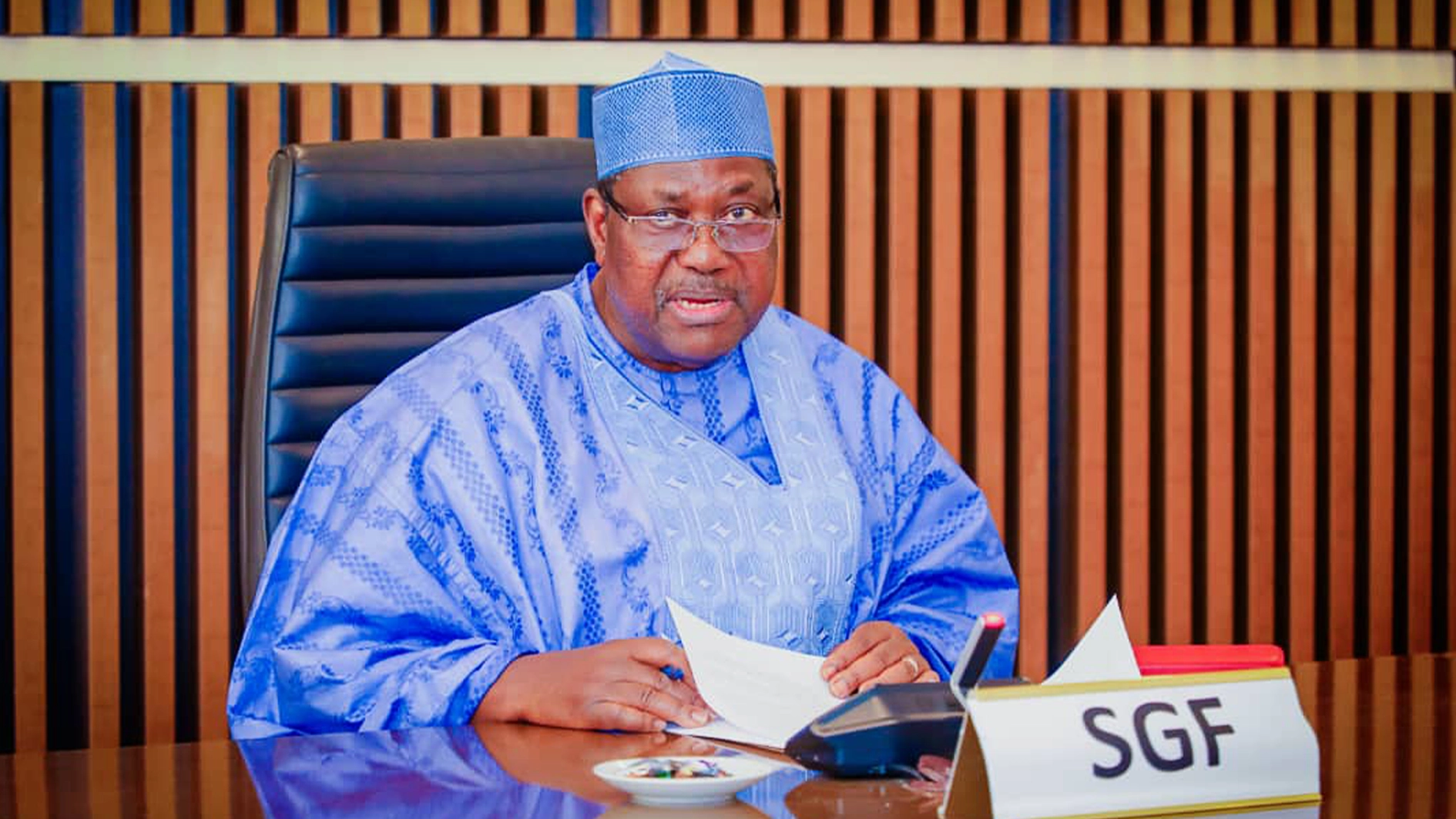
THE Federal Government has stated that forced displacement in Nigeria has transcended humanitarian emergencies to become a complex development, security, and governance challenge that requires integrated institutional responses.
Secretary to the Government of the Federation (SGF), Senator George Akume, disclosed this yMonday in Abuja during the commemoration of the 2026 World Refugee Day, which also marked the 75th anniversary of the 1951 Refugee Convention.
Akume, representing President Bola Tinubu, reiterated Nigeria’s dedication to international commitments despite immense pressure on national resources.
He said “Displacement is not solely a humanitarian issue. New realities, including climate induced displacement and transnational security threats, demand renewed thinking, collective action, and stronger partnerships.”
He commended the National Commission for Refugees, Migrants and Internally Displaced Persons (NCFRMI) and the United Nations High Commissioner for Refugees (UNHCR) for their collaboration.
Meanwhile the Justice, Development and Peace Caritas Initiative (JDPCI) of the Catholic Archdiocese of Abuja, has called on the global community and governments to prioritize the protection and dignity of displaced persons, noting that shared humanity must transcend geopolitical borders.

Executive Director of JDPCI, Reverend Father Sebastian Sanni while delivering fraternal felicitations from the Catholic Archbishop of Abuja, Most Reverend Dr Ignatius Kaigama, stated that the world refugee day serves as a stark reminder of the human lives disrupted by geopolitical volatility, emphasizing that faith based organizations and state actors must collaborate to provide holistic care for victims of war, violence, and natural disasters.
The cleric noted that the JDPCI has been actively supporting refugee communities within the Federal Capital Territory (FCT), particularly displaced persons from Cameroon, the Democratic Republic of Congo, and other neighbouring countries.
He explained that “Behind every refugee is a father, a brother, a sister, a mother, and a family deserving of love, protection, and respect.
“As people of faith, we are called to welcome the stranger, comfort the afflicted, and stand in solidarity with those who are victims.”
Highlighting its institutional interventions, the director disclosed that the JDPCI is partnering with the United Nations High Commissioner for Refugees (UNHCR) and the National Commission for Refugees, Migrants and Internally Displaced Persons (NCFRMI) to offer essential support to vulnerable populations.
“JDPCI Abuja is proud to collaborate with the UNHCR and the NCFRMI in providing pro bono legal services to rejected asylum seekers.
“Through this partnership, we continue to advocate for justice, protection, and the right of vulnerable persons seeking safety and a chance for a better future,” Sanni adds.
Also, the United Nations High Commissioner for Refugees (UNHCR) and the National Commission for Refugees, Migrants and Internally Displaced Persons (NCFRMI) have renewed their commitment to protecting displaced persons, noting that 42 million refugees are currently registered globally.
Speaking on this year’s theme ‘Until Everyone is Safe’, UNHCR Deputy Representative, Bernadette Muteshi, called for global solidarity saying; “This is a plight of a special category of people that we do not want to leave behind.”
On his part, the Honourable Federal Commissioner of the NCFRMI, Tijani Ahmad, assured that Nigeria would continue to uphold its humanitarian obligations.
He said “Never again will we turn our backs on the displaced.
“Safety is achieved when the world stands together.”

