 Follow Us on Google News


 Follow Us on Google Discover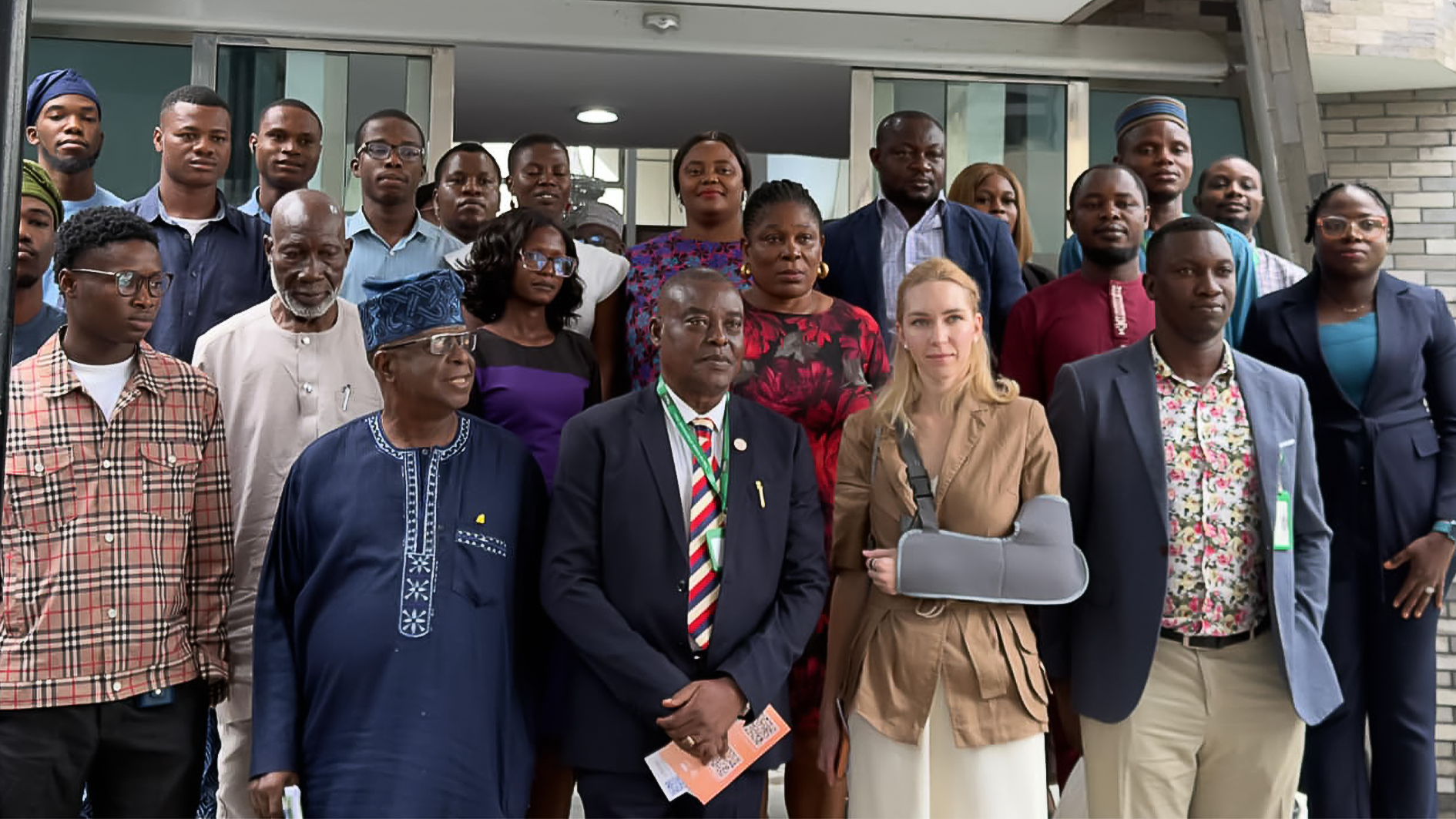
Russia has reaffirmed its commitment to strengthening bilateral relations with Nigeria, as both countries position themselves as key players in an evolving global order marked by a shift from unipolarity to a more complex multipolar system.
This was at the Roundtable Discussion on Nigeria and Russia in the Changing and Challenging World Order organised by the Nigerian Institute of International Affairs (NIIA) in partnership with Moscow State Institute for International Relations (MGIMO) in Lagos.
Attaché to the Russian Embassy in Nigeria, Alexey Starikov said the international system is undergoing profound structural transformation, emphasising that Russia and Nigeria are actively contributing to the emergence of a more balanced and equitable global architecture.
He described the transition as a long-term process anchored on the principles of equality and multilateralism.
Starikov highlighted Africa’s growing importance in global affairs, noting that Nigeria, in particular, plays a pivotal role in articulating the interests of developing countries.
He reiterated Russia’s support for strengthening Africa on the world stage.
He said relations between Russia and Nigeria are marked by mutual respect and an absence of political contradictions, adding that significant opportunities exist for expanding cooperation in sectors such as energy, agriculture and infrastructure.
According to him, both countries are also exploring collaboration in security, irrigation, and human capital development, with Russia expressing readiness to share expertise in security and capacity building.
Starikov disclosed that preparations are underway to convene a meeting of the intergovernmental cooperation working group in Russia, stressing that the partnership must remain pragmatic, forward-looking, and focused on tangible outcomes.
He added that intellectual platforms, including academic engagements, are vital for fostering deeper understanding and advancing shared goals.
Director-General, NIIA, Prof. Eghosa Osaghae, noted growing interest in Russia’s activities in the Sahel region, while underscoring the importance of academic collaboration with the MGIMO University.
He said the partnership would create opportunities for Nigerian fellows to study in Russia and strengthen institutional capacity.

Osaghae explained that the collaboration builds on an earlier initiative and aligns with efforts to enhance foreign language proficiency, including plans to expand offerings to African languages such as Swahili, Afrikaans, Amharic and potentially Hausa.
He added that the institute is working toward establishing a foreign languages laboratory as part of its long-term vision.
Analyst, Institute of International Relations, MGIMO University, Valery Zhuchkov, outlined the history and global standing of the university, established in 1943 as Russia’s first institution dedicated to international studies.
He described it as a leading centre for political and diplomatic education, with students drawn from more than 90 countries, including several African nations.
He noted that the institution hosts an African-focused programme aimed at deepening understanding of international relations and Russia’s development trajectory.
He added that initiatives such as the African Club and the Russia-Africa Forum are designed to challenge stereotypes and empower young people, while partnerships with African institutions continue to grow.
The university also provides various academic pathways, including short-term courses, master’s programmes, and doctoral studies, alongside dedicated support for international students through Russian language training.
According to him, special programmes targeting young researchers between the ages of 20 and 40 are intended to promote international collaboration, while efforts are being made to increase Nigerian participation.
The Director of Research at the NIIA, Prof Joshua Bolarinwa, represented by Dr Ichimi, said West Africa is currently undergoing a significant geopolitical shift, largely influenced by Russia’s strategic recalibration.
He said Russia is leveraging this environment to expand its footprint by securing strategic resources and promoting its energy sector in countries such as Nigeria and Ghana.
He said Russian companies are actively involved in gold mining and oil exploration across parts of Africa, including Nigeria, Egypt, and Algeria.
According to him, beyond economic interests, Russia is advancing narratives that portray Western powers as ineffective, positioning itself as a more reliable partner while using information campaigns to undermine Western initiatives and influence public perception.
The event ended with a signing of a memorandum of understanding, which is expected to yield concrete outcomes.

