 Follow Us on Google News


 Follow Us on Google Discover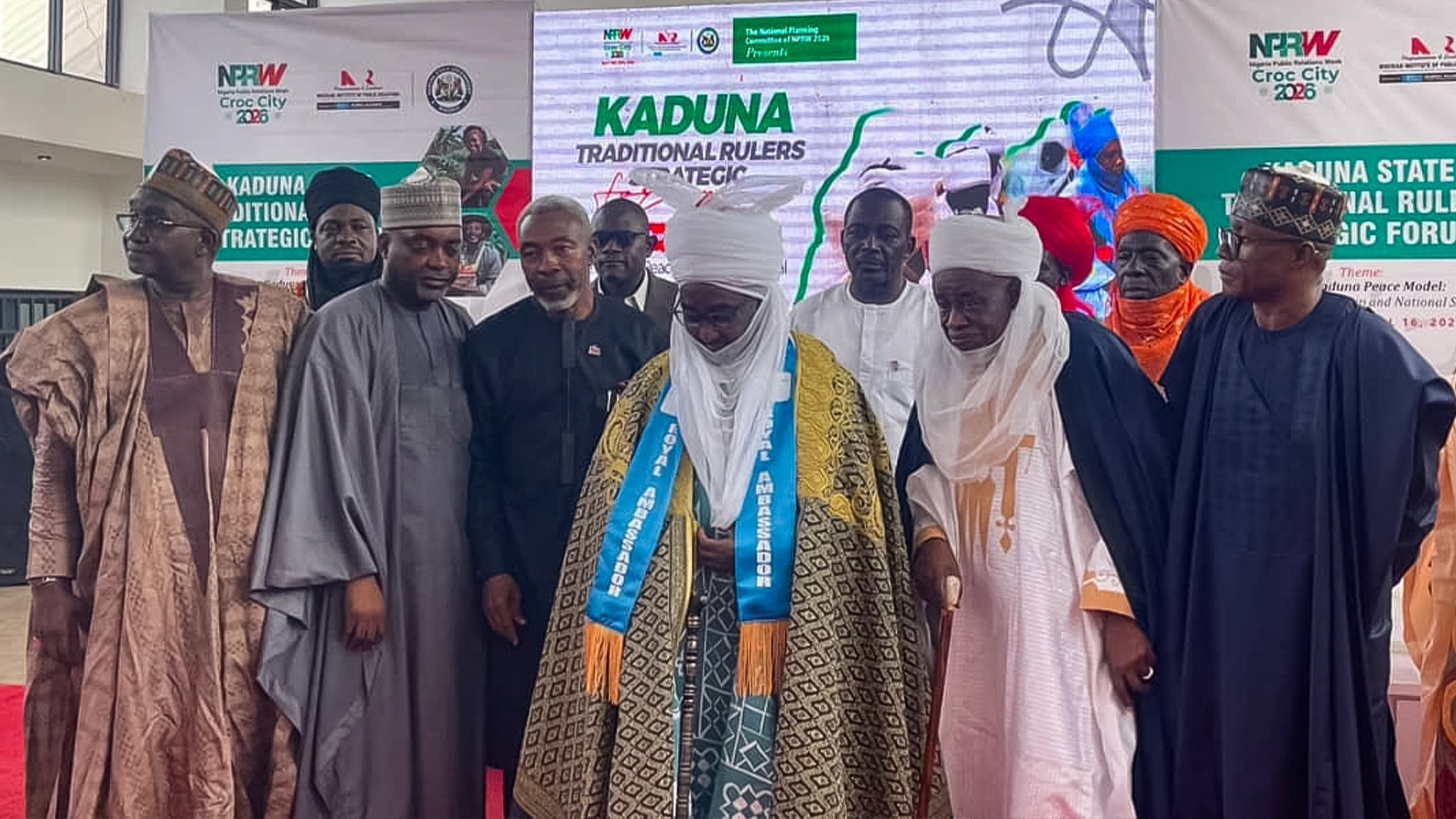
The traditional rulers in Kaduna State, led by the Emir of Zazzau, Ahmed Nuhu Bamali have renewed calls for stronger constitutional recognition, while urging the government to formally define and strengthen the role of traditional institutions in governance and peace building.
Speaking at the Nigerian Institute of Public Relations Week (NIPRW) “Croc City 2026” forum held at the State House, Hassan Usman Katsina House, Kawo, Kaduna, the emir said traditional rulers remain central to peace, unity and grassroots development but are yet to receive adequate institutional backing.
“The roles of traditional rulers are underutilised and therefore, there should be a constitutional backing for their roles so that they can function efficiently,” he said.
Bamali explained that the traditional institution in Northern Nigeria predates colonial rule and has continued to serve as a stabilising force in communities, particularly in conflict mediation and inter-communal dialogue.
The monarch stressed that traditional rulers must remain active partners in promoting peace and discouraging violence and hate speech.
“As traditional leaders, we must continue to work with all stakeholders and use our influence to work against violence and hate speech,” he said.

On food security, the emir pointed out, sustainable peace remains a prerequisite for agricultural productivity, noting that farmers can only contribute effectively when they are able to farm safely.
“Peace will be achievable when people farm safely,” he stressed.
In his remarks, Governor Uba Sani, represented by the Commissioner for Local Government and Chieftaincy Affairs, Sadeeq Maman Lagos, assured traditional rulers of continued inclusion in governance under his administration.
He said, “the government recognises the strategic importance of traditional institutions in security management and grassroots development”.
“Under Uba Sani, traditional rulers will see changes in Kaduna,” he added.
The commissioner stressed that no government can succeed without the active involvement of traditional rulers, describing them as key stakeholders with deep knowledge of local communities.
“Any government not involving traditional rulers in the scheme is wasting time because they know the nooks and crannies of the state,” he said.
He pledged that the administration would continue to work closely with traditional institutions to improve security, strengthen public trust, and deepen development at the grassroots.
Earlier, President of the Nigerian Institute of Public Relations, Ike Neliaku, emphasised the importance of strategic communication in governance, noting that policies only succeed when they are effectively understood and embraced by citizens.
He said traditional rulers remain closest to the grassroots and are critical to translating government policies into community acceptance and participation.
“In building peace, we must build sustainable peace. And for peace to be sustainable, it must be based on community relations because the traditional leaders are the nearest to the grassroots,” he said.
He added that no community can achieve sustainable peace alone, stressing the need for collaboration among stakeholders.
“Build partnership for collaboration. No one, no community can do it alone. So there must be an effective collaboration,” he said.
He also noted that traditional rulers provide valuable feedback that can help governments design better solutions.
“We want to also get feedback from them on how governance is doing… this will help in designing solutions,” he added.
In a keynote address, the Emir of Birnin Gwari, Zubair Jibril, described traditional rulers as “communication anchors” within the peace architecture, saying they serve as critical bridges between government and communities.
He explained that traditional leaders translate government intentions into culturally meaningful messages while also conveying community concerns back to policymakers, making them central to conflict prevention and resolution.
The forum, part of the NIPR Week activities, focused on strengthening strategic communication, community relations, bipeacebuilding, and food security outcomes across Kaduna State.

