Hello there, friend! I must tell you straightaway that this article represents months of research into Nigerian greeting customs and years of navigating the wonderfully complex world of Nigerian pleasantries across different regions. How do Nigerians say hello? The answer is gloriously complicated. We don’t just have one way to say hello. Rather, we have hundreds, shaped by over 520 indigenous languages, regional customs, and a greeting culture so intricate it would make your head spin.
I remember my first week in Kano.
I confidently greeted an elderly Hausa woman with “Hello” and received a confused stare in return. A colleague quickly intervened with “Sannu” and suddenly her face lit up like I’d offered her a million Naira. That’s when I realised something profound about Nigerian culture. Greetings aren’t mere words here. They’re social contracts, cultural markers, and relationship builders all rolled into linguistic packages that change based on who you’re speaking to, when you’re speaking, and what that person is doing at the time.
The Federal Ministry of Information and National Orientation emphasises how Nigerian languages serve as bridges of understanding rather than barriers, creating what they call “unity in diversity” across our ethnic groups. But here’s the fascinating bit. Even Nigerians sometimes struggle with the sheer variety of greetings! A Lagos Yoruba speaker visiting Calabar might find themselves just as lost as any foreign visitor when confronted with Efik greeting protocols.
Let me give you the most common greeting across Nigeria’s three major ethnic groups, then we’ll explore the beautiful complexity underneath.
Understanding Nigeria’s Core Greeting Languages
Nigerians primarily greet in three major languages, though the reality on the ground is far more nuanced than this simple categorisation suggests.
Hausa speakers, predominantly in northern Nigeria, use “Sannu” as their basic hello. But wait, there’s more. They might say “Sannu da zuwa” (welcome), “Sannu da aiki” (greetings for your work), or “Yaya dai?” (how are you?). The specific greeting changes based on what the person is doing when you encounter them. If they’re eating, you say “Sannu da abinci.” If they’re travelling, “Sannu da tafiya.” This contextual greeting system shows respect for the person’s current activity.
In southwestern Nigeria, Yoruba greetings operate on an entirely different cultural framework. “E ka aro” means good morning, whilst “E ka san” is good afternoon, and “E ku irole” translates to good evening. But here’s where it gets interesting. The plural “E” prefix shows respect. If you’re greeting someone your age or younger, you might drop the “E” and say “Ka aro” instead. Age hierarchy matters tremendously in Yoruba culture.
I once greeted a Yoruba elder with the informal version and my friend literally pulled me aside to explain the cultural error I’d just committed!
Igbo greetings from southeastern Nigeria take yet another approach. “Kedu?” serves as the universal “how are you?” whilst “Ndewo” functions as a general hello. “I meela” means thank you, often used in greeting exchanges. But similar to Yoruba, Igbo has formal and informal registers. The National Council for Arts and Culture has worked extensively to document and preserve these linguistic variations as part of Nigeria’s cultural heritage.
How do you say hello in Nigerian slang?
Nigerian slang greetings represent where tradition meets contemporary urban culture, and honestly, this is where things get properly fun.
“How far?” has become the quintessential Nigerian greeting amongst younger people and in informal settings. It literally translates to “How far?” but functionally means “How are you? What’s happening?” The genius of this greeting is its economy. Two words accomplish what might take several sentences in formal English. I’ve watched business deals begin with “How far?” in Lagos board rooms where you’d expect stiff formality.
“Wetin dey?” is another popular pidgin greeting meaning “What’s happening?” or “What’s up?” This one emerged from Nigerian Pidgin English, which the Voice of Nigeria broadcasting service notes is spoken by over 60 million Nigerians as a lingua franca bridging ethnic divides.
“See you o!” doesn’t actually mean you’re seeing someone (though you might be). Rather, it’s an exclamation of greeting when you encounter someone, particularly someone you haven’t seen in a while. The “o” at the end adds emphasis and warmth. Guardian Nigeria’s coverage of Nigerian slangs demonstrates how these expressions have moved from street culture to mainstream usage.
Younger Nigerians have developed even more creative greetings. “You dey for ground?” roughly translates to “Are you available?” or “Are you around?” whilst serving as a general greeting. “I dey” or “I dey oh” means “I’m here” or “I’m doing okay” and often serves as both greeting and response.
The slang changes rapidly too. What’s trendy in Lagos this month might be old news next month. “E choke” became a greeting of sorts, expressing excitement or approval. “We outside” announced one’s presence at social gatherings. These greeting innovations spread through social media, music, and comedy skits with astonishing speed.
Here’s something I find particularly interesting. Many educated Nigerians who would never use pidgin at work switch naturally to these slang greetings with friends and family. It’s rather like having two completely separate greeting vocabularies operating simultaneously in your brain!
How do they say “hi” in Nigeria?
The short answer? Nigerians rarely just say “hi” in indigenous languages because the concept doesn’t quite translate that simply.
English “hi” certainly gets used, particularly in urban centres and formal settings. But traditional Nigerian greeting customs view the quick, casual “hi” as rather rude or at minimum incomplete. Greetings traditionally involved enquiring about someone’s health, their family, their work, their journey, and more. A proper traditional greeting could easily take two minutes!
I once watched a traditional Yoruba greeting between two elders that included questions about each person’s children, parents, siblings, spouse, health, business, and recent travels. They prostrated (for men) and knelt (for women) during parts of the exchange. By the time they finished, I’d mentally composed my entire shopping list. But here’s the thing. Both parties left that exchange feeling truly seen and respected.
That’s what traditional Nigerian greetings accomplish. They’re not just words. They’re relationship maintenance rituals.
However, modern Nigerian life, particularly in cities like Lagos, Abuja, and Port Harcourt, has shortened these exchanges considerably. Young people increasingly use English “hi” or pidgin “how far?” for quick greetings. Yet even abbreviated greetings still carry cultural weight. You can’t just walk past someone you know without acknowledging them. That would be considered spectacularly rude.
In markets, bus stops, and offices across Nigeria, you’ll hear “Good morning” or “Good afternoon” far more frequently than a bare “hi.” Nigerians love the completeness of these fuller greetings. “Good morning, how are you?” rolls off tongues naturally, often as a single fluid phrase rather than separate questions.
Regional variations add another layer. In northern Nigeria, “Salam alaikum” (peace be upon you) gets used widely due to Islamic influence. In southern regions, Christian influence means “God bless you” or “How are you by God’s grace?” appear regularly in greeting exchanges.
Nigerian Greeting Variations Across Major Ethnic Groups
| Ethnic Group | Basic Hello | Good Morning | How Are You? | Thank You | Context Notes |
|---|---|---|---|---|---|
| Hausa | Sannu | Ina kwana | Yaya dai? | Na gode | Add context (da zuwa, da aiki) for specific situations |
| Yoruba | Pele / E pele | E ka aro | Bawo ni? / Se daadaa ni? | E se | Use “E” prefix for elders, drop for peers |
| Igbo | Ndewo | Ututu oma | Kedu? / Kedu ka odi? | I meela / Daalụ | Formal vs informal registers exist |
| Pidgin | How far? | Morning oh | Wetin dey? | I dey kampe | Universal across ethnic boundaries |
| Fulani | Sannu | Jam waali | E jam tano? | Ala barki | Closely related to Hausa in northern regions |
| Ibibio | Nnyin | Emem isong | Afo akpokoro? | Sosongo | Prominent in Cross River and Akwa Ibom |
This table provides just a snapshot. Each of these languages contains dozens of contextual greeting variations based on the time of day, the addressee’s activity, their social status, and the relationship between speakers. The figures represent common usage patterns across Nigeria’s estimated 220 million population.
What does Oya Na mean?
“Oya na” deserves its own discussion because it perfectly encapsulates how Nigerian languages evolve and blur boundaries.
Originally a Yoruba phrase, “oya” means “hurry up” or “let’s go” whilst “na” adds emphasis. Together, “oya na” literally translates to something like “hurry up then” or “let’s go now.” But as often happens in Nigeria, this phrase escaped its ethnic boundaries and became pan-Nigerian.
Today, “oya na” has transcended its original meaning. Guardian Nigeria documented how Nigerian youth transformed it into a multifunctional phrase that can mean anything from “hurry up” to “goodbye” to “get on with it” to “well then” depending on context and tone.
I’ve heard “oya na” used to:
- Encourage someone to hurry: “We’re late, oya na!”
- Express resignation: “You won’t listen? Oya na.” (meaning “fine, have it your way”)
- Initiate action: “Oya na, let’s begin the meeting”
- End conversations: “Okay, talk later. Oya na!”
- Express agreement: “You’re right. Oya na, let’s do it your way”
The phrase has become so popular that non-Yoruba speakers use it confidently without knowing its etymology. A Hausa speaker in Kano and an Igbo speaker in Enugu both pepper their conversations with “oya na” naturally. This linguistic borrowing demonstrates how Nigerian languages influence each other constantly.
Interestingly, the phrase rarely functions as a greeting per se. You wouldn’t typically walk up to someone and say “oya na” as your opening salvo. However, it does appear in greeting contexts as a transition phrase. After the initial “how far?” you might say “oya na, how body?” (meaning “well then, how are you feeling?”).
The Federal Ministry of Arts, Culture and Creative Economy recognises phrases like “oya na” as examples of Nigeria’s linguistic diversity creating shared cultural touchstones that unite rather than divide our various ethnic groups.
What are 5 ways to greet?
Let me walk you through five distinct Nigerian greeting methods that showcase the beautiful variety of our customs.
First, the verbal greeting with physical gestures. In Yoruba culture, younger men prostrate fully on the ground before elders whilst younger women kneel. This isn’t mere theatrics. It’s deep cultural respect made physical. I’ll never forget watching my Lagos friend fully prostrate before his elderly uncle at a family gathering. The uncle then placed his hand on my friend’s head, offering blessings. The entire exchange carried profound emotional weight.
Second, the time-based greeting protocol. Nigerians don’t just say “hello.” We say “good morning” (until noon), “good afternoon” (noon to 6pm), or “good evening” (after 6pm). But here’s where it gets intricate. In Yoruba, you have “E ka aro,” “E ka san,” and “E ku irole” respectively. Each literally translates differently, acknowledging the specific time period and the addressee’s experience during that time. “E ku irole” essentially means “well done for surviving the evening.”
How brilliant is that?
Third, the activity-based greeting in Hausa culture. If someone’s eating, you say “Sannu da abinci” (greetings for your food). If they’re working, “Sannu da aiki” (greetings for your work). If they’re travelling, “Sannu da tafiya” (greetings for your journey). This system shows respect for whatever the person is engaged in at that moment. It acknowledges their specific experience rather than offering a generic greeting.
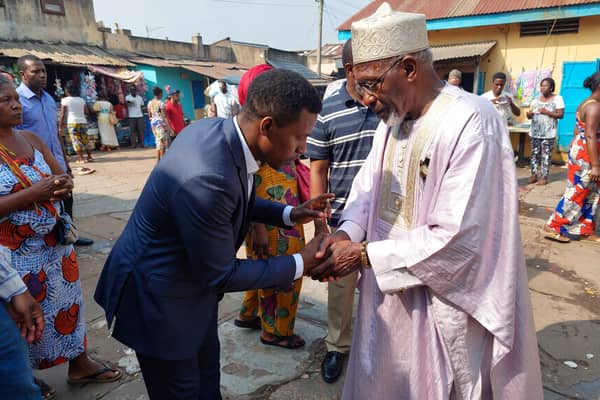
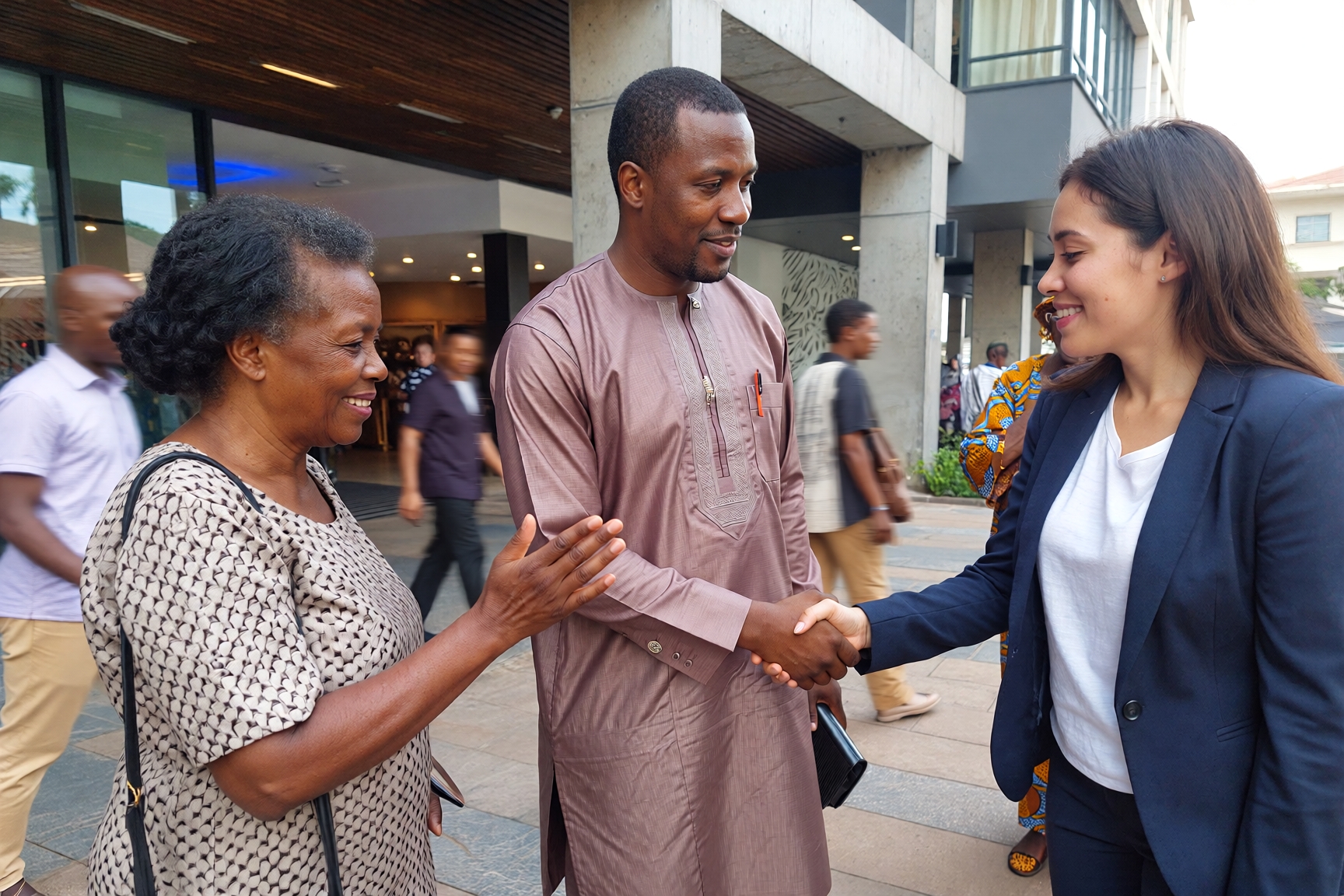
Fourth, the handshake greeting with both hands. In many Nigerian cultures, particularly when greeting elders or social superiors, you offer or receive a handshake with your right hand whilst your left hand touches your right elbow or wrist. This demonstrates humility and respect. I unconsciously do this now even when greeting non-Nigerians!
Fifth, the extended family enquiry greeting. Traditional greetings, particularly in rural areas or amongst older Nigerians, involve asking after multiple family members by name. “How’s your mother? And your father? The children? Your siblings? Your spouse?” This can extend to asking about farms, businesses, health, and recent events. These aren’t throwaway questions. People expect actual updates!
7 Steps to Master Nigerian Greetings Like a Local
After years navigating Nigeria’s greeting customs, I’ve developed a systematic approach that’ll save you from my early embarrassing mistakes.
1. Learn the three big languages’ basic greetings first (Week 1)
Start with “Sannu” (Hausa), “E ka aro/san/irole” (Yoruba), and “Kedu?” (Igbo). These three cover approximately 60% of Nigeria’s population as either first or second languages. Don’t worry about perfect pronunciation initially. Nigerians appreciate any effort to speak local languages, even mangled attempts. I’ve butchered Yoruba greetings spectacularly and still received warm responses.
Practise these greetings with Nigerian friends or use language learning apps. Notice I said greetings, plural. Learn the morning, afternoon, and evening variations for Yoruba because Yoruba speakers will judge you if you say “good morning” at 3pm!
2. Master Nigerian Pidgin greetings for universal application (Week 2)
Nigerian Pidgin serves as your linguistic safety net. “How far?” and “I dey” work everywhere from Sokoto to Calabar. Add “How body?” (how are you feeling?) and “You good?” to your repertoire. These pidgin greetings function across all ethnic boundaries and social classes. Guardian Nigeria reports that pidgin is increasingly becoming Nigeria’s true common language, bridging the gaps between our 520+ indigenous languages.
The beauty of pidgin greetings is their flexibility. You can’t really get them wrong. Mess up the grammar slightly? Nobody cares. Mix in some English? That’s how pidgin works!
3. Observe and match respect levels (Ongoing)
Watch how Nigerians greet elders versus peers. Notice the physical gestures, the formal language registers, the time spent on greetings. Then mirror this behaviour. If you see younger people kneeling or bowing, and you’re in that age bracket, follow suit. If everyone’s using formal prefixes with an elderly person, you do the same.
Nigerian culture runs on respect hierarchies more explicitly than Western cultures. Getting this right matters tremendously. I once greeted a Yoruba elder too casually and a friend literally pulled me aside to explain why that was inappropriate. The correction was gentle but firm. Learn from these moments rather than getting defensive.
4. Add activity-based greetings for deeper cultural fluency (Week 3-4)
Learn “Sannu da aiki” (greetings for your work) and “Sannu da abinci” (greetings for your food) in Hausa. These contextual greetings impress Nigerians because they show you understand that greetings aren’t just words but acknowledgments of the person’s current experience. Imagine walking into an office and greeting people based on what they’re actually doing rather than offering a generic “good morning.”
This might feel strange initially if you’re from a culture where “hi” suffices universally. Push through that discomfort. The rewards in relationship building are enormous.
5. Practise the extended handshake technique (Week 4)
The Nigerian handshake often involves gripping hands, then snapping fingers as you pull apart, sometimes multiple times. Watch YouTube videos of Nigerian handshakes to understand the rhythm. Then practise with Nigerian friends until it feels natural. Getting this right instantly marks you as culturally aware rather than an outsider fumbling through interactions.
For elder greetings, practise offering your right hand whilst your left hand touches your right elbow. This looks awkward in description but feels perfectly natural once you’ve done it a few times.
6. Learn the financial aspects of greeting culture (Ongoing)
In many Nigerian contexts, particularly during festivals or visits, greetings come with expected financial gifts. Younger people greeting elders during Christmas, Eid, or traditional festivals often provide small amounts, perhaps ₦1,000 to ₦5,000 depending on the relationship and your means. Elders reciprocate to younger family members with “blessings” (cash gifts), often ₦500 to ₦2,000 per child.
Don’t treat these as bribes or obligations. View them as relationship maintenance through material expression. The amounts matter less than the gesture. I’ve seen wealthy Nigerians give ₦50,000 during festival greetings whilst struggling students offer ₦500, both received with equal warmth because both showed respect through their means.
7. Accept that you’ll make mistakes and learn from them (Forever)
Even Nigerians mess up greetings across ethnic boundaries! The lady who speaks only Yoruba visiting Kano faces the same learning curve you do. What matters is showing effort and humility. When you get a greeting wrong, laugh at yourself, apologise briefly, and ask for correction. Nigerians are remarkably patient with genuine attempts to learn our customs.
I once prostrated before greeting a Yoruba elder when I should have just bowed (I’m not Yoruba). Everyone found it hilarious, but they also appreciated the effort. That moment became a warm family story rather than an embarrassing failure.
Understanding the Cultural Depth of Nigerian Greetings
Nigerian greeting customs carry cultural freight that goes far beyond mere pleasantries.
They signal social status and relationships. Who prostrates to whom? Who uses formal registers? Who speaks first? All these micro-decisions communicate vast amounts of social information in seconds. I’ve watched Nigerians size up entire social situations through the first 30 seconds of greeting exchanges.
Greetings also serve as litmus tests for moral character. In many Nigerian communities, children who don’t greet elders properly get labelled as poorly raised. “That child doesn’t greet” serves as a damning assessment of their entire family’s values. Conversely, “That one knows how to greet” signals approval of the child’s upbringing.
The Federal Ministry of Information and National Orientation notes in their cultural documentation how traditional greeting practices reflect Nigeria’s emphasis on community over individualism. When you spend two minutes properly greeting someone, asking after their family, their health, their work, you’re reinforcing social bonds that keep communities functioning.
But modernity is shifting things. Lagos professionals increasingly use quick English greetings at work. Young people text “Hi” rather than going through elaborate verbal exchanges. Some commentators worry we’re losing cultural identity. Others celebrate the efficiency of modern communication whilst maintaining traditional greetings for appropriate contexts.
I find myself doing both. Quick “how far?” with friends via text. Full formal greetings with elders in person. The code-switching happens automatically now, rather like changing registers between formal and informal English.
Regional Variations That Add Complexity
Beyond the major three languages, Nigeria’s smaller ethnic groups each maintain unique greeting traditions.
The Tiv people in Benue State have elaborate greeting dances for special occasions. The Efik people in Cross River use “Mbok” as a respectful greeting. The Kanuri people in northeastern Nigeria share linguistic connections with Hausa but maintain distinct greeting customs influenced by their proximity to Chad and Niger.
In the Niger Delta region, greetings often incorporate pidgin heavily but with local linguistic flavourings. “How you dey?” might become “You dey kampe?” in some areas. Markets in Warri or Port Harcourt bubble with these hybrid greetings that blend English, pidgin, and indigenous languages into something entirely unique.
I visited Calabar once and attempted my best Yoruba greetings. The locals smiled politely and responded in Efik, which I didn’t understand at all! A kind stranger switched to pidgin as a bridge language. That experience taught me that even within Nigeria, we’re all learning each other’s customs constantly.
The National Council for Arts and Culture has documented how greetings serve as markers of ethnic identity whilst also creating bridges between groups. When someone makes the effort to greet you in your mother tongue, even badly, it signals respect and openness.
Modern Technology’s Impact on Nigerian Greetings
Social media has accelerated greeting evolution in fascinating ways.
WhatsApp voice notes now carry traditional greetings across continents. Nigerians in the diaspora send “Good morning” messages to relatives back home, maintaining cultural connections through digital greetings. But the medium changes the message. A voice note lacks the physical presence, the eye contact, the body language that traditional greetings required.
Does this represent cultural loss or adaptation? I lean towards adaptation. My parents’ generation wrote letters. Mine uses WhatsApp. My nieces use TikTok. But all three generations still fundamentally understand that greetings matter in Nigerian culture. The form shifts whilst the underlying value persists.
Guardian Nigeria documented how President Tinubu and French President Macron exchanged greetings in Nigerian Pidgin during an official state visit, demonstrating how Nigerian greeting culture has reached international diplomatic circles. “Na big honor” (it’s a big honour) made international headlines!
Social media slang also generates new greeting forms constantly. “E choke,” “mad o,” “you dey feel am?” all emerged as greeting-adjacent expressions through music, comedy skits, and viral content. These spread nationwide within weeks, creating shared linguistic touchstones across ethnic boundaries.
Bringing Nigerian Greetings into Your Daily Practice
Understanding how Nigerians say hello ultimately requires accepting that there’s no single answer. We say hello in hundreds of ways, each carrying cultural meaning, social signals, and relationship implications that extend far beyond the words themselves.
Start with the basics: Sannu, E ka aro, and Kedu for the major languages. Add How far? and I dey for pidgin universality. Then layer on respect protocols, contextual variations, and physical gestures as you gain comfort.
Remember that Nigerians value effort over perfection. Your mangled Hausa greeting still demonstrates respect and cultural awareness. Your enthusiastic “how far?” builds bridges even if your accent makes people smile. These small attempts accumulate into genuine cultural competence over time.
I’ve spent years perfecting Nigerian greetings across multiple ethnic groups. I still make mistakes regularly! But those mistakes now happen within a framework of understanding and respect that Nigerians recognise and appreciate.
The next time someone asks “How do Nigerians say hello?” you can confidently answer: “It depends on who’s greeting whom, when, where, why, and in which of our 520 languages!” Then perhaps share a few examples from this article to illustrate just how wonderfully complicated our greeting culture truly is.
Connecting Nigerian Greetings to Broader Cultural Understanding
Nigerian greeting customs don’t exist in isolation. They connect to broader patterns in our culture that emphasise respect, community, and relationship building.
If you’re interested in understanding more about how Nigerians navigate cultural expectations, you might explore how Nigerians show respect through various gestures and customs. Greetings form just one part of a comprehensive respect system that shapes Nigerian social interactions at every level.
Similarly, understanding Nigerian cultural taboos helps contextualise why certain greeting practices matter so much. Breaking greeting protocols can sometimes cross into taboo territory, particularly regarding elder interactions and social hierarchy acknowledgment.
These cultural systems interconnect, creating a rich tapestry of social norms that govern Nigerian life. Greetings serve as your entry point into this world, the first gesture that signals whether you understand and respect Nigerian cultural values.
Key Takeaways
- Nigerian greetings vary by language, region, time, context, and relationship: Master basic greetings in Hausa (“Sannu”), Yoruba (“E ka aro”), and Igbo (“Kedu”), then learn Nigerian Pidgin (“How far?”) for universal communication across all ethnic groups.
- Physical gestures and respect protocols matter as much as words: Younger Nigerians prostrate or kneel before elders, use both hands for handshakes with superiors, and spend time on extended greetings that enquire about family, health, and work to demonstrate genuine interest and respect.
- Modern Nigerian greetings blend traditional customs with contemporary slang: Urban Nigerians code-switch between formal indigenous greetings for elders and casual pidgin expressions like “How body?” with peers, whilst social media creates new greeting phrases that spread rapidly nationwide through music, comedy, and viral content.
Frequently Asked Questions About How Nigerians Say Hello
How do Nigerians say hello?
Nigerians say hello in over 520 different languages with the three most common being “Sannu” in Hausa, “E ka aro/san/irole” in Yoruba (depending on time of day), and “Kedu?” in Igbo. Nigerian Pidgin English provides universal greetings like “How far?” and “Wetin dey?” that work across all ethnic boundaries in urban and rural settings alike.
What’s the most common greeting in Nigeria?
Nigerian Pidgin’s “How far?” has become the most universally understood informal greeting across Nigeria’s diverse ethnic groups, spoken by over 60 million people. For formal contexts, “Good morning/afternoon/evening” in English serves as the most common greeting in business settings, government offices, and amongst educated Nigerians regardless of their ethnic background.
Do I need to learn different greetings for morning and evening?
Yes, Nigerian greeting culture distinguishes between times of day with specific phrases in most indigenous languages, particularly Yoruba where “E ka aro” (morning), “E ka san” (afternoon), and “E ku irole” (evening) are distinct greetings. However, Nigerian Pidgin greetings like “How far?” work at any time, whilst English “good morning/afternoon/evening” provides a safe formal option that Nigerians accept readily.
Why do Nigerians kneel or prostrate when greeting?
Physical gestures during greetings demonstrate respect for elders and social superiors in traditional Nigerian culture, with Yoruba men prostrating fully and women kneeling before elders as signs of humility and proper upbringing. The National Council for Arts and Culture recognises these customs as important cultural heritage practices that reinforce community values and generational respect across Nigeria’s diverse ethnic groups.
Can I just say “hi” in Nigeria?
Whilst educated urban Nigerians understand and use “hi” in informal settings, traditional Nigerian culture considers this greeting too brief and potentially disrespectful, particularly with elders or in formal contexts. Most Nigerians prefer fuller greetings like “Good morning” or “How are you?” that acknowledge the other person more completely, though younger Nigerians increasingly accept casual “hi” amongst peers in cities.
What does “How far?” actually mean?
“How far?” is Nigerian Pidgin that literally asks “how far?” but functions as a general greeting meaning “How are you?” or “What’s happening?” with no expectation of discussing actual distances. Guardian Nigeria reports this phrase has become one of Nigeria’s most popular greetings across ethnic groups, age ranges, and social classes from street hawkers to business executives.
Is Nigerian Pidgin different from English?
Yes, Nigerian Pidgin is a distinct creole language that blends English vocabulary with Nigerian language grammar structures and unique expressions, spoken by over 60 million Nigerians as a lingua franca. Whilst it contains recognisable English words, pidgin follows different grammatical rules and includes borrowings from Yoruba, Igbo, Hausa, and other Nigerian languages that make it incomprehensible to English speakers unfamiliar with Nigeria.
What does “Oya na” mean in greetings?
“Oya na” originally meant “hurry up” in Yoruba but has evolved into a multipurpose Nigerian phrase meaning anything from “let’s go” to “goodbye” to “well then” depending on context and tone. Whilst not typically used as an opening greeting, it appears frequently in greeting exchanges as a transition phrase like “oya na, how body?” (well then, how are you feeling?).
How long should a proper Nigerian greeting take?
Traditional Nigerian greetings, particularly in rural areas or with elders, can extend two to three minutes as speakers enquire about each other’s health, family members, work, and recent experiences by name. Modern urban Nigerians have shortened greetings considerably to 30 seconds or less, though maintaining some extended greeting protocol with elders remains culturally important even in cities like Lagos and Abuja.
Do I need to greet everyone I pass in Nigeria?
In Nigerian culture, greeting people you know is non-negotiable and walking past an acquaintance without acknowledgment is considered extremely rude and grounds for social judgment. However, you’re not expected to greet strangers on the street, though doing so in smaller towns or rural areas creates positive impressions and signals friendliness and respect for local customs.
What hand gestures accompany Nigerian greetings?
Nigerians commonly offer handshakes with the right hand whilst the left hand touches the right elbow or wrist when greeting elders or social superiors as a sign of respect and humility. The “Nigerian handshake” amongst peers often involves gripping hands then snapping fingers as hands separate, sometimes multiple times in rhythm, creating a distinctive greeting gesture recognised across ethnic groups.
Should I give money when greeting elders during festivals?
During major festivals like Christmas, Eid, or traditional celebrations, younger Nigerians often provide small cash gifts of ₦1,000 to ₦5,000 to elders as part of greeting customs, with elders reciprocating to children with smaller amounts of ₦500 to ₦2,000. These exchanges represent relationship maintenance and respect rather than obligations, with the gesture mattering more than the specific amount based on one’s financial means and the closeness of the relationship.