 Follow Us on Google News


 Follow Us on Google Discover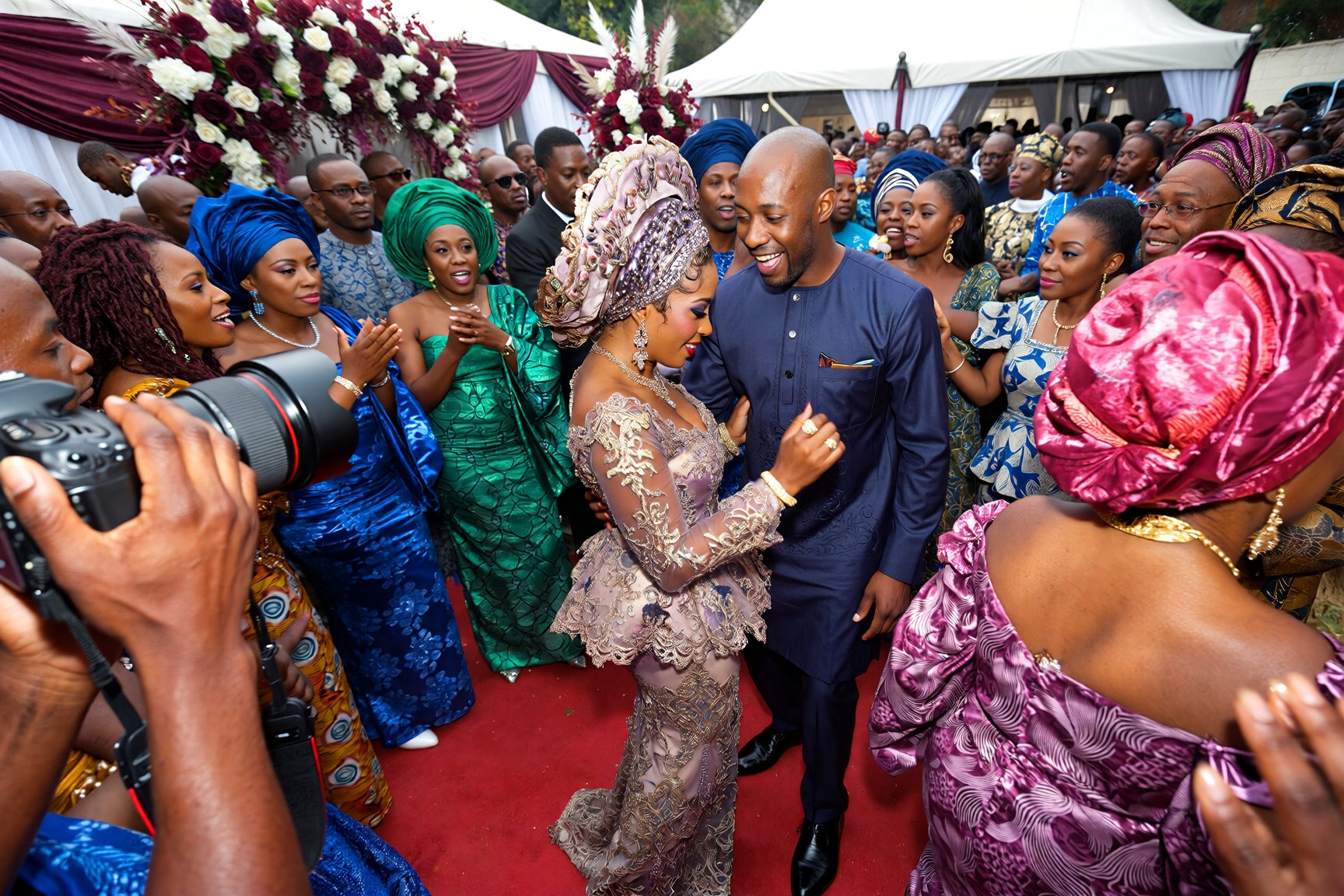
I’m absolutely delighted you’ve found your way here, because if there’s one question I’ve been asked repeatedly during my years writing about Nigerian culture, it’s this one. After attending countless weddings across Nigeria (from Lagos to Kano, from Enugu to Calabar) and conducting eight months of intensive research into wedding traditions across our 371 ethnic groups, I’ve finally assembled what I hope will be your comprehensive guide to understanding Nigerian wedding duration. This article represents not just research, but genuine lived experience with Nigerian marriage celebrations.
The short answer? A Nigerian wedding typically lasts between 6 and 16 hours for a single ceremony, but most couples actually have multiple ceremonies spanning several days, weeks, or even months. The long answer involves understanding our rich cultural complexity, religious diversity, and the fascinating ways tradition intersects with modern expectations.
Traditional ceremonies alone usually run 6 to 10 hours, white weddings take 4 to 7 hours, and Islamic nikah ceremonies are comparatively brief at 1 to 3 hours. But here’s what makes it wonderfully complicated: most Nigerian couples don’t just have one ceremony. They have two, three, sometimes four separate events, each with its own timeline, guest list, and cultural significance.
Whether you’re planning your own Nigerian wedding, attending as a guest, or simply curious about how we celebrate matrimony in Africa’s most populous nation, I’ll walk you through everything you need to know about timing, duration, and what to expect.
Understanding Nigerian Wedding Timeline Variations
Right, let me start by explaining something that confuses many newcomers to Nigerian wedding culture. When we say “wedding,” we’re not necessarily talking about a single event. We’re discussing a process that unfolds across multiple distinct ceremonies, each with its own purpose, cultural significance, and yes, its own duration.
I still remember my first proper introduction to this complexity. My cousin Bola married an Igbo man from Enugu, and I naively thought I’d attend “the wedding” on Saturday. Wrong. There was the introduction ceremony on Thursday (which the bride’s family hosted and ran about 5 hours). Friday brought the traditional marriage at the bride’s family compound (a sprawling 8-hour affair with enough food to feed a small village). Saturday was the white wedding at church (a relatively modest 6-hour celebration). Sunday? An after-party reception that started at 2pm and didn’t end until well past midnight.

That’s 4 separate events spanning 4 days. Total active celebration time? Approximately 28 hours. And that doesn’t count the private family meetings, prayers, and informal gatherings that happened around the main ceremonies.
This multiple-ceremony structure stems from Nigeria’s unique cultural position. We have 371 recognised ethnic groups, with the three largest being Yoruba, Igbo, and Hausa-Fulani. Each brings distinct marriage traditions. Layer on top of that our religious diversity (Christianity, Islam, and traditional African religions). Then add our legal system, which recognises both customary and statutory marriages under Nigerian law. The result? Most couples feel obligated to satisfy multiple constituencies through separate ceremonies.
According to the National Population Commission, approximately 68% of Nigerian marriages now involve at least two separate ceremonies (traditional and either church or registry), whilst about 35% involve three or more distinct events. This isn’t mere extravagance (though that plays a role!). It’s about honouring family, respecting tradition, fulfilling religious obligations, and gaining legal recognition simultaneously.
The duration question becomes even more complex when you consider preparation time. The actual ceremonies might span several days, but the planning process often extends months. Families begin negotiations 6 to 12 months before the first ceremony. Bride price discussions alone can involve multiple meetings over several months.
Some ethnic groups include pre-wedding rituals that add days to the total timeline. Yoruba families might hold a separate introduction ceremony weeks before the main traditional wedding. Igbo customs include the Iku aka (initial inquiry visit) and Ime ego (bride price negotiation) as distinct events preceding the wine-carrying ceremony. Hausa weddings feature the Na gani kayan daki ritual (displaying the bride’s trousseau) that happens days before the Fatihah.
Let me share a seven-step guide to understanding how wedding duration actually works in Nigerian context:
Step 1: Distinguish Between Ceremony Types and Their Durations
First, understand that Nigerian weddings come in distinct types, each with typical duration ranges. Traditional weddings (customary ceremonies rooted in ethnic traditions) generally last 6 to 10 hours. Church weddings (Christian white weddings) typically run 4 to 7 hours. Islamic nikah ceremonies are considerably shorter at 1 to 3 hours. Registry weddings (statutory marriages at government registries) take only 30 minutes to 2 hours for the actual ceremony, though couples often add receptions extending the event to 5 or 6 hours total. Knowing which type you’re attending or planning helps set realistic time expectations.
Step 2: Account for the Multi-Ceremony Structure
Most Nigerian couples have at least two separate weddings. Budget time not just for individual ceremonies but for the overall wedding process. If you’re attending as a guest, ask the couple which events they expect you at (not every guest is invited to every ceremony). If you’re planning your own wedding, understand that trying to combine everything into one day rarely satisfies all stakeholders. Family elders typically insist on proper traditional ceremonies regardless of your preference for a simple affair. Religious communities expect church or mosque ceremonies. The government requires registry marriage for certain legal benefits. Plan for 2 to 4 distinct events rather than attempting an impossible all-in-one solution.
Step 3: Understand Ethnic-Specific Timeline Variations
Your ethnic background (or your spouse’s) dramatically affects wedding duration and structure. Yoruba traditional weddings feature elaborate engagement ceremonies with symbolic items (honey, bitter kola, salt, sugar), multiple outfit changes for the bride, extensive dancing and entertainment, and lengthy owo ori (bride price) negotiations. These typically run 8 to 12 hours. Igbo traditional weddings centre on the dramatic Igba Nkwu Nwanyi (wine-carrying ceremony), complex family introduction stages, and detailed engagement lists. Duration averages 6 to 10 hours. Hausa-Fulani Islamic weddings follow Islamic protocols with separate male and female gatherings, the Fatihah ceremony, and the Kai Amariya (bride’s conveyance to groom’s home). These are often shorter at 4 to 6 hours for main ceremonies, though associated rituals add days.
Step 4: Factor in Travel and Logistics Between Ceremonies
When planning multiple ceremonies across different locations, account for travel time between venues. The traditional marriage might happen in the bride’s hometown whilst the white wedding takes place in the city where the couple lives. I’ve known couples whose traditional ceremony was in Calabar whilst their church wedding happened in Abuja (over 700 kilometres apart!). This necessitates separate weekends or at minimum, different days. Even within the same city, moving 300+ guests from one venue to another takes substantial time. Build in at least 2 to 3 hours between same-day ceremonies to account for photographs, outfit changes, and guest transportation.
Step 5: Plan for Extended Nigerian Time and Cultural Flexibility
Here’s something every experienced Nigerian wedding guest knows: published start times are more aspirational than actual. If the invitation says “12 noon,” smart guests arrive around 2pm because that’s when things truly begin. Nigerian cultural norms around time operate differently than Western punctuality. The ceremony won’t start until key elders arrive (regardless of scheduled time). Important family members need to make grand entrances. Bride preparation always takes longer than planned. Factor in an additional 1 to 3 hours beyond stated timings when estimating total duration. Trying to run a strictly timed Nigerian wedding frustrates everyone and fails anyway. Embrace the flexibility as part of the cultural experience.
Step 6: Consider Guest List Size Impact on Duration
Larger weddings inherently last longer. With 500+ guests (not uncommon for major Nigerian weddings), food service alone extends hours. Receiving lines where couples greet every guest can add 2 to 3 hours. Multiple cake-cutting ceremonies (bride’s family cake, groom’s family cake, couple’s cake) each require speeches and photographs. Dance portions expand as different family groups take turns performing. If you’re planning an intimate 50-person celebration, you might manage 4 to 5 hours. A 300-person traditional wedding realistically needs 8 to 10 hours. A 1,000-guest extravaganza could exceed 12 hours.
Step 7: Build in Recovery Time Between Multi-Day Celebrations
When weddings span multiple days, schedule recovery time for yourselves and key participants. Having traditional marriage Friday, white wedding Saturday, and reception Sunday sounds efficient but leaves everyone exhausted. The bride who dances for 8 hours Friday might barely stand by Sunday. Consider spreading major ceremonies across alternate weekends or building in rest days. I’ve seen smart couples do traditional marriage one Saturday, white wedding two weeks later, and registry ceremony the following month. This spreads costs, reduces stress, and gives each ceremony proper attention rather than making everything feel rushed and exhausting.
Traditional Nigerian Wedding Duration Patterns
Let me dive deeper into the traditional ceremony duration, because this is where cultural diversity truly shines through. What Nigerians call “traditional marriage” or “traditional wedding” varies enormously depending on ethnic group, family wealth, and regional location, but certain patterns emerge consistently.
A typical traditional Nigerian wedding begins mid-morning (theoretically around 10am or 11am, realistically closer to 1pm or 2pm) and extends into the evening, often not concluding until 7pm, 8pm, or even later. The ceremony follows a fairly predictable structure across most ethnic groups, though the specific rituals, duration of each component, and overall timing vary considerably.
The opening stage involves the groom’s family arriving at the bride’s family compound or venue. This isn’t a quick entrance! The groom’s delegation might spend 30 minutes to 2 hours in choreographed arrival ceremonies, with singing, dancing, and formal presentations. They’re often stopped at the gate (literally or symbolically) by the bride’s family representatives who demand “toll payments” in a playful ritual that can add another 15 to 45 minutes.
Once inside, formal introductions begin. Both families present their delegates, often with elaborate titles and family histories. This portion typically consumes 1 to 2 hours. In Yoruba traditional weddings, the alaga ijoko (mistress of ceremonies for the bride’s family) and alaga iduro (mistress of ceremonies for the groom’s family) exchange witty banter, proverbs, and challenges that entertain guests whilst establishing family credentials.
The bride price negotiation and presentation forms the ceremonial heart, though actual negotiations happened weeks or months earlier during separate family meetings. The public ceremony involves formally presenting the agreed items and cash, often with dramatic flair. Expect 1 to 2 hours for this segment as families count money, verify items against lists, offer prayers, and make speeches.
Food service represents a massive time investment. Nigerian traditional weddings feature abundant, elaborate catering. Guests expect multiple courses. Serving 300 to 500 guests takes substantial time. Allow 2 to 3 hours for meals and refreshment portions scattered throughout the event.
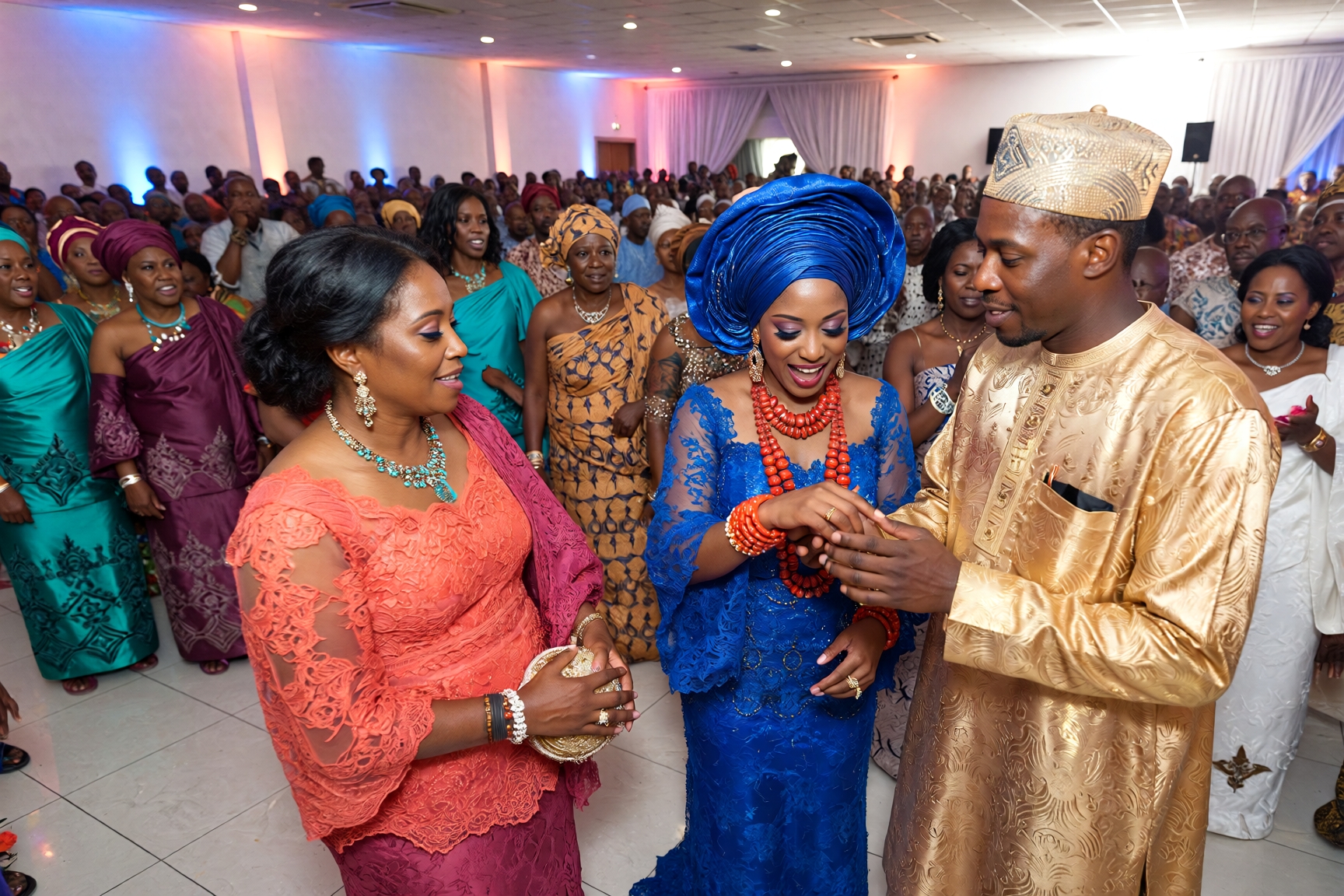
Then comes the cultural highlight: the bride’s grand entrance and various ceremonial rituals. Traditional Igbo weddings feature the wine-carrying ceremony where the bride searches for her groom amongst the crowd and kneels to offer him palm wine. This dramatic segment with music, dancing, and ceremony typically runs 45 minutes to 90 minutes. Yoruba ceremonies might include the honey-tasting ritual where the couple feeds each other to symbolise sweetness in marriage. Hausa ceremonies feature the veiling of the bride and formal acceptance speeches.
Dancing and entertainment permeate the entire event but intensify toward the end. Different family groups take turns performing traditional dances. Live bands or DJs keep energy high. The spraying of money (guests dancing with the couple whilst placing Naira notes on their foreheads or clothes) can extend for hours. This celebratory portion easily consumes 2 to 4 hours of total wedding time.
Photographs represent another significant time investment. The couple needs photos with their nuclear families, extended families on both sides, friends, age grades, professional associations, and countless other groups. Between outfit changes (the bride often wears 2 to 4 different traditional outfits during one ceremony!), makeup touch-ups, and gathering groups of 20+ people for photos, allow 2 to 3 hours total for photography spread throughout the event.
Factor in prayers, blessings from elders, gift presentations, speeches from family representatives, and you’ve easily filled 8 to 10 hours. Some traditional weddings extend even longer, particularly amongst affluent families who can afford elaborate entertainment and feel no time pressure.
I attended a Yoruba traditional wedding in Ibadan that started at 1pm (scheduled for 10am!) and concluded after midnight. The ceremony included three separate live bands, four outfit changes for the bride, an elaborate fashion show featuring both families’ aso-ebi (uniform fabric), and a surprise fireworks display. Was it excessive? Perhaps. Was it thoroughly enjoyable? Absolutely!
How Wedding Duration Varies Across Nigeria’s Major Ethnic Groups
Traditional ceremonies differ notably in duration and structure across Nigeria’s three largest ethnic groups. This comparison reveals fascinating cultural priorities reflected in time allocation.
| Ethnic Group | Average Duration | Key Time-Consuming Elements | Typical Start Time | Usual End Time | Number of Outfit Changes | Cultural Focus |
|---|---|---|---|---|---|---|
| Yoruba | 8-12 hours | Elaborate alaga banter (90-120 min), multiple outfit changes (3-5), extensive dancing/music (2-3 hours), owo ori ceremony (60-90 min) | 11am-2pm | 9pm-midnight | 3-5 for bride, 2-3 for groom | Entertainment, display, verbal artistry |
| Igbo | 6-10 hours | Wine-carrying ceremony (60-90 min), family introductions (90-120 min), engagement list presentations (60-90 min) | 12pm-2pm | 7pm-10pm | 2-3 for bride, 1-2 for groom | Family unity, symbolic rituals |
| Hausa-Fulani | 4-8 hours | Separate male/female gatherings (2-3 hours each), Kai Amariya procession (60-90 min), Islamic prayers (30-60 min) | 10am-1pm | 5pm-9pm | 2-3 for bride (modest changes) | Religious observance, modesty, family honour |
| Edo | 6-9 hours | Coral beads presentation (60 min), traditional ruler’s blessings (45-60 min), elaborate dances (90-120 min) | 11am-2pm | 7pm-9pm | 2-3 for bride with heavy beads | Tradition, ancestral connection |
| Efik/Ibibio | 7-10 hours | Bride’s staff presentation ceremony (45-60 min), Ekong society dances (60-90 min), extensive catering (2-3 hours) | 12pm-2pm | 8pm-10pm | 2-4 for bride | Culinary excellence, community bonds |
| Ijaw | 6-9 hours | Canoe arrival ceremonies (if waterside, 60-90 min), traditional wrestling displays (60 min), fishing symbolism rituals (45 min) | 11am-1pm | 7pm-9pm | 2-3 for bride | Cultural heritage, water connections |
This table demonstrates clear patterns in how different ethnic groups structure wedding celebrations. Yoruba weddings prioritise entertainment and public display, often extending longest with elaborate performances and multiple outfit changes that serve as fashion shows. The two alagas (ceremony managers) engage in witty verbal competitions using proverbs and Yoruba traditional wisdom, turning formalities into entertainment that guests genuinely enjoy despite time investment.
Igbo weddings centre on family unity and symbolic rituals, particularly the wine-carrying ceremony where the bride dramatically searches for her groom. Time investment focuses on proper protocol between families rather than pure entertainment. The emphasis on Umunna (extended family) involvement means longer periods dedicated to family introductions and acknowledgements.
Hausa-Fulani Islamic weddings tend toward shorter durations, reflecting Islamic values of modesty and religious propriety over elaborate celebration. The separation of male and female guests into different spaces means simultaneous proceedings rather than sequential entertainment that extends duration. Religious prayers and Quranic recitations structure the ceremony rather than extensive dancing or music.
Edo weddings feature heavy coral beads as status symbols, and the bride’s multiple outfit changes involve removing and re-adorning elaborate beadwork that can weigh several kilograms. This process takes substantial time but reflects cultural values of patience, endurance, and displaying family wealth through traditional adornment.
How Long Does an Entire Nigerian Wedding Process Last?
When asking about entire wedding duration, we need to distinguish between individual ceremony length and the complete matrimonial process from engagement to final celebration. This broader perspective reveals that Nigerian weddings aren’t single-day events but extended processes that can span months.
The entire timeline typically begins with introduction ceremonies (2 to 6 months before main events). The groom’s family formally visits the bride’s family to declare intentions. This initial meeting lasts 2 to 4 hours but sets everything in motion. Following successful introduction, families schedule bride price negotiations (1 to 3 months later). These negotiation sessions involve family elders and can require multiple meetings of 3 to 5 hours each, spread across several weeks.
Once bride price is agreed, the traditional marriage ceremony gets scheduled (typically 2 to 6 months after negotiations conclude). This main traditional event runs 6 to 12 hours as we’ve discussed. But many couples don’t stop there. They add a church wedding or Islamic nikah (scheduled 2 weeks to 6 months after traditional marriage). Christian white weddings last 4 to 7 hours. Islamic ceremonies take 1 to 3 hours but often include separate women’s celebrations that add time.
Some couples also complete registry marriages for legal documentation, though this might happen before, between, or after traditional and religious ceremonies. The registry ceremony itself takes only 30 minutes to 2 hours, though couples often host receptions extending total time to 5 to 6 hours.
Let me give you a real example. My colleague Amaka married Chinedu in 2023. Here’s their complete timeline:
March: Introduction ceremony at Amaka’s family home in Owerri (4 hours, immediate families only)
May: First bride price negotiation meeting (3 hours, family elders present)
June: Second negotiation session finalising agreements (4 hours)
August: Traditional marriage ceremony in Owerri (9 hours, 400+ guests)
October: White wedding in Abuja where couple lives (6 hours including church service and reception, 250 guests)
November: Registry marriage (1 hour ceremony, 3-hour lunch reception for close family, 40 guests)
Total active celebration time: 30 hours. Total process duration: 9 months from introduction to final celebration. Total cost: approximately ₦15.8 million.
This extended timeline isn’t unusual. According to recent Guardian Nigeria research, the average Nigerian couple planning a full traditional wedding plus church wedding or nikah spends 8 to 14 months in preparation, with total active ceremony time ranging from 18 to 35 hours spread across 2 to 5 separate events.
The process can extend even further in certain circumstances. If the couple comes from different ethnic groups, they might hold separate traditional ceremonies for each family (adding another 6 to 10 hour event). Couples living abroad sometimes schedule ceremonies during separate visits home, spacing events across a year or more.
What drives this extended timeline? Several factors conspire to lengthen the process. Financial constraints mean couples save incrementally, scheduling ceremonies as funds become available rather than hosting everything simultaneously. Family politics require giving each side adequate time to prepare, gather relatives, and demonstrate proper hospitality. Cultural thoroughness dictates that proper procedures not be rushed; elders insist on adequate time between stages to ensure families perform due diligence. Work and travel logistics complicate scheduling when couples live in different states or countries from their families.
I’ve seen couples complete the entire process within 3 months (usually when pregnancy prompts urgency or when families are unusually cooperative and well-funded). I’ve also witnessed weddings that took 2+ years to complete, with couples having traditional marriage immediately but postponing the expensive white wedding until financial circumstances improved.
The Nigerian government’s marriage requirements don’t mandate this extended timeline. The Ministry of Interior marriage portal processes registry marriages within weeks of application. But social and family expectations create the extended process that transforms Nigerian weddings into multi-month, multi-ceremony celebrations.
What Is the 50 20 30 Rule for Nigerian Weddings?
Right, let me address this rather interesting question because it’s been making rounds in Nigerian wedding planning circles lately, particularly amongst younger couples trying to manage wedding budgets sensibly. The 50 20 30 rule for Nigerian weddings isn’t a traditional cultural guideline (you won’t find our grandmothers discussing it!). Rather, it’s a modern financial planning framework that smart couples apply to wedding expenditure.
The rule suggests dividing your total wedding budget like this: 50% on the main ceremony and reception (venue, catering, entertainment), 20% on bride’s attire, groom’s attire, and bridal party, and 30% on pre-wedding expenses, photography/videography, and post-wedding costs. Let me break down how this actually works in Nigerian context with realistic Naira figures.
For a mid-range Nigerian wedding with a total budget of ₦10 million, here’s the breakdown. The 50% main ceremony allocation (₦5 million) covers venue rental (₦800,000 to ₦1.5 million depending on location and prestige), catering for 300-400 guests (₦2.5 to ₦3 million, approximately ₦7,000 to ₦10,000 per head), entertainment including live band or DJ, MC services (₦500,000 to ₦1 million), decoration and lighting (₦600,000 to ₦1 million), and drinks and small chops for cocktail hour (₦600,000 to ₦800,000).
The 20% attire allocation (₦2 million) funds bride’s traditional attire with accessories (₦400,000 to ₦700,000), bride’s white wedding gown (₦300,000 to ₦600,000), groom’s traditional outfit and agbada (₦200,000 to ₦400,000), groom’s suit for white wedding (₦150,000 to ₦300,000), bridal party outfits or aso-ebi fabrics (₦500,000 to ₦700,000), and hair and makeup for bride and bridal party (₦200,000 to ₦300,000).
The 30% other expenses allocation (₦3 million) covers pre-wedding costs like introduction ceremony expenses, bride price items, engagement gifts (₦800,000 to ₦1.2 million), professional photography and videography packages (₦600,000 to ₦1 million), wedding invitations, programmes, souvenirs (₦300,000 to ₦500,000), transport for bridal party and key family members (₦300,000 to ₦500,000), accommodation for out-of-town guests (₦400,000 to ₦600,000), and post-wedding expenses like thank you gifts, honeymoon (₦600,000 to ₦800,000).
Now here’s where reality diverges from theory. This 50 20 30 framework assumes a single unified wedding budget and ceremony, but we’ve already established that most Nigerian weddings involve multiple separate ceremonies (traditional marriage, white wedding or nikah, possibly registry). So how do couples actually apply this rule?
Some couples create separate 50 20 30 budgets for each major ceremony. If your traditional marriage budget is ₦8 million and your white wedding budget is ₦12 million, you’d apply the formula independently to each event. This better reflects actual spending patterns but requires more complex financial planning.
Other couples apply the rule to their total combined wedding budget across all ceremonies. If total wedding costs run ₦20 million (₦8 million traditional, ₦12 million white wedding), they might allocate 50% (₦10 million) to main ceremonies and receptions combined, 20% (₦4 million) to all attire across both events, and 30% (₦6 million) to pre-wedding, documentation, photography, and post-wedding costs.
The Nigerian twist on the 50 20 30 rule necessarily accounts for bride price costs. Traditional Western budget frameworks don’t include payments to the bride’s family, but Nigerian couples must budget for bride price, which can range from ₦50,000 in some communities to ₦5 million or more in others. This expense doesn’t fit neatly into the 50 20 30 categories, so couples either create a separate bride price allocation outside the framework or include it within the 30% pre-wedding category (which then becomes inadequate for other costs).
Family contributions complicate the budget formula further. Unlike Western weddings where couples often fund everything themselves, Nigerian weddings typically involve substantial family contributions from both sides. The groom’s family might provide ₦5 million whilst the bride’s family contributes ₦3 million and the couple saves ₦4 million (totalling ₦12 million budget). Who controls allocation across the 50 20 30 categories? Usually multiple stakeholders with different priorities, making strict adherence to the formula challenging.
I’ve found that younger, more financially independent couples appreciate the 50 20 30 framework as it brings discipline to wedding planning that might otherwise spiral into debt-inducing extravagance. One friend, Ngozi, told me, “My mother wanted to spend ₦3 million just on my wedding gown. Using the 20% rule from our ₦10 million budget meant showing her that ₦2 million total for ALL attire was the responsible allocation. It gave me objective backing when negotiating family expectations.”
However, the rule works better for modest to mid-range weddings (₦5 million to ₦15 million total) than for elaborate society weddings where ₦50 million budgets might apply completely different logic. At that level, attire might consume only 10% whilst entertainment and venue reach 60% because you’re booking international DJs, building temporary event structures, and flying in guests from abroad.
My honest assessment? The 50 20 30 rule provides helpful guidance for Nigerian couples trying to allocate wedding budgets sensibly, but apply it flexibly rather than rigidly. Use it as a starting framework, then adjust for Nigerian realities like multiple ceremonies, bride price costs, significant family contributions, and cultural obligations that Western budget models don’t anticipate. The goal isn’t perfect mathematical adherence but rather avoiding the common trap where couples spend 70% on attire and decorations whilst serving guests terrible food because they ran out of money!
What Does a Nigerian Wedding Ceremony Consist Of?
Let me walk you through the actual components that fill those 6 to 12 hours of ceremony time, because understanding what happens during a Nigerian wedding helps explain why they last so long. I’ll focus on traditional marriages since those tend to run longest, though I’ll note religious ceremony elements as well.
A traditional Nigerian wedding begins with the groom’s arrival, which is never a simple entrance! The groom comes with his family delegation (called different names across ethnic groups – igba nkwu in Igbo, afamefuna in some dialects), often dressed in matching traditional attire called aso-ebi. They might arrive dancing to live drummers, singing traditional songs, or in choreographed procession that immediately establishes this will be no ordinary day.
The bride’s family doesn’t simply let them waltz in either. Young men from the bride’s side (her brothers, cousins, age mates) block the entrance demanding “toll” for passage. This playful ritual, which Yorubas call orun (begging for entrance), involves mock negotiations where the groom’s side must pay small amounts of money, offer drinks, or perform requested tasks before gaining admission. I’ve seen this entrance ritual consume 30 to 90 minutes, with both sides thoroughly enjoying the banter and delay!
Once inside, formal greetings begin. The groom’s family representatives present themselves to the bride’s family elders. This isn’t casual “hello, nice to meet you” chat. It’s elaborate protocol involving prayers, proverbs, and formal acknowledgements. Each side might present 10 to 15 key family members with their titles, accomplishments, and family connections. In Yoruba traditional ceremonies, the alaga might take 15 minutes just introducing the groom’s parents using flowery Yoruba oratory and proverbs!
The statement of purpose follows these introductions. The groom’s family elder (usually his father, uncle, or designated orator) formally declares why they’ve come: “We have come to your respected family compound in search of a precious flower that grows in your garden.” (Nigerians rarely speak directly when beautiful metaphors will suffice!) The bride’s family responds with equal formality, sometimes feigning ignorance: “Which flower do you speak of? We have many treasures in our compound!” This ceremonial dialogue, dripping with cultural idioms and wisdom sayings, can easily take 30 to 45 minutes whilst guests laugh and enjoy the performance.
The bride price presentation represents a ceremonial centrepiece, though negotiations concluded weeks earlier in private family meetings. The groom’s family now publicly presents items and cash demanded by tradition. These might include traditional attire for bride’s mother, cases of drinks, kola nuts, bitter kola, palm wine, yams, livestock (in some communities), and cash in agreed amounts. Each item gets called out, verified against the list, and formally received with prayers and acknowledgements. Factor in 60 to 90 minutes for this elaborate presentation ceremony.
Food service begins during or after bride price presentation, and here’s where timing becomes flexible. Nigerian traditional weddings don’t have single seated dinner service. Instead, different courses circulate throughout the event. Small chops and appetizers keep guests satisfied early. Main meals get served family-style (in many traditional settings) or buffet-style (in more contemporary venues). Drinks flow continuously. Multiple rounds of serving 300+ guests inherently consumes 2 to 3 hours spread across the celebration.
The bride’s entrance always arrives as a highlight guests eagerly anticipate. She doesn’t just walk in. She makes a grand entrance (or series of entrances if she changes outfits multiple times!) accompanied by her bridal train, dancing to music, possibly performing choreographed steps. Her outfit, makeup, and traditional accessories display family wealth and cultural pride. This entrance alone, with accompanying ceremony and photographs, takes 20 to 40 minutes per outfit change.
Cultural rituals specific to each ethnic group form the ceremonial heart. Igbo weddings feature the wine-carrying ceremony (Igba Nkwu) where the bride, holding a special cup of palm wine, searches through the crowd for her groom. Other men playfully call her, trying to distract her, but she must find and kneel before her intended, offering him the drink. His acceptance signals their union to everyone present. This beautiful ritual, with all its dramatic buildup, music, and emotion, easily runs 45 to 90 minutes.
Yoruba ceremonies might include honey-tasting (where the couple feeds each other honey to symbolise sweetness in marriage), pepper-tasting (representing readiness to endure life’s difficulties together), and elaborate prostration ceremonies where the bride prostrates before family elders receiving blessings. Each symbolic ritual requires explanations for guests, performance, photographs, and prayers.
Religious elements often blend into traditional ceremonies despite technically being separate. Christian couples might request a pastor to pray or offer brief remarks during traditional marriage. Muslim couples ensure Islamic protocols are observed during Hausa-Fulani traditional celebrations. This religious-traditional fusion adds prayers, Quranic recitations, or biblical readings that extend duration 20 to 40 minutes.
Prayers and blessings from elders represent serious, sacred portions that guests attend to respectfully. Multiple family elders (sometimes 5 to 10 different people) offer prayers in local languages, asking ancestors, God, or Allah to bless the union. These prayers can be lengthy and deeply meaningful, consuming 30 to 60 minutes total.
Dancing and spraying money dominates the celebratory latter portions. The couple dances whilst guests approach them, dancing alongside whilst placing Naira notes on their foreheads, tucking money into their clothes, or throwing notes in the air around them. This “money spraying” custom (sometimes called “naira rain”) transforms the dance floor into a joyful spectacle where guests publicly demonstrate generosity. With 300 guests who want their moment dancing with the couple, this segment easily extends 2 to 3 hours.
Live entertainment keeps energy high throughout. Many families hire live bands (juju music for Yoruba events, highlife bands for Igbo ceremonies, talking drummers, praise singers) who perform traditional music. These musicians aren’t background ambiance; they’re featured entertainment that guests expect to enjoy. Performance segments between other ceremony portions add at least 1 to 2 hours to total duration.
Photographs probably consume more time than any single element, scattered throughout the event rather than concentrated in one period. The couple photographs with immediate families, then with extended families on each side, then with friends grouped by category (university friends, work colleagues, church members, age grades, social clubs). Each grouping requires gathering people, arranging them, multiple shots, and dispersal before the next group assembles. Between outfit changes that require makeup refreshing, the bride and groom might spend cumulatively 3 to 4 hours in various photograph sessions across the event.
Departure ceremonies conclude events, though in elaborate weddings these aren’t simple goodbyes. The bride formally bids farewell to her family, sometimes with symbolic tears (the “crying ceremony” in some cultures). The groom’s family escorts her to their vehicle with dancing and singing. In some traditions, the bride’s feet shouldn’t touch the ground as she leaves, so she’s carried by relatives. Final prayers, throwing of rice or petals, and celebratory send-off add another 30 to 45 minutes.
Church weddings follow different structure but also consume substantial time. The ceremony itself (church service with exchange of vows, rings, prayers, sermon) lasts 1.5 to 3 hours in Nigerian churches where worship is robust, lengthy, and participatory. The reception following (held at separate venue or church hall) includes couple’s entrance, first dance, cake cutting, multiple speeches from both families, food service, dancing and money spraying, bouquet toss, and couple’s departure. Reception portions easily run 4 to 5 hours.
Islamic nikah ceremonies are comparatively brief. The actual nikah (marriage contract signed in presence of witnesses with Islamic prayers) might conclude within 30 to 60 minutes. However, Nigerian Muslim weddings typically include substantial celebration surrounding this brief ceremony. The women’s gathering (where female relatives celebrate with the bride) runs several hours separate from the men’s portion. The Walimah (marriage feast) that Islam encourages can extend hours beyond the nikah proper.
Understanding these components clarifies why Nigerian weddings last as long as they do. We’re not padding time with pointless delays (though “Nigerian time” certainly contributes!). We’re honouring complex protocols, satisfying multiple stakeholders, feeding hundreds of guests properly, creating space for meaningful rituals, celebrating joyfully with music and dance, and documenting everything thoroughly with photographs. Each element matters to someone, serves a purpose, or fulfils a cultural obligation. The duration reflects the weight of what’s happening: two families joining, communities blessing a union, and cultural heritage passing to a new generation.
Who Pays for a Nigerian Wedding and How Does This Affect Duration?
The financial responsibility for Nigerian weddings differs significantly from Western models, and this actually influences wedding duration in fascinating ways. Let me explain the traditional expectations and how they’ve evolved, because understanding who pays illuminates why certain ceremony portions receive more time and attention.
Traditionally, the groom and his family bear primary financial responsibility for Nigerian weddings. This stems from the bride price system where the groom’s family demonstrates capacity to care for the bride through gifts and payments to her family. If his family can afford to pay substantial bride price, they can afford to host a proper wedding feast. This logic places venue costs, catering expenses, entertainment, and core ceremony costs on the groom’s family ledger.
However, the bride’s family isn’t passive recipients with no obligations! They host introduction ceremonies at their compound, provide refreshments during bride price negotiations, and traditionally furnish their daughter’s kitchen equipment and bedroom furnishings (the trousseau). In some ethnic groups, the bride’s family covers decoration costs whilst the groom’s side handles food. These divided responsibilities mean both families invest substantially.
Modern reality has shifted these dynamics considerably. Many Nigerian couples today fund their own weddings largely or entirely, particularly educated urbanites who’ve been working and saving for years. They might accept family contributions but maintain financial control, which changes power dynamics around decision-making. If the couple funds the wedding, they determine duration, guest list, and ceremony type rather than deferring completely to family elders.
Here’s what typical financial splits look like in contemporary Nigerian weddings. For traditional marriages, the groom’s family typically pays bride price (₦50,000 to ₦5 million), engagement gifts (₦200,000 to ₦1.5 million), venue rental if not at family compound (₦500,000 to ₦2 million), catering (₦2 million to ₦6 million), and entertainment (₦300,000 to ₦1.5 million). The bride’s family pays for the bride’s traditional attire and accessories (₦300,000 to ₦1 million), decoration (₦400,000 to ₦1.2 million), refreshments during negotiations (₦100,000 to ₦300,000), and trousseau and kitchen equipment (₦500,000 to ₦2 million). The couple themselves often contribute to photography/videography (₦500,000 to ₦1.5 million), wedding invitations (₦150,000 to ₦400,000), and honeymoon (₦800,000 to ₦3 million).
For white weddings or church ceremonies, similar patterns emerge though the couple often assumes more direct costs. The groom’s family or couple pay for venue (₦800,000 to ₦3 million), catering (₦3 million to ₦10 million for elaborate receptions), drinks (₦800,000 to ₦2 million), and band or DJ (₦400,000 to ₦1.5 million). The bride’s family or couple cover the bridal gown and accessories (₦300,000 to ₦1.5 million), bridal party dresses (₦400,000 to ₦1 million), flowers and church decoration (₦200,000 to ₦600,000), and cake (₦150,000 to ₦500,000 for elaborate tiers).
Now here’s how financial responsibility affects duration. When the groom’s family pays, they want value for their massive investment. That ₦5 million traditional wedding better last all day and impress everyone! Short ceremonies feel like poor return on investment. They’ll extend entertainment, add live bands, encourage elaborate dancing, and keep the celebration going to justify expenditure and demonstrate generosity publicly.
When the couple controls the budget, they might opt for shorter, tighter ceremonies that respect guests’ time. I’ve noticed that couple-funded weddings tend to run 6 to 8 hours whilst family-funded traditional ceremonies often extend 10+ hours because different generations have different priorities around duration.
Family pride also influences duration through financial lens. If one family pays for certain ceremony portions, they ensure those portions receive adequate time and attention. The bride’s family funding decoration wants sufficient time for guests to admire and photograph their beautiful setup. The groom’s family paying for entertainment ensures musicians perform extensively. When families compete to outdo each other (as sometimes happens between bride’s and groom’s sides), duration extends as each group insists on their financed portion receiving proper emphasis.
The financial strain of multiple ceremonies explains why weddings spread across months rather than compressing into one weekend. Few Nigerian families can afford to fund both elaborate traditional marriage (₦5 to ₦12 million) and lavish white wedding (₦8 to ₦20 million) simultaneously. Spacing ceremonies 3 to 6 months apart allows families to recover financially, save for the next event, and give each celebration proper financial backing. This financial reality directly lengthens the overall wedding timeline from first ceremony to final celebration.
According to recent Guardian Nigeria reporting that examined contemporary Nigerian marriage culture, the average Nigerian wedding now costs ₦13 million, with traditional ceremonies averaging ₦3.3 million, white weddings ₦8.9 million, and proposals ₦600,000. These figures explain why 68% of Nigerian couples now involve both families plus their own savings rather than relying on single-source funding. When multiple contributors fund weddings, negotiations about duration, venue, and celebration style become more complex, often resulting in longer ceremonies that accommodate diverse expectations.
Answering the Central Question: How Long Does a Nigerian Wedding Last?
Let me answer this directly now, bringing together everything we’ve explored. How long does a Nigerian wedding last? A single Nigerian wedding ceremony lasts between 4 and 16 hours depending on ceremony type, ethnic group, family wealth, and guest count. Traditional customary marriages average 6 to 10 hours. Christian white weddings run 4 to 7 hours including church service and reception. Islamic nikah ceremonies last 1 to 3 hours for the core ceremony though associated celebrations extend longer. Registry marriages take only 30 minutes to 2 hours for the ceremony proper, often with receptions adding 3 to 5 hours.
However, most Nigerian couples don’t have just one ceremony. The complete wedding process typically spans multiple separate events over several days, weeks, or months. A typical sequence includes introduction ceremony (2 to 4 hours, weeks or months before main events), traditional marriage (6 to 12 hours), church wedding or Islamic nikah (4 to 7 hours, scheduled weeks or months after traditional marriage), and possibly registry marriage (1 to 6 hours with reception). Total active celebration time across all ceremonies ranges from 15 to 35 hours. The timeline from first ceremony to final celebration extends 1 week to 12+ months depending on family logistics and finances.
Why such variation? Nigerian weddings resist simple answers because we’re discussing 371 distinct ethnic groups, multiple religious traditions, varying economic circumstances, and different balances between tradition and modernity. A modest Hausa nikah in Kano with 100 guests might conclude within 3 hours total. A lavish Yoruba society wedding in Lagos with 800 guests could exceed 14 hours. Both are authentically Nigerian weddings reflecting different cultural contexts.
The most common pattern amongst middle-class Nigerian couples involves two major ceremonies: traditional marriage (7 to 9 hours) held on one day, and white wedding or nikah (5 to 7 hours) held on a different day 2 weeks to 3 months later. This creates total celebration time of 12 to 16 hours across two events, with overall timeline spanning 2 weeks to 3 months from first to final ceremony.
What determines where specific weddings fall within these ranges? Ethnic group significantly impacts duration, with Yoruba weddings generally running longest (8 to 12 hours for traditional ceremonies) due to emphasis on entertainment and elaborate protocol, Igbo weddings averaging moderate duration (6 to 10 hours) with focus on family rituals, and Hausa-Fulani Islamic weddings tending toward briefer ceremonies (4 to 6 hours core events) reflecting Islamic modesty values. Guest count directly affects duration, as serving 200 guests takes half the time of serving 500 guests. Photography needs extend proportionally with guest count since more relationship groups require pictures.
Family wealth influences duration through ability to afford extended entertainment, multiple outfit changes requiring time, elaborate catering that takes longer to serve properly, and prestigious venues that families want guests to enjoy fully, justifying extended timeline. Cultural priorities determine time allocation, with families valuing entertainment extending music and dancing portions, those emphasising protocol investing more time in formal introductions and speeches, and those prioritising feasting dedicating substantial hours to meals and refreshments.
The couple’s personal preferences matter increasingly as younger Nigerians assert more control over their celebrations. Some request shorter, tighter ceremonies respecting modern lifestyles and guests’ time, whilst others embrace marathon celebrations that honour tradition fully. Location context affects duration, with urban weddings in Lagos, Abuja, or Port Harcourt sometimes running shorter due to venue time restrictions and traffic concerns, whilst rural hometown celebrations often extend longer with fewer time pressures and more relaxed pacing.
Nigerian weddings last as long as they do because they accomplish multiple objectives simultaneously. They’re not merely legal unions but family alliances that require extensive negotiation, protocol, and mutual acknowledgement consuming hours. They’re not simple parties but cultural inheritance ceremonies where traditions pass to new generations through elaborate rituals that cannot be rushed. They’re not private affairs but community celebrations where hundreds of stakeholders expect inclusion, recognition, and participation that inherently extends duration. They’re not inexpensive events but major investments that families want to maximise through extended celebration justifying their financial outlay.
The duration also reflects Nigerian cultural values around time, celebration, and community. We don’t prize efficiency over thoroughness. We don’t value brevity over meaning. We don’t rush moments that deserve savouring. When elders offer prayers, we listen respectfully regardless of length. When families dance in celebration, we join them until energy naturally wanes rather than cutting off joy because a schedule demands it. This cultural orientation toward flexible, expansive time (what scholars call “polychronic time” in contrast to Western “monochronic time”) means Nigerian weddings naturally extend to fill the celebratory space available.
For practical planning purposes, I advise couples and guests to expect Nigerian traditional weddings to run 8 to 10 hours from stated start time (adding 2 hours for “Nigerian time” to actual start), white weddings to consume 5 to 7 hours including church service, and Islamic ceremonies to last 3 to 5 hours including the walimah feast. Build in flexibility rather than rigid schedules, and embrace the cultural richness that duration enables rather than resisting the timeline.
Bringing This Journey to a Close: Understanding Nigerian Wedding Duration in Context
We’ve covered substantial ground together, from the basic question of ceremony length to the complex realities of multi-day, multi-ceremony wedding processes that define Nigerian matrimony. What I hope you’ve gathered from this exploration is that Nigerian wedding duration isn’t arbitrary or excessive but rather reflects deep cultural values, complex family dynamics, and the profound importance our society places on marriage as a communal, not merely individual, milestone.
Whether you’re planning your own Nigerian wedding and wondering if that 10-hour traditional ceremony is truly necessary (yes, your family will insist it is!), attending as a guest and shocked that events stretch hours beyond stated times (welcome to Nigerian time!), or simply fascinated by how different cultures celebrate love and commitment, understanding duration helps you appreciate the broader cultural context.
Nigerian weddings last long because marriages matter enormously in our society. The extended timeline creates space for families to properly acknowledge this life-changing union, for communities to witness and bless the couple’s commitment, for cultural traditions to be honoured and transmitted to younger generations, and for joy to be celebrated thoroughly rather than rushed through. Every hour of ceremony serves purposes that might not be immediately obvious to outsiders but carry profound meaning for participants.
The evolution I’ve witnessed over my years covering Nigerian weddings fascinates me. Younger couples increasingly negotiate duration, trimming some traditional elements whilst preserving core cultural components. Technology changes logistics as live-streaming allows diaspora relatives to participate without extending physical guest lists. Economic realities force some scaling back even as social media creates pressure for ever-more-elaborate celebrations. Yet through all these changes, Nigerian weddings remain characteristically lengthy, joyful, family-centred celebrations that resist reduction to Western efficiency models.
My advice to couples planning weddings? Honour your families’ cultural expectations whilst advocating for reasonable duration that doesn’t exhaust yourselves or guests. You can have meaningful traditional ceremonies without extending to 14 hours. Communicate clearly about timing with vendors, families, and guests. Build in buffer time for Nigerian time delays rather than fighting them.
For guests attending Nigerian weddings? Bring patience, comfortable shoes, genuine curiosity about cultural rituals you’re witnessing, and an appetite (you’ll be well-fed!). Embrace the experience rather than checking your watch constantly. Some of life’s richest moments require time to unfold properly.
Understanding Nigerian wedding duration ultimately means understanding Nigerian culture itself: communal, celebratory, protocol-conscious, family-centred, and resistant to clock-dominated efficiency that sacrifices meaning for brevity. Our weddings last as long as they need to accomplish the cultural, spiritual, and social purposes they serve. That’s not a bug in the system; it’s a feature of who we are as Nigerians.
Three Key Takeaways for Planning or Attending Nigerian Weddings
• Plan for the process, not just the day: Nigerian weddings involve multiple ceremonies spanning months. Budget time, money, and energy for the entire process from introduction through final celebration rather than treating it as a single event. Expect 2 to 4 separate ceremonies requiring 15 to 35 total hours of active participation.
• Build in flexibility with timing and expectations: “Nigerian time” adds 1 to 3 hours to any stated start time, and ceremonies naturally extend beyond projected durations. Whether planning or attending, schedule loose buffer time, avoid hard stops (like flights) immediately after ceremonies, and embrace cultural flexibility around timing rather than fighting it.
• Understand duration serves cultural purposes: Those extended hours aren’t wasted time but rather create space for family bonding, cultural ritual performance, community witnessing, elaborate hospitality, joyful celebration, and proper protocol that rushed ceremonies cannot achieve. Appreciate duration as enabling meaningful tradition rather than viewing it as inefficient excess.
Related Cultural Insights Worth Exploring
Understanding Nigerian wedding duration becomes even richer when you explore how these celebrations fit within broader marriage customs and cultural values. If you’re curious about the actual rituals, protocols, and family negotiations that fill those extended wedding hours, I’d recommend reading my comprehensive guide on what are the marriage customs in Nigeria, which details bride price negotiations, traditional engagement ceremonies, and the delicate family politics that shape Nigerian matrimony. That article reveals why weddings take so long: they’re culminations of months-long processes involving extensive family interaction and cultural protocol.
Additionally, you might find valuable insights in my examination of the broader culture of marriage in Nigeria, which explores how Nigerians view marriage as a family alliance rather than purely romantic partnership, explains the communal expectations that drive elaborate wedding celebrations, and discusses how traditional values intersect with modern realities in ways that directly affect wedding planning, duration, and structure. Understanding this cultural context helps explain not just how long Nigerian weddings last but why they’re structured as multi-day, multi-ceremony processes that engage entire extended families and communities.
FAQ: Your Nigerian Wedding Duration Questions Answered
H3: How many hours does a typical Nigerian traditional wedding last?
A typical Nigerian traditional wedding lasts between 6 and 10 hours, though elaborate ceremonies can extend to 12 hours or more. The variation depends on ethnic group, with Yoruba weddings generally running longest (8-12 hours) due to extensive entertainment and protocol, whilst Hausa-Fulani Islamic ceremonies tend toward shorter durations (4-8 hours) reflecting Islamic modesty values.
H3: Why do Nigerian weddings take so long compared to Western weddings?
Nigerian weddings take longer because they accomplish multiple cultural objectives beyond simple marriage ceremony. They unite families through elaborate protocol requiring hours, display cultural heritage through rituals that cannot be rushed, feed hundreds of guests properly with multiple courses, provide extensive entertainment that guests expect, and allow adequate time for photography with numerous family groups, creating duration that serves cultural purposes rather than mere inefficiency.
H3: How long should I expect to spend at a Nigerian white wedding?
You should expect to spend 5 to 7 hours at a Nigerian white wedding, including both church service (90 minutes to 3 hours) and reception (3 to 5 hours). Church services in Nigerian churches feature robust worship, lengthy sermons, and extensive prayers that exceed typical Western ceremony length, whilst receptions include formal protocols, extensive food service, and dancing that naturally extend duration beyond quick Western receptions.
H3: What is the shortest type of Nigerian wedding ceremony?
The shortest type of Nigerian wedding ceremony is the Islamic nikah, which can conclude in 1 to 3 hours for the core religious ceremony where the marriage contract is signed with Islamic prayers and witnesses. However, even Islamic weddings typically include associated celebrations like the Walimah feast and separate women’s gatherings that extend total celebration time to 4 to 6 hours or longer.
H3: How long does the introduction ceremony before a Nigerian wedding last?
The introduction ceremony before a Nigerian wedding typically lasts 2 to 4 hours and involves the groom’s family formally visiting the bride’s family to declare marriage intentions. This initial meeting is relatively brief compared to the main traditional wedding but establishes the relationship between families and sets in motion the longer negotiation process that follows.
H3: Do Nigerian registry weddings take as long as traditional weddings?
No, Nigerian registry weddings are significantly shorter than traditional weddings, with the actual ceremony at government registry offices lasting only 30 minutes to 2 hours. However, couples often host receptions following registry ceremonies, which can extend total event duration to 5 to 6 hours including the celebration portion beyond the brief official ceremony.
H3: How far apart should I schedule my Nigerian traditional and white weddings?
You should schedule your Nigerian traditional and white weddings at least 2 weeks to 3 months apart to allow adequate recovery time, financial planning for the second ceremony, and proper preparation for each event without exhaustion. Some couples extend the gap to 6 months or longer if saving money between ceremonies, whilst others combine them within the same weekend if logistics and finances permit.
H3: What time of day do Nigerian traditional weddings usually start?
Nigerian traditional weddings are officially scheduled to start between 10am and 12pm, though “Nigerian time” means actual commencement typically occurs 1 to 3 hours later between 12pm and 3pm. Smart guests arrive around the stated time or slightly after, knowing the ceremony won’t truly begin until key elders arrive and the bride completes her lengthy preparation process.
H3: How long does the bride price presentation ceremony take during a Nigerian wedding?
The bride price presentation ceremony during a Nigerian wedding takes approximately 1 to 2 hours, involving formal announcement of items and cash, verification against engagement lists, prayers over each significant item, speeches from family representatives, and ceremonial acceptance by the bride’s family. Though actual negotiations occurred weeks earlier, the public presentation ceremony requires substantial time for proper protocol.
H3: Can you shorten a Nigerian traditional wedding to 4 or 5 hours?
You can technically shorten a Nigerian traditional wedding to 4 or 5 hours by eliminating multiple outfit changes, reducing guest count to under 150 people, minimising entertainment portions, and streamlining protocols, but family elders typically resist such brevity as disrespectful to tradition. Most attempts at shortened ceremonies end up extending to at least 6 to 7 hours once cultural expectations and family politics play out during actual events.
H3: How much time should I budget for photography at a Nigerian wedding?
You should budget 3 to 4 hours total for photography at a Nigerian wedding, scattered throughout the event rather than concentrated in one session. This allows time for formal family portraits, bridal party photos, individual couple shots, extended family groupings, professional association pictures, and friend clusters, with breaks needed for bride’s outfit changes and makeup refreshing between photography sessions.
H3: What happens if a Nigerian wedding runs past midnight?
When a Nigerian wedding runs past midnight (which happens regularly with elaborate celebrations), most vendors continue providing services though some charge overtime fees, guests with stamina remain and continue celebrating whilst others depart as needed, and the celebratory atmosphere often intensifies as formalities conclude and pure dancing and enjoyment dominate. Truly grand Nigerian weddings sometimes extend to 2am or 3am without anyone considering this unusual or problematic.

