 Follow Us on Google News
 Follow Us on Google Discover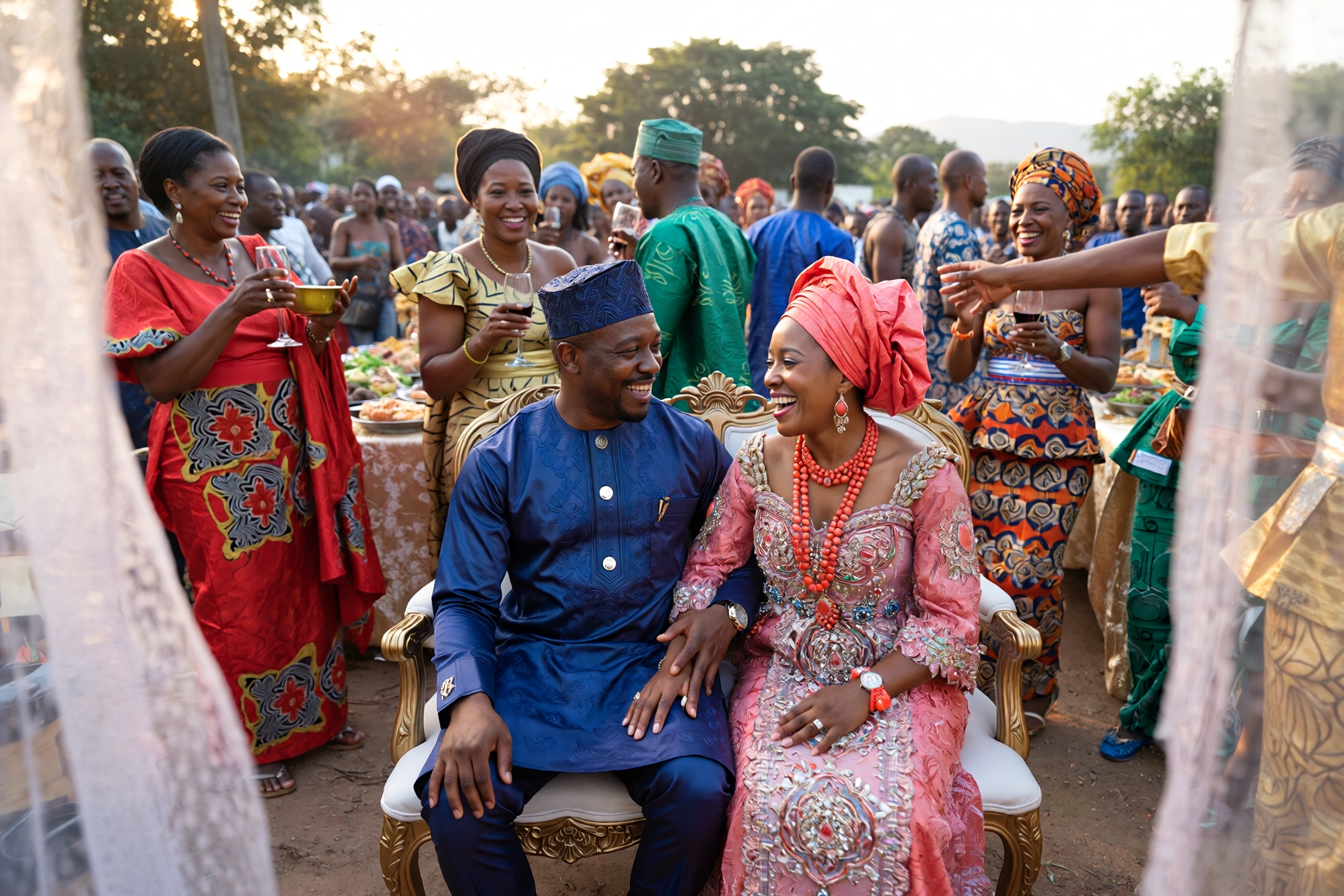
Welcome, dear readers! After spending eight months immersing myself in the rich tapestry of Nigerian wedding ceremonies, attending traditional and religious celebrations from Sokoto to Calabar, and documenting the complex dance between tradition and modernity that defines Nigerian matrimony, I’m absolutely thrilled to share this comprehensive guide with you. The question of whether Nigerians have two weddings opens up a fascinating window into our cultural soul, revealing how we balance ancestral customs, religious observances, and modern expectations in ways that would make international wedding planners’ heads spin.
Yes, most Nigerians have at least two separate wedding ceremonies, sometimes three or even four. The typical sequence involves a traditional wedding following ethnic-specific customs (which itself might include multiple ceremonies from both families’ traditions), followed by a religious ceremony (either a Christian white wedding or Islamic nikah), and potentially a civil registry marriage for statutory recognition. According to the Ministry of Interior’s marriage services data, approximately 60% of Nigerian couples undergo multiple ceremonies to satisfy cultural, religious, and legal requirements simultaneously, creating a months-long wedding journey that tests both commitment and financial resources.
This multi-ceremony approach isn’t mere extravagance or cultural confusion. Rather, it reflects the layered nature of Nigerian identity, where traditional ethnic heritage, religious faith, and modern legal frameworks all demand recognition and respect. Each ceremony serves distinct purposes and satisfies different stakeholders in the marriage process.
Understanding Why Nigerians Celebrate Multiple Wedding Ceremonies
I remember attending my cousin Amaka’s wedding celebrations in 2022. First came the traditional Igbo ceremony in her father’s compound in Owerri, complete with palm wine searching and extensive gift presentations. Two weeks later, we reconvened at the cathedral in Port Harcourt for her white wedding, an elaborate affair with bridesmaids, flower girls, and a five-tiered cake. Finally, three months later, they quietly completed their registry marriage at the Federal Marriage Registry to obtain statutory recognition for visa applications. Same couple, three entirely separate ceremonies, each essential in its own way!
The traditional wedding satisfies cultural requirements and gains family approval. This is where ancestral customs are honoured, bride price is paid, and families formally unite. For most Nigerian ethnic groups, the traditional ceremony represents the legitimate creation of the marriage, regardless of what happens afterwards. My Yoruba friend Tunde once joked that his parents considered him properly married after the traditional ceremony, with everything else being “nice additions for the young people.”
Religious ceremonies fulfil spiritual obligations and community expectations. Christians feel their union isn’t complete without church blessing, whilst Muslims require the nikah ceremony for religious legitimacy. The religious component adds divine sanction to what traditional ceremony already established culturally.

The statutory registry marriage provides legal recognition under the Marriage Act, CAP M6, Laws of the Federation of Nigeria (2004). This becomes particularly important for international documentation, immigration purposes, government employment requirements, and property matters. Many couples discover they need statutory marriage only when applying for spousal visas or accessing certain government services.
Financial pressures shape these multiple ceremonies significantly. The average Nigerian wedding now costs ₦13 million according to recent data, with traditional ceremonies averaging ₦3.3 million and white weddings reaching ₦8.9 million for elaborate celebrations. Couples often space ceremonies months apart specifically to allow time for saving and family contributions between events.
How Long Does the Entire Wedding Journey Last?
The complete wedding process, from initial engagement ceremonies through final celebrations, typically spans 12 to 24 months for most Nigerian couples. This extended timeline accommodates multiple ceremonies, family negotiations, financial planning, and the practical logistics of coordinating events across different locations.
Planning phases consume substantial time before any actual ceremonies begin. Introduction visits, bride price negotiations, and engagement ceremonies can take 3 to 6 months alone, depending on how organised families are and whether inter-ethnic or inter-religious complications arise. My colleague spent four months just negotiating bride price because his wife’s extended family kept expanding the requirements list!
Traditional ceremony preparation requires another 4 to 8 months once dates are set. Booking venues, ordering traditional attire, coordinating caterers, arranging transportation for family members travelling from different states, and handling thousands of logistical details demands serious time investment. Yoruba couples preparing for expensive aso oke fabric and elaborate reception decorations often need the full eight months to gather resources and plan properly.
Religious ceremonies (white weddings or nikah) follow their own timelines. Church weddings require pre-marital counselling (typically 3 months), venue booking often secured 6 to 12 months in advance for popular churches, and elaborate preparation for what many couples consider the “main” wedding day. Islamic nikah ceremonies involve less elaborate preparation but still require proper scheduling with mosque authorities and family coordination.
Registry marriages can theoretically be completed quickly, but couples usually schedule them around the other ceremonies. Some complete registry formalities first to establish legal standing, then proceed with traditional and religious ceremonies. Others finish traditional and religious ceremonies first, treating the registry as a practical formality handled months later when visa applications or other legal needs arise.
The spacing between ceremonies varies dramatically based on finances, family schedules, and personal preferences. Some couples complete everything within three months, whilst others stretch the process over two years as they save money and accommodate various family members’ availabilities and travel schedules.
What Defines the 50 20 30 Wedding Budget Rule?
The 50 20 30 rule for wedding budgeting suggests allocating 50% of your budget to reception costs (venue, catering, drinks, entertainment), 20% to attire and beauty (clothing, makeup, photography), and 30% to other expenses (decorations, gifts, transportation, contingencies). This framework helps couples distribute resources strategically across the many competing demands of Nigerian wedding celebrations.
For Nigerian weddings with their multiple ceremonies, applying this rule becomes more complex. You’re essentially running multiple budget plans simultaneously. A ₦10 million total wedding budget might break down into ₦3.5 million for the traditional ceremony, ₦5.5 million for the white wedding, and ₦1 million for miscellaneous expenses including the registry fees and post-wedding costs.
Within each ceremony budget, the 50 20 30 principle still provides guidance. If you’re allocating ₦5.5 million to your white wedding, you’d ideally spend ₦2.75 million on reception (venue rental at ₦500,000, catering at ₦1.5 million for 500 guests, live band at ₦400,000, drinks at ₦350,000), ₦1.1 million on attire and beauty (bridal gown ₦400,000, groom’s suit ₦200,000, makeup and photography ₦300,000, bridesmaids’ coordination ₦200,000), and ₦1.65 million for everything else.
Traditional ceremony budgeting follows similar patterns but with different cost centres. Reception costs include hall rental, traditional catering featuring substantial rice, stew, and meat servings, and cultural entertainment like talking drummers or cultural dancers. Attire costs focus on expensive traditional fabrics like aso oke, george, or lace, with couples often spending ₦300,000 to ₦1.5 million just on fabric and tailoring.
The challenge with Nigerian weddings is preventing budget creep as family expectations expand. Aunties suggest adding “just a few more people” to the guest list. Cousins volunteer to be part of the wedding party, requiring their aso ebi uniforms. Suddenly your 50 20 30 plan encounters reality, and you’re overspending in every category!
Timeline Breakdown for Planning Nigerian Weddings
| Planning Phase | Typical Duration | Key Activities | Average Cost Range |
|---|---|---|---|
| Introduction & Engagement | 3-6 months | Initial family meetings, bride price list discussion, engagement ceremony | ₦500,000 – ₦2,000,000 |
| Traditional Wedding Preparation | 4-8 months | Venue booking, traditional attire ordering, catering arrangements, invitation distribution | ₦2,000,000 – ₦8,000,000 |
| White Wedding/Nikah Preparation | 3-6 months | Church/mosque booking, pre-marital counselling, reception planning, photography/videography | ₦3,000,000 – ₦15,000,000 |
| Registry Marriage | 2-4 weeks | Document submission, oath taking, certificate collection | ₦50,000 – ₦200,000 |
| Post-Wedding Activities | 1-2 weeks | Thank you visits, gift distribution to family elders, settling vendor payments | ₦200,000 – ₦800,000 |
| Total Journey | 12-24 months | Complete wedding process from engagement to final ceremonies | ₦6,000,000 – ₦25,000,000 |
This breakdown shows just how consuming the Nigerian wedding process becomes, both financially and temporally. Couples essentially dedicate one to two years of their lives managing these celebrations whilst simultaneously handling jobs, planning their future lives together, and maintaining sanity through family pressures and expectations. The costs reflect middle-class urban weddings; rural ceremonies or simpler celebrations cost significantly less, whilst elite Lagos or Abuja weddings easily exceed these figures.
What Components Make Up a Complete Nigerian Wedding?
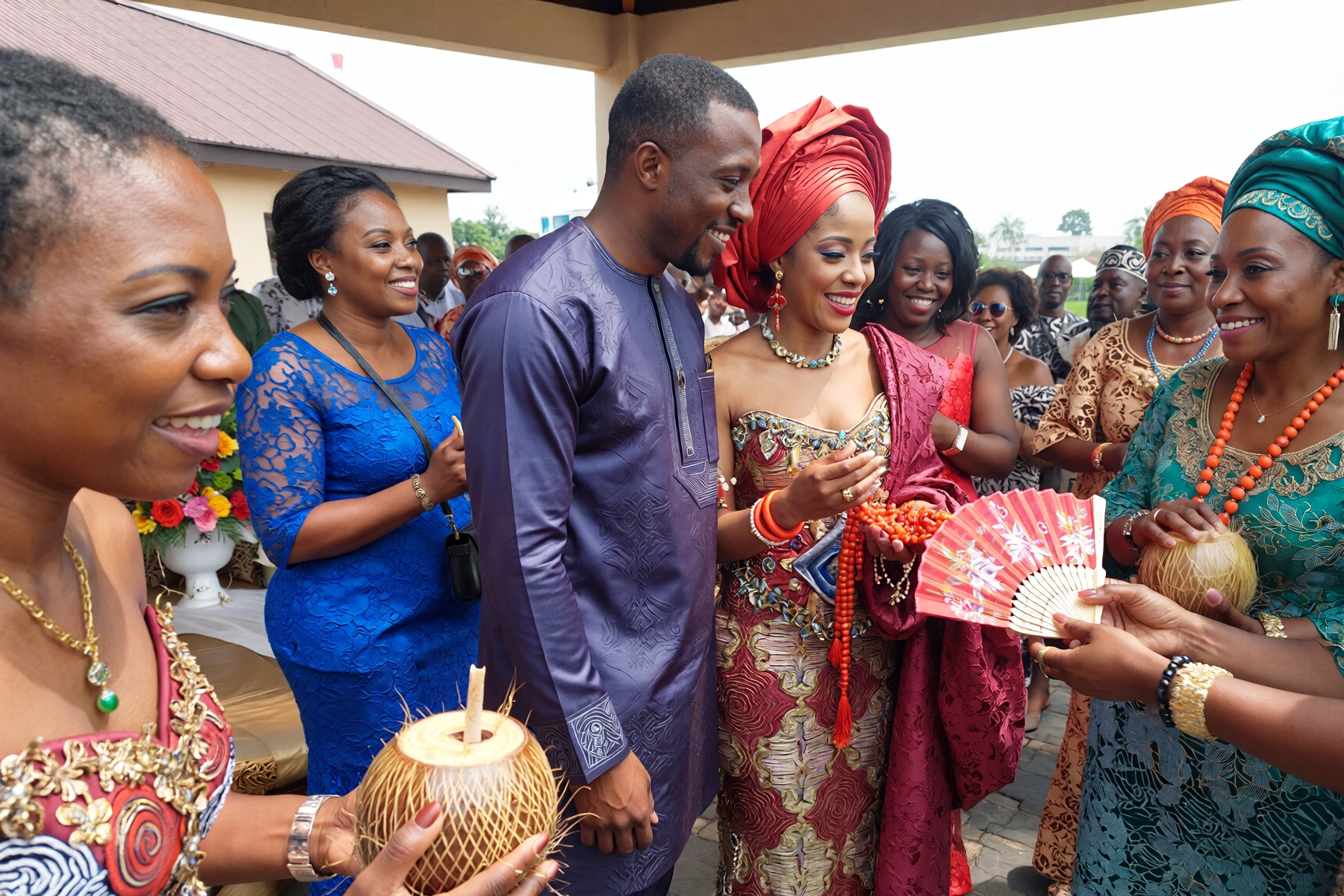
Let me answer this directly, because understanding what constitutes a Nigerian wedding requires grasping several interconnected elements that together create the complete matrimonial experience. A Nigerian wedding consists of traditional ceremonies rooted in ethnic customs (such as Yoruba engagement rites with bride price negotiations, Igbo wine-carrying ceremonies where the bride identifies her groom, or Hausa Fatihah blessings), religious observances (Christian white weddings featuring elaborate church ceremonies and receptions, or Islamic nikah ceremonies following Sharia principles), optional statutory registry marriages providing legal recognition under the Marriage Act, and extensive reception celebrations with hundreds or thousands of guests, elaborate catering, live entertainment, and family gift exchanges that can continue for hours or even days.
The traditional marriage ceremony forms the cultural foundation. This is where families truly unite, where ancestral customs are honoured, and where the marriage gains legitimacy in the eyes of the community. Components vary dramatically by ethnic group, but common elements include formal introductions between families, bride price presentations and negotiations, traditional prayers and blessings from elders, symbolic gestures unique to each culture (like the Igbo palm wine search or Yoruba prostration), exchange of traditional items and gifts, and finally the formal handing over of the bride to the groom’s family.
I’ve attended traditional weddings where the entire ceremony completed in three hours, and others that stretched across two full days with overnight festivities. The Yoruba traditional wedding I attended in Ibadan last year began at 10am and didn’t conclude until nearly 6pm, with multiple stages including the presentation of the groom’s family, bride price negotiations, the engagement ceremony proper, entertainment, and finally the extensive reception with its own protocol and performances.
Religious ceremonies add spiritual dimensions. White weddings in Nigeria have evolved into spectacular productions that sometimes overshadow the traditional ceremonies in scale and cost. Church sanctuaries are transformed with elaborate flower arrangements, professional lighting, and staging that would rival concert venues. Brides arrive in imported gowns costing ₦500,000 to ₦5 million, whilst receptions feature five-tiered cakes, multiple outfit changes (the bride might wear three to five different gowns throughout the reception), choreographed bridal party dances, and guest lists reaching 800 to 1,500 people.
Islamic nikah ceremonies follow different patterns, generally being simpler and more focused on religious requirements than elaborate social display. However, Nigerian Muslims have also begun incorporating elaborate reception elements, blending Islamic marriage principles with Nigerian cultural expectations for celebration and communal participation. The fusion creates unique ceremonies that honour both faith and culture.
Wedding receptions deserve special mention as they’ve become central features of Nigerian weddings regardless of the ceremony type. These aren’t quiet dinner parties; they’re full-scale productions! Live bands perform for hours, guests dance continuously, waiters circulate with endless food and drinks, family members spray money on dancing couples, photographers and videographers capture everything, and the celebration continues until midnight or later. My friend’s wedding reception in Lagos started at 4pm and was still going strong at 2am, with vendors continuing to serve food and guests still dancing enthusiastically.
Who Bears the Financial Responsibility for Nigerian Weddings?
Traditionally, the groom’s family shoulders most wedding expenses, particularly for traditional ceremonies. This expectation stems from cultural principles where the groom demonstrates his ability to provide for a wife and future family through wedding expenditure. The bride price itself represents wealth transfer from groom’s family to bride’s family, and the groom’s family typically also covers ceremony costs, reception expenses for the traditional wedding, and gifts presented to the bride’s family throughout the process.
Modern reality has complicated these traditional arrangements considerably. Young couples today increasingly contribute substantially to their own weddings, sometimes covering 50% to 70% of total costs through personal savings, salary deductions over 12 to 24 months, and contributions from their own social networks. The shift reflects changing economic realities where waiting for parents to fund weddings would delay marriage indefinitely.
Family contributions now follow more complex patterns. The groom’s family might cover the traditional ceremony costs (₦2 million to ₦5 million), whilst the bride’s family contributes to the white wedding or reception costs (₦1 million to ₦3 million). Alternatively, both families contribute proportionally based on financial capacity, with wealthier families shouldering larger burdens regardless of whether they’re on the bride’s or groom’s side.
Community contributions through aso ebi sales have become significant revenue sources. Couples select specific fabrics that friends, extended family, and well-wishers purchase at marked-up prices, essentially making donations disguised as uniform purchases. A couple might sell ₦50,000 worth of aso ebi to 100 people, generating ₦5 million that offsets wedding costs substantially. This system distributes financial burden across the couple’s broader social network rather than concentrating it on immediate families.
Joint wedding accounts represent the modern approach, with both families and the couple themselves contributing. Transparency increases, financial planning improves, and the burden doesn’t fall disproportionately on any single party. Though older relatives sometimes view this arrangement as suggesting “the man cannot afford his own wedding,” practical couples embrace it as the most sustainable approach.
Debt remains a serious concern despite these distributed funding mechanisms. Many couples begin married life owing ₦2 million to ₦8 million to vendors, family members who loaned money, or even banks that provided wedding loans. The pressure to meet social expectations drives couples into financial holes that strain marriages for years afterwards. I’ve watched friends argue bitterly over wedding debts three years after the celebration ended!
Managing the Complex Timeline of Multiple Wedding Ceremonies
Successfully navigating multiple wedding ceremonies requires strategic planning, realistic budgeting, and careful coordination across many stakeholders. Here’s a comprehensive seven-step approach for managing this complex process effectively.
Step 1: Begin with Realistic Financial Assessment and Planning
Before setting any dates or making commitments, sit down with your partner and honestly assess your financial capacity. Calculate what you can personally save monthly, what family contributions you can realistically expect, how much you might raise through aso ebi sales, and what debt level you’re comfortable carrying. Create a comprehensive budget covering all ceremonies (traditional, religious, and registry), reception costs, attire and beauty expenses, photography and videography, decorations and flowers, transportation and accommodation for out-of-town guests, gifts and gratuities, and a 20% contingency fund for inevitable overruns. My friend Chidinma saved herself enormous stress by being brutally honest about finances upfront and adjusting ceremony expectations accordingly, rather than planning lavish events she couldn’t afford.
Step 2: Negotiate with Both Families on Ceremony Expectations
Schedule serious conversations with both sets of parents about their expectations for the wedding celebrations. Discuss how many ceremonies they consider essential, what elements of each ceremony are non-negotiable versus flexible, who they expect to be invited and approximate guest counts, what financial contributions they plan to make, and what timeline they envision for the various ceremonies. These conversations often prove difficult because parents have their own social reputations to maintain through their children’s weddings, but clarity early prevents conflicts later. Document agreements in writing (perhaps through WhatsApp messages that create records) to avoid “I never said that” disputes months later when memories fade and positions shift.
Step 3: Establish a Phased Timeline That Accommodates Financial and Logistical Realities
Create a master timeline that sequences ceremonies realistically based on your financial capacity and family schedules. Many couples start with the traditional ceremony since families often insist this happens first before any religious or legal ceremonies. Space ceremonies 2 to 6 months apart to allow time for saving money between events, recovering emotionally from the exhaustion of each celebration, and managing the detailed planning each ceremony requires. Consider seasonal factors like weather (avoiding rainy season outdoor events), academic calendars if you or guests are students, and major holidays that affect venue and vendor availability. Build in buffer time because wedding planning always takes longer than anticipated, and trying to rush multiple ceremonies in quick succession creates needless stress.
Step 4: Book Venues and Major Vendors Early for Each Ceremony
Popular wedding venues in Nigerian cities book 8 to 12 months in advance, sometimes longer for premium locations. Once your timeline is established, immediately secure venues for each ceremony by paying deposits and signing contracts. The same applies to critical vendors like photographers, videographers, catering companies, live bands or DJs, and makeup artists. Waiting until three months before your ceremony to book vendors leaves you with whatever options remain available, which are rarely the best. Get everything in writing, including prices, dates, times, what’s included, payment schedules, and cancellation terms. I’ve seen couples lose ₦500,000 deposits because they didn’t have clear written contracts when vendors failed to deliver as promised.
Step 5: Order Traditional and Religious Ceremony Attire Well in Advance
Nigerian wedding attire requires substantial lead time, especially for custom-made traditional garments. Aso oke fabric for Yoruba traditional weddings needs 3 to 6 months when commissioned from weavers who create it from scratch. Brides ordering elaborate wedding gowns from designers need 4 to 6 months for design consultations, fabric sourcing, fittings, and final adjustments. Grooms requiring custom agbada or traditional attire similarly need months for proper tailoring. Order attire for the first ceremony immediately after booking venues, then begin planning attire for subsequent ceremonies at least 6 months before each event. This staggered approach prevents overwhelming yourself whilst ensuring everything’s ready when needed.
Step 6: Manage the Guest List Strategically Across Multiple Ceremonies
Decide early which guests you’ll invite to which ceremonies to manage both costs and logistics effectively. Some couples invite extended networks to traditional ceremonies (where numbers matter less since these often happen in family compounds), restrict white wedding church ceremonies to closer circles (since churches have capacity limits), and then expand reception guest lists again. Others do the opposite, keeping traditional ceremonies more intimate and making white weddings the grand social event. Communicate these distinctions clearly to avoid offending people who wonder why they weren’t invited to every ceremony. Remember that in Nigerian culture, wedding invitations carry social significance, and exclusions are noticed and discussed. Choose your approach thoughtfully and communicate it gracefully.
Step 7: Build Financial and Emotional Support Systems Throughout the Process
Wedding planning across multiple ceremonies stretches over months or years, creating sustained pressure that tests relationships and mental health. Establish support systems including a wedding planning committee from trusted friends who can handle specific responsibilities, regular check-ins with your partner to ensure you’re aligned and supporting each other, budget tracking systems that prevent overspending and show you’re on track financially, and honest conversations about stress levels and how you’re both coping with pressures. Remember that the goal is building a strong marriage, not just executing perfect ceremonies. I’ve watched too many couples become so focused on wedding perfection that they neglected the relationship they were supposedly celebrating. Maintain perspective throughout this journey.
These seven steps create a framework for successfully managing multiple Nigerian wedding ceremonies without destroying your finances, alienating your families, or ending your relationship before it properly begins. The process remains challenging regardless of how well you plan, but thoughtful preparation tremendously improves your odds of reaching the other side with your sanity, relationship, and bank account relatively intact!
Cultural Variations Across Nigerian Ethnic Groups
Nigeria’s 371 ethnic groups celebrate weddings in wonderfully diverse ways, creating a rich tapestry of ceremonial traditions that reflect our cultural complexity. Understanding these variations helps explain why wedding timelines and components differ so dramatically across Nigerian communities.
Yoruba traditional weddings in southwestern Nigeria emphasise elaborate social display and family prestige. The engagement ceremony alone can involve hundreds of guests, whilst the introduction of the groom’s family features extensive protocol about who speaks when and how various family representatives present themselves. Yoruba couples often spend ₦2 million to ₦6 million on traditional ceremonies, with aso oke fabric costs alone reaching ₦800,000 for couples wanting premium hand-woven materials. The ceremony structure includes distinct phases: introduction, engagement, and wedding proper, sometimes happening on the same day but following strict sequences.
Igbo traditional weddings in southeastern Nigeria centre on the bride’s agency through the iconic palm wine ceremony. After extensive negotiations and presentations, the bride is given palm wine to find and identify her chosen husband among the gathered crowd. This beautiful ritual emphasises her choice and consent in ways that Western observers often find surprisingly progressive given the traditional context. Igbo traditional weddings typically cost ₦1.8 million to ₦5 million, with elaborate wine-carrying ceremonies and the presentation of the Igbo bride in multiple outfit changes throughout the day.
Hausa-Fulani Islamic weddings in northern Nigeria follow different patterns entirely. The nikah ceremony itself is relatively simple, focused on religious requirements like the payment of mahr (bride price), recitation of Quranic verses, and securing consent from both parties through their representatives. However, post-nikah celebrations have expanded to include elaborate receptions rivalling southern Nigerian celebrations in scale. Northern Nigerian couples might spend ₦1.5 million to ₦4 million on wedding celebrations, with costs distributed differently since Islamic principles discourage excessive expenditure even as social pressures push towards grander events.
Smaller ethnic groups maintain their own distinct traditions. Ijaw traditional weddings in the Niger Delta involve extensive bride price negotiations and family presentations spread across multiple days. Tiv weddings in the Middle Belt region feature unique cultural performances and traditional items that differ from southern practices. Edo traditional weddings in mid-western Nigeria showcase the spectacular coral beads that mark Edo bride attire, with authentic coral sets costing ₦3 million to ₦15 million for families wanting traditional prestige items.
These cultural variations mean there’s no single “Nigerian wedding” template. Inter-ethnic marriages particularly benefit from understanding these differences, as couples must navigate potentially conflicting expectations about ceremony structure, duration, cost distribution, and which elements are truly essential versus optional.
The Rise of Destination Weddings and Contemporary Innovations
Recent years have seen Nigerian weddings evolve beyond traditional formats as couples incorporate international influences and modern innovations. Destination weddings, where couples take their entire celebration to exotic locations, have become status symbols among affluent Nigerians despite the extraordinary costs involved.
Dubai, Ghana, South Africa, and Seychelles rank among popular destination wedding locations for Nigerian couples. These weddings typically cost ₦15 million to ₦40 million when accounting for venue fees, guest transportation and accommodation, international vendors, and the couple’s own travel expenses. The appeal includes Instagram-worthy exotic backdrops, more intimate guest lists since distance naturally limits attendance, and the prestige of hosting an international celebration.
However, destination weddings create complications with traditional expectations. Families still insist on traditional ceremonies in Nigeria regardless of where the white wedding happens, so couples end up with destination white weddings plus traditional ceremonies at home, essentially multiplying their celebration count and costs. My colleague had her white wedding in Mauritius but still completed full traditional Igbo ceremonies in Enugu three months earlier to satisfy family requirements!
Technology has transformed wedding planning and celebration. Couples now use wedding planning apps to manage budgets and vendor contracts, create wedding websites where guests access event information and RSVP, establish wedding hashtags that aggregate social media posts from celebrations, livestream ceremonies for relatives abroad who cannot attend, and use digital payment platforms for gift giving instead of physical money spraying. These innovations improve efficiency whilst maintaining cultural essence.
Eco-conscious weddings represent an emerging trend among educated urban couples. They minimise waste through digital invitations instead of printed cards, donate excess food to orphanages or homeless shelters instead of discarding it, rent or resell wedding attire instead of wearing outfits once then storing forever, and choose meaningful charitable donations over elaborate party favours. These approaches face resistance from older generations who view simplified weddings as indicating poverty or lack of respect, but persistence by younger couples is gradually shifting norms.
Micro-weddings and intimate ceremonies have gained acceptance, particularly post-pandemic. Couples limit guest lists to 50 to 150 truly close people rather than inviting 500+ guests they barely know, host celebrations in restaurants or private homes instead of massive halls, and prioritise meaningful experiences over impressive social display. The financial savings are substantial, often reducing wedding costs by 60% to 70% compared to traditional massive celebrations.
Balancing Modern Aspirations with Traditional Expectations
Perhaps the greatest challenge facing Nigerian couples today is navigating the tension between their own wedding visions and their families’ traditional expectations. This isn’t a simple matter of choosing one over the other; it requires delicate diplomacy, strategic compromises, and sometimes difficult conversations.
Traditional expectations often include massive guest lists accommodating every distant relative and family acquaintance, elaborate multi-day ceremonies following ancestral customs precisely, substantial bride price payments demonstrating the groom’s capacity, extensive family involvement in every planning decision, and wedding celebrations that reflect family prestige and social standing in the community. These expectations aren’t frivolous; they represent deeply held values about family honour, respect for elders, and proper ways to enter marriage.
Modern couple preferences increasingly emphasise more intimate celebrations with only close friends and family, simplified ceremonies focusing on the marriage relationship rather than social display, reasonable budgets that don’t create debilitating debt, greater couple autonomy in planning decisions, and wedding designs reflecting the couple’s personal style and values. These aren’t selfish desires; they represent changing understandings of marriage as primarily about the couple’s partnership rather than extended family alliance.
The collision between these worldviews creates stress that tests relationships before marriage even begins. I’ve watched couples argue bitterly with parents over guest lists, seen grooms’ families insist on bride price amounts the couple considers excessive, and observed mothers-in-law dictating menu choices for receptions they’re not even funding. The pressure becomes overwhelming.
Successful navigation requires several key strategies. Start conversations early rather than presenting families with final decisions, explaining your reasoning whilst genuinely listening to family concerns. Look for compromise positions where everyone gains something even if no one gets everything they wanted. For example, agree to the traditional ceremony parents insist upon whilst simplifying other elements, or accept larger guest lists in exchange for family financial contributions covering the additional costs.
Set and maintain firm boundaries about what you simply cannot compromise on. If you and your partner agree that beginning marriage with ₦5 million in debt is unacceptable, communicate that boundary clearly and stick to it even when pressured. Your marriage will last decades whilst your wedding lasts hours; prioritise long-term stability over temporary social approval.
Remember that cultural preservation and modernisation aren’t necessarily opposed. You can honour your heritage through meaningful traditional elements whilst simplifying or modernising other aspects. My Yoruba friend included the traditional engagement ceremony her parents insisted upon but simplified the aso oke requirements by having fewer outfit changes, satisfying cultural expectations whilst managing costs reasonably.
Understanding How Nigerian Weddings Continue to Evolve
Nigerian wedding culture hasn’t remained static; it continues evolving as each generation brings new influences, economic realities shift, and cultural exchange accelerates through globalisation and digital media. Looking ahead, several trends suggest how Nigerian weddings might continue changing in coming years.
Generational attitudes towards wedding spending are shifting dramatically. Whilst older generations often view lavish weddings as essential regardless of cost, younger Nigerians increasingly question the wisdom of spending years’ worth of salary on one-day celebrations. Social media discussions about wedding debt horror stories have raised consciousness about financial sustainability, and more couples are openly choosing simpler celebrations despite social pressures.
The pandemic accelerated acceptance of smaller weddings and virtual attendance options. Couples who hosted intimate celebrations during COVID-19 restrictions discovered these events felt more meaningful than massive impersonal gatherings they’d originally planned. Virtual attendance options allowed diaspora relatives to participate meaningfully without expensive international travel, reducing pressure to delay weddings until everyone could physically attend.
Inter-ethnic and inter-religious marriages continue increasing as Nigeria urbanises and young people meet partners outside their ethnic communities. These unions create fascinating cultural fusions where couples blend traditions from different backgrounds, sometimes celebrating ceremonies representing both families’ customs, or creating entirely new hybrid ceremonies honouring multiple heritages. The children of these marriages will further reshape Nigerian wedding culture as they draw from multiple traditional sources.
Economic pressures will likely drive continued simplification of wedding expectations despite cultural resistance. As Nigeria’s economy faces challenges and the naira fluctuates, sustaining ₦10 million to ₦20 million wedding budgets becomes increasingly difficult for young couples. Either wedding costs will moderate, or more couples will delay marriage indefinitely whilst saving, or debt-funded weddings will become even more common with all their attendant problems.
Cultural documentation through digital media is preserving and spreading wedding traditions in unprecedented ways. YouTube videos of traditional ceremonies allow Nigerians abroad to learn ancestral customs, Instagram influencers showcase innovative wedding designs that spread across the country, and TikTok videos making Nigerian weddings go viral internationally create pride in our cultural practices whilst also inviting external scrutiny and influence.
The fundamental question remains whether Nigerian wedding culture will continue requiring multiple elaborate ceremonies or whether younger generations will successfully simplify expectations without being viewed as disrespecting traditions. The answer likely lies somewhere in the middle, with continued evolution rather than revolutionary change, preserving meaningful cultural elements whilst adapting unsustainable practices to contemporary realities.
Why the Question “Do Nigerians Have Two Weddings?” Matters
This question matters far beyond simple curiosity about ceremonial practices. It illuminates fundamental tensions in Nigerian society between tradition and modernity, individual autonomy and family obligation, spiritual values and material display, and personal authenticity versus social expectations.
When we examine why Nigerians typically celebrate multiple wedding ceremonies, we’re really examining how contemporary Nigerians negotiate their multiple identities. We’re simultaneously traditional people honouring ancestral customs, religious believers seeking divine blessing on our unions, modern citizens requiring legal documentation, and social beings embedded in complex family and community networks. Our wedding practices reflect these layered identities rather than representing confusion or excess.
The financial dimension reveals broader economic anxieties and aspirations in Nigerian society. Wedding expenditure often represents the largest financial outlay many Nigerians make outside of housing, and the pressure to celebrate elaborately regardless of financial capacity shows how status competition and social approval drive behaviour even at significant personal cost. Wedding debt discussions increasingly appear in Nigerian financial planning discourse precisely because the practice has become so problematic and widespread.
The question also highlights generational change as younger Nigerians push back against aspects of traditional wedding culture whilst still wanting to honour their heritage. This negotiation between honouring the past and creating sustainable futures characterises Nigerian life far beyond weddings, appearing in discussions about gender roles, child-rearing practices, career choices, and countless other domains where traditional expectations meet modern realities.
Understanding Nigerian wedding multiplicity helps outsiders grasp broader truths about Nigerian culture. We’re not abandoning our traditions in favour of wholesale Western adoption, nor are we frozen in ancestral practices unchanged by modernity. Rather, we’re engaged in continuous creative synthesis, honouring what remains meaningful whilst adapting to changing circumstances. Our weddings exemplify this beautiful, sometimes messy, always fascinating cultural evolution.
If you’re interested in exploring how these wedding traditions reflect broader patterns in Nigerian cultural life, I’d encourage you to read my previous article examining what are the marriage customs in Nigeria, where bride price negotiations and family involvement demonstrate the communal nature of Nigerian unions. Additionally, my piece on what is the culture of marriage in Nigeria reveals how religious observances and traditional ceremonies interweave to create the rich tapestry of Nigerian matrimonial practices we’ve discussed throughout this article.
Conclusion: Celebrating Love Across Multiple Ceremonies with Nigerian Weddings
Yes, Nigerians typically have two, three, or even four separate wedding ceremonies, creating a months-long matrimonial journey that celebrates love through traditional, religious, and legal frameworks simultaneously. This multi-ceremony approach reflects our layered cultural identity, honouring ancestral customs through traditional weddings, securing divine blessing through religious ceremonies, and establishing legal recognition through statutory marriage, all whilst managing substantial financial costs averaging ₦6 million to ₦25 million and requiring 12 to 24 months from engagement through final celebrations.
The beauty of Nigerian weddings lies not in their complexity but in what that complexity represents: families uniting across generations, cultures being preserved and adapted, communities celebrating together, and couples embarking on marriage with the support and witness of everyone who matters in their lives. Yes, the costs strain budgets and the planning exhausts participants, but the resulting celebrations create memories and bonds that last lifetimes.
For couples planning your Nigerian wedding journey, remember that this process is ultimately about building a strong marriage, not just executing perfect ceremonies. Make financial decisions you can live with long-term, maintain honest communication with your partner throughout the stress, honour your families whilst establishing healthy boundaries, and keep perspective about what truly matters. Your marriage will outlast your wedding by decades; invest accordingly in both.
Key Takeaways:
- Most Nigerian couples complete 2-4 separate ceremonies (traditional, religious, and statutory) over 12-24 months, spending ₦6-25 million total whilst navigating complex family expectations and cultural requirements across multiple events.
- Strategic planning including realistic budgeting, early vendor booking, phased ceremony scheduling, and clear family communication helps couples successfully manage multiple weddings without financial ruin or relationship damage.
- Nigerian wedding culture continues evolving as younger generations balance respect for ancestral traditions with modern preferences for sustainable budgets, intimate celebrations, and couple autonomy in planning their matrimonial journey.
Frequently Asked Questions About Nigerian Weddings
How long does a typical Nigerian traditional wedding ceremony last?
Traditional wedding ceremonies typically last 4 to 8 hours from when the groom’s family arrives until the bride is formally handed over and guests begin departing. However, the full celebration including setup, preliminaries, and reception can extend from early morning until late evening, spanning 10 to 12 hours or more depending on ethnic group customs and family elaboration preferences.
Can you have just one wedding ceremony in Nigeria and still be properly married?
Yes, you can be legally and culturally married with just one ceremony, though social and family pressures often make this difficult to achieve in practice. A traditional customary marriage alone is legally recognised under Nigerian law and satisfies cultural requirements, whilst a statutory registry marriage alone provides full legal recognition without requiring traditional or religious ceremonies, though families usually insist on multiple ceremonies for social and cultural legitimacy.
What is the average guest count at Nigerian weddings?
Nigerian weddings typically host 300 to 800 guests for traditional ceremonies and white weddings, with some elaborate celebrations reaching 1,000 to 1,500 guests depending on family size and social networks. Islamic nikah ceremonies tend towards smaller gatherings of 150 to 400 guests focused on religious community, whilst micro-weddings and intimate celebrations with 50 to 150 guests represent a growing trend among younger urban couples.
How far in advance should you start planning a Nigerian wedding?
Begin planning at least 12 to 18 months before your first ceremony to allow adequate time for family negotiations, venue and vendor booking, budget preparation, and attire ordering. Popular venues in Lagos, Abuja, and Port Harcourt book 8 to 12 months in advance, traditional attire requires 3 to 6 months for custom creation, and comprehensive planning across multiple ceremonies demands extended timelines that rushed planning cannot accommodate without significant stress and compromised quality.
What does aso ebi mean and how does it help fund weddings?
Aso ebi means “family cloth” in Yoruba and refers to uniform fabric selected by couples that friends and family purchase to wear at wedding celebrations, creating visual unity whilst generating revenue. Couples sell fabric at marked-up prices (₦30,000 to ₦80,000 per set depending on material quality), potentially raising ₦3 million to ₦8 million from 100-150 aso ebi participants, which significantly offsets wedding costs and distributes financial burden across social networks rather than concentrating it on immediate families.
Do Nigerian weddings require dowry or bride price payments?
Yes, virtually all Nigerian traditional marriages involve bride price (called different names across ethnic groups: owo ori in Yoruba, ịhe isi in Igbo, rubu diya in Hausa), though amounts vary dramatically from ₦50,000 in some communities to ₦5 million in others. Bride price represents cultural compensation to the bride’s family, demonstrates the groom’s capacity to provide, and establishes formal family connections, though debate continues about whether modern Nigeria should retain this practice or whether it commodifies women inappropriately.
What is the difference between white wedding and traditional wedding in Nigeria?
Traditional weddings follow ethnic-specific customs, happen at family compounds or cultural venues, centre on bride price and ancestral rituals, and guests wear traditional attire whilst celebrating indigenous cultural practices. White weddings are Christian religious ceremonies held in churches, feature Western-style elements like white bridal gowns and tuxedos, emphasise religious vows and divine blessing, and often include elaborate receptions with multiple outfit changes that can cost more than traditional ceremonies despite being imports from Western culture.
Can Nigerians legally marry without traditional or religious ceremonies?
Yes, statutory marriage at federal marriage registries is completely legal under the Marriage Act without requiring any traditional or religious ceremonies beforehand. However, most Nigerian families consider marriage incomplete without traditional ceremonies regardless of legal status, and religious communities expect church weddings or nikah ceremonies for spiritual legitimacy, creating social pressure for multiple ceremonies even when statutory marriage alone would suffice legally.
How much does an average Nigerian wedding cost in 2026?
The average Nigerian wedding costs ₦13 million according to recent data, with traditional ceremonies averaging ₦3.3 million, white weddings or nikah celebrations ranging ₦3 million to ₦15 million depending on elaboration, and registry marriages adding ₦50,000 to ₦200,000. Elite weddings in Lagos or Abuja can easily exceed ₦25 million to ₦50 million, whilst simpler rural celebrations might cost ₦2 million to ₦5 million for couples who resist social pressure for elaborate displays and family members who accept modest celebrations.
What percentage of Nigerian couples have destination weddings?
Approximately 5-8% of Nigerian couples have destination weddings according to wedding industry estimates, concentrated among affluent urban professionals who can afford ₦15 million to ₦40 million total costs. Popular destinations include Dubai, Ghana, South Africa, and island locations in the Indian Ocean or Caribbean, though most couples still complete traditional ceremonies in Nigeria even when having destination white weddings abroad, effectively doubling their celebration count and multiplying costs substantially.
How long do Nigerian white wedding receptions typically last?
White wedding receptions typically last 5 to 8 hours from when guests arrive until official programme conclusion, beginning around 3pm or 4pm and continuing until 9pm or 10pm. However, many Nigerian receptions extend well past scheduled end times, with dancing and celebration continuing until midnight or later as guests refuse to leave whilst music plays, food remains available, and celebratory atmosphere persists despite venue time limits and vendors’ desire to close operations and depart.
What is the proper etiquette for giving money at Nigerian weddings?
Money spraying during dancing segments is traditional, with guests approaching the dancing couple to spray naira notes around them or place notes on their foreheads whilst grooving together briefly. Spray amounts vary based on your relationship and financial capacity from ₦5,000 to ₦50,000 for regular guests to ₦100,000 to ₦500,000 from close family members, though increasingly couples provide designated money boxes for discrete donations rather than public spraying, accommodating guests who feel uncomfortable with conspicuous display whilst still receiving financial gifts that help offset wedding costs.

