 Follow Us on Google News
 Follow Us on Google Discover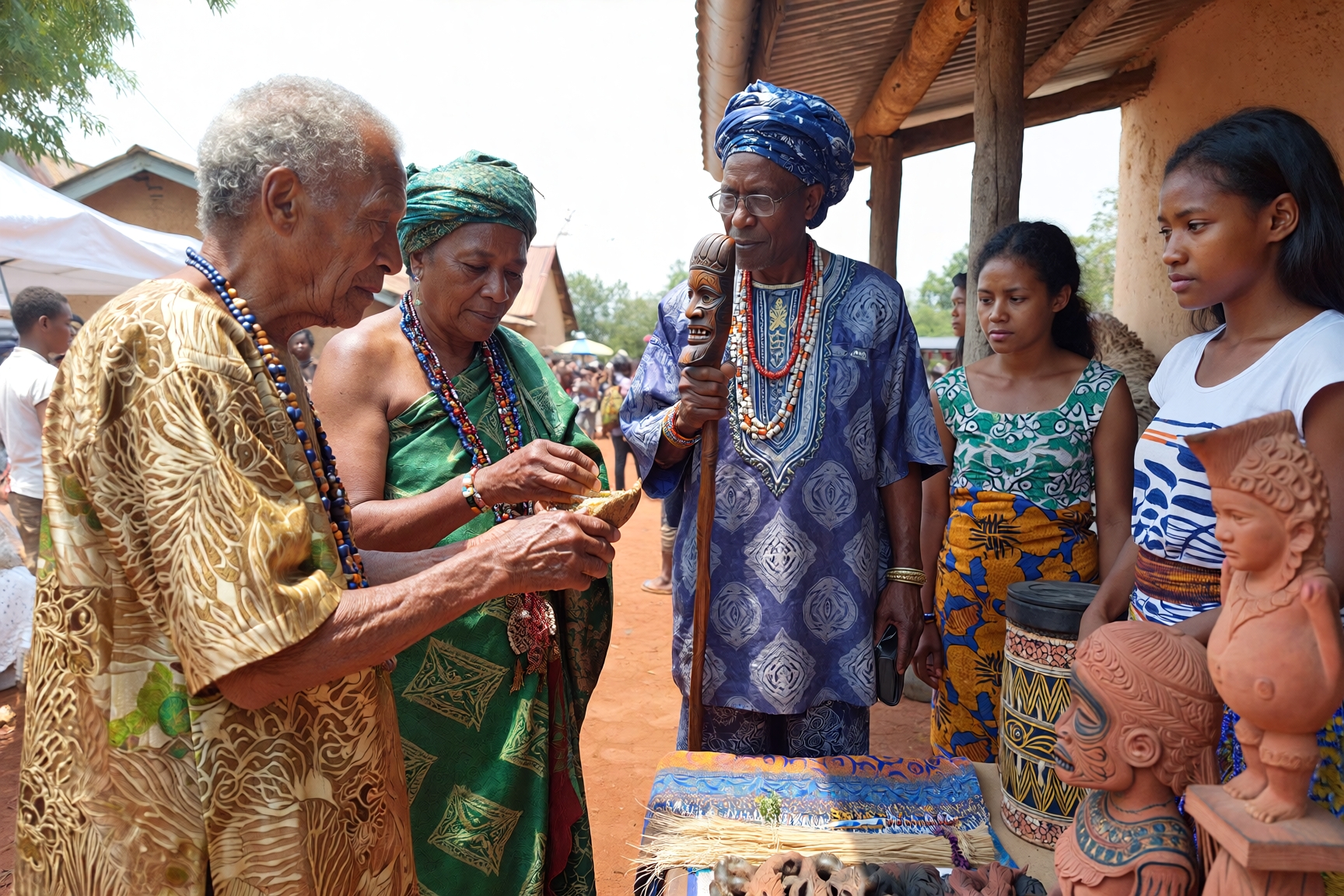
Welcome, dear readers! After months of dedicated research travelling across Nigeria’s six geopolitical zones and years of documenting our nation’s rich cultural heritage, I’m absolutely thrilled to share this comprehensive guide to Nigerian traditions. From the sun-baked savannas of Sokoto to the mangrove forests of the Niger Delta, I’ve witnessed firsthand how our diverse ethnic groups maintain traditions that have shaped African civilisation for millennia.
I still remember attending my first New Yam Festival in an Igbo village outside Enugu. The entire community gathered as the eldest man ceremonially cut the first yam of the season. Children danced, women sang ancient songs, and I felt this overwhelming connection to something far bigger than myself. That moment crystallised why understanding Nigerian traditions matters profoundly, not just for cultural preservation, but for comprehending the values that unite our 220 million people across 371 ethnic groups.
This article represents the conclusion of months of research into what makes Nigerian traditions so remarkably diverse yet coherently Nigerian, drawing upon years of experience studying our customs, festivals, and social practices.
Understanding the Foundation of Nigerian Cultural Traditions
Nigerian traditions encompass an extraordinary range of customs, ceremonies, festivals, and social practices developed by over 371 ethnic groups speaking more than 500 languages. These traditions include elaborate marriage ceremonies, naming rituals, burial rites, age-grade systems, religious festivals, traditional governance structures, artistic expressions, and hospitality customs that have evolved over thousands of years whilst maintaining core cultural values.
Rather like a massive cultural quilt, Nigerian traditions weave together distinct ethnic practices whilst sharing common threads. Our traditions aren’t museum pieces gathering dust. They’re living, breathing practices that adapt whilst maintaining essential cultural DNA.
The Federal Ministry of Art, Culture and Creative Economy recognises multiple Nigerian traditions as UNESCO Intangible Cultural Heritage, including the Ifa Divination System, Ijele Masquerade, Argungu Fishing Festival, and Gelede masquerade, demonstrating the international significance of our cultural practices.
What strikes me most about Nigerian traditions is their fundamental purpose. They’re not just quaint customs we maintain for tourists. These practices serve essential social functions: marking life transitions, maintaining social order, connecting communities to ancestors, teaching moral values to younger generations, and creating shared identity across diverse populations.
My grandmother used to say, “A people without traditions are like a tree without roots.” (She was right, though at sixteen I found her lectures rather tedious!)
The sheer scale of Nigerian cultural diversity staggers the imagination. We’re not talking about three or four major ethnic groups with slightly different customs. We’re discussing 371 distinct ethnic groups, each with unique languages, customs, festivals, marriage traditions, burial practices, and social structures.
Five Key Examples of Nigerian Traditions That Define Our Culture
Let me walk you through five traditions that beautifully illustrate Nigerian cultural richness. These aren’t random selections but carefully chosen examples representing different aspects of Nigerian life, from our relationship with agriculture to our respect for ancestors and our approaches to governance.
Marriage Ceremonies: The Union of Families
Nigerian marriage traditions represent some of our most elaborate and culturally significant practices. Unlike Western weddings that focus primarily on the couple, traditional marriage negotiations and customs across different ethnic groups emphasise family unions extending across generations.
I attended a traditional Yoruba engagement ceremony last year in Ibadan where the groom’s family arrived with nearly forty people, all bearing gifts. The negotiation alone took three hours! They discussed everything from bride price to kola nuts to the number of relatives who’d witness the ceremony. The bride’s father, an elderly man wearing magnificent agbada, spoke in proverbs for twenty minutes about family responsibility.
In Igbo culture, the Igba Nkwu ceremony features the iconic moment when the bride publicly identifies her husband by offering him palm wine whilst surrounded by men trying to distract her. This theatrical performance symbolises the bride’s choice whilst publicly cementing the union. The groom typically pays bride price ranging from ₦50,000 to ₦500,000 depending on the family’s expectations and the couple’s socioeconomic status.
Hausa-Fulani marriage customs, heavily influenced by Islamic tradition, emphasise simplicity in bride price (the lower the better, according to Islamic teaching) whilst maintaining elaborate family involvement. The Fatihah ceremony officially joins the families, with the husband expected to provide housing whilst the bride’s family furnishes it completely.
These marriage traditions aren’t disappearing. According to the National Population Commission, approximately 68 per cent of Nigerian marriages still begin with traditional ceremonies before any religious or statutory proceedings, demonstrating the enduring importance of customary practices regardless of education level or urban residence.
Naming Ceremonies: Welcoming New Life
Nigerian naming ceremonies (called Isomoloruko among Yoruba, Ikuku aha among Igbo, and Suna among Hausa) typically occur seven to eight days after birth. These aren’t simple announcements but elaborate rituals connecting the child to family, community, and spiritual traditions.
The Yoruba naming ceremony involves specific rituals where items like honey (symbolising sweetness in life), salt (representing wisdom), water (for purity), oil (for smooth life), bitter kola (for longevity), and pepper (for boldness) are touched to the baby’s lips whilst elders pray over each item’s symbolic meaning.
Names themselves carry profound significance. They’re not just pretty sounds but statements about family circumstances, spiritual beliefs, or parental aspirations. Chukwuemeka means “God has done well” in Igbo. Ayomide means “my joy has arrived” in Yoruba. Nneka means “mother is supreme” in Igbo. Every name tells a story.
My friend Olufunmilayo was named during her family’s difficult financial period. Her name means “God has given me joy” in Yoruba, a declaration of faith despite circumstances. Thirty years later, she still feels that spiritual weight every time someone calls her name.
These ceremonies typically cost families ₦100,000 to ₦300,000 depending on scale, with expenses covering food for numerous guests, gifts for performers, and offerings for traditional prayers. The Ministry of Interior notes that naming ceremonies often precede official birth registration, though the government encourages prompt registration regardless of traditional practices.
Burial Rites: Honoring the Ancestors
Nigerian burial traditions reflect our profound belief that death isn’t an ending but a transition to ancestral status. These elaborate ceremonies can span days or even weeks, with costs ranging from ₦500,000 for modest burials to ₦10 million or more for prominent community members.
In Yoruba culture, burial ceremonies involve specific rituals ensuring the deceased’s peaceful transition to the spirit world. The body is washed, dressed in finest clothing, and laid in state for community members to pay respects. Professional mourners might be hired to cry and wail, expressing grief the family might be too stunned to voice.
Igbo burial ceremonies are particularly elaborate, especially for titled men or women who achieved significant social standing. The ceremony might include traditional dancing groups, multiple cows slaughtered for feast preparations, and extensive gift distributions to attendees. The “second burial” ceremony (ikwa ozu) conducted months or even years after the initial burial marks the deceased’s formal transition to ancestral status.
I attended a burial ceremony in Anambra State where the deceased man’s family spent over ₦8 million on festivities spanning five days. Three cows were slaughtered. Four traditional dance groups performed. Hundreds of guests received gifts. This wasn’t frivolous spending but cultural obligation, demonstrating the family’s respect for their father and maintaining social standing within the community.
The practice reflects our belief that how you bury your parents directly impacts your own prosperity and reputation. Families often go into significant debt rather than conduct burials considered inadequate by community standards.
Festivals: Celebrating Cultural Identity and Spiritual Connections
Nigerian festivals represent some of our most vibrant and visible traditions. These aren’t mere entertainment but sacred celebrations connecting communities to agricultural cycles, spiritual beliefs, and historical events whilst providing opportunities for ethnic diversity that creates both challenges and rich cultural tapestries.
The New Yam Festival (Iri Ji or Iwa Ji) celebrated by Igbo communities between August and October marks the farming season’s conclusion and the harvest’s beginning. No one eats new yam until the king or eldest man ceremonially cuts and tastes the first yam, declaring it safe for consumption. Violating this taboo brings serious consequences in traditional communities.
The Argungu Fishing Festival in Kebbi State, dating back to 1934, features thousands of fishermen diving into the Matan Fada River armed only with traditional nets and gourds, competing for the biggest catch. This spectacular event attracts visitors internationally and generates significant revenue for the local economy. The National Council for Arts and Culture estimates festivals contribute over ₦50 billion annually to Nigeria’s economy through tourism, crafts sales, and related services.
The Eyo Festival in Lagos Island, held to honour deceased Lagos kings or chiefs, features masqueraders dressed entirely in white representing spirits of the dead. These Eyo masquerades parade through Lagos streets, and tradition demands that everyone removes their hats and shows respect when encountering them. Men must remove shoes and bare their heads, a requirement that has caused amusing confrontations in modern Lagos where such customs clash with contemporary lifestyles!
The Durbar Festival during Islamic celebrations (Eid-al-Fitr and Eid-al-Adha) showcases Northern Nigerian cultural splendour. Emirs and district heads parade on elaborately decorated horses, demonstrating horsemanship whilst thousands of spectators witness the spectacular display of traditional governance and military traditions dating back centuries.
These festivals serve multiple functions beyond entertainment. They reinforce cultural identity, provide economic opportunities for artisans and performers, attract tourism revenue, educate younger generations about traditions, and create social cohesion within communities. They’re cultural anchors in rapidly changing Nigerian society.
Elder Respect: The Foundation of Social Structure
Perhaps no tradition is more universally Nigerian than our profound respect for elders. This isn’t just politeness but a fundamental worldview where age represents accumulated wisdom, spiritual authority, and social standing deserving automatic deference.
Children are taught from birth to greet elders properly. Yoruba children prostrate (male) or kneel (female) when greeting elders. Igbo children greet elders with both hands. Hausa children bow slightly whilst greeting. These aren’t optional courtesies but non-negotiable cultural expectations.
The respect extends beyond greetings. Elders speak first in meetings. Their opinions carry tremendous weight in family decisions. Young people don’t interrupt, contradict, or argue with elders publicly, even when the elder is clearly wrong. (This creates interesting dynamics when elders lack formal education but make pronouncements on subjects younger, university-educated family members understand far better!)
I once witnessed a thirty-five-year-old medical doctor accept his uncle’s advice about treating his child’s illness, despite the uncle having only primary school education and suggesting remedies contradicting modern medicine. The doctor later quietly followed proper medical treatment whilst maintaining outward deference to his uncle. This balancing act between traditional respect and modern knowledge characterises contemporary Nigerian life.
Traditional governance structures reinforce elder authority. Age-grade systems in many communities automatically elevate men to leadership positions as they age. The council of elders makes crucial community decisions, settles disputes, and maintains social order. These traditional structures exist alongside modern governmental systems, creating dual authority structures that sometimes complement and sometimes conflict with each other.
Cultural Traditions Across Nigeria’s Major Ethnic Groups
The three largest ethnic groups (Hausa-Fulani, Yoruba, and Igbo) together comprise over 60 per cent of Nigeria’s population, each contributing distinct traditions whilst sharing common values about community, family, and respect for elders.
Hausa-Fulani traditions reflect strong Islamic influence blended with indigenous practices. Their greeting customs are elaborate and time-consuming, with proper greetings potentially lasting several minutes as participants inquire about health, family, work, and general wellbeing before discussing actual business. The Durbar festivals showcase their equestrian traditions, with spectacular displays of horsemanship and elaborate traditional regalia.
Yoruba culture emphasises elaborate ceremonies, with traditions like the Ifa divination system recognised by UNESCO as a Masterpiece of Intangible Heritage. Yoruba respect for knowledge and wisdom manifests in proverbs woven through everyday speech and in their complex traditional religion that influenced diaspora practices in Cuba, Brazil, and the Caribbean.
Igbo traditions emphasise individual achievement balanced with communal responsibility. The title-taking system allows successful individuals to gain social recognition through elaborate ceremonies and financial contributions to community development. This tradition of earned status rather than inherited position shapes Igbo entrepreneurial culture and their dispersion across Nigeria in commercial activities.
Smaller ethnic groups contribute unique traditions enriching Nigeria’s cultural landscape. The Edo kingdom maintains unbroken traditional governance dating back centuries, with the Oba of Benin wielding significant cultural authority. The Tiv people’s Kwagh-hir theatrical performances combine puppetry, masquerade, music, and storytelling in ways recognised internationally for artistic innovation.
Regional Traditions and Cultural Expressions Across Nigeria’s Six Zones
| Geopolitical Zone | Dominant Ethnic Groups | Key Traditional Practices | Major Festivals | Estimated Annual Participants |
|---|---|---|---|---|
| South-West | Yoruba, Edo | Ifa divination, Eyo masquerade, elaborate naming ceremonies, title systems | Eyo Festival, Osun-Osogbo, Olojo Festival, Sango Festival | 2.5 million+ |
| South-East | Igbo, Efik, Ibibio | Igba Nkwu marriage, Ijele masquerade, title-taking, ozo societies | New Yam Festival, Ekpe Festival, Ofala Festival | 1.8 million+ |
| South-South | Ijaw, Urhobo, Itsekiri | Water deity worship, fishing traditions, age-grade systems | Fishing festivals, masquerade traditions, river goddess ceremonies | 800,000+ |
| North-Central | Tiv, Nupe, Gbagyi | Kwagh-hir performance, communal farming, harvest celebrations | Kwagh-hir performances, harvest festivals | 600,000+ |
| North-West | Hausa, Fulani | Islamic Durbar, Sharo endurance tests, dyeing traditions | Durbar Festival, Argungu Fishing Festival | 3 million+ |
| North-East | Kanuri, Bura, Marghi | Islamic ceremonies, traditional leadership structures, craft traditions | Sallah celebrations, fishing competitions | 1.2 million+ |
This table demonstrates how Nigerian traditions vary dramatically by region whilst maintaining common themes of community celebration, respect for authority, and connection to agricultural or spiritual cycles. The South-West and North-West see the largest festival participation due to population density and internationally recognised events attracting domestic and international tourists.
The Richness of Nigerian Traditional Art Forms
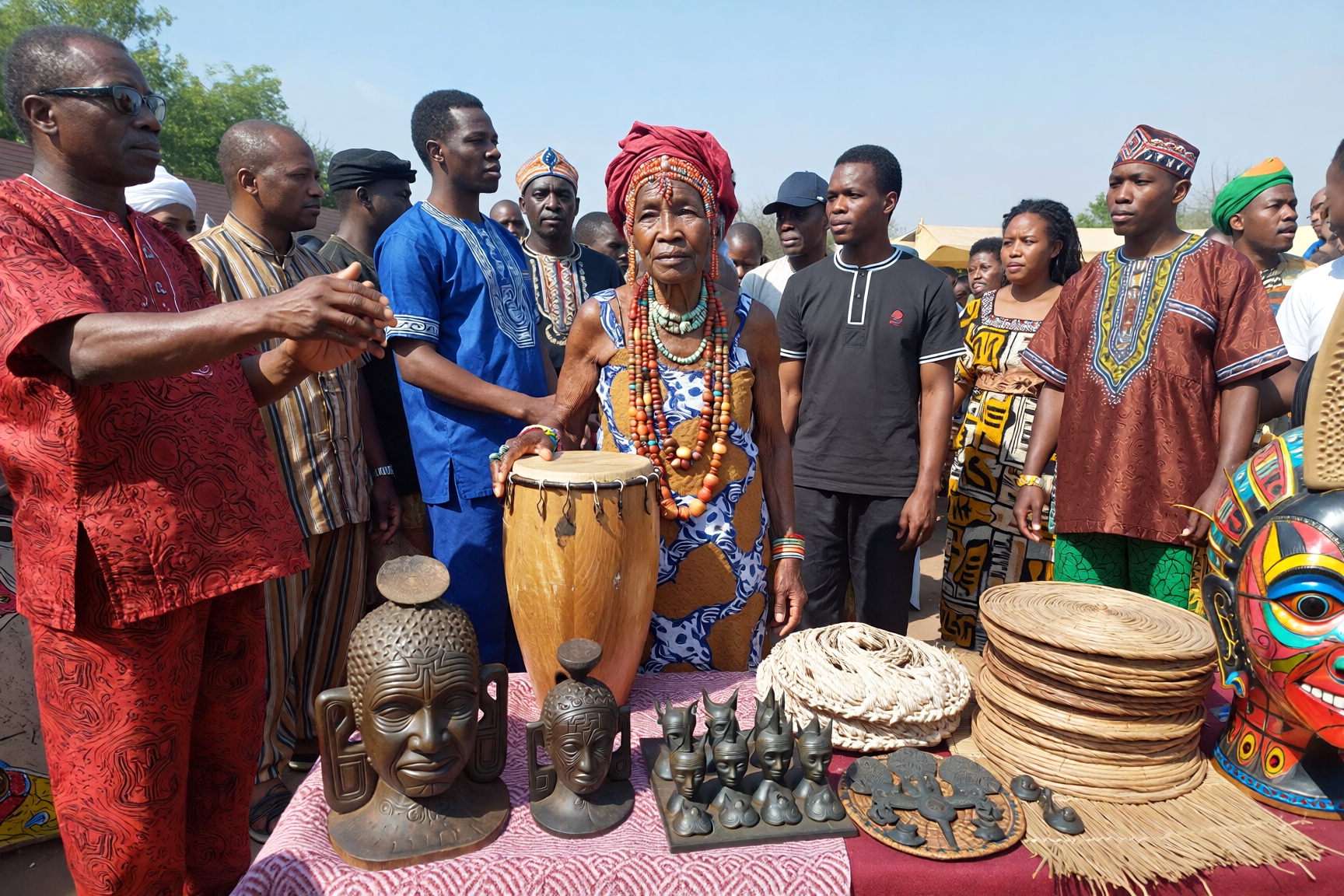
Nigerian traditional art represents ten major categories, each with distinct regional variations, materials, and cultural significance. These aren’t just aesthetic expressions but carriers of cultural memory, spiritual power, and social commentary.
Bronze Casting and Metalwork
The ancient Benin bronzes, created through lost-wax casting techniques dating back to the 13th century, represent some of Africa’s most sophisticated artistic achievements. These bronze plaques, heads, and figures adorned the Oba’s palace, recording historical events and royal lineages. (Many remain controversially housed in British museums despite ongoing repatriation campaigns.)
Contemporary bronze casting continues in Benin City, with master craftsmen maintaining techniques passed through generations. A quality bronze sculpture costs ₦500,000 to ₦5 million depending on size and complexity.
Wood Carving
Yoruba wood carving traditions produce everything from door panels depicting historical narratives to ritual masks embodying spiritual entities. The craftsmanship required to create these pieces demands years of apprenticeship, learning not just technical skills but also the spiritual and symbolic meanings embedded in traditional designs.
I watched a master carver in Osogbo create an Epa mask over three months, working primarily with hand tools passed down from his grandfather. He explained each curve and symbol’s meaning, how certain woods carry spiritual significance, and why some carvings can only be created during specific moon phases. This knowledge transmission from master to apprentice preserves not just artistic techniques but entire worldviews.
Carved masks used in masquerade performances range from ₦50,000 for simple designs to ₦2 million or more for elaborate ceremonial pieces with historical significance.
Textile and Fabric Traditions
Nigerian textile traditions showcase remarkable diversity and artistic sophistication. Aso Oke, hand-woven on narrow looms by Yoruba weavers, creates fabric so intricate and time-consuming that a single piece might require weeks or months to complete. Traditional Aso Oke costs ₦150,000 to ₦800,000 per piece depending on complexity and thread quality.
Adire, traditional Yoruba indigo-dyed fabric, uses resist techniques creating stunning blue and white patterns. The ancient indigo pits in Abeokuta still produce this distinctive fabric, with dyers maintaining techniques hundreds of years old.
Northern Nigeria’s weaving traditions produce beautiful fabrics and leatherwork sold across West Africa. The leather goods from Kano, particularly decorated with intricate patterns, are prized internationally, with quality pieces fetching ₦100,000 to ₦500,000.
Pottery and Ceramics
Traditional pottery serves both functional and ceremonial purposes across Nigerian cultures. Women in many communities maintain pottery traditions, creating water vessels, cooking pots, and ceremonial objects decorated with symbolic patterns.
The ancient Nok terracotta sculptures (dating from approximately 1500 BCE to 500 CE) demonstrate sophisticated ceramic traditions existed in Nigeria for millennia. Contemporary traditional pottery continues these ancient techniques, with pieces ranging from ₦5,000 for functional items to ₦200,000 for elaborate ceremonial objects.
Beadwork and Jewelry
Nigerian beadwork traditions create stunning decorative and symbolic pieces. Edo coral bead traditions are particularly renowned, with elaborate coral bead crowns and regalia marking royal and chiefly authority. A full set of traditional Edo bride’s coral beads can weigh several kilograms and cost ₦500,000 to ₦3 million, representing family wealth and status.
Yoruba beaded crowns for traditional rulers incorporate specific colors and patterns carrying spiritual and political significance. These aren’t just decorative objects but vessels of authority, with some crowns considered so spiritually powerful that looking at the ruler’s face directly would be dangerous for common people. (Hence the beaded veil concealing royal faces on ceremonial crowns.)
Body Art and Decoration
Traditional body scarification, though declining in practice, remains culturally significant in some communities. These marks indicated ethnic identity, social status, spiritual protection, or aesthetic enhancement. While younger generations rarely undergo traditional scarification, older Nigerians still bear these marks, walking testimonies to cultural practices evolving in response to modernisation.
Henna decorations, particularly popular in Northern Nigeria and among Muslim communities, create beautiful temporary designs for celebrations and ceremonies. Traditional henna application costs ₦10,000 to ₦50,000 depending on design complexity.
Music and Dance Traditions
Nigerian traditional music employs unique instruments including talking drums (that literally mimic tonal languages), sekere (beaded gourds), udu (clay pot drums), and various stringed instruments. These aren’t just musical instruments but communication tools and spiritual conduits.
I’ll never forget attending a traditional ceremony where the talking drummer “spoke” Yoruba through drum patterns. Elders in the audience literally responded to what the drum was “saying,” because the tonal patterns genuinely replicated speech. This isn’t metaphorical communication but actual linguistic transmission through rhythm and tone.
Traditional dance forms vary dramatically across regions, from the energetic Bata dance of Yoruba culture to the graceful movements of Igbo maidens during ceremonies. These dances aren’t entertainment but ritual performances connecting participants to spiritual realities and ancestral traditions.
Architecture and Building Traditions
Traditional Nigerian architecture showcases remarkable adaptation to climate and cultural needs. The Hausa-Fulani architectural traditions create beautiful mud structures with distinctive designs surviving centuries. The Sultan of Sokoto’s palace, built over 200 years ago in traditional Hausa architectural style, remains magnificent testament to indigenous building knowledge.
Yoruba palaces featured elaborate courtyards, carved pillars, and specific spatial arrangements reflecting social hierarchies and spiritual beliefs. The Oba’s palace in Ile-Ife, considered spiritual headquarters of the Yoruba race, demonstrates how architecture expresses cultural values and political authority.
Traditional building techniques using local materials (mud, thatch, wood) create structures naturally suited to Nigeria’s tropical climate, maintaining cool interiors without modern cooling systems requiring electricity.
Masquerade and Performance Art
Nigerian masquerade traditions represent some of our most spectacular and spiritually significant artistic expressions. Masquerades aren’t performers in masks but embodiments of spiritual entities, ancestors, or natural forces. Taking masquerades lightly or treating them as mere entertainment can cause serious offence in traditional communities.
The Ijele masquerade of Igbo culture, standing over 4 meters tall and weighing hundreds of kilograms, requires multiple men to carry. This massive spectacle appears only on special occasions, with its appearance signifying major communal importance. UNESCO recognises Ijele as Intangible Cultural Heritage of Humanity.
Ekpo masquerades in Cross River and Akwa Ibom states embody ancestral spirits, feared and respected for their supernatural associations. These masquerades maintain social order through their spiritual authority, with specific masquerades empowered to curse wrongdoers or bless faithful community members.
Leather Craft and Decorative Arts
Northern Nigerian leather crafting traditions produce beautiful goods exported internationally. Shoes, bags, pouches, and decorative items showcase intricate tooling and embellishment techniques passed through generations. Quality traditional leather shoes cost ₦50,000 to ₦150,000, whilst elaborate decorative pieces command higher prices.
These traditions face modernisation pressures as cheaper imported goods flood markets, but dedicated craftspeople maintain traditional techniques whilst adapting designs for contemporary markets.
What Exactly Are Nigerian Traditions and Why Do They Matter?
Nigerian traditions are the collective cultural practices, ceremonies, beliefs, and social customs developed by our 371 ethnic groups over millennia, serving as the foundation for social cohesion, moral education, spiritual connection, and communal identity across one of Africa’s most populous and diverse nations.
These traditions function on multiple interconnected levels simultaneously. There’s the individual level (your family’s specific burial customs), the ethnic level (Yoruba naming ceremonies versus Igbo ones), the regional level (Southern coastal traditions versus Northern savanna practices), and the national level (elder respect that transcends ethnic boundaries).
The practical importance of understanding Nigerian traditions cannot be overstated. These aren’t quaint customs for anthropologists to study. They actively shape contemporary Nigerian life in profound ways, influencing everything from business negotiations to political campaigns to how families allocate resources.
When multinational companies establish Nigerian operations without understanding traditional authority structures and decision-making customs, they inevitably encounter difficulties. When politicians campaign without respecting traditional rulers and local customs, they struggle winning community trust. When young Nigerians marry without fulfilling traditional requirements, they often face family rejection regardless of legal marriage status.
Traditions also preserve indigenous knowledge systems developed over centuries of African experience. Traditional agricultural practices, environmental management techniques, conflict resolution mechanisms, and healthcare approaches contain wisdom that remains relevant despite technological advancement.
My friend’s grandmother, a traditional herbalist in rural Ogun State, possesses encyclopedic knowledge of local plants’ medicinal properties. She can identify hundreds of plant species, knows their applications, understands which combinations are safe, and maintains healing knowledge dating back generations. This isn’t primitive superstition but sophisticated botanical knowledge increasingly recognised by modern pharmaceutical researchers studying traditional remedies for drug development.
However, we must acknowledge that traditions evolve and not all traditional practices deserve preservation unchanged. Some customs (like certain discriminatory inheritance practices or harmful aspects of some initiation rites) require thoughtful examination and potential modification to align with contemporary values about human rights, gender equality, and individual dignity.
The goal shouldn’t be blind tradition preservation but rather thoughtful cultural evolution that maintains essential values whilst adapting practices to contemporary realities.
Seven Steps to Understanding and Appreciating Nigerian Traditional Practices
Whether you’re Nigerian seeking deeper understanding of your heritage, someone marrying into a Nigerian family, or simply someone fascinated by African cultures, here’s a practical approach to engaging with Nigerian traditions respectfully and meaningfully.
Step 1: Start with Your Own or Your Partner’s Ethnic Background
Don’t try understanding all 371 ethnic groups simultaneously. Begin focused research on one specific culture, preferably one you have personal connection to through birth, marriage, or friendship.
Research that ethnic group’s major traditions including marriage customs, burial practices, festivals, and social structures. Read books written by cultural historians from that group. Watch documentaries. Most importantly, talk with elders willing to share knowledge.
I spent six months researching Igbo traditions specifically before attending my first traditional Igbo marriage ceremony. That focused preparation meant I understood the significance of each ritual segment, recognised the symbolic meanings behind gift presentations, and avoided embarrassing cultural faux pas that would have marked me as culturally ignorant.
Step 2: Attend Traditional Ceremonies and Festivals When Invited
Theoretical knowledge means little compared to actual participation. When invited to traditional ceremonies, go! These aren’t inconvenient obligations but precious opportunities experiencing living culture firsthand.
Arrive on time (or rather, arrive when ceremonies actually start, which might be hours after stated times, because “Nigerian time” is itself a cultural phenomenon!). Dress appropriately in traditional attire when expected. Bring appropriate gifts. Observe how elders are greeted and treated. Watch, listen, and absorb.
I attended the Osun-Osogbo Festival several years ago. Reading about it beforehand was useful, but actually being there, surrounded by thousands of worshippers making offerings to the river goddess, seeing the traditional rituals performed exactly as they’ve been for centuries, hearing the drums and chanting, witnessing devotees’ genuine spiritual devotion was transformative.
No book can replicate that experiential learning.
Step 3: Learn Appropriate Greetings and Respect Protocols
Master basic respect protocols for whatever cultures you’re engaging with. Learn how to greet elders properly. Understand gift-giving customs. Know when to speak and when to remain silent.
In Yoruba culture, learn to greet properly with “E kaaro” (good morning), “E kaasan” (good afternoon), and most importantly, learn the proper physical greeting positions (prostrating for males, kneeling for females when greeting elders significantly older or of high status).
In Igbo culture, understand the importance of kola nut protocols. When kola nut is presented, there are specific rituals for breaking it, prayers to be said, and distribution protocols. Getting this wrong marks you as culturally incompetent.
These might seem like minor details, but they signal respect and cultural awareness. Nigerians appreciate outsiders making genuine effort to honour our customs, even when the execution is imperfect.
Step 4: Understand the “Why” Behind Traditions, Not Just the “What”
Don’t just memorise ritual steps mechanically. Understand the underlying purposes, beliefs, and values these traditions express and maintain.
Why do Igbo families spend millions on burial ceremonies? Because they believe proper burial honours ancestors who continue influencing family prosperity, and inadequate burial brings shame affecting living family members’ social standing and spiritual wellbeing.
Why are traditional rulers still powerful despite having no constitutional authority? Because they embody cultural legitimacy, ancestral connection, and community identity in ways elected politicians cannot replicate.
Understanding these deeper meanings transforms traditions from exotic curiosities into coherent cultural systems making perfect sense within their own logic frameworks.
Step 5: Engage Respectfully with Elders and Cultural Custodians
The richest sources of traditional knowledge aren’t books or websites but elders who’ve lived these traditions their entire lives. Engage them respectfully, asking genuine questions and listening carefully to their explanations.
Bring appropriate gifts when visiting elders for cultural education (kola nuts, palm wine, or cash gifts in amounts like ₦5,000 to ₦20,000 depending on circumstances). Frame questions respectfully. Don’t argue or challenge, even when explanations conflict with your modern understanding. Your goal is learning their perspective, not debating whose worldview is correct.
I’ve spent countless hours sitting with traditional chiefs, priests, and community elders, listening to explanations of customs, histories, and beliefs. These conversations provided insights no academic research could replicate. The way an elder’s eyes light up when talking about traditions they’ve maintained for seventy years, the pride in their voice when describing ceremonies they’ve ensured continue for younger generations, the concern they express about traditions potentially dying with them creates emotional understanding transcending intellectual knowledge.
Step 6: Recognise Regional and Family Variations Within Ethnic Groups
Don’t assume all Yoruba families follow identical traditions, or that all Igbo communities maintain the same customs. Significant variations exist within ethnic groups based on specific towns, villages, or family lineages.
Two Igbo families might have dramatically different traditional marriage requirements depending on which part of Igboland they originate from. Owerri traditions differ from Enugu traditions differ from Abia traditions, despite all being Igbo.
Always ask about specific family customs rather than assuming your general knowledge of an ethnic group applies universally. This shows cultural sophistication and prevents embarrassing mistakes.
Step 7: Balance Respect for Tradition with Contemporary Values
Here’s where it gets delicate. You can appreciate and honour traditions whilst maintaining modern values about gender equality, individual rights, and human dignity.
Some traditional practices (particularly regarding women’s roles, inheritance rights, or certain initiation rites) conflict with contemporary human rights standards. You can acknowledge these tensions honestly rather than pretending they don’t exist.
Young Nigerians increasingly navigate this complexity, honouring parents and maintaining cultural connections whilst creating marriages and families more aligned with egalitarian values. This isn’t cultural betrayal but cultural evolution, the same process that’s allowed Nigerian traditions to survive centuries of change.
Contemporary Challenges and the Future of Nigerian Traditions
Nigerian traditions face unprecedented pressures in our rapidly modernising nation. Urbanisation pulls young people from villages where elders maintain traditional knowledge. Western education sometimes devalues indigenous practices. Christianity and Islam have modified or replaced certain traditional spiritual practices. Globalisation introduces competing cultural influences through media and the internet.
I’ve watched traditional craftspeople struggle finding apprentices, because young people prefer university education leading to office jobs over learning traditional skills. I’ve attended festivals where elderly performers dominate because younger generations show limited interest. I’ve seen traditional languages decline as English becomes the primary language for educated young people.
These changes create legitimate concerns about cultural preservation. Will future generations maintain the traditional knowledge, skills, and practices that have defined Nigerian identity for millennia? Or will globalisation create culturally homogenised young Nigerians disconnected from their heritage?
However, I’ve also witnessed hopeful counter-trends. Young Nigerians increasingly embrace traditional attire, particularly for celebrations. Social media amplifies traditional festivals, reaching audiences that would never have witnessed them previously. Diaspora communities maintain traditions sometimes more zealously than those remaining in Nigeria. Nigerian entertainment industry showcases traditional elements in music, film, and fashion, introducing them to global audiences.
Some traditions evolve rather than disappear. Modern couples maintain traditional marriage ceremonies but negotiate costs downward or simplify elaborate requirements. Festivals incorporate contemporary elements whilst preserving core rituals. Traditional rulers use social media maintaining relevance for younger generations.
The key is balanced evolution. Traditions should adapt without losing essential cultural meaning. We can honour ancestors whilst creating practices relevant for contemporary life. We can maintain cultural identity whilst participating in global modernity.
Government initiatives also play crucial roles. The National Council for Arts and Culture works preserving traditional practices. UNESCO recognition of Nigerian cultural heritage provides international validation and protection. Cultural festivals receive government support. Traditional rulers maintain official recognition within governance structures.
The future of Nigerian traditions ultimately depends on whether young Nigerians see value in maintaining cultural distinctiveness rather than fully assimilating into globalised culture. That requires making traditions accessible, meaningful, and relevant for contemporary life whilst respecting their historical and spiritual significance.
Connecting Traditional Practices to Contemporary Nigerian Life
Understanding Nigerian traditions provides essential context for navigating contemporary Nigerian society successfully. These connections extend across multiple domains of modern life, influencing everything from business practices to political strategies to social relationships.
In business contexts, knowing that how traditional and religious ceremonies blend in contemporary Nigerian unions affects scheduling (avoiding major festivals), negotiation strategies (respecting hierarchy and elder involvement), and relationship building (participating in traditional ceremonies when invited).
I’ve watched foreign businesspeople struggle in Nigeria because they didn’t understand that signing contracts doesn’t necessarily mean immediate action if traditional authorities haven’t blessed the arrangement. I’ve seen deals falter because outsiders inadvertently offended traditional sensibilities through ignorance of cultural protocols.
In political contexts, successful politicians understand that traditional rulers wield significant influence over their communities despite lacking constitutional authority. Campaign strategies that bypass traditional structures or show disrespect to cultural institutions inevitably fail. Politicians who understand traditional governance structures and cultural values can mobilise community support more effectively.
Social relationships require navigating traditional expectations even in modern urban contexts. Young professionals living in Lagos or Abuja still face family pressure to fulfil traditional obligations around marriages, naming ceremonies, and burials. Understanding these traditional frameworks helps explaining family dynamics and social pressures that outsiders might find baffling.
The intersection of tradition and modernity creates the fascinating complexity that is contemporary Nigeria. We’re not abandoning traditions for modernity or rejecting modernity for traditions. We’re creating something new: a uniquely Nigerian synthesis maintaining cultural distinctiveness whilst participating fully in global modernity.
Final Reflections on the Beauty and Complexity of Nigerian Traditions
As we conclude this comprehensive exploration of Nigerian traditions, I’m struck again by the sheer magnificence of our cultural heritage. From the spiritual depth of traditional religious practices to the artistic sophistication of our crafts, from the social wisdom embedded in our customs to the environmental knowledge maintained through traditional practices, Nigerian traditions represent humanity’s rich cultural diversity.
These traditions aren’t relics to be preserved in museums but living practices that continue shaping Nigerian identity, values, and social structures. They connect us to ancestors whilst providing frameworks for contemporary life. They create shared identity across diverse populations whilst allowing space for ethnic distinctiveness. They anchor us in African cultural roots whilst allowing us to participate in global culture.
The responsibility for maintaining these traditions falls primarily on Nigerians ourselves. We must decide which practices to preserve unchanged, which to adapt thoughtfully, and which to allow fading as no longer serving contemporary needs. These aren’t easy decisions, and they require balancing competing values: respect for ancestors versus contemporary rights consciousness, cultural distinctiveness versus global integration, traditional authority versus democratic governance.
What gives me hope is witnessing young Nigerians increasingly appreciating their cultural heritage. Whether through fashion incorporating traditional elements, music blending traditional and modern sounds, festivals attracting youth participation, or social media celebrating cultural practices, I see evidence that traditions remain relevant for contemporary Nigerian identity.
Understanding Nigerian traditions matters profoundly, not just for cultural preservation but for appreciating the complex, beautiful, frustrating, inspiring nation that is modern Nigeria. Our traditions are the threads weaving together 220 million people across 371 ethnic groups into something recognisably, undeniably, magnificently Nigerian.
Key Takeaways for Engaging with Nigerian Traditions:
• Approach traditions with respect and genuine curiosity, recognising they represent sophisticated cultural systems developed over millennia, not primitive practices awaiting modernisation.
• Start with focused learning about specific ethnic traditions rather than trying to understand everything simultaneously, and prioritise experiential learning through attending ceremonies over purely theoretical study.
• Balance deep appreciation for traditional values and practices with contemporary consciousness about human rights, gender equality, and individual dignity, recognising that cultural evolution and preservation can coexist.
Related Cultural Insights Worth Exploring
For readers wanting deeper understanding of how Nigerian cultural practices shape modern life, I encourage exploring several related topics I’ve researched extensively. Understanding traditional greeting customs and respect protocols provides essential foundation for navigating Nigerian social contexts successfully, whilst learning about festival celebrations and community gatherings offers windows into spiritual and communal aspects of Nigerian identity.
Additionally, exploring the food traditions that unite and distinguish Nigerian ethnic groups reveals how culinary practices embody cultural values, regional identities, and hospitality customs central to Nigerian life.
Frequently Asked Questions About Nigerian Traditions
What are 5 examples of traditions in Nigeria?
Five prominent Nigerian traditions include traditional marriage ceremonies uniting families through elaborate multi-day celebrations costing ₦5-10 million, naming ceremonies welcoming newborns seven to eight days after birth with symbolic rituals, burial rites honouring deceased family members with expensive ceremonies demonstrating respect, major festivals like the New Yam Festival and Argungu Fishing Festival celebrating agricultural cycles and cultural identity, and universal elder respect protocols requiring specific greeting behaviours and deference to age-based authority. These traditions span across Nigeria’s 371 ethnic groups with regional variations whilst maintaining common cultural themes about community, family, and spiritual connection.
What are 5 examples of cultural traditions?
Cultural traditions include rites of passage marking life transitions (birth, coming-of-age, marriage, death), seasonal festivals celebrating agricultural cycles or religious observances, traditional governance systems maintaining social order through customary authority structures, artistic expressions including music, dance, visual arts, and performance transmitting cultural knowledge, and ceremonial practices reinforcing community bonds and spiritual beliefs. Each tradition serves multiple functions simultaneously including education, social cohesion, spiritual connection, economic exchange, and cultural identity maintenance across generations.
What are some of the main traditions?
Main Nigerian traditions include marriage customs involving bride price payment, family negotiations, and elaborate multi-ceremony celebrations, naming rituals connecting newborns to family and spiritual traditions through symbolic objects and prayers, burial ceremonies ensuring proper ancestral transition and maintaining family honour through expensive festivities, seasonal festivals like New Yam Festival, Eyo Festival, Durbar ceremonies, and Argungu Fishing Festival celebrating cultural identity, and universal respect protocols demanding specific behaviours toward elders and traditional authorities regardless of ethnic background. These traditions maintain social structures, transmit values, mark important life transitions, and create shared Nigerian identity despite tremendous ethnic diversity.
What are the 10 Nigerian traditional art and their significance?
The ten major Nigerian traditional art forms are bronze casting (exemplified by Benin bronzes using lost-wax techniques costing ₦500,000 to ₦5 million), wood carving (creating masks, door panels, and sculptures requiring years of apprenticeship and costing ₦50,000 to ₦2 million), textile arts (including Aso Oke hand-weaving and Adire indigo dyeing costing ₦150,000 to ₦800,000), pottery and ceramics (both functional and ceremonial ranging from ₦5,000 to ₦200,000), beadwork and jewelry (particularly Edo coral beads costing ₦500,000 to ₦3 million), body art including traditional scarification and henna decoration, traditional music employing talking drums and indigenous instruments, architectural traditions using local materials suited to tropical climate, masquerade performances embodying spiritual entities and ancestors, and leather crafting producing goods costing ₦50,000 to ₦150,000. Each art form serves spiritual, social, and economic functions whilst transmitting cultural knowledge and aesthetic values across generations.
How do Nigerian traditions vary across different regions?
Regional variations reflect Nigeria’s ecological diversity, with Southern coastal traditions emphasising water-related festivals and fishing customs, Northern savanna traditions focusing on equestrian displays and Islamic influences, Eastern traditions featuring elaborate title-taking systems and masquerade performances, and Western traditions showcasing complex divination systems and royal ceremonial practices. Climate, historical trade patterns, religious influences (Christianity, Islam, traditional religions), colonial experiences, and pre-colonial political structures all shape regional differences. However, common themes including elder respect, elaborate ceremonies for life transitions, communal decision-making, and spiritual worldviews connect traditions across regional boundaries despite specific practice variations.
What role do traditional rulers play in maintaining cultural traditions?
Traditional rulers serve as primary custodians and exemplars of cultural practices, embodying ancestral authority and cultural legitimacy whilst maintaining ceremonial protocols, settling customary disputes, sanctioning traditional festivals, and representing community interests to governmental authorities and external entities. Their courts preserve traditional governance knowledge, their palaces serve as cultural centres where traditions are displayed and transmitted, and their participation legitimises cultural events in community perception. Despite lacking constitutional authority, traditional rulers wield significant influence because they embody cultural continuity, spiritual authority, and community identity in ways modern governmental structures cannot replicate, making them essential partners in cultural preservation efforts.
How are traditional practices adapting to modern Nigerian life?
Traditional practices adapt through selective modification maintaining core cultural meanings whilst accommodating contemporary realities, including simplified ceremonies reducing financial burdens whilst preserving essential rituals, incorporation of modern elements (photography, social media documentation, contemporary music) alongside traditional components, negotiation between generations balancing elder expectations with young people’s practical constraints, government recognition providing institutional support whilst allowing traditional evolution, and diaspora communities maintaining traditions sometimes more strictly than those in Nigeria. Many young Nigerians embrace tradition selectively, participating in major ceremonies whilst modifying aspects conflicting with contemporary values about gender equality, individual rights, and financial sustainability.
What are the economic costs of maintaining traditional practices?
Economic costs vary dramatically based on practice, social class, and regional expectations, with traditional marriages ranging from ₦2 million for modest ceremonies to ₦10 million or more for elaborate multi-day celebrations, naming ceremonies costing ₦100,000 to ₦300,000 depending on guest numbers and entertainment, burial ceremonies ranging from ₦500,000 to ₦10 million based on deceased person’s status and family social standing, and title-taking ceremonies costing ₦500,000 to ₦5 million including community contributions and ceremonial requirements. These costs create significant financial pressure on families, with many going into debt to fulfil cultural obligations they perceive as non-negotiable for maintaining social standing and honouring ancestors.
How do naming traditions reflect Nigerian cultural values?
Naming traditions demonstrate beliefs that names carry spiritual power shaping individual destiny, with names reflecting family circumstances at birth (Chinedu meaning “God leads”), parental aspirations (Ayomide meaning “my joy has arrived”), spiritual beliefs (Chukwuemeka meaning “God has done well”), or family history and lineage connections. The naming ceremony itself emphasises community participation in welcoming new life, elder authority in blessing the child, and spiritual dimensions of naming through prayers and rituals. Multiple names from different family branches acknowledge that children belong to extended families and communities, not just parents, reflecting collectivist cultural orientation where individual identity connects fundamentally to family and community identity.
What is the significance of festivals in Nigerian culture?
Festivals serve multiple interconnected functions including agricultural cycle marking (New Yam Festival celebrating harvest), spiritual connection through honouring deities or ancestors (Osun-Osogbo Festival, Eyo Festival), community cohesion bringing diverse populations together in shared celebration, economic opportunity for artisans, performers, and vendors, tourism revenue generation (Calabar Carnival attracts international visitors), cultural education transmitting traditions to younger generations through experiential participation, and social entertainment providing joy and cultural pride. The National Council for Arts and Culture estimates festivals contribute over ₦50 billion annually to Nigeria’s economy whilst serving as living demonstrations of cultural continuity and adaptive evolution maintaining relevance across generations.
How do traditional marriage practices differ from Western weddings?
Traditional Nigerian marriages emphasise family union over individual couple focus, with extended families negotiating terms, participating actively throughout ceremonies, and maintaining ongoing involvement in the marriage’s success or failure. Bride price payment symbolises respect, commitment, and family connection rather than purchasing women, though critics note some families exploit this tradition financially. Multiple ceremonies over extended periods (sometimes spanning months) replace single-day Western weddings, with traditional ceremonies often preceding religious or statutory marriage. Public community participation replaces private intimate gatherings, and ceremonies emphasise family display, gift exchange, and community witness over romantic couple focus, reflecting collectivist cultural values prioritising community harmony and family continuity over individual romantic satisfaction.
What challenges do Nigerian traditions face in the 21st century?
Contemporary challenges include urbanisation reducing young people’s exposure to village-based traditional practices and elder knowledge-keepers, Western education sometimes devaluing indigenous knowledge systems in favour of European frameworks, globalisation introducing competing cultural influences through media and internet connectivity, economic pressures making expensive traditional ceremonies financially unsustainable for many families, religious evolution as Christianity and Islam modify or replace traditional spiritual practices, and generational gaps as younger Nigerians prioritise modern values about individual rights and gender equality over some traditional hierarchical structures. However, counter-trends including social media amplification of cultural practices, diaspora communities maintaining traditions zealously, and youth movements reclaiming cultural identity suggest traditions may evolve rather than disappear, adapting to contemporary realities whilst maintaining essential cultural meanings.

