 Follow Us on Google News


 Follow Us on Google Discover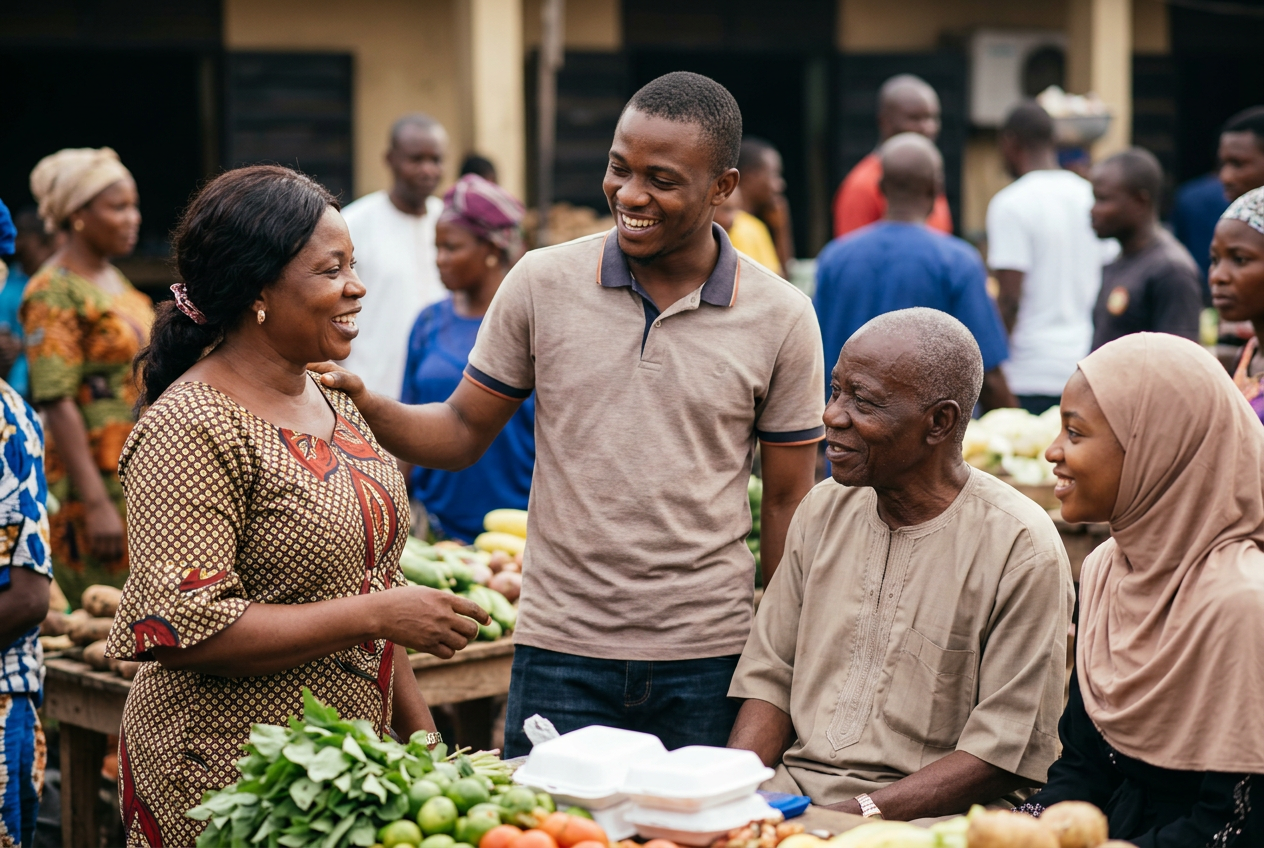
Hello there, and welcome. I am genuinely thrilled to share with you what has become one of the most meaningful pieces I have written in quite some time. This article is the conclusion of months of research into Nigerian identity and years of experience immersed in Nigerian culture, journalism, and community life. The question of what are the characteristics of a Nigerian person is one that deserves a proper, loving answer, and I am going to give you exactly that. Whether you are Nigerian and feeling seen for the first time in a written piece, or you are someone trying to understand the people behind the headlines, this is for you.
Let me tell you something upfront: Nigerians defy easy categories. You cannot reduce 230 million people to a tidy list of bullet points, and I would not insult them by trying. What I can do is trace the broad strokes that seem to hold across ethnic lines, geography, and generation. The warmth, the hustle, the faith, the family loyalty, the storytelling. These threads run through Nigerians whether they live in Kano, Calabar, Lagos, or London.
What Are the Characteristics of Nigerian People?
Start with the most obvious one: warmth.
If you have ever been welcomed into a Nigerian home, you know what I mean. There is a generosity of spirit that is not performative or strategic. It is simply how things are done. You arrive as a guest, and somehow within twenty minutes there is food in front of you, even if your host had not planned to cook. Hospitality in Nigeria is not a nicety. It is a moral obligation rooted in something far older than any written code of conduct.
The National Institute for Cultural Orientation describes cultural values as shaping behaviour, which in turn forms character, and the collective character of individuals defines a nation’s strength. That is a wonderfully precise way to put something Nigerians already know instinctively.
Resilience is the second quality that simply cannot be skipped. Nigerians live with infrastructure challenges, economic pressures, and political frustrations that would break the spirit of many societies. Instead, what you find is an almost defiant optimism. Generator culture, for instance, should be a source of national mourning. Somehow, Nigerians have turned it into an entire informal economy, a community ritual, and occasionally a source of shared humour. That is resilience dressed up as creativity, and it is distinctly Nigerian.

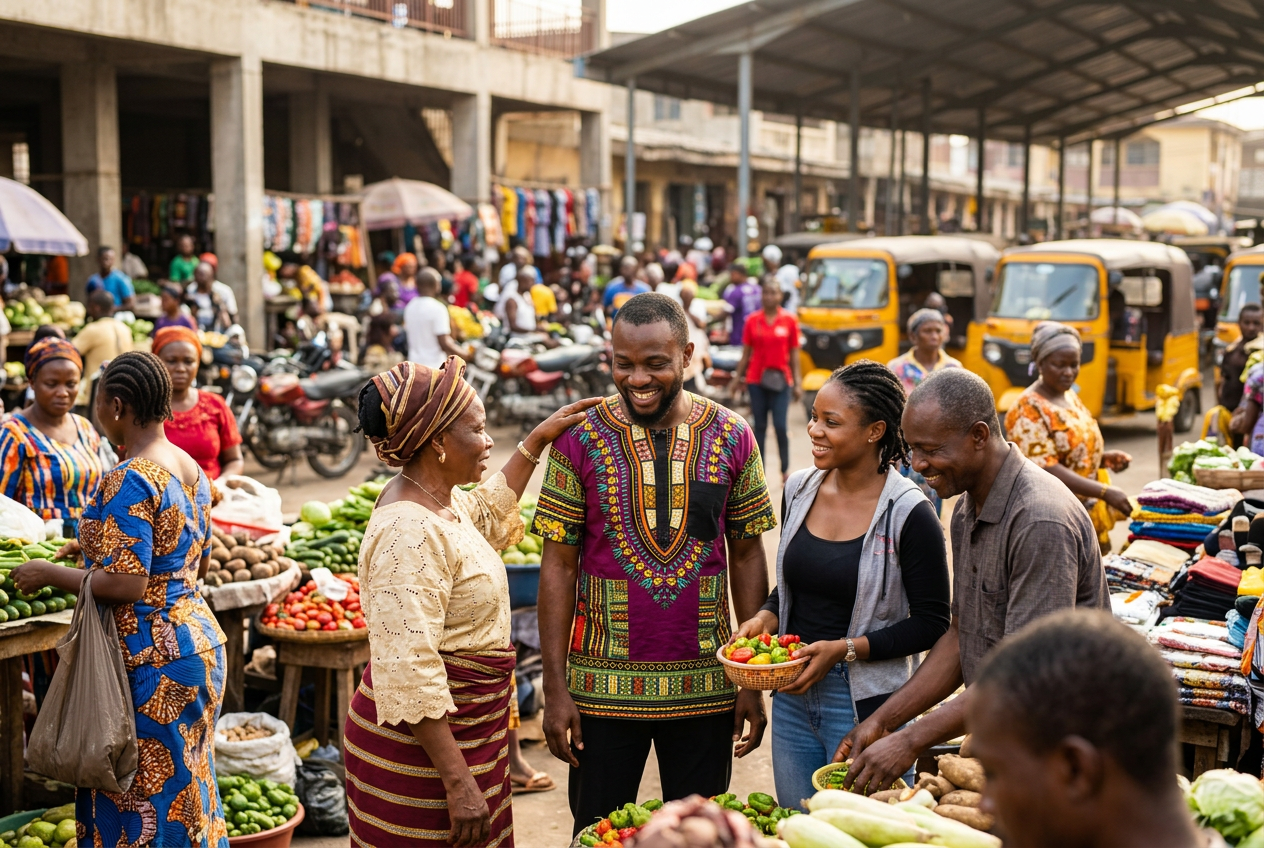
Then there is the famous hustle mentality. The Guardian Nigeria has noted that Nigerians are incredibly entrepreneurial, with many people running three or four income streams simultaneously. This is not purely a Lagos thing, either. From market women in Onitsha who have built empires from single stalls, to the tech founders in Yaba redefining what African fintech looks like, the drive to create something from very little is a near-universal Nigerian characteristic. An opinion piece on where Nigeria’s role models have gone reminds us that this entrepreneurial spirit was always present in the country’s founding generation, and it remains alive in ordinary Nigerians even when leadership disappoints.
Communication style is another telling characteristic. Nigerians tend to be expressive, dramatic in the best sense, and often hilarious without trying to be. Conversations are layered, with proverbs slipping in naturally alongside modern slang. A Yoruba elder and a Lagos Gen Z child both reach instinctively for the metaphor rather than the blunt statement. Even anger tends to come with a story.
Religious faith deserves its own paragraph. For the overwhelming majority of Nigerians, religion is not a Sunday activity or a private preference. It is the operating system. Christians reference God constantly in conversation: “by God’s grace,” “God willing,” “we thank God.” Muslims structure their days around prayer times and speak of Allah’s will as a living reality rather than a theological abstraction. This faith is not passive. It is active, expressive, and deeply social. And it produces in most Nigerians a genuine hope for tomorrow, even on the hardest days.
Family loyalty, particularly to extended family, is a characteristic that shapes every major life decision. Career choices, marriage partners, where to live, how to spend money: all of these are understood as family matters, not purely individual ones. The communal weight of family expectation can feel suffocating from the outside, but from the inside, it is also a safety net that Western individualism rarely replicates.
One quality that sometimes gets overlooked is Nigerian pride. Not arrogance, though that sometimes visits too. A deep, chest-out sense that Nigeria is a significant place producing significant people. When Burna Boy performs at major international festivals, when Ngozi Okonjo-Iweala leads the World Trade Organisation, when Chimamanda Ngozi Adichie reshapes global feminist discourse, ordinary Nigerians feel that personally. The pride is collective and unabashed.
What Are the 7 Core Values of Nigeria?
Nigeria’s national value framework has been an ongoing conversation between government, civil society, and ordinary citizens. The Voice of Nigeria reported that President Tinubu committed to launching a National Values Charter, approved by the Federal Executive Council, to promote shared values and foster trust across the nation’s diverse population. This reflects a broader truth: Nigerian core values are not invented by government. They are drawn from what already exists in the people.
Drawing from this framework and from lived Nigerian experience, seven values consistently emerge as foundational.
Nigeria’s Seven Core National Values at a Glance
The table below summarises the seven values most consistently cited across Nigerian cultural institutions, government frameworks, and everyday social life, along with how each one typically shows up in daily interactions.
| Core Value | What It Looks Like in Practice | Which Ethnic Groups Emphasise It Most Visibly |
|---|---|---|
| Respect for Elders | Kneeling, prostrating, using titles and formal address | Yoruba, Igbo, Hausa, Fulani, Ijaw |
| Communal Solidarity | Financial support for family members; communal labour | All groups, especially rural communities |
| Religious Faith | Daily prayer, church attendance, referencing God in speech | Nationwide, across Christianity and Islam |
| Hospitality | Feeding guests, welcoming strangers, sharing resources | All groups; particularly strong in the south |
| Industriousness | Multiple income streams; informal economy participation | Lagos, Igbo traders, Hausa merchants |
| Cultural Pride | Traditional dress, festivals, language preservation | All groups; strongest at ceremonial occasions |
| Integrity in Community | Reputation management; accountability to the group | Elders’ councils; title-holding societies |
These values do not operate in isolation. Respect for elders reinforces communal solidarity. Religious faith undergirds both hospitality and integrity. Cultural pride sustains industriousness by reminding people what they are working to protect and build. The Federal Ministry of Information and National Orientation has specifically identified hospitality as a defining feature of Nigeria’s global soft power brand, which is no accident.
What Are the Five Physical Features of Nigeria You Know?
Nigeria’s physical geography is as varied as its people, and it shapes the character of those who live within it in ways that are easy to underestimate.
The five most defining physical features of Nigeria are the following. The Niger River, one of Africa’s great waterways, cuts through the country and has shaped trade, agriculture, and settlement for centuries. The Benue River joins it at Lokoja, creating a confluence that sits at the literal and symbolic heart of Nigeria. Together, they form the Niger Delta in the south, a vast wetland region that has driven the country’s oil economy and is among the world’s most biodiverse river deltas. The Jos Plateau rises in central Nigeria, offering cooler temperatures and a dramatically different landscape from the tropical south. And the Sahel savanna of the far north, bordering the Sahara, creates the semi-arid environment that has shaped Hausa and Fulani culture, agriculture, and movement for generations.
These physical features matter to a discussion of Nigerian character because geography is never neutral. The south’s tropical forest abundance shaped a culture of agricultural surplus, trade, and elaborate ceremonial life. The north’s harsher climate produced values of endurance, pastoral community, and long-distance trade. The coastline opened Nigeria to the world, and not always gently, but it also made Nigerians remarkable traders and travellers. The Guardian Nigeria has explored these origins of Nigerians in some depth, noting how geography and ethnic identity intertwine in ways that still shape modern political life.
A step-by-step approach to understanding how Nigeria’s physical geography connects to its people’s character might look like this.
- Start with the Niger and Benue Rivers. Recognise that these waterways were the first highways of trade and communication, bringing diverse peoples into contact centuries before colonialism arrived.
- Move south to the Niger Delta. Understand that the communities here developed sophisticated fishing and trading cultures, and that oil extraction transformed their world within a single generation, creating resilience forged in disruption.
- Look at the middle belt. The Jos Plateau and surrounding area has historically been a zone of cultural mixing, where northern and southern traditions met, producing some of Nigeria’s most creative artistic and musical traditions.
- Consider the western forest zone. The Yoruba kingdoms that developed here built elaborate cities, court cultures, and artistic traditions that rivalled medieval European societies in complexity.
- Examine the northern Sahel. The dryness that shaped the north produced communities with extraordinary skills in long-distance trade, Islamic scholarship, and governance, some of which predate British contact by centuries.
Understanding this geography is not just geography. It is understanding why Nigerians are who they are.
What Are the Characteristics of a Nigerian Person, Answered Directly
Here is the honest, comprehensive answer to that question, because it deserves its own moment.
A Nigerian person is typically characterised by a combination of deep family loyalty, expressive religious faith, extraordinary resilience in the face of systemic challenges, an entrepreneurial instinct that surfaces in virtually every circumstance, genuine warmth towards guests and strangers, a strong sense of ethnic and national pride that coexist sometimes uneasily, a love of storytelling and oral tradition, and an ability to navigate multiple identities (ethnic, national, linguistic, religious) simultaneously and with remarkable fluidity. These characteristics manifest differently across Nigeria’s 250-plus ethnic groups, but the broad strokes hold. A Yoruba professional in Lagos, a Hausa trader in Kano, an Igbo entrepreneur in Aba, and an Ijaw fisherman in Warri share more of these qualities than they might always readily admit. A Guardian Nigeria piece examining the three types of Nigerians offers a more critical lens on how these characteristics express themselves in civic life, noting both the proud traditionalists and the opportunists who exploit communal trust.
It is also worth naming the tensions honestly. Nigerian warmth can coexist with ethnic suspicion. Nigerian faith can coexist with superstition and manipulation. Nigerian family loyalty can coexist with nepotism. These are not contradictions that cancel each other out. They are simply the full picture of a complex, alive, extremely human people.
How to Show Love to a Nigerian Man
Right, let us talk about something practical and rather fun.
If you love a Nigerian man, or you are hoping to, you need to understand that his sense of self is tightly wrapped up in a few core things: his family, his reputation, his faith, and his ability to provide. These are not problems to be solved. They are values to be respected.
Food matters enormously. This is not a cliche. For most Nigerian men, a lovingly prepared meal communicates something that words in English simply cannot. Whether it is a pot of egusi soup with pounded yam, or jollof rice cooked properly (we all know the debates), cooking for him is a love language that lands with particular power. I have heard Nigerian men speak about their mothers’ cooking with a reverence usually reserved for sacred things. You are not competing with that. You are honouring it.
Respect his people. You do not just date a Nigerian man. You date his family, his extended family, and arguably his community. This is not a burden. It is actually rather beautiful, once you lean into it. Greet his elders with deference. Remember names. Show up at events. These acts communicate respect for him in the deepest possible way, because his honour is wrapped up in theirs.
Take his ambitions seriously. Nigerian men tend to carry enormous pressure around success and provision. A partner who dismisses this pressure or fails to acknowledge the weight of it will find themselves on the outside of his inner world. Celebrate his wins loudly. Ask about his projects with genuine interest. The hustle culture mentioned above is not just economic. It is emotional and spiritual.
Pray with him or at least respect his faith without condescension. Whether he is a devout Muslim who prays five times daily or a Pentecostal Christian who names and claims his destiny, his faith is not a peripheral part of him. It is load-bearing. Engaging with it respectfully, even if you do not share every belief, communicates a respect for his whole person.
And finally: communicate with warmth but directness. Nigerian men can read warmth and respect very clearly. Cold formality tends to land as dismissal. Laughter, teasing, and genuine affection, expressed without excessive restraint, work far better than emotional distance.
Conclusion: The Characteristics of a Nigerian Person Are a Story Worth Telling Properly
I started this article with a warning that Nigerians defy easy categories, and I will end by standing by that. The characteristics of a Nigerian person are not a fixed set of traits to be memorised and applied. They are a living set of tendencies shaped by geography, history, faith, family, and a nation still in the process of becoming. What I love most about Nigerians, having spent years in this space, is that very aliveness. There is nothing static or resigned about Nigeria’s national character. It is arguing with itself constantly, reimagining itself constantly, building and mourning and celebrating simultaneously.
If you are Nigerian, I hope this piece made you feel honestly seen. If you are not, I hope it replaced some newspaper-shaped caricatures with something richer.
Here are three actionable things to take away from everything you have read.
- Approach any Nigerian person with genuine curiosity about their specific ethnic and regional background, rather than treating “Nigerian” as a monolithic identity. The differences between Yoruba, Igbo, Hausa, Ijaw, Tiv, and three hundred other groups are real and fascinating.
- Lead with warmth and respect for elders in any Nigerian social setting. These two qualities open more doors than any amount of cleverness or status signalling.
- Take Nigerian faith seriously as a cultural and social reality, even if you do not share it. Understanding that religion is not a weekend hobby but a daily operating system will help you connect with Nigerian people at a far deeper level.
Related Articles
If this piece has you wanting to go further, two of my earlier articles sit perfectly alongside it. My piece on what Nigerian culture is known for digs into the creative and artistic traditions that give Nigerian character its outward expression, from Nollywood to Afrobeats to literary giants like Chinua Achebe and Chimamanda Ngozi Adichie. And my exploration of what Nigerian society is like looks at the social structures and daily rhythms that hold all of these characteristics together in practice. Both pieces will add considerable texture to everything explored here.
Frequently Asked Questions About the Characteristics of a Nigerian Person
What are the main personality traits of a Nigerian person?
The most widely shared personality traits include warmth, resilience, deep family loyalty, expressive religious faith, and a strong entrepreneurial drive. These traits appear consistently across Nigeria’s many ethnic groups, though they are expressed differently in different cultural contexts.
Are Nigerians known for being friendly?
Yes, Nigerians are widely regarded as among the most welcoming and sociable people on the continent, with hospitality considered a core cultural obligation rather than a personal choice. The Federal Ministry of Information and National Orientation has specifically identified Nigerian hospitality as a key component of the country’s global soft power appeal.
What makes Nigerian culture unique?
Nigerian culture’s uniqueness comes from its extraordinary diversity combined with a recognisable national identity. Over 250 ethnic groups, 500-plus languages, two major world religions, and wildly different geographies all coexist under a single national identity, producing a cultural richness that is almost impossible to replicate elsewhere.
How important is family to Nigerian people?
Family is arguably the single most important institution in Nigerian life, with extended family networks functioning as social safety nets, financial systems, and identity frameworks simultaneously. Major life decisions including career choices, marriage, and financial planning are understood as collective family matters rather than purely individual ones.
What role does religion play in Nigerian character?
Religion is not peripheral but absolutely central to Nigerian identity and daily routine for the vast majority of people. Whether Christian or Muslim, most Nigerians integrate faith into their speech, their schedules, their major decisions, and their understanding of both hardship and success.
Are Nigerians entrepreneurial by nature?
Nigerians consistently demonstrate extraordinary entrepreneurial instincts, with many individuals maintaining multiple income streams as a matter of course. This quality has roots in both economic necessity and a deep cultural value placed on industry, self-reliance, and the ability to provide for one’s family and community.
What are the core values of Nigerian society?
The seven core values that appear most consistently across Nigerian culture are respect for elders, communal solidarity, religious faith, hospitality, industriousness, cultural pride, and integrity within the community. These values are mutually reinforcing and remain visible in daily life even as Nigeria modernises rapidly.
How do Nigerians show respect to elders?
Respect for elders in Nigeria is expressed through specific physical gestures including kneeling, prostrating, or bowing depending on the ethnic group, as well as through the use of honorific titles, deference in conversation, and the expectation that younger people will not challenge or contradict elders publicly. This respect is not merely symbolic but carries genuine social weight.
What are the five main physical features of Nigeria?
The five key physical features are the Niger River, the Benue River, the Niger Delta, the Jos Plateau, and the northern Sahel savanna. Each of these geographical zones has shaped the culture, economy, and character of the communities that live within it over many centuries.
Is Nigeria’s national character affected by its ethnic diversity?
Yes, deeply and in fascinating ways. Nigeria’s 250-plus ethnic groups each maintain distinct traditions, values emphases, and social norms, which means that “Nigerian character” is more accurately a broad family of related characteristics than a single fixed identity. The shared qualities exist precisely because they were strong enough to persist across all this diversity.
How does Nigerian culture approach hospitality?
Nigerian hospitality operates on the principle that a guest must not leave a home without being fed or at least offered something, and that the wellbeing of a visitor is the host’s personal responsibility. This extends to strangers as well as friends, and is considered a reflection of one’s character and family honour rather than an optional social courtesy.
What does showing love to a Nigerian person typically involve?
Showing love to a Nigerian person typically involves respecting their family, engaging warmly with their community, taking their ambitions seriously, honouring their faith, and expressing affection with genuine warmth rather than formal restraint. Food, presence at family events, and public respect for their elders communicate love in ways that words alone often cannot.

