 Follow Us on Google News
 Follow Us on Google Discover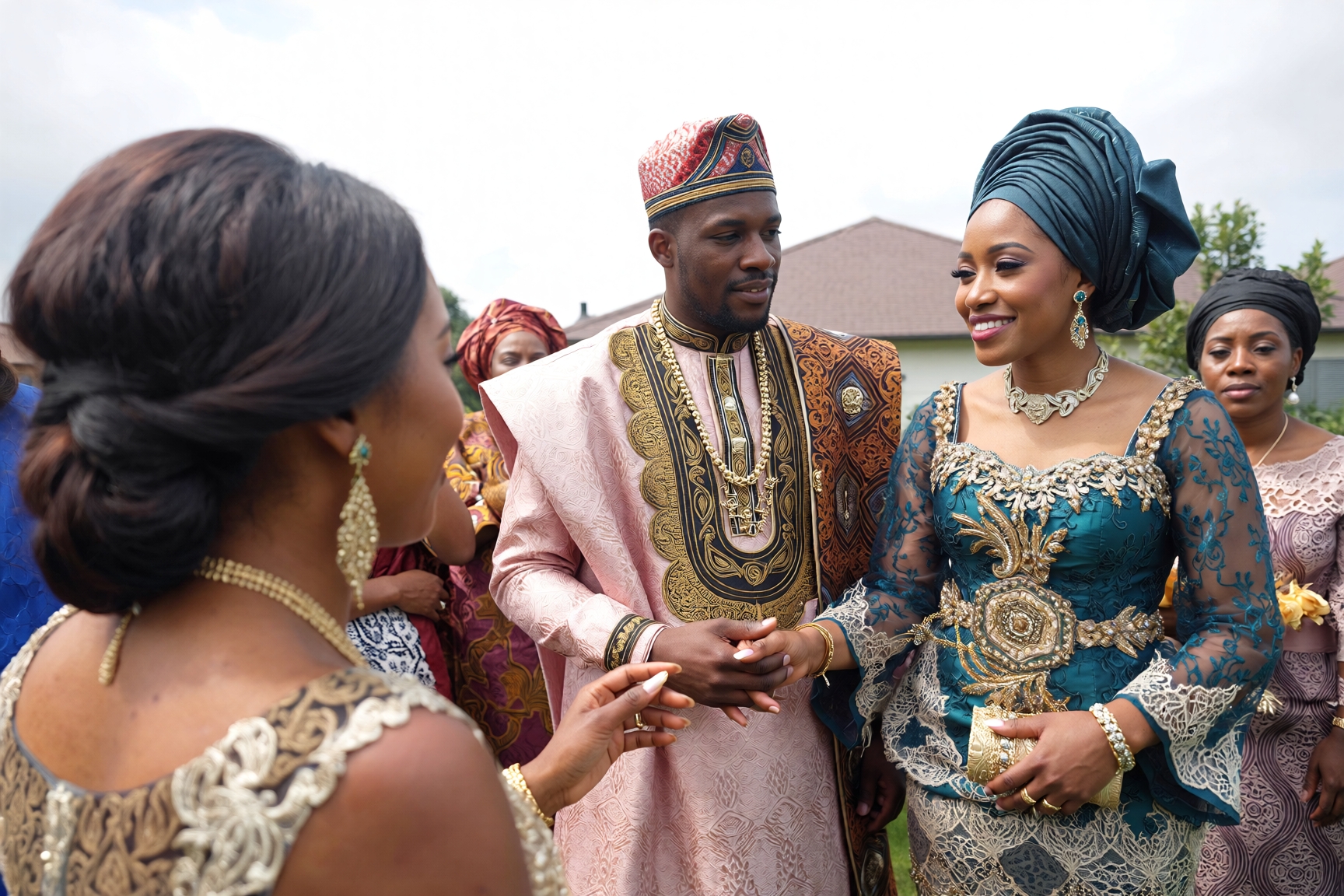
Hello there, friend. I’m absolutely delighted to share this comprehensive exploration with you, representing the culmination of months of intensive research into Nigeria’s fascinating marriage practices and years of experience documenting how our diverse cultures approach matrimony. What are the four marriage practices in Nigeria? The answer reveals something profound about how tradition, religion, law, and modernity intersect in Africa’s most populous nation. Nigeria recognises four distinct marriage practices: customary marriage, statutory marriage, Islamic marriage, and church marriage, each with unique legal standing, cultural significance, and social implications that shape how millions of Nigerians enter into matrimony.
I still remember attending my first traditional Igbo wedding in Enugu. The elaborate wine-carrying ceremony, where the bride searched through the gathered crowd to present palm wine to her chosen groom, moved me to tears. That moment crystallised something essential about Nigerian marriages: they’re not simply legal contracts between two individuals but intricate cultural performances that weave together family lineages, community bonds, and ancestral blessings in ways that transcend Western understandings of matrimony.
Understanding Nigeria’s marriage landscape requires appreciating how our 371 ethnic groups have developed distinct matrimonial customs over millennia. These customs didn’t disappear when colonial rule introduced statutory marriages or when Christianity and Islam became dominant religions. Instead, they adapted, creating a complex legal and cultural framework where couples often navigate multiple marriage ceremonies to satisfy family expectations, religious requirements, and legal necessities. The Ministry of Interior oversees statutory marriage registration through Federal Marriage Registries nationwide, whilst customary and religious marriages operate under separate legal frameworks that sometimes complement and sometimes conflict with statutory provisions.
Understanding Customary Marriage in Nigerian Culture
Customary marriage represents the oldest and most culturally significant form of matrimony in Nigeria. It’s marriage conducted according to the indigenous customs and traditions of the couple’s ethnic group, recognised by both the community and Nigerian law.
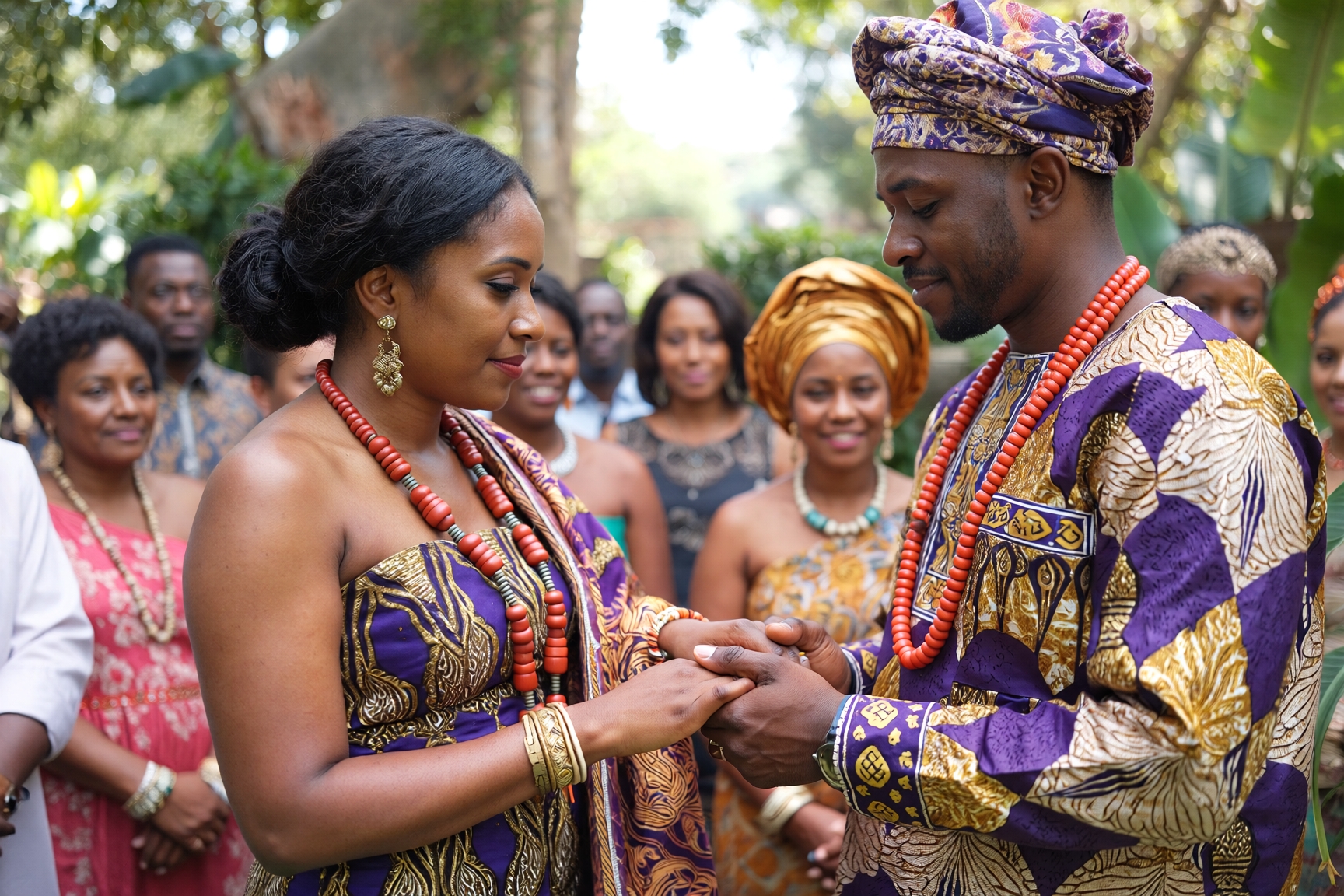
When I spent three months researching marriage customs across Yoruba, Igbo, and Hausa communities, I discovered something remarkable. Whilst the specific ceremonies differ dramatically (Yoruba engagement involves elaborate prostration ceremonies, Igbo traditions centre on wine presentation rituals, Hausa customs emphasise parental negotiations through intermediaries), the underlying structure remains consistent: marriage is fundamentally a union between two families, not just two individuals.
The legal framework governing customary marriages comes from a patchwork of sources. The Edo State Judiciary has published extensive documentation showing that customary marriages fall under the Marriage, Divorce and Custody of Children Adoptive By-laws Order applicable to southwestern states, whilst northern states follow different customary law frameworks shaped by Islamic principles. This creates fascinating regional variations in how customary marriages are contracted and dissolved.

Bride price (or bride wealth, as scholars prefer) forms the centrepiece of most customary marriages. It’s not payment for the bride (that’s a common misconception that irritates anthropologists) but rather a symbolic gesture acknowledging the groom’s commitment and the bride’s family’s role in raising her. Among the Igbo, bride price might include yams, palm wine, livestock, and cash. Yoruba traditions involve alaga iduro (matchmakers) who negotiate the bride price and traditional items like bitter kola, honey, and cloth. Hausa customs emphasise sadaki (a gift to the bride herself) alongside the bride price paid to her family.
The beauty of customary marriage lies in its flexibility. Unlike statutory marriage (which requires monogamy), customary marriage permits polygamy in most Nigerian ethnic groups. A man can marry multiple wives through successive customary ceremonies, each valid under traditional law. This explains why many Nigerian men prefer customary marriage as their primary matrimonial form, even when they later add statutory or religious ceremonies.
Here’s something that surprises many people: customary marriage doesn’t require written documentation to be legally valid. The presence of family representatives, payment or promise of bride price, and community witnessing suffice. However, many couples now seek Customary Court Declarations affirming their customary marriage, particularly for visa applications, pension benefits, or inheritance claims where documentary proof becomes necessary.
The dissolution of customary marriages operates quite differently from statutory divorces. As Guardian Nigeria reports, traditional marriages can be dissolved through mutual consent by returning the bride price, whilst statutory marriages require court petitions citing specific grounds like adultery or cruelty. This relative ease of dissolution makes some women advocate for additional statutory marriages to provide greater security.
Statutory Marriage Under the Marriage Act
Statutory marriage represents the colonial legacy marriage form, conducted under the Nigerian Marriage Act and registered at Federal Marriage Registries or licensed places of worship. It’s what Nigerians colloquially call “court marriage” or “registry marriage,” though religious ceremonies at licensed venues equally qualify as statutory marriages.
I attended a registry wedding at the Ikoyi Marriage Registry in Lagos last year. The ceremony lasted exactly fifteen minutes. The registrar read prescribed vows, the couple exchanged rings, signed the marriage register, and received their marriage certificate. No elaborate ceremonies, no family negotiations, just legal formalities. Yet that brief ceremony carried profound legal implications that distinguished it from every customary or religious marriage I’d witnessed.
The defining characteristic of statutory marriage is its strict monogamy. Section 35 of the Marriage Act explicitly states that any person already in a statutory marriage who marries again whilst the first marriage subsists commits a felony punishable by imprisonment. This creates interesting dynamics in Nigerian society, where some men maintain one statutory marriage alongside multiple customary or Islamic marriages with different women.
The Ministry of Interior’s Citizenship and Business Department handles statutory marriage licensing and registration. Federal Marriage Certificates cost ₦15,000 per certificate, with couples purchasing them from licensed registries or places of worship authorised to conduct statutory marriages. The process involves submitting notice of intention to marry, paying prescribed fees, and satisfying residency requirements (at least fifteen days in the marriage district).
Here’s where it gets interesting from a legal perspective. Statutory marriage provides automatic inheritance rights that customary marriages don’t guarantee. A widow in a statutory marriage has statutory rights to her husband’s estate under the Administration of Estates Law, whilst a customary marriage widow’s inheritance depends on whether her husband’s ethnic group recognises widows’ inheritance rights (many traditional systems allocate estates to male relatives, not widows).
Property acquired during statutory marriage falls under matrimonial property principles, making division contentious during divorce. Customary marriages often maintain separate property systems where the husband owns property purchased during marriage unless specifically gifted to the wife. These distinctions create strategic considerations when couples choose marriage types.
The dissolution process for statutory marriages requires formal court proceedings. Couples file divorce petitions in the High Court citing grounds specified in the Matrimonial Causes Act: adultery, cruelty, desertion for at least one year, failure to comply with restitution of conjugal rights, or that the marriage has broken down irretrievably. The process typically takes eighteen months to three years, involves substantial legal fees (₦500,000 to ₦3 million depending on complexity), and often generates acrimony over property division and child custody.
Many educated Nigerian couples now pursue both customary and statutory marriages. They’ll first perform traditional rites to satisfy family and cultural obligations, then proceed to registry or church for statutory recognition. This dual approach provides cultural legitimacy whilst securing legal protections that statutory marriage offers.
Islamic Marriage and Its Unique Position
Islamic marriage occupies a fascinating position in Nigeria’s matrimonial landscape. It’s recognised under customary law frameworks yet operates according to Sharia principles that differ significantly from indigenous Nigerian customs. The National Judicial Institute classifies Islamic marriage as a subset of customary marriage, though its practitioners would argue it transcends mere custom by deriving authority from divine revelation.
I attended a Hausa-Fulani wedding in Kano, and the simplicity struck me immediately. The entire marriage contract (nikah) took less than ten minutes. The bride’s father (or wali) represented her interests, the groom stated his intention to marry, they agreed on mahr (bridal gift), and witnesses confirmed the contract. No elaborate ceremonies, no wine-carrying, no prostrations. Just a straightforward contractual agreement before witnesses, followed by communal celebration.
Islamic marriage permits polygamy up to four wives simultaneously, provided the husband treats all wives equitably. This differs from customary polygamy (which often sets no numerical limit) and absolutely contradicts statutory marriage (which forbids polygamy entirely). Nigerian Muslim men can legally marry up to four wives through Islamic nikah ceremonies, and these marriages receive legal recognition under customary law frameworks even though they wouldn’t qualify as statutory marriages.
The mahr (bridal gift) serves a function similar to bride price in customary marriages, but with crucial differences. Mahr belongs exclusively to the bride, not her family. It can be cash, gold, property, or even Quranic education promised as a gift. Some progressive Nigerian Muslims are setting nominal mahr amounts (like ₦10,000) to emphasise marriage’s spiritual over commercial aspects, whilst traditional families in northern Nigeria might negotiate mahr worth millions of naira.
Divorce in Islamic marriages operates through talaq (husband-initiated divorce) or khul (wife-initiated divorce with mutual consent or judicial intervention). A Muslim husband can pronounce talaq three times across three months, with each pronouncement creating a waiting period (iddah) during which reconciliation remains possible. After the third pronouncement, divorce becomes irrevocable. Khul requires the wife to return her mahr or negotiate compensation, creating financial barriers to wife-initiated divorce that men don’t face.
Interestingly, some Nigerian Muslims combine Islamic and statutory marriages to gain legal protections. They’ll perform nikah according to Islamic rites, then register the marriage at a Federal Marriage Registry. This creates tension because statutory monogamy contradicts Islamic polygamy permissions. A Muslim man with one wife can register that marriage statutorily, but any subsequent Islamic marriages to additional wives would technically violate the Marriage Act even whilst remaining valid under Islamic law.
The question “what are the 4 P’s of marriage” occasionally surfaces in Nigerian wedding planning contexts. Whilst this doesn’t represent a traditional Nigerian marriage classification, some modern wedding planners reference it when discussing marriage preparation: purpose (why you’re marrying), partnership (how you’ll function together), parenting (children and family planning), and permanence (commitment to lifelong union). These Western-derived concepts increasingly influence urban Nigerian couples’ pre-marital counselling, though they don’t replace traditional cultural emphases on family honour, bride price negotiations, and extended family integration.
Church Marriage and Religious Ceremonies
Church marriage represents Nigeria’s most visible and celebrated marriage form, particularly in southern states where Christianity dominates. It’s what creates the “society weddings” that dominate social media, where brides wear elaborate white gowns, receptions cost millions of naira, and guest lists exceed three hundred people.
But here’s what many people misunderstand: church marriage isn’t automatically a statutory marriage. A church wedding only qualifies as statutory marriage if the church holds a valid license from the Ministry of Interior to conduct marriages under the Marriage Act. Many churches lack this license, meaning their ceremonies, whilst religiously valid, don’t create statutory marriage unless couples separately register at a Federal Marriage Registry.
I spoke with a Lagos pastor who explained the licensing process. Churches pay ₦45,000 to ₦150,000 for Ministry of Interior inspections depending on location, then purchase marriage certificate booklets at ₦75,000 for five certificates. The bureaucratic requirements discourage smaller churches from seeking licenses, creating a situation where couples might believe they’re statutorily married after a church ceremony when they’re legally not.
The Christian wedding ceremony in Nigeria blends Western liturgical traditions with indigenous cultural elements. Brides typically wear white gowns (increasingly expensive due to social competition, with some Lagos weddings featuring ₦2 million gowns), whilst traditional attire ceremonies precede or follow the white wedding. Yoruba weddings might include traditional iro and buba (wrapper and blouse) ceremonies before the white wedding. Igbo couples perform the traditional wine-carrying ceremony before church. Hausa Christians might integrate Hausa cultural elements like henna application alongside church rites.
As Guardian Nigeria opinion writers have observed, interethnic church marriages create beautiful cultural fusions where Yoruba meets Igbo, Hausa meets Ijaw, and families navigate respectful blending of different cultural expectations. These marriages, particularly among educated urban Nigerians, are increasingly common and play significant roles in reducing ethnic tensions through familial bonds that cross traditional divides.
The cost of church weddings has created controversy in Nigerian religious discourse. Some pastors argue that elaborate weddings create financial burdens that start marriages in debt. Churches like the Redeemed Christian Church of God now encourage simple ceremonies, whilst others see expensive weddings as celebrations of God’s blessings worth the expenditure. The average church wedding in Lagos costs ₦5 million to ₦15 million when factoring in venue rental, catering, photography, attire, and reception expenses.
Church marriage provides spiritual legitimacy that many Nigerian Christians value above legal recognition. They believe God’s blessing through church ceremony sanctifies the union in ways that registry paperwork cannot. This creates situations where couples might perform church marriage without statutory registration, relying on religious validity whilst lacking legal protections that statutory marriage provides for inheritance, pension benefits, and visa applications.
Seven Steps for Navigating Nigerian Marriage Practices Successfully
After years of researching and attending Nigerian weddings across different ethnic groups and religious traditions, I’ve developed this practical guide for couples navigating our complex marriage landscape.
- Understand your ethnic group’s customary marriage requirements. Research the specific bride price expectations, ceremonial obligations, and family protocols your culture demands. Igbo couples should familiarise themselves with umunna (extended family) approval processes and wine-carrying traditions. Yoruba couples need to understand alaga roles and traditional engagement protocols. Hausa couples must navigate parental intermediaries and Islamic nikah alongside customary elements. Budget at least ₦500,000 to ₦2 million for traditional ceremonies depending on family expectations and ethnic group norms.
- Decide whether statutory marriage suits your circumstances. Consider that statutory marriage provides legal protections (inheritance rights, pension benefits, immigration advantages) but requires strict monogamy and complex divorce procedures. If you value easy dissolution possibilities or plan polygamous marriage, customary or Islamic marriage might better serve your needs. Registry marriage costs ₦15,000 for the certificate plus ₦5,000 to ₦50,000 for notice publication and processing fees depending on the registry location.
- Verify church licensing status before assuming statutory validity. Ask your pastor whether the church holds a valid Ministry of Interior license to conduct statutory marriages. If not, you’ll need separate registry registration to achieve statutory marriage status. Don’t assume that a church wedding automatically creates legal marriage recognition for inheritance, immigration, or pension purposes.
- Budget realistically for multiple ceremonies. Most Nigerian couples perform at least two ceremonies (traditional plus either church or registry, often all three). Traditional ceremonies cost ₦500,000 to ₦2 million, church weddings run ₦3 million to ₦15 million in urban areas, and registry ceremonies cost ₦100,000 to ₦300,000 when including reception. Total wedding costs for middle-class urban couples typically range from ₦5 million to ₦20 million.
- Negotiate bride price respectfully but firmly. Whilst tradition requires bride price payment, excessive demands create financial strain that damages marriages before they begin. Some families demand ₦500,000 to ₦2 million plus livestock, yams, and traditional items. Negotiate respectfully, involve respected family elders, and remember that bride price symbolises commitment, not commercial transaction. Stand firm against exploitative demands whilst honouring cultural requirements.
- Document everything for future legal protection. Even customary marriages benefit from documentation. Obtain Customary Court Declarations affirming your marriage, keep receipts for bride price payments, photograph traditional ceremonies with family witnesses present, and maintain marriage certificates from statutory or religious ceremonies. This documentation becomes crucial for visa applications, inheritance claims, and pension benefits decades later.
- Consult legal professionals for complex situations. If you’re planning interethnic marriage, have previous customary marriages requiring formal dissolution, face parental opposition, or navigate statutory divorce whilst planning new customary marriage, consult family law practitioners familiar with Nigerian matrimonial law’s complexities. Legal fees for consultations run ₦50,000 to ₦200,000 but prevent costly mistakes.
The term “33 marriage” occasionally appears in Nigerian wedding contexts, typically referring to marriage at age thirty-three or weddings held on the 33rd day after engagement. It doesn’t represent an official marriage category but rather informal slang that varies by region and social group. Some couples choose thirty-three as symbolically significant (Christ’s age at crucifixion), whilst others simply find themselves marrying at that age and jokes emerge about “joining the 33 club.”
Comparing Nigeria’s Four Marriage Practices
Here’s a comprehensive comparison of costs, legal status, and key characteristics across Nigeria’s marriage types:
| Marriage Type | Legal Status | Polygamy Permitted | Typical Cost Range | Divorce Process | Certificate Issued | Primary Documentation |
|---|---|---|---|---|---|---|
| Customary Marriage | Recognised under Customary Law | Yes (most ethnic groups) | ₦500,000 – ₦2,000,000 | Bride price return, mutual consent | Optional Customary Court Declaration | Family witnesses, community acknowledgment |
| Statutory Marriage | Governed by Marriage Act | No (strictly monogamous) | ₦100,000 – ₦500,000 | High Court petition required | Federal Marriage Certificate | Marriage register, government certificate |
| Islamic Marriage | Recognised as Customary Law | Yes (up to 4 wives) | ₦200,000 – ₦1,500,000 | Talaq or khul procedures | Marriage certificate from mosque | Witnesses, mahr agreement, nikah contract |
| Church Marriage | Valid only if church licensed | No (Christian monogamy) | ₦3,000,000 – ₦15,000,000 | Depends on church license status | Church certificate (statutory if licensed) | Church records, marriage certificate |
The table demonstrates why many Nigerians perform multiple marriage ceremonies. Customary marriage satisfies family and cultural obligations, statutory marriage provides legal protections, and church or Islamic ceremonies offer religious legitimacy. Each marriage type serves different purposes within Nigeria’s complex matrimonial framework.
Different Types of Marriage in Nigeria Beyond the Four Main Categories
Whilst Nigeria primarily recognises four marriage practices, several variations and hybrid forms have emerged in modern Nigerian society that deserve mention.
Traditional-statutory hybrid marriages represent the most common contemporary pattern. Couples perform elaborate traditional ceremonies (satisfying family and cultural requirements) followed by registry or licensed church weddings (obtaining legal recognition). This dual approach costs ₦5 million to ₦20 million total but provides both cultural legitimacy and legal protections. Urban educated couples particularly favour this model.
Court customary declarations allow couples who married traditionally years ago to obtain judicial recognition without performing new ceremonies. The Customary Court examines evidence (witnesses, bride price receipts, photographs, family testimony) and issues a declaration affirming the marriage’s existence. This costs ₦50,000 to ₦200,000 in legal fees and court charges but creates documentary proof useful for pension claims, visa applications, and inheritance matters.
Interreligious marriages create unique challenges in Nigeria’s marriage landscape. A Christian-Muslim couple faces difficulties because Islamic marriage requires both parties be Muslim, whilst Christian marriages typically require shared faith. Some couples resolve this through civil statutory marriage at registries, bypassing religious requirements entirely. Others perform both ceremonies (one spouse converts or participates nominally), whilst some maintain separate religious identities and forgo religious marriage altogether.
Common law marriage doesn’t legally exist in Nigeria despite popular belief. Many couples live together for years assuming they’re “automatically married” after a certain duration. Nigerian law doesn’t recognise this. Cohabitation creates no marital rights regardless of duration unless the couple performed customary, statutory, or religious marriage ceremonies. This misunderstanding creates devastating consequences when relationships end and one partner claims spousal rights that courts don’t recognise.
Traditional ruler marriages in some Nigerian kingdoms follow special protocols. When an Oba (king) marries in Yoruba land or an Emir marries in Hausa-Fulani territory, the ceremonies involve royal protocols transcending ordinary customary marriage. These marriages carry political implications because wives might come from strategic families, and children from these unions potentially inherit traditional titles. Royal marriages typically cost ₦50 million to ₦200 million due to elaborate ceremonies, royal protocol requirements, and communal celebrations.
The influence of Western culture has created “destination weddings” where affluent Nigerians marry abroad (popular destinations include Dubai, Santorini, and Maldives) then return for traditional ceremonies. These weddings can cost ₦100 million to ₦500 million when factoring international travel for guests, foreign venue costs, and subsequent Nigerian traditional ceremonies. Whilst legally valid if performed in jurisdictions recognising Nigerian citizenship, they often still require traditional ceremonies to satisfy family expectations.
I’ve also observed increasing numbers of “micro weddings” among younger Nigerians who reject expensive ceremonies. These couples perform minimal statutory registry marriages with fewer than twenty guests, spending ₦500,000 to ₦2 million total. They invest money saved into home deposits or business capital rather than elaborate ceremonies. This trend faces resistance from parents who view weddings as family status displays, but economic realities are forcing reconsideration of wedding cost expectations.
What This Means for Your Marriage Journey
Understanding Nigeria’s four marriage practices matters because your choice affects everything from legal rights to family harmony, from inheritance to divorce proceedings, from visa applications to social status.
Here’s what genuinely concerns me after years of research: too many Nigerian couples choose marriage types based on family pressure rather than informed decisions about legal and practical implications. A young woman whose family insists on elaborate church wedding might spend ₦10 million borrowed on credit whilst never obtaining statutory marriage registration, leaving her legally vulnerable if the marriage fails. A man who performs only customary marriage to maintain polygamy options might later face visa rejection when documentation proves inadequate for immigration requirements.
My advice? Make strategic decisions. If you value legal protections and monogamy, pursue statutory marriage through registry or licensed church. If cultural obligations matter most and you might desire polygamy, customary or Islamic marriage serves better. If you can afford it and family expectations demand it, perform multiple ceremonies providing both cultural legitimacy and legal recognition.
But please, don’t bankrupt yourselves trying to impress guests with expensive ceremonies. I’ve attended ₦50 million weddings that ended in divorce within three years and ₦500,000 registry marriages that celebrated golden anniversaries. The ceremony cost doesn’t determine marriage success. Compatibility, commitment, and communication do.
What are the four marriage practices in Nigeria? They’re customary marriage (traditional ethnic ceremonies emphasising family and bride price), statutory marriage (legal registration under the Marriage Act), Islamic marriage (Sharia-compliant nikah contracts), and church marriage (Christian ceremonies that may or may not create statutory recognition). Each serves different purposes, carries distinct legal implications, and shapes how millions of Nigerians enter into matrimony across our wonderfully diverse nation.
Wrapping Up: Your Path Forward in Nigerian Marriage
We’ve explored Nigeria’s complex marriage landscape where tradition, religion, law, and modernity create multiple pathways to matrimony.
The four marriage practices (customary, statutory, Islamic, and church marriages) each offer unique advantages and challenges. Customary marriages connect you to ancestral traditions and family lineages whilst permitting polygamy. Statutory marriages provide legal protections for inheritance and immigration whilst requiring monogamy. Islamic marriages follow Sharia principles with specific gender roles and divorce procedures. Church marriages offer religious legitimacy but only create statutory status if the church holds proper licensing.
Your marriage choice should align with your values, legal needs, and family expectations whilst remaining financially responsible. Don’t let social pressure drive you into debt for elaborate ceremonies. Focus on building a strong foundation of compatibility and commitment that sustains marriage through challenges rather than creating perfect wedding day memories that fade whilst debt persists.
Key Takeaways:
- Research before committing: Understand your chosen marriage type’s legal implications, costs, and divorce procedures before the ceremony. Consult family law practitioners if navigating complex situations like interethnic marriages or previous customary marriages requiring dissolution.
- Document everything thoroughly: Obtain marriage certificates, keep bride price receipts, photograph ceremonies with witnesses, and secure Customary Court Declarations where appropriate. This documentation becomes crucial for inheritance claims, visa applications, and pension benefits decades later.
- Balance tradition with practicality: Honour cultural obligations whilst making informed decisions about legal protections. Many couples successfully navigate this by performing traditional ceremonies satisfying family expectations plus registry marriages securing legal rights, spending within budgets that don’t compromise their financial future.
Related Articles
If you found this exploration of Nigerian marriage practices helpful, you might also enjoy my detailed examination of how many ethnic groups are in Nigeria and how these 371 distinct communities maintain separate marriage customs and traditions. I’ve also written about what Nigerian culture is known for, exploring how our diverse ethnic identities shape everything from marriage ceremonies to daily life across the nation.
Frequently Asked Questions About Nigerian Marriage Practices
What are the four marriage practices in Nigeria?
Nigeria recognises four distinct marriage practices: customary marriage (traditional ceremonies following ethnic customs), statutory marriage (legal registration under the Marriage Act), Islamic marriage (Sharia-compliant nikah contracts), and church marriage (Christian ceremonies that create statutory status only if the church holds proper licensing). Each marriage type serves different cultural, legal, and religious purposes within Nigerian society.
What is the difference between customary and statutory marriage in Nigeria?
Customary marriage follows traditional ethnic customs emphasising family involvement and bride price, permits polygamy, requires no written documentation, and can be dissolved through mutual consent by returning bride price. Statutory marriage requires legal registration at Federal Marriage Registries or licensed places of worship, enforces strict monogamy, provides automatic inheritance rights, and requires formal High Court divorce proceedings that typically take eighteen months to three years.
Can you have multiple marriage types in Nigeria?
Yes, many Nigerians perform multiple marriage ceremonies to satisfy cultural, religious, and legal requirements simultaneously. Common combinations include traditional customary ceremonies followed by statutory registry marriages or church weddings, providing both family legitimacy and legal protections. However, you cannot hold multiple statutory marriages simultaneously as that constitutes bigamy punishable by imprisonment.
How much does marriage cost in Nigeria?
Marriage costs vary dramatically by type and region. Traditional customary ceremonies cost ₦500,000 to ₦2 million depending on ethnic group and family expectations. Statutory registry marriages cost ₦100,000 to ₦500,000 including fees and modest receptions. Church weddings range from ₦3 million to ₦15 million in urban areas when factoring venue, catering, photography, and attire. Many couples spend ₦5 million to ₦20 million performing multiple ceremonies.
Is Islamic marriage legal in Nigeria?
Yes, Islamic marriage receives legal recognition in Nigeria under customary law frameworks. The National Judicial Institute classifies Islamic marriages as a subset of customary marriage, making them legally valid for inheritance, custody, and other civil matters. However, Islamic marriages don’t qualify as statutory marriages under the Marriage Act, creating different legal rights and obligations compared to registry marriages.
What happens if a church is not licensed for statutory marriage?
If a church lacks a valid Ministry of Interior license to conduct statutory marriages, the ceremony provides religious validity but doesn’t create statutory marriage status. Couples married in unlicensed churches must separately register at Federal Marriage Registries to obtain statutory recognition necessary for inheritance rights, pension benefits, and visa applications requiring documented marriage proof.
Can customary marriage be dissolved without court involvement?
Yes, customary marriages can be dissolved through mutual consent without court proceedings in most ethnic groups. The dissolution typically involves returning the bride price to the husband’s family and terminating cohabitation. However, obtaining Customary Court confirmation of the dissolution provides documentary evidence useful for future statutory marriages or legal matters requiring proof of marital status.
What is bride price and is it still practiced in Nigeria?
Bride price (or bride wealth) represents a customary gift from the groom or his family to the bride’s family, symbolising commitment and acknowledging the bride’s family’s role in raising her. It typically includes cash (₦100,000 to ₦2 million), livestock, yams, palm wine, and traditional items depending on ethnic group. Bride price remains widely practiced across Nigerian ethnic groups as a fundamental element of customary marriage ceremonies.
Do statutory marriages provide better legal protection than customary marriages?
Yes, statutory marriages provide automatic inheritance rights under the Administration of Estates Law, matrimonial property protections, and stronger legal standing for visa applications, pension benefits, and international recognition. Customary marriage widows’ inheritance depends on their ethnic group’s customs (many traditional systems favour male relatives over widows), and customary marriages sometimes face documentation challenges when proving marriage existence to government agencies or foreign embassies.
Can a man in statutory marriage marry additional wives through customary marriage?
No, Section 35 of the Marriage Act prohibits anyone in a statutory marriage from contracting subsequent marriages whilst the statutory marriage subsists. Doing so constitutes bigamy punishable by imprisonment regardless of whether the subsequent marriages are customary or Islamic. A man must divorce his statutory marriage wife before contracting new customary or Islamic marriages legally.
What is the role of family in Nigerian marriages?
Family plays central roles in Nigerian marriages across all types. Traditional marriages require parental consent, family representatives conduct bride price negotiations, extended relatives witness ceremonies and validate unions, and family elders mediate conflicts and dissolution processes. Marriage represents a union between two families, not just two individuals, making family approval and ongoing involvement essential for marital success and social legitimacy.
How long does it take to complete a Nigerian wedding?
Timeline varies by marriage type and family expectations. Statutory registry marriages can be completed in one day after fulfilling notice requirements (minimum fifteen days). Traditional customary marriages typically span several weeks or months as families negotiate bride price and plan elaborate ceremonies. Most couples performing multiple ceremonies (traditional plus statutory plus church) spend three to twelve months completing all ceremonies from initial family introductions to final celebrations.

