 Follow Us on Google News


 Follow Us on Google Discover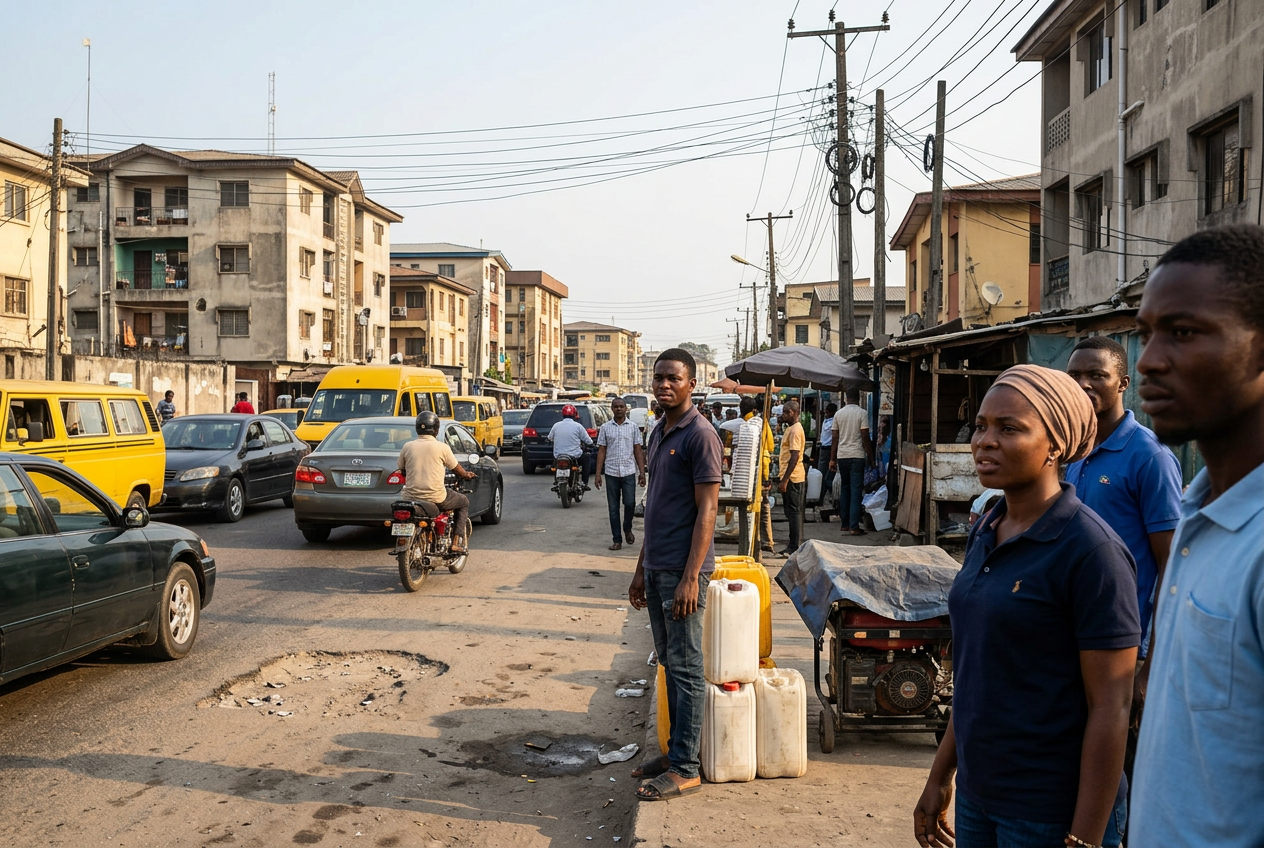
Welcome, and thank you for opening this one. It is the end point of months of research, market visits, price checks and long conversations with people who have stayed and people who have gone, layered on top of years spent writing about how ordinary households actually cope in the most populous country on the African continent. When readers ask me about the problems with living in Nigeria, they are usually bracing for one of two things: a brochure, or a lament.
I am not going to hand you either.
What I can give you is the version I would give a cousin ringing from Manchester at midnight, weighing up whether to bring her children home. Honest, specific, and priced in Naira, because vague sympathy has never paid anybody’s rent.
Here is the shape of it. Nigeria is not one country in the way that Portugal is one country. It is six geopolitical zones, thirty-six states and a federal capital, and the distance between life in Ado-Ekiti and life in a Zamfara farming hamlet is not a matter of degree. It is a matter of kind. Any answer that treats the country as a single experience is going to mislead you, and most of the answers online do exactly that.
So I will work through the pressures one at a time. What they are. How big they actually are, according to the people who publish the numbers rather than the people who shout about them. And, crucially, what each one costs a household every month, because that is the figure that decides whether a family stays.
The Everyday Disadvantages of Living in Nigeria
Start with the thing that grinds hardest, which is not the thing that makes headlines.

It is money. Or more precisely, the widening gap between what people earn and what a tin of tomatoes costs by the time it reaches a Lagos market. Headline inflation eased to 15.43 per cent in July 2026, according to the monthly releases published by the national statistics agency, which sounds like progress until you look one line down. Food inflation accelerated for the sixth straight month to 20.31 per cent. Food is the largest single item in most household budgets here, so a falling headline number with rising food prices is, for a mother of four, no improvement at all. It is a statistical consolation prize.
The national minimum wage sits at ₦70,000 a month. At roughly ₦1,400 to the dollar, that is about forty-two dollars. Read that twice.
In 2019 the floor was ₦30,000, worth around eighty-three dollars at the rates of the day. The nominal figure has more than doubled and the purchasing power has roughly halved, which is the cleanest illustration I know of why Nigerians talk about the economy the way they do. The World Bank puts the share of Nigerians living in poverty at around 63 per cent heading into 2026, up from roughly 56 per cent in 2023, which translates to somewhere between 129 million and 141 million people depending on whose modelling you accept. A Guardian columnist described this as growth without development, and I have not found a tighter three-word summary anywhere.
Then there is electricity, which deserves its own paragraph because it quietly taxes everything else.
Nigeria has roughly 13,625 megawatts of installed generation capacity. In April 2026, average available generation was 4,286 megawatts, meaning the fleet was running at about 31 per cent of what it was built to deliver. Those figures come from the regulator’s own quarterly performance reporting, not from a campaign leaflet. The grid collapsed entirely on 23 January 2026, with all eleven distribution companies showing zero allocation. It partially collapsed again on the night of 22 August 2026, when national generation dropped to 1,132 megawatts from over 4,000 earlier the same day, with twelve named stations producing nothing at all.
What does that mean in a flat in Surulere? It means you pay twice. Once to the distribution company, and once to the generator. Households reclassified into the premium Band A have reported bills leaping from ₦10,000 to over ₦41,000, with some estates quoting ₦50,000 to ₦70,000, while still receiving four to six hours of supply on bad days. Petrol has hovered between roughly ₦1,100 and ₦1,400 a litre through late 2026, and the Dangote gantry price moved to ₦1,350 in mid September. Run a small generator for four hours an evening and you will feel that number in your bones.
And then there is water in the wrong places at the wrong time. Flooding is now an annual budget line for millions of families, not a freak event, and the emergency agency issues seasonal alerts naming the states most at risk with grim regularity. Benue, Kogi, Anambra, Delta, Bayelsa and Rivers appear on those lists so often that people in the affected communities have stopped treating the warnings as news.
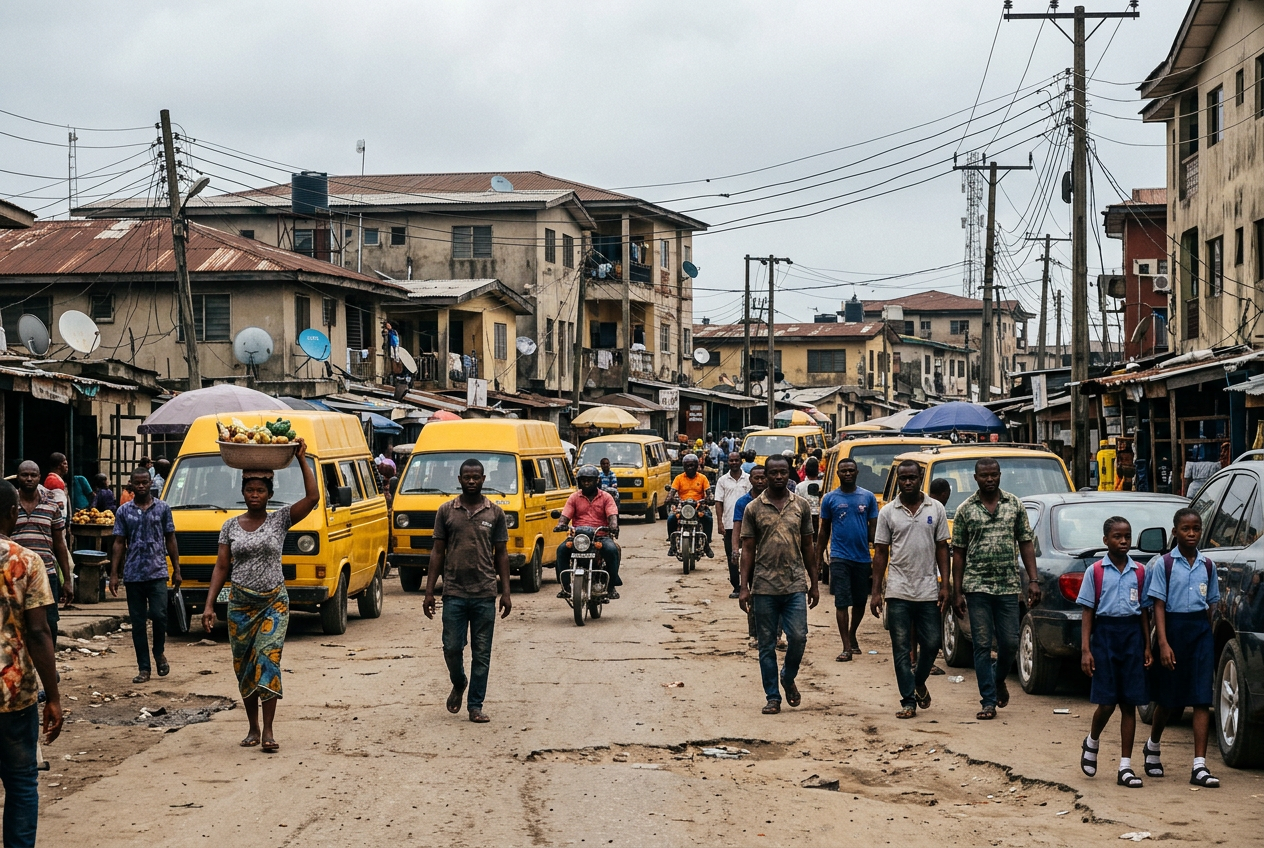
Smaller frictions stack on top. Road quality that turns a ninety-minute journey into four hours. Paperwork that requires three visits and a tip. Healthcare that works beautifully if you can pay privately and barely at all if you cannot.
None of these is dramatic on its own. Together they are exhausting, and exhaustion is the disadvantage nobody puts in a statistic.
The Biggest Problems in Nigeria Right Now
If I had to rank them by how many lives they touch, rather than by how much noise they make, the order would be this: cost of living, insecurity, power, healthcare capacity, and the slow haemorrhage of skilled people.
Insecurity is the one the world sees, and it is genuinely severe in specific places. SBM Intelligence recorded 2,938 people kidnapped in the North West between July 2024 and June 2025, which was more than 60 per cent of all reported incidents nationwide. Zamfara accounted for 1,203 of those, Kaduna 629, Katsina 566, Sokoto 358. Nextier’s conflict database logged 156 violent incidents in May 2026 alone, producing 842 deaths and 279 kidnappings, with fatalities up sharply against the same month a year earlier.
Those numbers are appalling, and I will not soften them. I will, however, insist on where they sit geographically, because that is the difference between useful information and panic.
Healthcare capacity is the problem I think is most underrated. The Nigerian Medical Association reports roughly 55,000 doctors actively practising for a population above 220 million, which works out at somewhere near one doctor for every 3,600 to 4,000 people. About 16,000 Nigerian doctors have emigrated in the last five years. Specialist care outside Lagos, Abuja and a handful of teaching hospitals is thin to the point of theoretical.
Which brings us to the japa question, the wave of emigration that has become a national shorthand. Afrobarometer found that 56 per cent of Nigerians have considered leaving, up twenty points on 2017, and that the share who had thought about it “a lot” had tripled to 33 per cent. Among Nigerians with post secondary qualifications, the figure rises to 71 per cent. That is not idle grumbling. That is the productive core of a country running the numbers on its own future.
Corruption sits underneath all of it, less as a discrete problem and more as a multiplier that makes every other problem more expensive to solve.
Before I give you the direct answer, here is the process I actually use with people who ask me to assess their own exposure. It takes about a fortnight of honest effort and it will tell you more than a hundred forum threads.
- Pin down the exact location, not the country. Write down the state, the local government area and the neighbourhood, because risk and cost both vary enormously within a fifty kilometre radius and every useful figure you will find is local.
- Price your actual monthly basket for four weeks. Walk the market you would really shop in, note the price of a 50kg bag of rice, a painter of beans, a basket of tomatoes and a litre of petrol, and total it rather than trusting any published average.
- Audit your power requirement in kilowatt hours, not in feelings. Count the appliances you cannot live without, work out the daily load, then price an inverter and battery bank against a generator and its fuel over a twelve month horizon.
- Test the commute at the worst hour, on the worst day. Do the journey at 6:30am on a Monday and again at 6pm on a Friday, because a rent saving of ₦400,000 a year evaporates the moment it costs you three hours a day.
- Map your medical fallback before you need it. Identify the nearest facility that can handle a genuine emergency at 2am, confirm it is staffed overnight, and price an HMO plan for every member of the household.
- Speak to three people who left the area and one who stayed. The people who left will tell you what finally broke them and the person who stayed will tell you what made it bearable, and you need both halves.
- Build a six month cash buffer in two currencies before you commit. Naira for living and something harder for shocks, because the single most common failure I see is a household with a workable monthly budget and no cushion for the month everything goes wrong at once.
That sequence is not glamorous. It is, however, the difference between a decision and a hope.
So, What Are the Problems With Living in Nigeria? The Direct Answer
Here is the paragraph you came for.
The problems with living in Nigeria cluster into six interlocking pressures: the cost of living, driven by food inflation above 20 per cent against a ₦70,000 statutory wage floor; insecurity, concentrated heavily in the North West and North East but present as kidnapping risk on highways nationwide; unreliable electricity, with the grid delivering around 4,286 megawatts against 13,625 megawatts of installed capacity; thin healthcare capacity, at roughly one practising doctor per 3,600 to 4,000 people; infrastructure and governance failures, from roads and drainage to the annual flooding that displaces hundreds of thousands; and the emigration of skilled workers, with 56 per cent of adults and 71 per cent of graduates having considered leaving. Every one of these is real. None of them is uniform across the country, and that second sentence matters as much as the first, because the same six pressures produce a bearable life in Ilorin and an unbearable one three hundred kilometres north.
The related entities worth naming, because they will come up in every serious conversation you have about this: the National Bureau of Statistics for prices, the Nigerian Electricity Regulatory Commission for power, the National Emergency Management Agency for flooding, the Central Bank for the exchange rate, and the state government of wherever you actually intend to live, which will affect your daily experience more than the federal government does.
What Each Problem Costs a Household Each Month
Figures below are indicative monthly outlays for an urban household of four in a major city, drawn from 2026 market prices and published sector data. They are working estimates for planning, not published statistics.
| Pressure point | 2026 indicator | Where it bites hardest | Common workaround | Indicative monthly cost (₦) |
|---|---|---|---|---|
| Food inflation | 20.31% year on year, July 2026 | Renters on fixed salaries, large households | Bulk buying at harvest, cooperative purchasing | 150,000 to 250,000 |
| Electricity | 4,286MW available against 13,625MW installed | Band A estates paying premium rates for partial supply | Inverter and solar array, or petrol generator | 40,000 to 120,000 including fuel |
| Fuel and transport | Petrol roughly ₦1,100 to ₦1,400 a litre | Long commute corridors in Lagos and Abuja | Living nearer work, shared or public transport | 30,000 to 100,000 |
| Security | Over 60% of reported abductions in the North West | Rural highways and farming communities | Daylight road travel only, estate security levies | 5,000 to 25,000 in levies |
| Healthcare | About 55,000 practising doctors for 220m people | Rural areas and any specialist requirement | Private HMO cover, dedicated medical savings | 15,000 to 60,000 per person |
| Housing | Rent rising faster than headline inflation in cities | Lagos island and central Abuja corridors | Longer commute in exchange for cheaper rent | 60,000 to 200,000 amortised |
Two conclusions fall out of that table. First, the problems are not evenly weighted: food and housing together account for the bulk of the monthly burden, while security, for most urban households, costs far less in Naira than it does in nerves. Second, almost every line has a workaround that trades money for time or time for money, which is precisely why two families on identical salaries in the same city can report completely different experiences of the same country.
Is It Safe to Live in Nigeria Right Now?
This is where I ask you to resist the single-word answer, because both available single words are wrong.
The honest position is that safety in Nigeria is a map question, not a country question. As of April 2026, the United States maintained a Level 3 advisory for Nigeria overall, with twenty-three states at Level 4, including Borno, Yobe, Adamawa, Plateau, Kaduna, Kano, Katsina, Sokoto, Zamfara and Niger. British guidance advises against all travel to Borno, Yobe, Adamawa, Gombe, Katsina and Zamfara, and against all but essential travel to a longer list. The United States also authorised the departure of non emergency embassy staff from Abuja in April 2026.
Now hold that against the other half of the picture.
Lagos and Abuja continue to function as working cities for millions of people, including a great many foreigners, with the risk profile of large cities anywhere plus a kidnapping premium. The South West states of Oyo, Osun, Ondo and Ekiti are consistently described as relatively stable, and Ekiti has ranked among the country’s safest states across more than a decade of incident data. The South East carries a different problem, less about violent crime and more about the disruption of sit at home enforcement, which you plan around rather than fear.
A reader’s letter in this paper captured the texture of it better than any risk index, describing how fear quietly reorganises ordinary decisions: which road you take, what hour you set off, whether you plant the far field this season. That is the real cost for most people. Not the statistically improbable catastrophe, but the constant low-level tax on freedom of movement.
My practical rules, developed the boring way, over years of getting places safely. Do not travel interstate by road after dark. Do not publicise movements in advance, on social media least of all. Keep two routes for any regular journey. Know the phone number of a local person who will actually pick up at 3am. And treat any advice that begins “Nigeria is completely safe” or “Nigeria is a war zone” as equally useless, because both are marketing.
Is Nigeria safe to live in right now? In Ado-Ekiti, Ilorin or a well-run Lekki estate, considerably safer than the headlines suggest. On the Kaduna to Abuja road at night, no. The country will not average those two into a useful number for you, so do not let anyone pretend it can.
Is Nigeria a Good Place to Live In, All Things Considered?
I have been dreading this section, because the honest answer contains a contradiction I cannot tidy away.
Nigeria ranked 106th of 147 countries in the 2026 World Happiness Report, continuing a slide from 105th in 2025, 102nd in 2024 and 95th in 2023. Ten African nations placed ahead of it, led by Mauritius at 73rd. In 2003 the World Values Survey found Nigerians to be among the most contented people surveyed anywhere. That fall is the single most damning statistic in this entire article, and a Guardian analysis of the distance between headline stability and household mood sets out why the two have come apart.
And yet.
Lagos sits 70th in the 2026 Global Startup Ecosystem Index, the highest ranked city on the continent, hosting 987 startups and roughly 67 per cent of Nigeria’s total. Nigeria ranks 13th globally in online banking and 17th in cryptocurrency, first in Africa in both. Real GDP grew 3.89 per cent in the first quarter of 2026. Port Harcourt grew faster than any other Nigerian city in the ecosystem rankings, and Enugu climbed nearly 40 per cent in a year.
More importantly, and I am aware this resists measurement: the social fabric here still does work that formal institutions do elsewhere. When a friend’s father was hospitalised in Ibadan last year, eleven people contributed within six hours and two of them had never met him. No insurer moves that fast. That density of obligation is not a nice cultural detail, it is functioning infrastructure, and it is precisely what the happiness rankings struggle to capture.
So is it a good place to live? It depends almost entirely on three things: whether your income is earned in Naira or in something harder, whether you have family or community in your city, and whether the specific work you do is scarce here. A software engineer billing in dollars from Yaba with cousins in Lagos is living a life that most of her London peers would envy on the numbers. A pensioner on a fixed Naira income in a flood-prone Benue community is facing something closer to an emergency. Same country. Same year.
Nigeria rewards people who already hold some advantage in a way few countries do, and punishes people without one more harshly than most. That is the whole answer, and anyone giving you a cleaner one is selling something.
Final Thoughts on the Problems With Living in Nigeria
If you have read this far, you probably did not want reassurance. You wanted to know whether the difficulty is manageable, and whether it is manageable specifically for you.
Here is where I have landed after months with the data and years with the people behind it. The problems with living in Nigeria are serious, measurable and unevenly distributed, and pretending otherwise does nobody any favours. Food inflation above 20 per cent is a real emergency for real families. A grid delivering less than a third of its capacity is a policy failure, not bad luck. Kidnapping figures in the North West are a humanitarian crisis by any reasonable standard.
But the conclusion most of the coverage reaches from those facts, which is that the country is uniformly unliveable, is simply not supported by them. Millions of people are building decent lives here, not by ignoring the difficulties but by choosing their location carefully, pricing their exposure honestly and treating self-reliance in power, water and security as a fixed monthly cost rather than an outrage to be argued with.
Do the fortnight of work in step one through seven. Price your actual basket in your actual market. Then decide with numbers in front of you rather than with a feeling in your chest, because the feeling is being fed by headlines and the headlines are, by design, about the worst places on the worst days.
Whatever you choose, choose it deliberately. That is the only part of this entirely within your control.
- Choose the state and neighbourhood first, then build the budget, because location determines both your risk and roughly half your cost
- Treat power, water and security as monthly line items you provide for yourself, and price them before you sign any tenancy agreement
- Protect income in a second currency if you can, since almost every pressure in this article traces back to what a Naira buys this month
Related Articles
If the underlying question here is why these pressures exist at all rather than how to cope with them, I traced the historical and structural roots in a longer piece on why the country remains developmentally stuck, which covers the institutional and infrastructure failures that sit beneath every figure quoted above. And for readers more interested in the lived experience than the ledger, my examination of how Nigerians actually rate their own lives works through the fall down the global wellbeing tables and what the resilience underneath it is made of.
Key Takeaways
- The six core pressures are cost of living, insecurity, unreliable power, thin healthcare capacity, infrastructure failure and skilled emigration, and they interact rather than operating separately
- Geography is decisive: the same six pressures produce a workable life in Ekiti or Kwara and an acute crisis in parts of Zamfara or Borno, so any national average will mislead you
- Your currency of income, your community ties and the scarcity of your skill set matter more to your experience here than any national statistic
Frequently Asked Questions About the Problems With Living in Nigeria
What are the problems with living in Nigeria?
The main problems with living in Nigeria are the cost of living against a ₦70,000 minimum wage, insecurity concentrated in the North West and North East, unreliable electricity at roughly 4,286 megawatts of available generation, limited healthcare capacity at about one practising doctor per 3,600 people, poor infrastructure including annual flooding, and the emigration of skilled workers. These pressures are real nationwide but vary enormously by state, which is why location determines your experience more than any national figure does.
What are the main disadvantages of living in Nigeria day to day?
Day to day, the sharpest disadvantages are food prices rising at over 20 per cent a year, paying twice for electricity through both a utility bill and generator fuel, long commutes on poor roads, and administrative processes that consume time and money. The cumulative effect is fatigue rather than any single crisis, and that steady drain is what most residents cite when they talk about leaving.
What are the biggest problems in Nigeria in 2026?
Ranked by how many people they affect, the biggest problems in 2026 are the cost of living crisis, with poverty estimated at around 63 per cent of the population, followed by insecurity, the power supply deficit, healthcare capacity and skilled emigration. Corruption underlies all of them by making every solution more expensive and slower to deliver than it needs to be.
Is it safe to live in Nigeria right now?
Safety depends entirely on location, with the United States maintaining a Level 3 advisory nationally and Level 4 for twenty-three states as of April 2026, while Lagos, Abuja and the South West states function normally with elevated precautions. The practical rules that matter most are avoiding interstate road travel after dark, keeping movements private and maintaining reliable local contacts.
Which parts of Nigeria are considered safest?
The South West states of Ekiti, Osun, Ondo and Oyo consistently record the lowest violence figures, with Ekiti ranking among the country’s five safest states across more than a decade of incident data. Kwara and parts of the South East are also relatively stable, though the South East carries disruption from sit at home enforcement rather than high violent crime.
Is Nigeria a good place to live in for a returning diaspora family?
It can be very good if income is partly earned in foreign currency, the family has existing community ties in the destination city, and the chosen location is carefully researched rather than assumed. It becomes difficult quickly where income is entirely Naira denominated, support networks are absent and the household has no cash buffer for shocks.
How much does a household need each month to live comfortably in Nigeria?
A four person urban household in a major city typically needs between ₦200,000 and ₦400,000 monthly for rent, food and transport at a modest standard, with comfort in Lagos or Abuja requiring considerably more. Food and housing account for most of that total, while self-provided power can add ₦40,000 to ₦120,000 depending on household size and equipment.
Why is electricity still such a problem in Nigeria?
Nigeria has around 13,625 megawatts of installed capacity but delivered average available generation of just 4,286 megawatts in April 2026, held back by gas supply shortfalls, transmission bottlenecks, poor plant availability and vandalism of infrastructure. The grid collapsed completely in January 2026 and partially again in August, which is why most households and businesses treat self-generation as essential rather than optional.
How bad is the healthcare shortage in Nigeria?
The Nigerian Medical Association reports about 55,000 doctors actively practising for a population above 220 million, roughly one per 3,600 to 4,000 people, with around 16,000 doctors having emigrated in the past five years. Specialist and emergency care outside the major teaching hospitals is severely limited, which makes private cover and a mapped emergency fallback a practical necessity.
Why are so many Nigerians emigrating?
Afrobarometer found that 56 per cent of Nigerians have considered leaving, up twenty percentage points since 2017, with the most common reasons being the search for work opportunities and escape from economic hardship. The proportion rises to 71 per cent among those with post secondary qualifications, which concentrates the loss among exactly the skills the country most needs to retain.
Does the naira exchange rate still make imported goods expensive?
With the naira trading around ₦1,400 to the dollar through much of 2026, anything imported or priced against the dollar remains expensive relative to local wages, including fuel, vehicles, electronics and many medicines. The rate has been steadier than in previous years, which has helped slow headline inflation, but it has not restored the purchasing power lost since 2023.
What is the single most practical way to reduce exposure to these problems?
Choose your specific location before anything else, because the state and neighbourhood you settle in determine both your security risk and roughly half your monthly costs. After that, price your own power, water and security provision as fixed monthly expenses and build a cash buffer covering six months, since the most common failure is a workable budget with no cushion for shocks.

