 Follow Us on Google News
 Follow Us on Google Discover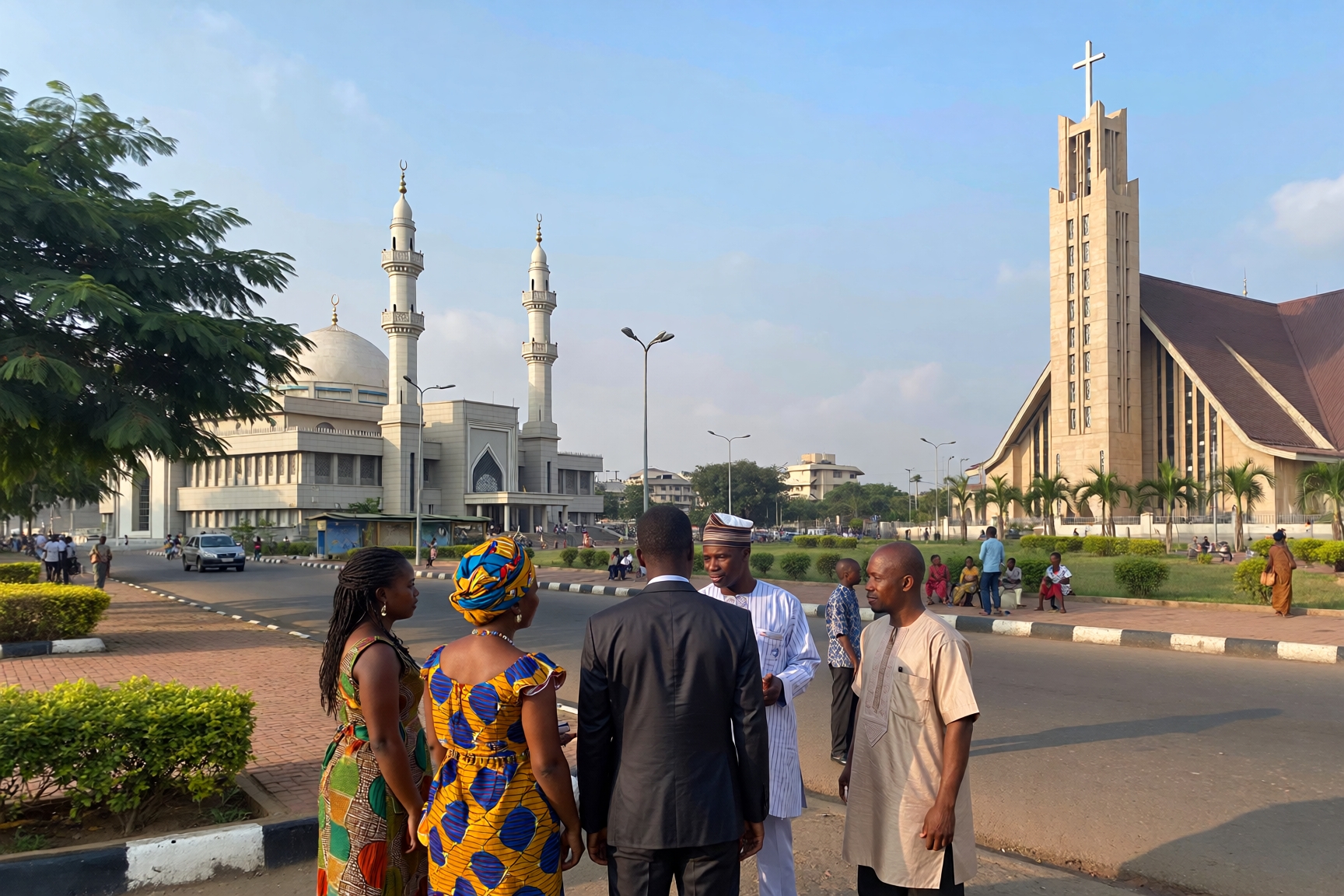
Welcome, dear reader. After months of research into Africa’s religious landscape and years of experience writing about faith, culture, and society across this magnificent continent, I’m thrilled to share what I’ve discovered about the faiths that shape African life.
When you walk through the bustling streets of Lagos, Nairobi, or Cairo, you’ll notice something remarkable. The call to prayer echoing from minarets. Church bells ringing on Sunday morning. The quiet reverence at traditional shrines. Religion isn’t just a Sunday affair in Africa; it’s woven into the very fabric of daily life, influencing everything from business deals to baby naming ceremonies.
The question of Africa’s largest religion isn’t as straightforward as you might think. The continent holds roughly equal populations of Christians and Muslims (each accounting for about 40 to 45 per cent of the total population), with traditional African religions and other faiths making up the remainder. But the story behind these numbers reveals centuries of cultural exchange, colonial influence, and the enduring resilience of indigenous African spirituality.
I remember chatting with my friend Amina in Kano about this very topic. She’s Muslim. Her business partner Samuel is Christian. And their elderly neighbour still consults the local traditional priest for major family decisions. “We’re all African,” Amina told me, laughing. “The religion came from outside, but we made it our own.”
That’s what makes understanding religion in Africa so fascinating. It’s never been a simple replacement of one faith with another. Rather, it’s a beautiful, sometimes complicated, always evolving conversation between ancient traditions and newer beliefs.
What is the Main Religion of Africa?
Africa doesn’t have a single main religion.

Christianity and Islam each claim approximately 40 to 45 per cent of Africa’s population, making them the two dominant faiths across the continent. However, their distribution varies dramatically by region, with North Africa predominantly Muslim, Southern and East Africa largely Christian, and West Africa showing significant diversity with both religions thriving alongside traditional African beliefs.
The National Human Rights Commission of Nigeria acknowledges the profound religious diversity across the country, noting that Nigeria mirrors the broader African pattern with significant Christian populations in the south and predominant Muslim communities in the north. This geographic division reflects historical trade routes, missionary activities, and pre-colonial political structures that shaped how these religions spread across the continent.
Traditional African religions, while often undercounted in official statistics, remain vibrant forces in many communities. In Nigeria alone, indigenous practices continue to influence daily life even among those who identify as Christian or Muslim. The Yoruba still revere Ogun, god of iron and war. The Igbo invoke Chukwu, the supreme creator. These aren’t relics of the past but living traditions that coexist with, and sometimes blend into, the imported faiths.
When I visited my uncle in Benin City last year, I watched him attend Sunday Mass in the morning and later consult with a traditional priest about his son’s persistent illness. “God works through many channels,” he told me without a hint of irony. That’s Africa’s religious reality.
The statistics tell one story, but lived experience tells another. According to the Ministry of Foreign Affairs, in Nigeria’s 13 northern states, the vast majority of people are Muslim, having been converted by Arab traders and merchants from the 10th century onwards. Meanwhile, in the southern states, the majority are Christian, though some groups continue to practise indigenous beliefs.
Christianity arrived in Africa through multiple routes. Ethiopian Christianity dates back to the 4th century, making it one of the oldest Christian traditions in the world. But for most of sub-Saharan Africa, Christianity came with European colonialism in the 19th and 20th centuries. Missionaries established schools and hospitals, creating infrastructure that accelerated conversion but also tied Christianity to colonial power in complex ways.
Islam’s African journey began earlier, spreading across North Africa in the 7th century following the death of Prophet Muhammad. By the 11th century, Islamic scholars and traders had established vibrant Muslim communities in West Africa, particularly in what is now northern Nigeria, Mali, and Senegal. The famous Timbuktu manuscripts stand as testimony to Islam’s deep intellectual roots in Africa.
What is the Largest Religion in Nigeria?
Nigeria perfectly encapsulates Africa’s religious diversity.
The country is nearly evenly split between Islam and Christianity, with Muslims comprising approximately 50 per cent of the population and Christians around 48 per cent, while traditional religions and other faiths account for the remaining 2 per cent. This balance creates unique dynamics where both religions significantly influence national politics, education, and social life.
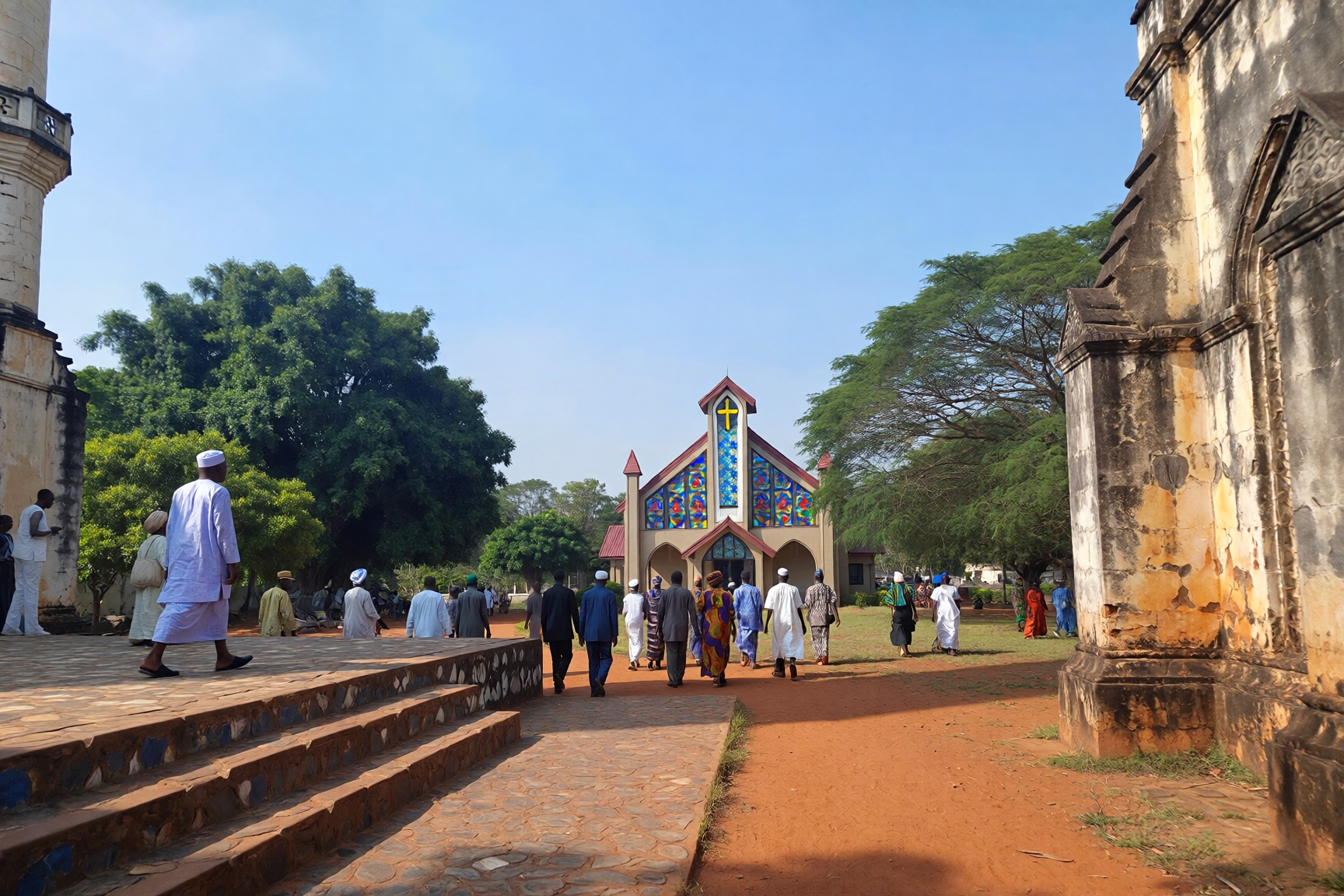
My friend Fatima, a university lecturer in Ibadan, explained it brilliantly: “We joke that Nigeria is one of the few countries where you need to know both the Islamic and Christian calendars to plan anything properly.” She’s right. Public holidays honour both Eid and Easter. Schools close for Ramadan in the north and Christmas in the south.
The geographic divide is stark and significant. According to government demographic data, the Hausa-Fulani of the north have been Muslim for nearly a millennium. The Igbo of the southeast are predominantly Christian, converted largely by Roman Catholic missionaries. The Yoruba of the southwest practice both religions in roughly equal numbers, creating communities where Muslim and Christian siblings share family compounds.
But here’s what statistics miss: Nigerian Christianity isn’t monolithic. You’ll find Roman Catholics, Anglicans, Methodists, and a growing number of Pentecostal churches with their own unique Nigerian flavour. Churches like the Redeemed Christian Church of God and the Living Faith Church Worldwide (Winners Chapel) have millions of members and operate mega-churches that seat tens of thousands.
Similarly, Nigerian Islam varies from the strict Sharia-observing communities in Zamfara State to the more moderate Muslim populations in Lagos where hijabs and business suits share the same office buildings. The Sokoto Caliphate’s legacy still influences northern Islam, while coastal Muslims blend their faith with commercial pragmatism.
I once attended a wedding in Kano where the couple’s families were mixed. The bride’s Muslim relatives and the groom’s Christian family negotiated two ceremonies with remarkable grace. “We’re all serving the same God,” the bride’s father told me, “just using different prayer books.” This isn’t everyone’s experience, of course (religious tensions do exist), but it represents an often-overlooked reality of Nigerian religious life.
The economic dimension matters too. A church plot in Lekki Phase 1 can cost upwards of ₦200 million, while building a mosque in rural Sokoto might require just ₦5 million. These disparities reflect both regional wealth differences and the varying organizational structures of the two religions. Christian churches often function as formal businesses with property holdings, while many mosques operate through community contributions and waqf (Islamic endowment) systems.
What are the Top 3 Biggest Religions?
Globally, Christianity, Islam, and Hinduism claim the title of the world’s three largest religions.
Christianity leads with approximately 2.4 billion followers worldwide, Islam follows with about 1.9 billion adherents, and Hinduism ranks third with roughly 1.2 billion practitioners. However, in the African context specifically, the top three are Christianity, Islam, and African Traditional Religions, with Judaism and other faiths present but representing smaller populations.
Africa’s religious composition differs significantly from global patterns. While Hinduism dominates South Asia, it has minimal presence in Africa outside of immigrant communities in South Africa and East African countries like Kenya and Tanzania. African Traditional Religions, meanwhile, claim far more adherents on the continent than most statistics suggest, as many people who identify as Christian or Muslim also maintain traditional practices.
The numbers matter less than the influence. Christianity has shaped African education systems, healthcare infrastructure, and social services across the southern and eastern regions. Christian missionaries established universities like the University of Ibadan and Makerere University that became centres of African intellectual life.
Islam’s influence extends from architecture (those beautiful mosques in Djenné and Kano) to legal systems (Sharia courts in northern Nigeria) to educational traditions (the Quranic schools that still teach millions of African children). Islamic scholarship in Timbuktu predated Oxford and Cambridge, preserving classical knowledge through Africa’s medieval period.
Traditional African religions, often dismissed or undercounted, shape the spiritual worldview of millions. Even in Nigeria, where official statistics rarely acknowledge them, traditional practices influence everything from agricultural calendars to conflict resolution mechanisms. The Yoruba concept of Ori (personal destiny), the Igbo belief in reincarnation through children, the Akan understanding of ancestors as active participants in daily life – these aren’t museum pieces but living philosophies that guide contemporary Africans.
Understanding Nigeria’s Religious Distribution by Region
| Region | Dominant Religion | Percentage | Major Ethnic Groups | Notable Religious Sites | Estimated Population |
|---|---|---|---|---|---|
| North-West | Islam | 95% | Hausa, Fulani | Sokoto Sultan’s Palace, Central Mosque Kano | 47 million |
| North-East | Islam | 85% | Kanuri, Fulani | Borno Shehu’s Palace, Yola Central Mosque | 30 million |
| North-Central | Mixed | 55% Muslim, 40% Christian | Tiv, Igala, Nupe | Jos Cathedral, Lokoja Central Mosque | 26 million |
| South-West | Mixed | 50% Christian, 45% Muslim | Yoruba | National Mosque Lagos, Cathedral Church Lagos | 43 million |
| South-East | Christianity | 98% | Igbo | Holy Trinity Cathedral Onitsha, Basilica Enugu | 22 million |
| South-South | Christianity | 90% | Ijaw, Efik, Ibibio | All Saints Cathedral Calabar, Chapel Warri | 28 million |
This breakdown reveals Nigeria’s religious complexity. The North-West remains the heartland of Nigerian Islam, home to the Sokoto Caliphate that historically unified the region’s Muslim communities. Christianity dominates the South-East almost completely, a legacy of intense Catholic missionary work among the Igbo people. The Middle Belt (North-Central) serves as Nigeria’s religious frontier, where Christianity and Islam meet, sometimes clash, and often coexist.
Who Brought Islam to Nigeria?
Arab traders and scholars introduced Islam to northern Nigeria from the 11th century onwards.
The Kanem-Borno Empire’s rulers were among the first to embrace Islam around 1085 CE, having encountered the religion through trans-Saharan trade networks connecting sub-Saharan Africa to North Africa and the Middle East. By the 14th century, Islamic scholarship flourished in Kano and Katsina, with renowned scholars teaching the Quran, Arabic, and Islamic jurisprudence to thousands of students.
My colleague Dr. Musa, a historian at Ahmadu Bello University, explained the process beautifully: “Islam didn’t arrive through conquest in Nigeria. It came through trade, intellectual exchange, and gradual conversion. The Hausa traders who went to North Africa for commerce returned as Muslims, bringing not just goods but a new worldview.”
The Sokoto Caliphate, established in 1804 by Usman dan Fodio, represents the most significant Islamic movement in Nigerian history. Dan Fodio led a jihad (religious reform movement) against what he saw as corrupt practices mixing Islam with traditional religion. His successful campaign created a vast Islamic state that encompassed much of northern Nigeria, parts of Niger, and Cameroon.
Guardian Nigeria’s analysis notes that Islam has been a defining feature of northern Nigerian identity for nearly a millennium, shaping everything from legal systems to educational structures to social organization. The Emirs who rule northern cities today trace their authority back to the Sokoto Caliphate’s political and religious legitimacy.
But the story isn’t simply one of peaceful spread. Islamic expansion sometimes meant war with non-Muslim communities, forced conversions, and the establishment of political systems that privileged Muslims. The legacy of these conflicts still echoes in contemporary Nigeria, particularly in areas where Christian and Muslim populations compete for political power.
The economic dimension was crucial too. Muslim traders controlled the most profitable trade routes connecting the Guinea coast to the Mediterranean. Kola nuts, leather goods, textiles, and (unfortunately) enslaved people moved north, while salt, horses, books, and Islamic scholarship flowed south. Converting to Islam opened economic opportunities and facilitated long-distance trade relationships built on shared religious identity.
Modern Nigerian Islam reflects centuries of adaptation. Unlike Saudi Arabia’s strict Wahhabism, Nigerian Islam traditionally incorporated aspects of Sufism, with brotherhoods like the Tijaniyya and Qadiriyya maintaining significant influence. Many northern Nigerian Muslims revere local saints and visit shrines, practices some purist Muslims criticize but which represent Nigerian Islam’s distinctive character.
The rise of Islamic reformist movements in the late 20th century, influenced by funding and ideology from Gulf states, has created tensions within Nigerian Islam. Groups like Boko Haram represent extremist interpretations that most Nigerian Muslims reject, but their emergence reflects broader debates about what Nigerian Islam should look like in the 21st century.
Understanding Christianity’s African Journey
Christianity’s African story is far more complex and ancient than many realize.
The Ethiopian Orthodox Church, established in the 4th century CE, represents one of Christianity’s oldest continuous traditions, predating most European Christian communities and maintaining unique theological perspectives that blend Christian doctrine with ancient Ethiopian traditions. However, for most sub-Saharan African countries, Christianity arrived much later through European colonial expansion in the 19th and 20th centuries.
In Nigeria specifically, Christianity came through multiple channels. Portuguese explorers brought Catholicism to the coast in the 15th century, but their influence remained limited. The real transformation came with 19th-century British colonialism. Anglican, Methodist, Baptist, and Presbyterian missionaries established churches, schools, and hospitals across southern Nigeria, creating infrastructure that accelerated conversion.
I grew up attending St. Gregory’s College in Lagos, founded by Catholic missionaries in 1928. The school’s motto, “Virtus et Scientia” (Virtue and Knowledge), reflects Christianity’s educational mission in Africa. Without the missionary schools, many argue, modern African education systems wouldn’t exist. Of course, this education also served colonial interests, teaching Africans to be “civilized” according to European standards.
The southeastern region, particularly Igboland, saw perhaps Africa’s most rapid Christian conversion. By the 1960s, over 90 per cent of Igbos identified as Christian, primarily Catholic. The missionaries’ message of individual salvation, education, and social mobility resonated powerfully with Igbo people who had traditionally valued personal achievement and entrepreneurial success.
But Nigerian Christianity evolved beyond its missionary roots. The 1970s and 1980s saw explosive growth of Pentecostal churches led by charismatic Nigerian pastors who indigenized Christianity in ways missionary churches never could. These churches conduct services in local languages, incorporate African musical styles, address concerns about witchcraft and spiritual warfare that resonate with traditional African worldviews, and preach a prosperity gospel that speaks to economic aspirations.
According to religious scholars, Africa has become Christianity’s new heartland, with the fastest-growing Christian populations globally. By 2060, Nigeria alone is projected to have 174.2 million Christians, making it one of the world’s largest Christian nations. This growth occurs even as Christianity declines in its traditional European strongholds.
Seven Steps to Understanding Africa’s Religious Landscape
Understanding Africa’s complex religious reality requires looking beyond simple statistics. Here’s a seven-step framework I’ve developed through years of research and countless conversations with Africans of all faiths:
- Recognise the Geographic Divide: Africa’s religious map follows clear geographic patterns with North Africa (Morocco, Egypt, Libya, Algeria, Tunisia, Sudan) predominantly Muslim, East and Southern Africa (Kenya, Tanzania, Uganda, South Africa, Zambia) largely Christian, and West Africa showing remarkable diversity with countries like Nigeria, Ghana, and Senegal hosting significant populations of both religions. Understanding these patterns helps explain political alliances, economic relationships, and cultural exchanges across the continent. The Sahara Desert historically served as both barrier and bridge, with trans-Saharan trade routes facilitating Islam’s spread while European coastal colonization brought Christianity from the opposite direction.
- Acknowledge Pre-Existing Beliefs: Before Christianity and Islam arrived, Africans practiced sophisticated religious systems that explained the cosmos, guided moral behaviour, and organized social life. The Yoruba religion, with its pantheon of Orisha deities, influenced religions across the Atlantic through the slave trade (Santería in Cuba, Candomblé in Brazil, Vodou in Haiti). The Akan concept of the Supreme Being Nyame, the Zulu understanding of Unkulunkulu as creator, the Dogon astronomical knowledge embedded in religious practices all demonstrate that African spirituality wasn’t primitive ignorance awaiting enlightenment but complex philosophical systems that deserve respect. Many African Christians and Muslims maintain these traditional beliefs alongside their adopted faiths, creating syncretic practices that enrich rather than dilute religious experience.
- Understand Colonialism’s Religious Impact: European colonization and Christianity arrived in Africa together, making it impossible to separate religious conversion from political subjugation. Missionaries genuinely believed they were saving African souls, but they also participated in systems that destroyed African political autonomy, economic independence, and cultural confidence. Mission schools taught reading and writing but also denigrated African languages and customs. Christian hospitals saved lives but also undermined traditional healing practices. This complicated legacy means that African Christianity carries traces of colonial power relations even as it has been thoroughly Africanized. Similarly, Islam’s spread through trade and conquest created power dynamics that still influence how different African communities relate to each other.
- Follow the Trade Routes: Religion in Africa spread primarily through economic networks rather than purely spiritual seeking. Muslim traders brought Islam to West Africa not primarily through missionary zeal but as part of commercial relationships. Shared religious identity facilitated trust in long-distance trade where contracts were difficult to enforce. Christian missions often followed European commercial interests, establishing churches where European traders needed educated African intermediaries. Today, Nigerian Pentecostal churches follow migration patterns, establishing branches in London, Houston, and Johannesburg wherever Nigerian diaspora communities settle. Understanding these economic dimensions helps explain why certain areas converted to particular religions while others maintained traditional practices.
- Examine Political Dimensions: Religion and political power remain deeply intertwined across Africa. In northern Nigeria, the Emirs derive legitimacy from Islamic authority established by the Sokoto Caliphate. In Ethiopia, the Orthodox Church’s relationship with the imperial dynasty shaped the nation’s identity for centuries. South African apartheid used Dutch Reformed Christianity to justify racial segregation, while the anti-apartheid movement found inspiration in liberation theology. Contemporary African politics cannot be understood without grasping religious dimensions. Elections in Nigeria often break along religious lines. Constitutional debates in Kenya involve religious organizations fighting over personal law. Sudan split into two countries partly along religious boundaries (Muslim north, Christian/traditionalist south).
- Appreciate Religious Innovation: African Christianity and Islam aren’t simply carbon copies of European or Middle Eastern originals but creative adaptations that address African concerns in culturally appropriate ways. Nigerian Pentecostalism’s emphasis on prosperity differs from Western evangelicalism’s focus on individual salvation precisely because it speaks to African economic realities and spiritual worldviews. West African Sufi brotherhoods organize Islam differently than Gulf state Wahhabism because they emerged from different historical and cultural contexts. The African Independent Churches that blend Christian theology with traditional practices represent genuinely African religious innovation, not confused syncretism. These innovations deserve recognition as legitimate religious developments rather than deviations from supposedly pure forms.
- Track Contemporary Changes: Africa’s religious landscape continues evolving rapidly, with implications for the continent’s future. Pentecostal Christianity grows explosively, attracting young urban Africans with messages of personal transformation and economic mobility. Islamic reformist movements funded by Gulf petrodollars compete with traditional Sufi brotherhoods for influence. Traditional religions adapt to modernity, with some practitioners creating formal organizations and written texts to preserve oral traditions. Religious tensions occasionally erupt into violence (Boko Haram in Nigeria, al-Shabaab in Somalia, Christian-Muslim conflicts in Central African Republic), but peaceful coexistence remains more common than conflict. The future will likely bring more religious diversity, more African innovation in religious practice, and continued negotiation between tradition and modernity.
The Economic Impact of Religion in Africa
Religion isn’t just about souls and salvation. It’s big business.
Nigerian churches collectively own property worth trillions of Naira. The Redeemed Christian Church of God’s Redemption Camp occupies 530 hectares along the Lagos-Ibadan Expressway, functioning as a small city with its own post office, police station, and even an airstrip. Living Faith Church (Winners Chapel) seats 50,000 people in its main auditorium and operates schools, bakeries, water bottling plants, and a planned airport.
As noted in Guardian Nigeria, Nigeria ranks among the world’s most religious nations, and this religiosity translates into massive economic activity. Nigerians spend billions on religious activities annually, from church tithes (typically 10 per cent of income) to pilgrimage trips to Jerusalem and Mecca that can cost ₦1.5 million to ₦3 million per person.
The prosperity gospel preached by many Pentecostal churches emphasizes material wealth as evidence of divine favour, encouraging congregants to give generously while expecting supernatural financial returns. Critics argue this exploits the poor while enriching pastors who fly private jets and live in mansions. Supporters counter that these churches provide hope, community, and practical assistance that government services fail to deliver.
Islamic economics operates differently but no less significantly. The Halal market in Nigeria alone is estimated at several trillion Naira annually, covering everything from food certification to Islamic banking. Takaful (Islamic insurance) companies offer Sharia-compliant financial products. Zakāt (mandatory charitable giving) and Sadaqah (voluntary charity) mobilize resources for the poor, though these systems often operate informally.
Religious tourism generates substantial revenue. Every year, hundreds of thousands of Nigerian Muslims perform Hajj (pilgrimage to Mecca), spending roughly ₦2.5 million each for official packages. Christian pilgrims visit Israel, Rome, and other holy sites. These journeys enrich airlines, hotels, and religious tour operators while providing spiritual fulfilment for believers.
But there’s a darker economic side. Religious organizations in Nigeria enjoy tax exemptions worth billions in lost government revenue. Some churches and mosques launder money through their accounts. Religious leaders sometimes trade political support for government contracts or appointments. The line between religious enterprise and commercial exploitation can blur uncomfortably.
Traditional African Religions: The Forgotten Majority?
Official statistics say traditional African religions claim only 2 to 3 per cent of Nigeria’s population.
Those statistics lie.
I’ve watched Sunday churchgoers consult traditional priests on Monday. I’ve seen Muslims wear protective charms prepared by traditional religious specialists. The truth is that traditional African religious practices influence far more people than census data suggests, operating alongside, beneath, and sometimes intertwined with Christianity and Islam.
Traditional African religions aren’t a single unified system but diverse local practices with common characteristics. Most believe in a supreme creator God (Olodumare for Yoruba, Chineke for Igbo, Olorun across many groups) who is too exalted for direct worship. Between this supreme deity and humans exist numerous spirits and deities with specific domains (thunder, fertility, iron, rivers) who accept worship and grant favours.
Ancestor veneration forms another crucial element. Ancestors aren’t worshipped as gods but honoured as family members who continue participating in family affairs from the spirit realm. They can bless or curse, guide or mislead, protect or punish their living descendants. This creates an unbroken chain connecting past, present, and future generations.
Traditional priests and priestesses (Babalawo in Yoruba tradition, Dibia among Igbos) serve as intermediaries, interpreting oracles, preparing medicines, conducting ceremonies, and maintaining the relationship between human and spiritual realms. Their training takes years, involving memorization of oral texts, understanding of herbal medicine, and mastery of divination systems like Ifa.
Christianity and Islam officially oppose these practices as paganism or idolatry. But reality is messier. Many Christians see no contradiction in attending church Sunday while consulting a traditional healer when their child falls mysteriously ill. They understand these as addressing different domains: Christianity handles eternal salvation, while traditional practices deal with immediate spiritual threats like witchcraft, curses, or offended ancestors.
The Yoruba Orisha tradition has actually grown globally through the diaspora, with millions practicing it in Brazil, Cuba, Trinidad, and the United States. Ironically, African Americans increasingly turn to Yoruba religion seeking connections to African roots, even as urban Nigerians abandon it for Christianity or Islam.
Some traditionalists resist these imported religions’ dominance. Organizations like the International Council for Ifa Religion promote traditional practices as legitimate religious paths deserving equal respect with Christianity and Islam. They point out that Yoruba cosmology predates both religions in Nigeria and offers sophisticated spiritual and philosophical insights.
The tension between tradition and modernity, local and global, persists. Urban educated Africans often view traditional religions as backward superstition preventing progress. Rural communities see them as essential cultural heritage worth preserving. The truth likely lies somewhere between these extremes: traditional African religions represent genuine spiritual wisdom that modern Africans might adapt rather than abandon wholesale.
Religious Tolerance and Conflict in Africa
Here’s what few people outside Africa understand: despite headlines about religious violence, most African Christians and Muslims coexist peacefully.
I live in Lagos where my landlord is Muslim, my favourite restaurant owner is Christian, and the security guard who watches our compound practices traditional religion. We celebrate each other’s holidays, share meals during religious festivals, and discuss theology over evening tea without anyone getting killed.
Guardian Nigeria’s examination of religious intolerance acknowledges that while incidents occur, they often stem from political manipulation, economic competition, or ethnic tensions using religion as cover rather than from inherent religious conflict. The three major faith systems in Nigeria (Christianity, Islam, and African traditions) can coexist peacefully, and largely do across most of the country.
Still, religious violence does occur and shouldn’t be minimized. Boko Haram’s insurgency in northeastern Nigeria has killed tens of thousands, destroyed communities, and displaced millions. Periodic clashes in Plateau State pit Christian farmers against Muslim herders (though the conflict involves land access as much as religion). The 2022 killing of Deborah Samuel in Sokoto over alleged blasphemy shocked many Nigerians.
What causes these eruptions? Several factors converge. First, religious identity often overlaps with ethnic and regional identity, making it difficult to separate religious grievances from other conflicts. Second, politicians cynically manipulate religious sentiments to mobilize voters and maintain power. Third, economic inequalities along religious lines create resentment and suspicion. Fourth, religious extremists on both sides (though they represent minorities within their faiths) actively work to polarize communities.
But compared to global conflicts, Africa’s religious violence is relatively contained. Nigeria hasn’t experienced anything like India’s partition, the Yugoslav wars, or the Middle East’s sectarian conflicts. Most African countries with religious diversity (Ghana, Tanzania, Senegal) maintain remarkable stability despite significant Christian and Muslim populations.
Education helps. Areas with higher literacy rates generally show less religious intolerance. Urbanization creates mixed communities where religious differences matter less than shared economic interests. Interfaith dialogue initiatives bring religious leaders together to build understanding and trust.
The Nigerian government’s response matters too. When authorities punish religious violence swiftly and impartially, it deters future incidents. When they turn a blind eye or favor one religion, violence escalates. The current administration’s handling of religious issues affects whether Nigeria moves toward greater tolerance or increased polarization.
Related Articles
If you’ve found this exploration of Africa’s religious landscape fascinating, you might enjoy my other deep dives into Nigerian culture and health. In 4 Surprising Sexual Health Benefits of ‘Miracle Fruit’, Goron Tula, I investigate a traditional Nigerian fruit that’s gaining attention for its remarkable wellness properties, demonstrating how indigenous knowledge systems offer valuable insights often overlooked by modern medicine.
For those interested in traditional Nigerian herbs and their contemporary applications, 7 Health Benefits Of Scent Leaves examines how this aromatic plant, used for centuries in Nigerian cooking and traditional medicine, provides scientifically-backed health advantages that our grandmothers understood intuitively but which research is only now confirming.
What is Africa’s Largest Religion? Final Thoughts
So, what is Africa’s largest religion? The answer depends on how you count.
By raw numbers, Christianity and Islam claim roughly equal shares of Africa’s 1.4 billion people, each representing about 40 to 45 per cent of the population. If you’re asking which religion has more adherents globally using Africa as a base, Christianity edges ahead slightly in the continent’s overall statistics.
But reducing African religion to a numbers game misses the bigger picture. Africa’s religious reality is beautifully complex, involving three interconnected traditions: Christianity brought by missionaries and colonizers, Islam spread through traders and scholars, and traditional African religions that predate both by thousands of years.
What matters more than which religion is “largest” is understanding how Africans have adapted these religions to African contexts, creating unique expressions of faith that differ from European Christianity or Middle Eastern Islam. Nigerian Pentecostalism, Ethiopian Orthodox Christianity, West African Sufi brotherhoods, and syncretized practices blending traditional and imported faiths all demonstrate African religious creativity.
The future looks religious. Africa’s population will double by 2050, and most Africans will remain deeply religious even as Europeans and Americans abandon faith. African Christianity and Islam will increasingly shape these religions globally as the centre of religious gravity shifts southward. African religious innovations, from prosperity gospel to Islamic reformism to revitalized traditional practices, will influence believers worldwide.
For Nigeria specifically, the religious balance between Christianity and Islam creates both challenges and opportunities. The challenge is managing religious tensions in ways that prevent violence while respecting both faiths. The opportunity is leveraging religious institutions’ social capital to address development challenges that government struggles to solve.
The question isn’t really which religion is largest but how Africans will navigate religious diversity in the 21st century, maintaining the freedom to worship while preventing religious differences from tearing communities apart.
Key Takeaways:
- Christianity and Islam each claim approximately 40 to 45 per cent of Africa’s population, making them roughly equal in size, while traditional African religions remain influential despite low official statistics
- Geographic patterns matter more than overall numbers, with North Africa predominantly Muslim, Southern and East Africa largely Christian, and West Africa showing remarkable religious diversity with both faiths thriving alongside indigenous practices
- African religious expression involves creative adaptation rather than simple imitation, with Nigerian Pentecostalism, West African Sufi brotherhoods, and syncretized traditions representing genuinely African religious innovations that are reshaping global Christianity and Islam
Frequently Asked Questions About Religion in Africa
Is Christianity or Islam bigger in Africa?
Christianity and Islam claim roughly equal populations in Africa, each representing approximately 40 to 45 per cent of the continent’s total population. However, regional distribution varies dramatically, with Christianity dominant in Southern and East Africa while Islam prevails in North Africa.
Which African country is most religious?
Nigeria consistently ranks among the world’s most religious nations, with over 95 per cent of the population identifying as Christian, Muslim, or adherents of traditional religions. Religious observance permeates daily life, with Nigerians attending worship services more frequently than citizens of nearly any other country globally.
What percentage of Nigeria is Muslim?
Muslims comprise approximately 50 per cent of Nigeria’s population, concentrated primarily in the northern states. The Hausa-Fulani ethnic groups have practiced Islam for nearly a millennium, creating deeply rooted Islamic traditions that shape northern Nigerian culture, politics, and social organization.
When did Christianity arrive in Africa?
Christianity reached North Africa in the first century CE, spreading to Egypt and Ethiopia by the 4th century. However, for most sub-Saharan African countries including Nigeria, Christianity arrived during the 19th century through European missionary activities accompanying colonial expansion.
Do traditional African religions still exist?
Traditional African religions remain vibrant and influential despite official statistics suggesting only 2 to 3 per cent of Africans practice them exclusively. Many African Christians and Muslims maintain traditional practices alongside their adopted faiths, consulting traditional healers and participating in ancestor veneration ceremonies.
Why did Islam spread so fast in Africa?
Islam spread rapidly through Africa via trans-Saharan trade networks connecting North Africa to West Africa from the 7th century onwards. Muslim traders brought not just commerce but shared religious identity that facilitated trust in long-distance transactions, making Islam attractive to African rulers and merchants seeking economic advantages.
What is the Sokoto Caliphate?
The Sokoto Caliphate was an Islamic state established in 1804 by Usman dan Fodio in northern Nigeria through a religious reform movement. It became one of the largest Islamic states in Africa, encompassing much of modern northern Nigeria and influencing the region’s Islamic character that persists today.
How many Christians are in Nigeria?
Nigeria has approximately 86 to 90 million Christians, representing about 48 per cent of the national population. This makes Nigeria one of the largest Christian-majority nations globally, with particularly high concentrations in the southeastern and southern regions dominated by Igbo and Yoruba ethnic groups.
Can Muslims and Christians marry in Nigeria?
Interfaith marriages between Muslims and Christians occur in Nigeria though they face social challenges and family opposition in many communities. Such marriages require navigating different religious requirements, family expectations, and potential discrimination, with success depending largely on the couple’s commitment and their families’ tolerance.
What is the fastest-growing religion in Africa?
Christianity represents the fastest-growing religion in Africa, with Pentecostal and Evangelical denominations experiencing particularly explosive growth. However, Islam also continues expanding, particularly in West Africa, making both religions’ African populations grow faster than their global averages.
How much do Nigerians spend on religion?
Nigerians collectively spend billions of Naira annually on religious activities including church tithes (typically 10 per cent of income), mosque contributions, pilgrimage trips to Jerusalem and Mecca (costing ₦1.5 million to ₦3 million per person), and religious education. These expenditures make religion one of Nigeria’s largest economic sectors.
Will Nigeria become a Muslim-majority country?
Demographic projections suggest Nigeria’s Muslim population will grow slightly faster than its Christian population, potentially reaching 60 per cent Muslim by 2060 compared to 37 per cent Christian. However, such projections depend on many variables including birth rates, conversion patterns, and regional migration that could alter these trajectories significantly.

