 Follow Us on Google News


 Follow Us on Google Discover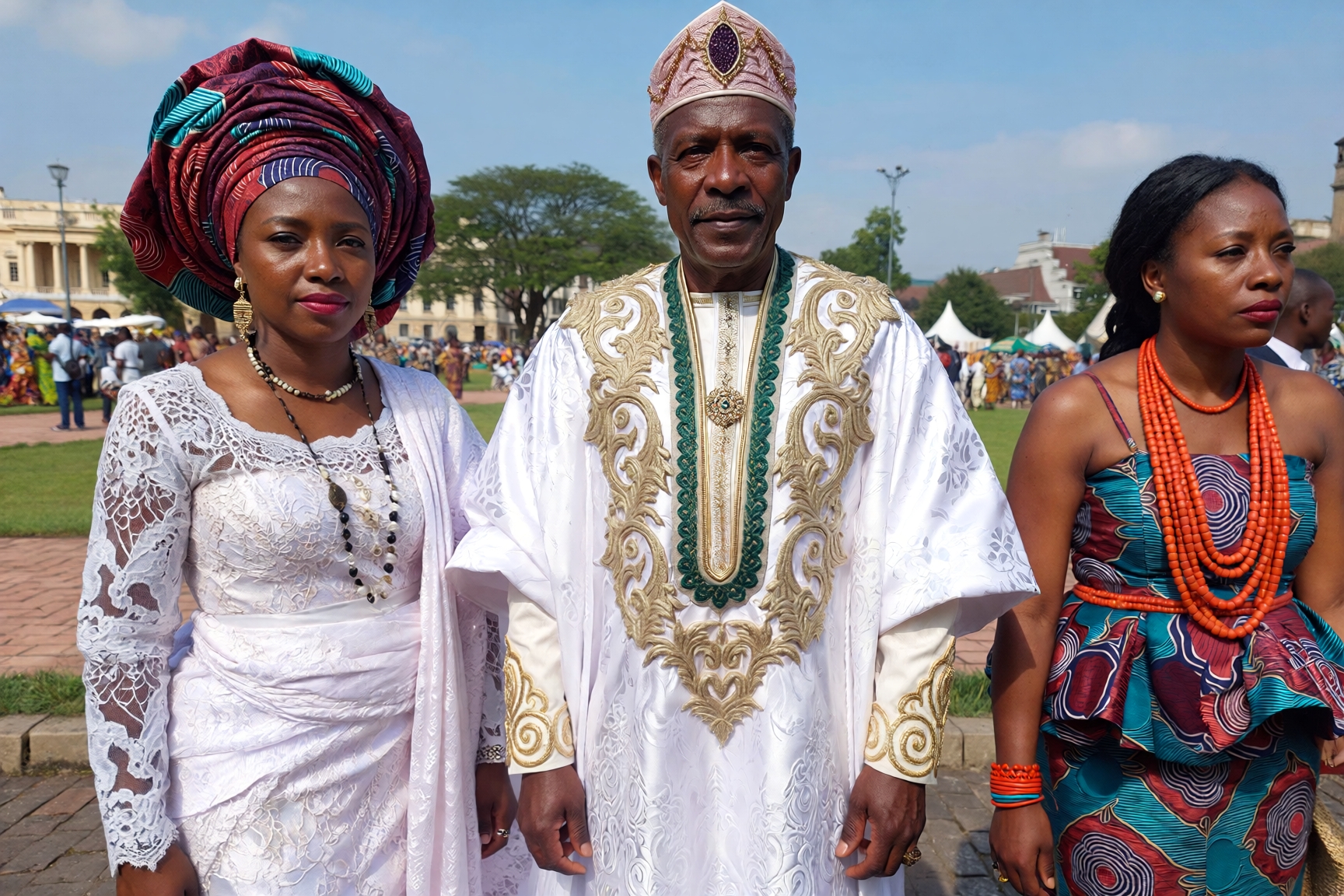
Welcome, and thank you for joining me on this exploration of Nigerian traditional dress. This article represents the culmination of months of research into Nigeria’s rich clothing traditions and years of experience documenting the cultural practices that define this vibrant nation. As someone who has attended countless Nigerian weddings, naming ceremonies, and cultural festivals, I’ve witnessed first-hand how traditional dress serves as living cultural history across Nigeria’s 371 ethnic groups.
What is the traditional dress in Nigeria? Nigerian traditional dress varies dramatically across ethnic groups, but the most recognisable garments include the agbada (flowing robes worn by men), buba and iro (blouse and wrapper combinations for women), kaftan (Northern-style robes), and ankara prints (vibrant wax-print fabrics). These garments communicate ethnic identity, social status, and cultural pride whilst incorporating centuries-old textile traditions like Aso-Oke weaving, adire tie-dye, and Akwete cloth production.
I still remember my first proper Nigerian wedding in Lagos back in 2019. The bride wore at least five different outfits throughout the day, each more spectacular than the last. Her white Aso-Oke ensemble cost approximately ₦850,000, and every thread told a story about Yoruba cultural heritage. That experience taught me something crucial: Nigerian traditional dress isn’t costume. It’s identity.
Understanding Nigerian Traditional Clothing Across Ethnic Groups
Nigeria’s cultural diversity creates an extraordinary wardrobe. The National Council for Arts and Culture oversees the preservation of these textile traditions, recognising that traditional attire represents one of Nigeria’s most visible cultural assets.
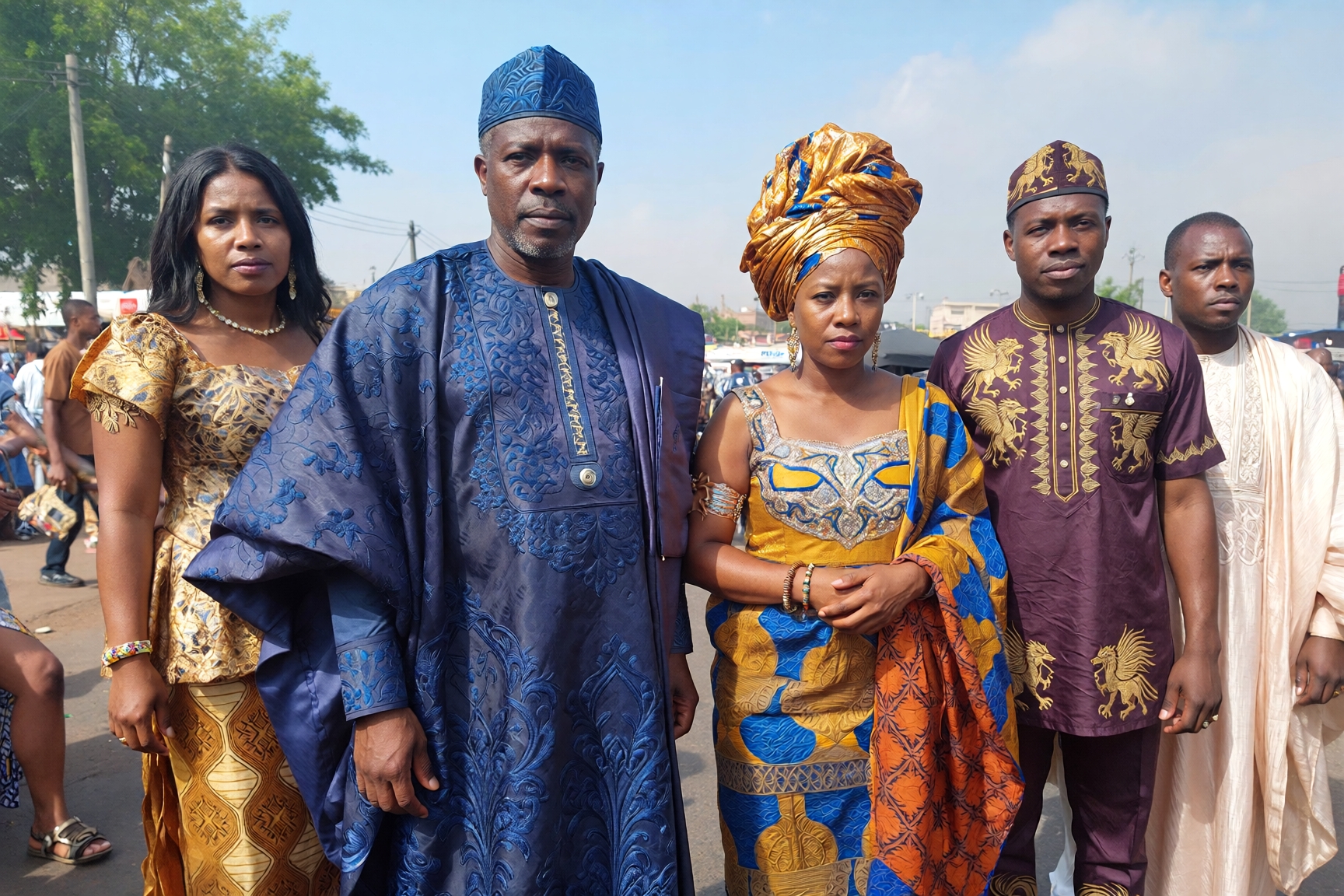
Let me break down the major regional styles. In the North, Hausa-Fulani men wear the babban riga (grand robe) with matching trousers called shokoto, completing the look with an embroidered cap. Women wear beautiful wrapper sets called zani with matching blouses, often in indigo-dyed fabrics. The embroidery work on Northern attire can be extraordinarily detailed, with some pieces requiring weeks to complete by hand.
Yoruba traditional dress from the Southwest centres on Aso-Oke, hand-woven fabric that comes in three traditional colours: etu (deep brown), sanyan (beige), and alaari (rich maroon). Men wear agbada, those magnificent flowing robes that billow dramatically when you walk. Trust me, once you wear a properly tailored agbada, regular clothes feel disappointingly flat! Women wear iro (wrapper), buba (blouse), and the famous gele (head tie), with an ipele (shawl) draped over the shoulder.

The Igbo from the Southeast favour George fabric for special occasions, though traditional isiagu (lion head print) has become increasingly popular. Men often wear the distinctive red cap (Okpu Agu), whilst women adorn themselves with coral beads that indicate status and family lineage. I’ve seen coral bead sets worth over ₦2 million at high-society Igbo weddings.
Niger Delta communities, including the Ijaw, Itsekiri, Efik, and Ibibio peoples, wear elaborate wrappers with matching blouses and spectacular head ties. The Federal Ministry of Information and Culture documents how these traditional garments incorporate elements reflecting the riverine environment and trading history of the region.
Middle Belt ethnic groups like the Tiv wear the distinctive Ange cloth with its zebra-like black and white stripes. Each ethnic group’s traditional dress carries specific cultural messages that community members immediately recognise.
What Nigerian Traditional Dress is Called
Here’s something that confused me initially: Nigerians don’t have one universal name for traditional clothing. Instead, each ethnic group uses specific terminology rooted in their own language.
The agbada goes by different names. Yoruba call it agbada. Hausa speakers call it babban riga (literally “big gown”). Some refer to the three-piece ensemble of flowing robe, trousers, and cap simply as “native” or “traditional.”
For women’s attire, terminology becomes even more specific. The Yoruba iro and buba translates to wrapper and blouse. Hausa women wear zani. Igbo women might call their wrapper and blouse set George (referencing George fabric), whilst others use wrapper and blouse interchangeably.
Ankara is Nigeria’s gift to global fashion vocabulary. These vibrant wax-print fabrics originated from Dutch and Indonesian textile traditions but became so thoroughly Nigerian that the world now associates them primarily with West African style. You’ll hear Nigerians reference “Ankara” as both fabric and finished garment.
The National Institute for Cultural Orientation documents that fabric names often become garment names. Aso-Oke (literally “cloth from the upland”) refers both to the hand-woven fabric and completed outfits made from it. Similarly, Akwete (named after the Akwete village in Abia State famous for weaving) describes both textile and clothing.
Nigerians also use contextual names. “Owambe attire” references elaborate party outfits worn to weekend celebrations. “Native wear” serves as catch-all terminology for traditional dress. “Senator style” describes the simple kaftan-style outfit popular among politicians.
What fascinates me most is how Nigerians code-switch between English and indigenous languages when discussing clothing. A Lagos tailor might advertise “Ankara gown with aso-oke trim and gele to match” in a single sentence, mixing English and Yoruba seamlessly.
The Most Famous Traditional Dress in Nigerian Culture
If forced to identify Nigeria’s most famous traditional dress, I’d point to three garments that have achieved genuine international recognition: the agbada, Ankara prints, and the gele.
The agbada has become Nigeria’s diplomatic uniform. Watch any international summit and you’ll spot Nigerian delegates in flowing agbadas, making powerful cultural statements without saying a word. These garments come in two main styles: Yoruba agbada with its distinctive wide sleeves and elaborate embroidery, and the Hausa babban riga with different cut and embroidery patterns. Both styles have spread far beyond their ethnic origins.
A proper agbada requires significant investment. Basic versions start around ₦50,000, but ceremonial agbadas with heavy embroidery can cost ₦500,000 to ₦3 million. The weight alone tells you about quality – a full ceremonial agbada might weigh 5-8 kilograms due to layers of fabric and embellishment.
Ankara prints have conquered global fashion. Guardian Nigeria’s fashion coverage documents how Nigerian designers transformed these prints from market fabric into runway-worthy couture. Designers like Deola Sagoe, Lisa Folawiyo, and Mai Atafo have built international reputations by reimagining Ankara in contemporary silhouettes.
What makes Ankara globally recognisable? The bold patterns, vibrant colours, and versatility. You can pay ₦3,000 per yard for basic Ankara or ₦15,000 for premium wax prints with more durable dyes. A typical outfit requires 3-4 yards, making Ankara accessible across economic classes whilst still allowing luxury options.
The gele (pronounced “gel-eh”) might be the most Instagram-famous Nigerian garment. These elaborate head wraps require genuine skill to tie properly. I’ve watched professional gele tiers work for 45 minutes creating architectural masterpieces from single pieces of fabric. The size and complexity of a gele communicate so much: formal occasions demand towering geles, whilst smaller wraps suit casual settings.
Coral beads worn by Igbo women deserve mention as arguably Nigeria’s most expensive traditional accessory. Full coral bead sets can cost ₦1 million to ₦10 million depending on the quality and quantity. These aren’t mere decoration – they’re wealth worn visibly, communicating family status and personal success.
What Tradition Dresses Represent in Nigerian Society
Traditional dress in Nigeria functions as visual language. Every element communicates specific information to those who understand the cultural code.
Ethnic identity appears immediately recognisable through traditional dress. When a man wears the distinctive red cap (Okpu Agu) and isiagu fabric, you know he’s Igbo. The Hausa man in elaborately embroidered babban riga announces his Northern heritage. Traditional dress lets Nigerians signal “I am Yoruba” or “I am Tiv” in multicultural settings where ethnic identity matters.
Economic status shows clearly through traditional attire quality. The difference between ₦40,000 Ankara and ₦400,000 George fabric is obvious to Nigerian eyes. Hand-woven Aso-Oke costs significantly more than machine-made alternatives. The embroidery density on an agbada reveals how much the wearer spent. Nigerians read these status signals effortlessly.
Age and life stage influence appropriate traditional dress. Young women wear brighter colours and bolder patterns. Older women gravitate toward richer, more subdued tones. Married women in many ethnic groups wear specific accessories unmarried women avoid. The elaborate coral beads indicating Igbo marriage versus the simpler beads worn by young girls illustrate this perfectly.
Occasion dictates formality levels. I learned this the hard way when I showed up to a naming ceremony in a casual Ankara outfit only to find everyone else in full ceremonial attire costing hundreds of thousands of naira. Weddings demand maximum display. Funerals require traditional dress in sombre colours (black, purple, brown). Religious services might call for modest traditional wear that balances cultural pride with religious propriety.
Religious affiliation subtly influences traditional dress choices. Muslim Nigerians often favour more conservative traditional styles with longer hemlines and fuller coverage. Christian Nigerians might incorporate Western elements more freely. Yet both groups wear traditional dress regularly, particularly for cultural ceremonies.
Professional context matters increasingly. The “Senator style” became popular precisely because it offers traditional Nigerian aesthetic in a format compatible with professional settings. Some organisations declare “native wear Fridays” where employees dress traditionally, celebrating Nigerian culture whilst maintaining workplace appropriateness.
Traditional dress serves nation-building purposes. During Nigerian Independence Day celebrations on October 1st, you’ll see Nigerians worldwide wearing traditional attire from ethnic groups other than their own. A Yoruba man might wear Hausa-style babban riga. An Igbo woman might tie gele in Yoruba style. These cross-cultural adoptions strengthen national unity whilst maintaining ethnic distinctiveness.
7 Essential Steps for Understanding and Appreciating Nigerian Traditional Dress
Let me share a practical framework for anyone wanting to truly understand Nigerian traditional dress, whether you’re planning to attend a Nigerian event, considering purchasing traditional garments, or simply interested in learning more about these cultural treasures.
Step 1: Learn the Basic Garment Categories by Gender
Start by understanding the fundamental pieces. For men: agbada or babban riga (flowing robes), kaftan (simpler robe style), buba and sokoto (shirt and trousers), and senator style (contemporary traditional fusion). For women: wrapper sets (iro and buba in Yoruba), boubou or kaftan (single-piece flowing dress), Ankara dresses in countless contemporary styles, and complete traditional ensembles with gele and accessories.
Don’t try to master everything immediately. Begin with your region of interest. If you’re attending a Yoruba wedding, focus on Yoruba terminology and styles. Planning to visit Kano? Research Northern traditional dress. This targeted approach prevents overwhelming yourself with Nigeria’s vast clothing diversity.
Step 2: Understand Fabric Differences and Their Significance
Quality assessment requires knowing fabrics. Aso-Oke is hand-woven cloth that feels textured and substantial, costing ₦15,000 to ₦40,000 per yard. George fabric (brocade) has a raised pattern you can feel, with prices ranging from ₦80,000 to ₦300,000 per piece. Ankara comes in quality tiers from ₦2,500 to ₦15,000 per yard depending on dye quality and brand. Lace (both local and imported) varies wildly in price and quality, from ₦10,000 to ₦200,000 per piece.
Visit Nigerian fabric markets (in person or online) to handle different textiles. The weight, texture, and drape differ dramatically. Heavy fabrics suit formal occasions. Lighter fabrics work better for Nigeria’s hot climate and casual events. Understanding these distinctions helps you make appropriate choices.
Step 3: Master Basic Cultural Protocol Around Traditional Dress
Certain rules govern who wears what. In Igbo culture, extensive coral beads traditionally indicate married women of status. The Yoruba use specific gele sizes for different occasions. Northern dress codes emphasise modesty regardless of religion. Middle Belt ethnic groups have particular patterns associated with specific age grades or social roles.
Research before you dress. If you’re not Nigerian but wearing traditional attire, approach it respectfully. Ask Nigerian friends for guidance. Avoid wearing items with specific cultural significance unless appropriate. At Nigerian weddings, follow the aso-ebi (family cloth) guidance if invited to participate. This group uniform creates visual unity and honors the celebrants.
Step 4: Budget Appropriately for Your Traditional Dress Needs
Traditional Nigerian clothing spans every price point. For everyday wear, budget ₦20,000 to ₦50,000 for simple but respectable Ankara outfits or basic native wear. For party wear suitable for most celebrations, plan ₦80,000 to ₦200,000. For weddings as family members or high-society events, consider ₦300,000 to ₦1 million.
These figures include fabric, tailoring, and basic accessories. Jewellery, shoes, and bags cost extra. Remember that proper traditional dress requires professional tailoring – the fabric is only half the equation. A talented tailor transforms decent fabric into stunning garments, whilst poor tailoring ruins even expensive materials.
Step 5: Find Skilled Tailors and Build Relationships
Tailoring makes or breaks traditional Nigerian dress. Don’t choose tailors based solely on low prices. Instead, examine their previous work. Check how seams lay, how patterns match, and whether completed garments fit properly. Visit tailors’ shops to see work in progress. Reliable tailors are booked weeks ahead during wedding season (roughly November to March).
Build relationships with tailors who understand your body and preferences. Explain your needs clearly. If you’re new to Nigerian traditional dress, ask for guidance on appropriate styles for your body type and occasion. Good tailors offer valuable cultural advice alongside technical expertise. They’ll tell you whether your planned outfit suits the event you’re attending.
Step 6: Learn to Coordinate Complete Outfits Including Accessories
Traditional Nigerian dress requires coordination. For women: match your wrapper, blouse, gele, ipele (shawl), and accessories. The gele fabric typically matches or complements the outfit. Shoes ideally coordinate with the colour scheme. Jewellery should enhance without overwhelming. Bags can match the gele or provide intentional contrast.
For men: ensure your agbada or babban riga coordinates with your cap and shoes. Traditional leather sandals suit certain styles, whilst dress shoes work for others. Contemporary fusion might incorporate trainers, but this works only with specific modern traditional designs. Pay attention to embroidery thread colours matching or complementing the main fabric colour.
Step 7: Understand Proper Wearing and Care Techniques
Traditional dress requires specific wearing knowledge. Agbadas have correct draping techniques that communicate cultural knowledge. Gele tying is an art form requiring practice or professional help. Wrappers must be tied securely with proper length and drape. Even seemingly simple garments have culturally correct wearing methods.
Care matters enormously. Hand-woven Aso-Oke needs gentle handling. Ankara’s vibrant colours require washing in cold water to prevent fading. Heavily embroidered agbadas need professional dry cleaning. George fabric and lace are delicate. Store traditional garments properly: fold embroidered pieces with tissue paper between layers, hang agbadas to maintain shape, and keep fabrics away from direct sunlight that fades colours.
Understanding Nigerian Traditional Dress Across Major Ethnic Groups
| Ethnic Group | Men’s Traditional Dress | Women’s Traditional Dress | Signature Fabric | Typical Complete Outfit Cost (Naira) |
|---|---|---|---|---|
| Yoruba | Agbada with buba and sokoto, cap | Iro and buba with gele and ipele | Aso-Oke, Ankara | ₦150,000 – ₦800,000 |
| Hausa-Fulani | Babban riga with embroidery, cap | Zani with matching blouse and hijab | Indigo-dyed cotton, brocade | ₦120,000 – ₦600,000 |
| Igbo | Isiagu shirt with trousers, red cap | George wrapper and blouse with coral beads | George, Isiagu print | ₦250,000 – ₦2,000,000 |
| Ijaw | Wrapper with elaborate shirt, feathered hat | Elaborate wrappers with matching blouse | Hand-woven textiles, expensive fabrics | ₦180,000 – ₦900,000 |
| Efik/Ibibio | Wrapper with elaborate shirt and hat | Ofod Ukod Anwang or wrapper sets | Vibrant wrappers, brocade | ₦150,000 – ₦750,000 |
| Tiv | Ange cloth (black and white stripes) | Ange wrapper with blouse | Ange woven cloth | ₦80,000 – ₦400,000 |
This table reveals substantial price variations reflecting fabric quality, embroidery complexity, and accessory requirements. The Igbo traditional dress commands premium prices primarily due to coral beads, which alone can cost ₦500,000 to ₦5 million depending on quality and quantity. Northern traditional dress prices reflect intricate embroidery that requires weeks of handwork. Yoruba Aso-Oke carries high costs because of hand-weaving labour intensity.
Notice how complete outfit costs span multiple price tiers within each ethnic group. A young professional might spend the lower amount for respectable party attire, whilst someone attending as a family member at a high-society wedding invests at the higher end. The flexibility within traditions allows economic accessibility whilst maintaining cultural authenticity.
How Nigerian Traditional Dress Adapts to Modern Life
Walk through Lagos on any given Thursday (often called “native wear day” in many offices) and you’ll witness cultural evolution in action. That woman in skinny Ankara trousers paired with a blazer? She’s honouring tradition whilst navigating modern professional life. The man in a senator style suit addressing a corporate board meeting? Same thing.
Nigerian traditional dress refuses to become museum pieces. Instead, it lives, breathes, and adapts to contemporary realities. This evolution isn’t cultural betrayal. It’s cultural confidence.
Contemporary Nigerian designers have revolutionised traditional fabrics. Take Ankara: once relegated to market traders and casual wear, it now appears on international runways. Guardian Nigeria reports how designers incorporate Ankara into crop tops, jumpsuits, bikinis, and even business suits. Each adaptation respects the fabric’s cultural significance whilst making it relevant to modern lifestyles.
Aso-Oke undergoes similar transformation. Traditional hand-woven Aso-Oke appears in unexpected places: handbags, shoes, bow ties, even phone cases. Young entrepreneurs create Aso-Oke sneakers that cost ₦45,000 per pair. This isn’t cultural dilution. It’s cultural expansion.
The fashion calendar influences traditional dress too. During wedding season (roughly November through March when harmattan weather provides relief from rain and heat), traditional tailors work around the clock. I know tailors who sleep in their shops during peak season, trying to complete orders for multiple weekend weddings. This seasonal intensity has created a ₦3.5 billion traditional attire industry just in Lagos.
Social media transformed how Nigerians engage with traditional dress. Instagram birthed a whole category of “aso-ebi look books” where people showcase their wedding outfits. Fashion bloggers earn substantial income reviewing traditional attire. YouTube tutorials teach gele tying techniques that were once passed mother to daughter. TikTok features #AnkaraChallenge videos celebrating creative traditional styling.
Yet traditional dress maintains core cultural meanings despite modern adaptations. When Nigerians wear traditional attire for important life events, they’re making statements about identity, heritage, and values that would be impossible in Western clothing. My friend Chika explained it perfectly: “I can wear jeans to work every day. But when my daughter gets married, I’m wearing full Igbo traditional dress with coral beads my grandmother wore. That’s not negotiable.”
The price of maintaining tradition surprises many. A complete traditional wedding outfit for a bride might involve five different traditional ensembles costing ₦2 million to ₦10 million total. Yet families scrape together these funds because the cultural significance transcends monetary value. That’s why you’ll see families in Lagos spending more on traditional wedding attire than on the wedding venue itself.
Regional festivals showcase traditional dress evolution. The National Council for Arts and Culture organises the annual National Festival of Arts and Culture (NAFEST) where each state presents its traditional attire in competitions judged on authenticity, craftsmanship, and cultural representation. These festivals help preserve traditional dress knowledge whilst encouraging creative interpretation.
Links to Further Cultural Exploration
Nigerian traditional dress connects deeply with broader cultural practices I’ve explored in previous articles. My piece on what traditions do Nigerians have examines how clothing traditions fit within Nigeria’s comprehensive cultural system including marriage ceremonies, naming rituals, and festivals where traditional dress plays crucial roles. Additionally, my article on Nigerian marriage customs details how wedding attire reflects complex negotiations between families and serves as visual representation of cultural continuity across generations.
Making Nigerian Traditional Dress Part of Your Cultural Understanding
Nigerian traditional dress offers more than aesthetic pleasure. It provides windows into cultural values, historical trade routes, artistic traditions, and contemporary social negotiations. Every agbada tells stories about West African textile history. Each coral bead necklace communicates family legacies spanning generations.
What strikes me most about Nigerian traditional dress is its refusal to choose between tradition and modernity. Nigerians comfortably wear business suits Monday through Thursday, then show up to Saturday weddings in full traditional regalia. They don’t experience this as contradiction but as cultural fluidity – honoring different aspects of identity depending on context.
For those outside Nigerian culture, traditional dress offers accessible entry points for cultural appreciation. Guardian Nigeria’s coverage of Nigerian culture demonstrates how clothing traditions intersect with music, film, literature, and other cultural expressions that increasingly influence global culture.
The economic implications of traditional dress deserve recognition. Nigeria’s traditional attire industry employs hundreds of thousands: weavers, dyers, embroiderers, tailors, fabric merchants, accessory makers, and designers. When you invest ₦200,000 in a traditional outfit, that money circulates through multiple Nigerian hands, supporting livelihoods whilst preserving cultural knowledge.
Looking forward, Nigerian traditional dress appears headed toward even greater global influence. Nigerian designers increasingly show at international fashion weeks. Ankara fabrics appear in unlikely places from New York to Tokyo. The distinctive silhouettes of Nigerian traditional dress inspire designers worldwide who’ve never visited Africa.
Yet the heart of Nigerian traditional dress remains in the communities that created these traditions. In the Aso-Oke weavers of Iseyin town. In the adire dyers of Abeokuta. In the coral bead merchants of Onitsha. In the embroiderers of Kano. These artisans preserve knowledge whilst adapting to contemporary markets.
If you have the opportunity to wear Nigerian traditional dress, approach it with respect and joy. Ask questions. Learn the cultural context. Appreciate the craftsmanship. And wear it with confidence. Nigerians generally respond warmly to genuine cultural interest, offering generous guidance to those who approach their traditions respectfully.
Key Takeaways About Nigerian Traditional Dress
- Nigerian traditional dress varies dramatically across 371 ethnic groups, with major styles including agbada for men, iro and buba for women, and Ankara prints worn universally, each communicating ethnic identity, social status, and cultural pride through fabric choice, embroidery complexity, and accessory selection. Complete traditional outfits range from ₦50,000 for everyday wear to over ₦2 million for elaborate ceremonial ensembles, reflecting quality differences in hand-woven fabrics like Aso-Oke, premium textiles like George brocade, and accessories like coral beads.
- Traditional dress functions as visual language in Nigerian society, instantly communicating ethnic background, economic status, age, marital status, and occasion appropriateness to culturally informed observers. Understanding proper traditional dress requires learning fabric differences, cultural protocols around specific garments, coordination principles for complete outfits, and appropriate budget allocation based on occasion formality and your role in celebrations.
- Nigerian traditional dress actively evolves whilst maintaining cultural significance, appearing in contemporary adaptations like Ankara blazers, Aso-Oke sneakers, and senator-style corporate wear that honour heritage whilst serving modern functional needs. This cultural confidence, supported by a ₦3.5 billion traditional attire industry in Lagos alone, ensures traditional dress remains relevant to young Nigerians whilst preserving artisan traditions in weaving, dyeing, and embroidery.
Frequently Asked Questions About Nigerian Traditional Dress
What is the traditional dress in Nigeria?
Nigerian traditional dress encompasses diverse ethnic styles including agbada (flowing men’s robes), buba and iro (women’s blouse and wrapper sets), kaftan (Northern robes), and Ankara print garments worn across Nigeria. These garments use traditional fabrics like hand-woven Aso-Oke, George brocade, and printed Ankara whilst incorporating ethnic-specific embroidery, accessories, and wearing methods that communicate cultural identity.
What is the difference between male and female traditional Nigerian dress?
Male traditional dress typically features flowing robes (agbada, babban riga, or kaftan) paired with trousers and caps, emphasising volume and dignified movement. Female traditional dress centres on wrapper and blouse combinations with elaborate head ties (gele), prioritising colour coordination, intricate accessories like coral beads or gold jewellery, and demonstrating skill in fabric wrapping and gele tying techniques.
How much does Nigerian traditional dress typically cost?
Nigerian traditional dress costs range from ₦20,000 to ₦50,000 for basic everyday wear, ₦80,000 to ₦200,000 for party attire, and ₦300,000 to ₦2 million or more for elaborate ceremonial outfits. Prices reflect fabric quality (hand-woven Aso-Oke costs more than printed Ankara), embroidery complexity, tailoring skill, and accessories like coral beads which alone can cost ₦500,000 to ₦5 million.
Can non-Nigerians wear Nigerian traditional dress?
Non-Nigerians can respectfully wear Nigerian traditional dress for appropriate occasions like weddings, cultural celebrations, or when invited by Nigerian friends. Approach traditional dress with cultural awareness, avoid items with specific sacred significance, credit Nigerian cultural origins, support Nigerian artisans through authentic purchases, and accept guidance from Nigerian friends about appropriate styling and contexts.
What fabrics are used in Nigerian traditional clothing?
Nigerian traditional clothing uses Aso-Oke (hand-woven cloth from Yoruba regions costing ₦15,000-40,000 per yard), George brocade (raised pattern fabric from ₦80,000-300,000 per piece), Ankara (wax-print cotton from ₦2,500-15,000 per yard), hand-woven Akwete cloth, indigo-dyed cotton, lace varieties, and Isiagu (lion head print). Each fabric carries cultural associations and quality variations affecting price and appropriateness for different occasions.
How do you tie a Nigerian gele?
Gele tying requires folding and wrapping structured fabric around the head in layered pleats secured without pins, creating architectural shapes that vary from modest everyday styles to towering ceremonial designs. Professional gele tiers spend 30-45 minutes creating elaborate styles costing ₦5,000 to ₦20,000 per styling, whilst simpler versions can be self-tied following YouTube tutorials or traditional knowledge passed through families.
What is Aso-Oke and why is it significant?
Aso-Oke is hand-woven Yoruba cloth created on narrow looms, traditionally coming in three colours: etu (indigo), sanyan (brown), and alaari (red), taking weeks to weave and costing ₦15,000-40,000 per yard. Its cultural significance stems from labour-intensive traditional production methods, association with important ceremonies like weddings and chieftaincy installations, and visual communication of Yoruba cultural identity and economic investment in proper traditional presentation.
Do all Nigerians wear traditional dress regularly?
Nigerians don’t wear traditional dress daily but reserve it for significant occasions: weddings, naming ceremonies, religious festivals, chieftaincy events, funerals, and cultural celebrations. Urban Nigerians typically wear Western clothing for work and casual activities, donning traditional dress for cultural events where it communicates respect for tradition, celebration of heritage, and appropriate occasion recognition.
What accessories complete Nigerian traditional dress?
Nigerian traditional dress requires accessories: gele (head ties) and ipele (shawls) for women, caps or hats for men, coral beads or gold jewellery, traditional shoes or contemporary dress shoes, handbags or clutches coordinating with outfits, and ceremonial items like walking sticks or fans. Complete accessorising costs ₦20,000 to ₦500,000 additional depending on jewellery quality and whether using family heirlooms or new purchases.
How has Nigerian traditional dress influenced global fashion?
Nigerian traditional dress influences global fashion through Ankara prints appearing on international runways, African print dresses available in mainstream retailers worldwide, Western designers incorporating Nigerian-style silhouettes, celebrities wearing Nigerian designers like Deola Sagoe and Lisa Folawiyo, and social media spreading Nigerian fashion aesthetics. This influence generated estimated ₦470 billion in export value for Nigerian fashion in 2024 alone.
What is aso-ebi and how does it relate to traditional dress?
Aso-ebi (literally “family cloth”) is the Nigerian practice of families choosing uniform fabric for wedding guests, creating visual unity at celebrations and demonstrating group solidarity whilst generating revenue for wedding families. Aso-ebi typically costs ₦15,000 to ₦50,000 per person, and guests invest additional ₦30,000 to ₦100,000 in tailoring and accessories, making coordinated traditional presentation at Nigerian weddings.
Where can I purchase authentic Nigerian traditional dress?
Authentic Nigerian traditional dress can be purchased in Nigerian fabric markets like Balogun Market or Computer Village in Lagos, through Nigerian tailors specialising in traditional wear, online platforms serving the Nigerian diaspora with international shipping, during visits to Nigeria coordinating with local tailors, or through Nigerian designers with international presence. Budget ₦80,000 to ₦200,000 for complete outfits including fabric, tailoring, and basic accessories from reputable sources.

