 Follow Us on Google News


 Follow Us on Google Discover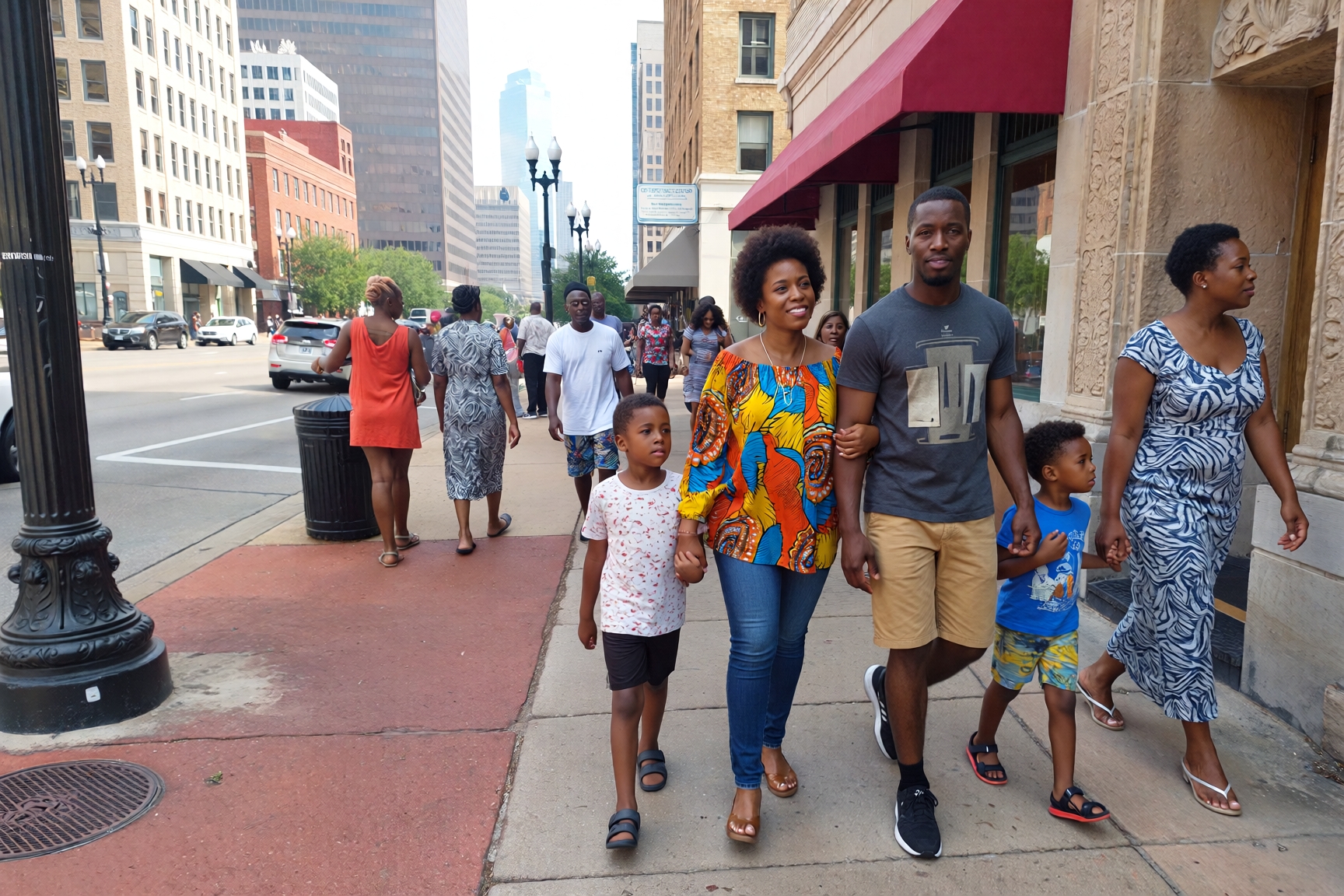
Welcome, and thank you for stopping by. If you have ever wondered exactly where Nigerian communities have planted their roots across America, you are in the right place. This article is the conclusion of months of careful research into diaspora population data, census records, and community reports, combined with years of experience tracking how and why Nigerians choose particular cities and states when they make that life-changing move across the Atlantic.
The Nigerian diaspora in the United States is one of the most remarkable migration stories of the modern era, and the question of where do most Nigerians live in the US deserves a thorough, honest answer. Spoiler: it is not one city. It is a constellation of communities, each with its own character, its own hustle, and its own way of keeping Nigeria alive thousands of miles from home. Let us get into it.
How Many Nigerians Are Living in the USA?
Before we talk about where, we need to talk about how many. The numbers tell a story that might surprise you.
According to the US Census Bureau’s American Community Survey, approximately 460,000 to 500,000 Nigerian-born individuals currently live in the United States. But that figure is really just the foundation. When you fold in second-generation and third-generation Nigerian-Americans, people who were born on American soil to Nigerian parents or grandparents and still strongly identify with their heritage, that number swells to somewhere between 700,000 and 850,000 people.
I have spoken with third-generation Nigerian-Americans who have never set foot in Lagos but still send money to cousins in Ogun State every month, still cook egusi soup on Sundays, and still answer phone calls from back home in Yoruba. These people do not always appear in the “Nigerian-born” statistics, but they are absolutely part of the community. The Nigerians in Diaspora Commission (NiDCOM) estimates the broader global Nigerian diaspora at over 17 million, with millions of those concentrated in the Americas, particularly the United States and Canada.
Nigeria consistently ranks among the top source countries for educated immigrants to America, a fact that reflects the drive and ambition that defines our people wherever they go. As the Nigerian Ministry of Foreign Affairs reminds us, the English language serves as Nigeria’s lingua franca across all 250-plus ethnic groups, and that shared language fluency gives Nigerian immigrants a significant advantage when they arrive in English-speaking America.

The numbers have grown sharply decade on decade. In 2000, the Nigerian-American population was a fraction of what it is today. Chain migration, educational scholarships, diversity visas, and employment pathways have all contributed to the acceleration. And when one Nigerian arrives and thrives, word travels fast. A WhatsApp message, a phone call, a church testimony, and suddenly a whole village knows which city to aim for.
A Seven-Step Guide to Understanding the Nigerian-American Settlement Pattern
Understanding how Nigerian communities form in American cities is not as complicated as it might look from the outside. There is actually a very logical sequence to it all.
- Identify the professional anchor. Every major Nigerian hub started because the city offered something specific: oil engineering in Houston, federal government jobs in Maryland, finance and healthcare in New York, tech and academia in California. The first wave arrived for those opportunities.
- Follow the cost of living. Nigerians are pragmatic. A city with a booming economy but sky-high rents is less appealing than one where a salary stretches further. Houston’s relatively affordable housing, compared to New York or Los Angeles, has made it particularly attractive for families.
- Map the existing community. No Nigerian moves to a city without first finding out if there are Nigerians already there. Churches, restaurants, and cultural associations are the advance scouts. If a city has a Nigerian Pentecostal church, it already has a community worth joining.
- Send remittances home and create visible success. When a Nigerian in Texas sends money home, builds a house in Imo State, pays school fees, and visits wearing American clothes, that success story recruits the next wave of migrants. Money speaks. Loudly.
- Sponsor family through immigration channels. Once permanent residency or citizenship is secured, Nigerians sponsor siblings, cousins, and spouses. This family chain is responsible for a substantial portion of population growth in established hubs like Maryland and Texas.
- Establish cultural infrastructure. Nigerian churches, grocery shops selling stockfish, ogiri, and crayfish, Afrobeats-focused restaurants, professional associations for Igbo engineers or Yoruba lawyers: these institutions deepen roots and attract more arrivals.
- Replicate the pattern in new cities. As established hubs grow expensive or crowded, secondary communities emerge in Atlanta, Dallas, Columbus, and Minneapolis, replicating the same sequence in a new location.
Which State Has the Highest Number of Nigerians?
This is the question I get asked most often, and the answer is Texas. But the picture is more interesting than one-word answers suggest.
According to American Community Survey data, Texas leads all American states with an estimated 100,000 to 125,000 Nigerian-Americans, a figure that has grown substantially over the past decade. The overwhelming majority are concentrated in Houston, which has arguably become the most important Nigerian city outside Nigeria itself. Nigerian churches in Houston seat thousands. Nigerian markets stock everything from achi to zobo. Nigerian professional associations cover every industry imaginable.
Maryland follows in second place, with approximately 55,000 to 75,000 Nigerian-Americans. The proximity to Washington DC, the abundance of federal government employment, international organisations, and healthcare institutions draws educated Nigerians in particular. Prince George’s County has quietly become one of the most Nigerian places in the entire western hemisphere. Drive through certain parts of PG County and you will hear more Igbo and Yoruba than English on a Saturday morning.
New York holds third place with around 50,000 to 65,000 Nigerian residents, dispersed across Brooklyn, the Bronx, and Queens. California ranks fourth, primarily in Los Angeles and the San Francisco Bay Area, hosting between 45,000 and 60,000 Nigerians.
Georgia, Illinois, New Jersey, Florida, Massachusetts, and Virginia complete the top ten states by Nigerian population. What is remarkable is that all 50 US states now have a measurable Nigerian presence, which would have seemed almost impossible thirty years ago.
Nigerian-American Population Across the Top Ten US States
The table below draws on American Community Survey estimates to give a comparative snapshot of where Nigerian-Americans have settled most heavily and what percentage of each state’s total population they represent.
| State | Estimated Nigerian-American Population | % of State Population | Primary City Hub | Main Professional Draw | Community Strength |
|---|---|---|---|---|---|
| Texas | 100,000 to 125,000 | 0.34% | Houston | Energy, medicine | Very high |
| Maryland | 55,000 to 75,000 | 0.86% | Prince George’s County | Federal government | Very high |
| California | 45,000 to 60,000 | 0.12% | Los Angeles/Bay Area | Tech, academia | High |
| New York | 50,000 to 65,000 | 0.23% | New York City | Finance, healthcare | High |
| Georgia | 30,000 to 45,000 | 0.30% | Atlanta | Business, entertainment | Growing |
| Illinois | 20,000 to 30,000 | 0.15% | Chicago | Healthcare, education | Moderate |
| New Jersey | 20,000 to 28,000 | 0.34% | Newark / Essex County | Healthcare, business | Moderate |
| Florida | 18,000 to 25,000 | 0.08% | Miami / Orlando | Business, hospitality | Growing |
| Massachusetts | 15,000 to 22,000 | 0.21% | Boston | Academia, medicine | Moderate |
| Virginia | 15,000 to 20,000 | 0.18% | Northern Virginia | Technology, government | Moderate |
Maryland stands out as having the highest concentration relative to state population, at roughly 0.86%, which reflects just how deeply Nigerian-Americans have embedded themselves into the region’s professional and civic fabric. Texas dominates in absolute numbers, driven by Houston’s extraordinary pull.
Where Do Most Nigerians Live in the US?
So let us answer the primary question directly. Where do most Nigerians live in the US?
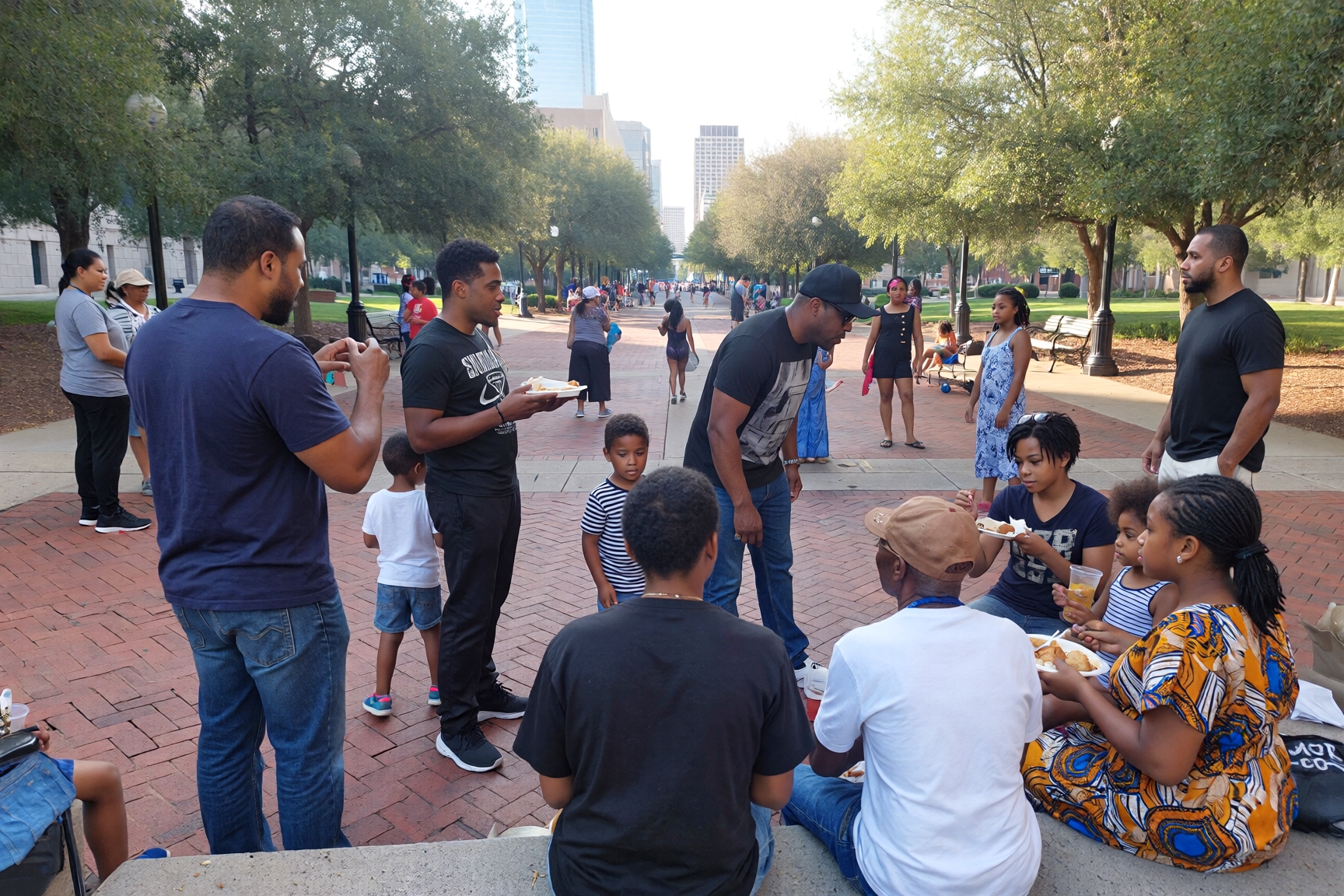
The largest concentration of Nigerian-Americans in the United States is in Texas, with Houston serving as the undisputed capital. But the broader picture is a network of major hubs that together define the Nigerian-American experience: Houston in Texas, the Prince George’s County and broader Washington DC metro area in Maryland, New York City, Los Angeles, Atlanta, and Chicago. These six locations account for the substantial majority of the entire Nigerian-American population. Related entities that define these communities include the Nigerian Pentecostal church networks that anchor social life, the Igbo, Yoruba, and Hausa cultural associations that maintain ethnic identity, the Nigerian American Alliance and similar advocacy organisations, the NiDCOM diaspora registry, and the remittance corridors that channel billions of naira back to Nigeria each year. To understand where most Nigerians live in the US, you need to understand all of these forces working together.
A piece in the Guardian Nigeria opinion section noted that Nigerians and excellence in the diaspora go hand in hand, with Nigerian-Americans representing one of the most educated immigrant groups in America, which helps explain why they cluster in cities with strong professional labour markets rather than spreading evenly across all 50 states.
Are There More Nigerians in Houston or Dallas?
Houston, without question.
This surprises some people because Dallas is a massive, fast-growing city that attracts migrants from everywhere. But the Nigerian community in Houston has a 30-year head start on Dallas and a very specific professional magnet: the energy industry.
Harris County, which encompasses Houston, has more Nigerian-born residents than any other single county in the United States. Estimates suggest between 28,000 and 40,000 Nigerian-born individuals in Harris County alone, and that figure does not include their American-born children. Houston’s Texas Medical Centre, one of the largest medical complexes in the world, is a secondary draw for Nigerian doctors, nurses, and healthcare researchers.
Dallas does have a growing Nigerian community, particularly in suburbs like Carrollton, Garland, and Plano. But it remains a fraction of Houston’s numbers. A Nigerian arriving in Texas for the first time and asking “where should I settle?” will receive the same answer from almost everyone they consult: go to Houston first, find your people, then decide.
That said, Dallas is growing. As Houston becomes denser and more expensive relative to its historical baseline, some Nigerian families are choosing the DFW metroplex instead. The pattern of secondary communities emerging as primary ones mature is consistent across all major Nigerian hubs in America.
Which State in America Reflects Nigeria’s Scale?
This is an interesting question that speaks to Nigeria’s extraordinary size. Nigeria covers approximately 923,768 square kilometres and is home to over 220 million people, making it Africa’s most populous nation and one of the largest economies on the continent.
In geographic terms, Texas at 695,662 square kilometres is the closest American state in scale to Nigeria, though still meaningfully smaller. In population terms, California and Texas together roughly approximate Nigeria’s headcount, though no single American state comes close. This context matters when you consider the Nigerian diaspora: the people who have scattered across America come from a nation of continental ambition, and they carry that scale of expectation wherever they go.
The NiDCOM remittance data shows that in peak years, Nigerians in the diaspora have sent home over $25 billion annually. A disproportionate share of that flows from America, a testament to the economic success Nigerian-Americans have achieved across those top ten states.
A Guardian Nigeria opinion column titled From Promise to Progress: Why Africa, Nigeria Matter captured this precisely, noting that Nigerian-Americans send home enormous remittances that now surpass foreign direct investment, powered by education, determination, and deeply rooted cultural values. That is not a small community. That is a force.
The Texture of Nigerian-American Community Life
Statistics only take you so far. The real story of where Nigerians live in the US is a story about how they live.
In Houston’s southwest corridor, particularly in the Alief and Missouri City areas, Nigerian communities have built something extraordinary. There are Nigerian-owned restaurants serving pepper soup and eba on weekday evenings, supermarkets stocking dried ede, ogufe, and uda, churches running three services back to back on Sundays with congregations that are seventy or eighty percent Nigerian, and professional networks so tight that a newly arrived engineer from Enugu can have a job lead within 72 hours of landing.
Maryland is somewhat different. The Nigerian community there tends to be more connected to government, policy, and international affairs. You find Nigerian-Americans working at the World Bank, the IMF, federal agencies, and major hospitals in the DC suburbs. The community is no less vibrant, but it has a slightly more formal register than Houston.
New York is where the artists, the entrepreneurs, and the restless ones tend to go. Brooklyn’s Nigerian population has given the city some of its most exciting Afrobeats scenes outside Lagos. Nigerian-owned fashion labels, creative agencies, and food businesses have made New York a cultural hub for the diaspora in ways that complement, rather than duplicate, what Houston and Maryland offer.
A thoughtful exploration of this dispersal appears in Nigeria and Nigerians in the Diaspora on Guardian Nigeria, which observes that the Nigerian diaspora can be divided between those who still see Nigeria as home and those born in host nations, and that both groups play distinct roles in Nigeria’s development story.
Practical Advice for Nigerians Considering the Move
If you are reading this from Lagos, Abuja, or Kano and thinking about where you might eventually settle in America, here is what the data and experience suggest.
Go where your profession takes you first. A petroleum engineer has an obvious answer: Houston. A federal policy expert or international development professional should look seriously at Maryland. A finance or media professional should consider New York. Let the job market lead, then the community will follow.
Budget for the first year carefully. Nigerians sometimes arrive underestimating American cost of living because they converted everything to naira in their heads and it looked enormous. Once you are actually spending dollars, apartment rents, car insurance, healthcare, and groceries feel very different. In Houston, a reasonable one-bedroom flat in a Nigerian-community-adjacent area runs roughly $900 to $1,400 per month. In New York, that same quality of accommodation starts at $2,000 and goes sharply upward.
Find your church or your cultural association within the first month. This is not purely spiritual advice; it is practical. Nigerian churches in America function as employment networks, housing information exchanges, and emotional support systems that no government agency can replicate. They are how our people survive the first difficult year.
Related Articles
If this article has sparked your curiosity about the broader Nigerian diaspora experience, two of my earlier pieces will add useful depth. In Which Country Has the Highest Nigerian Immigrants?, I examine how America compares to the UK, Canada, and other major destinations and why the global picture is more complicated than any single country ranking suggests. And in Can a Nigerian Live in the USA?, I walk through the full range of visa pathways, the realities of daily life once you arrive, and what genuine success in America actually requires beyond the visa itself.
Both pieces will give you a much fuller picture of the Nigerian-American journey from decision to settlement.
Conclusion: The Nigerian Footprint Across America Is Deep, Wide, and Still Growing
Where do most Nigerians live in the US? In Texas above all, in Maryland’s DC suburbs, in New York City, in California, in Atlanta, and in a growing web of secondary communities across the entire country. Together these communities represent one of the most educated, economically productive, and culturally vibrant diaspora populations anywhere in the world.
The Nigerian-American story is still being written. Chain migration, growing diversity visa uptake, and expanding professional networks mean that the communities described in this article will be larger still in a decade’s time. What gives me confidence is not the statistics alone but the character of the people behind them: resourceful, ambitious, family-oriented, and carrying the full complexity and beauty of Nigerian identity across every border they cross.
If you are part of this community, be proud. If you are considering joining it, prepare thoroughly. And if you are simply curious about where our people have gone and what they have built, I hope this article has given you a picture worth keeping.
- Nigerian-Americans are most concentrated in Texas (led by Houston), Maryland, New York, and California, with all 50 US states now hosting measurable Nigerian communities.
- Houston remains the single most important Nigerian hub in America, driven by the energy industry, the Texas Medical Centre, and decades of chain migration that have created a self-sustaining community ecosystem.
- The broader Nigerian-American population, including second and third generations, likely exceeds 700,000 people, making remittances, cultural influence, and political representation increasingly significant for both Nigeria and the United States.
Frequently Asked Questions About Where Most Nigerians Live in the US
Where do most Nigerians live in the US?
The largest Nigerian-American communities are in Texas, Maryland, New York, and California, with Texas holding the highest absolute numbers. Houston is widely regarded as the unofficial Nigerian capital of America, with tens of thousands of Nigerian-born residents and a full cultural ecosystem of churches, markets, and professional networks.
How many Nigerians are living in the USA?
Approximately 460,000 to 500,000 Nigerian-born individuals currently reside in the United States according to American Community Survey estimates. Including second and third-generation Nigerian-Americans, the broader community is estimated at between 700,000 and 850,000 people.
Which state has the highest number of Nigerians?
Texas has the highest total number of Nigerian-Americans, with estimates ranging from 100,000 to 125,000 residents of Nigerian heritage. Maryland has the highest concentration relative to state population, with Nigerian-Americans making up roughly 0.86% of the state’s total population.
Are there more Nigerians in Houston or Dallas?
Houston has significantly more Nigerians than Dallas, with Harris County alone estimated to hold 28,000 to 40,000 Nigerian-born residents. Dallas has a growing Nigerian community in suburbs like Carrollton and Garland, but it remains far smaller than Houston’s well-established community that has been building for over three decades.
Why did so many Nigerians settle in Houston?
Houston’s energy industry attracted Nigerian petroleum engineers and geoscientists from the earliest wave of immigration, creating an initial community that then grew through chain migration and cultural infrastructure. The Texas Medical Centre, affordable housing relative to other major American cities, and a warm climate that feels less alien than northern winters all add to Houston’s appeal.
Why is Maryland such a large hub for Nigerian-Americans?
Maryland’s proximity to Washington DC places Nigerian-Americans near federal government employment, international organisations like the World Bank and IMF, and major hospitals and research institutions. Prince George’s County in particular has become a centre of Nigerian-American professional and civic life on the East Coast.
Do Nigerian-Americans tend to stay in one city or move around?
Many Nigerian-Americans initially settle where their first job or university is located, then make one or two further moves as careers develop. A common pattern is arrival in a major hub like Houston or New York, followed by suburban migration as families grow and school quality becomes the priority.
What percentage of American Nigerians are university-educated?
Nigerian-Americans are one of the most highly educated immigrant groups in the United States, with a substantial proportion holding bachelor’s degrees or higher. Studies have consistently found that over 60% of Nigerian-born adults in America hold university degrees, well above the average for both immigrant and native-born populations.
How much money do Nigerian-Americans send back to Nigeria each year?
Remittances from Nigerians in the diaspora, of which American Nigerians contribute a large share, have exceeded $25 billion in peak years according to World Bank and NiDCOM data. This financial flow is one of the most important economic links between Nigeria and the global diaspora community.
Is the Nigerian-American population growing or shrinking?
The Nigerian-American population is growing consistently and has done so for several decades. New visa applications, diversity lottery wins, family sponsorships, and student visas that convert to work authorisation all continue to add to the community year on year.
What languages do Nigerian-Americans speak at home?
English remains the common language of Nigerian-American households given that it is Nigeria’s official language and the language most Nigerians are educated in from childhood. However, Yoruba, Igbo, and Hausa are all widely spoken within families and Nigerian church and community settings, and many Nigerian-American children are deliberately raised bilingual.
Are Nigerian-Americans politically active in the United States?
Nigerian-Americans have become increasingly visible in American civic and political life, with community members serving in local government, professional associations, and advocacy organisations. The growing size and economic weight of the community has drawn attention from political campaigns at state and federal levels, particularly in Texas, Maryland, and Georgia where concentrations are highest.

