 Follow Us on Google News


 Follow Us on Google Discover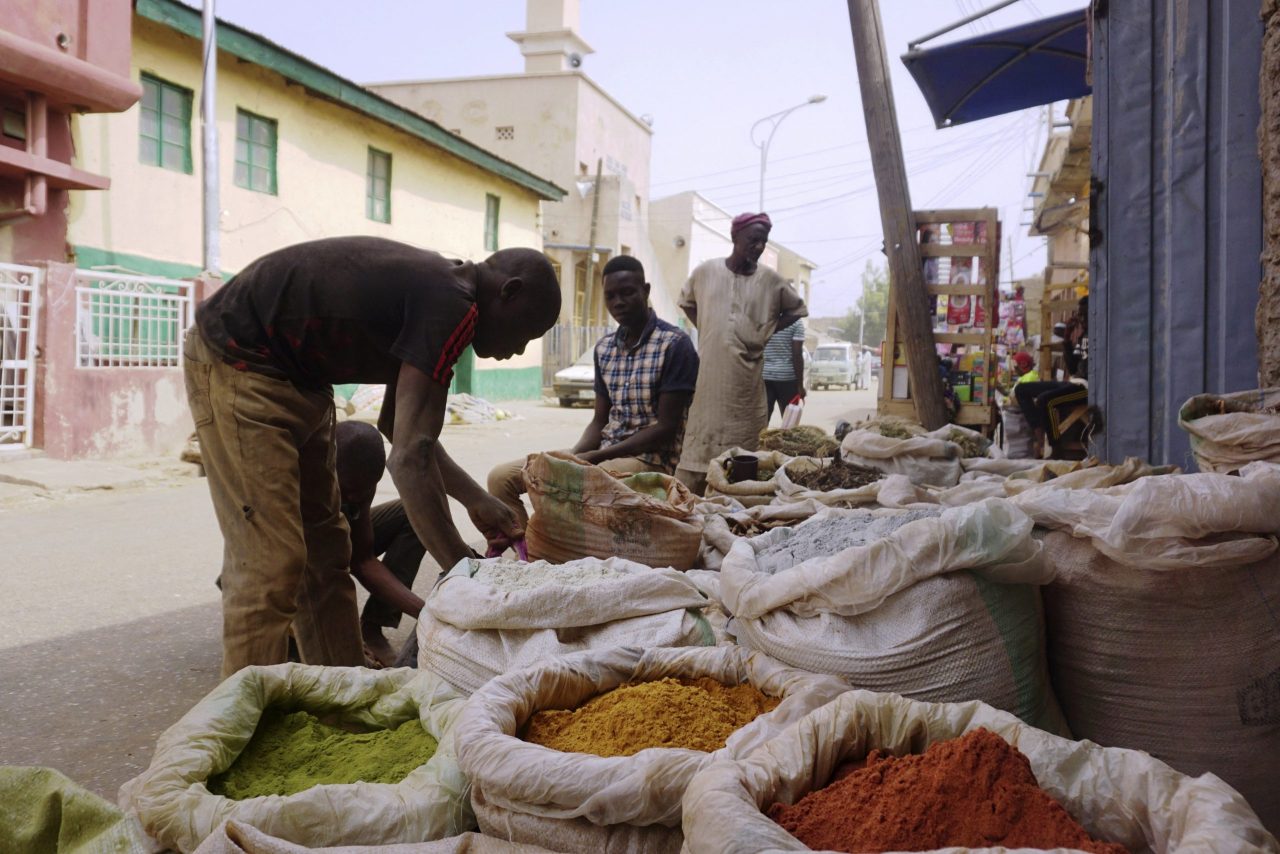

Then came the Economy Recovery Growth Plan (ERGPs) of Muhammadu Buhari’s administration (2015- 2023), stepping the policy economics forward with so much funding for agriculture in the name of economic diversification, a whooping N1 trillion went into rice, wheat, cassava and others under the Central Bank of Nigeria’s Anchor Borrowers Schemes. And many other fundings through the National Agricultural Land Development Agency (NALDA).
[ad]
Today, we are being harassed by the government of President Tinubu left, right, centre, back and front, depending on which side the harassment is coming on you. With his ‘Renewed Hope Agenda’ and policy directive of making food and water resources as National Security Council sphere of decisions. Critically, all of the above-mentioned policies are trackable to tackling food inflation or food-related problems being faced in the country. Hence, in the wisdom of the Government, food and agricultural elements are of national security importance.
Whether they understood the import of food inflation in all their policy action is another issue. However, food inflation is scary, dreadful, and dangerous, it reduces the nutritional and vitamins of the poor, denying them the necessary health benefits that are gotten through food consumption.
This now brings us to the recently released August 2023 general inflation of 25.8 per cent by the National Bureau of Statistics (NBS). As usual, it draws attention to the flipping floppy economic situation. NBS in its Consumer Price Index (CPI) report for the month of August 2023, the NBS’ headline inflation rate increased to 25.80 per cent is relative to the July 2023 headline inflation rate which was 24.08 per cent.
According to the NBS, it showed a 1.72 percentage point increase when compared to the July 2023 headline inflation rate. On a year-on-year basis, the headline inflation rate was 5.27% points higher compared to the rate recorded in August 2022, which was 20.52%.
However, the sad reality was the damaging figure of food inflation of 29.34% which was more fearful. The NBS noted that food inflation for August rose to 29.34 per cent in August 2023, representing a 2.35 percentage point increase from 26.98 per cent recorded in the previous month, on a year-on-year basis, which was 6.22% points higher compared to the rate recorded in August 2022 (23.12%).
[ad]
Our fear about this double-digit food inflation has persisted for many years untamed. And we are very sure that this latest figure is linked not just to the distortion of fiscal and monetary policy of today’s Government but also to past ones are to be blamed also. Major food commodities that are daily consumed by Nigerians such as bread, cereals, milk, meat, fish, potatoes, yam, and other tubers, soft drinks, and fruits are not without government policy intervention.
Meanwhile, the rise in food inflation is seen in ‘wheat flour with a price increase of 43 per cent to N38,000, rice with 91 per cent increase to N61,000, palm oil with 55 per cent increase to N31,000, sugar with 75 per cent to N42,000 and tomatoes with 82 per cent increase to N40,000.”

Fundamentally, economists would always attribute demand and supply paradigms as factors that drive inflation, and most especially food price inflation. Consequently, one may not be surprised at the report going by the many years of structural decay and successive government poverty of economic governance, both in fiscal and monetary policy deployment to address the country’s food inflation woes.
For instance, the Central Bank of Nigeria (CBN) promising from its projection that the country’s inflation rate would drop to a single-digit range of 6–9 per cent has failed, using its interest rate currently standing at 18.75% as a monetary measure to fight inflation. However, we acknowledge the relationship between interest rate and inflation, nevertheless, one cannot become a threat to the other, in this case, stiffing the supply of money and credit to businesses. Lack of understanding in this regard mess up the Apex Bank’s strategic policies that cut across multi-sectorial macroeconomics and microeconomic variable that are failing to tame inflation.
Another is the poverty of fiscal policy through government spending to address poor infrastructural facilities to aid farming activities across the country with the Federal Government throwing money on cosmetic and ad hoc agricultural projects, leaving out the core needed project in terms of electricity, storage facility, roads and better transport logistics for rural farming communities and others that are at the base station of food supply.
[ad]
Similarly, fiscal policy failure is the multiple taxation of Government at the federal (9 tax items) and sub-national levels (46 tax items). The entire Government fiscal mandates are all about revenue drive without balancing how this would go back efficiently to tackle inflation. A case in point is the huge operational cost manufacturing sector that is more in the food commodities sub-sector which bears together with taxes and fees being paid.
Lastly is the failure of our national security architecture to arrest the persistent insecurity that is increasingly affecting farming communities and wreaking havoc on the food chain and commodity supply in the country.The reality of the foregoing cannot be overemphasised with its burden fuelling the food inflation rate. Sadly, despite trillions of naira being spent as intervention in agriculture, security, and infrastructure amongst others, the increase in the food inflation rate and the surge in prices of bread and cereals, protein foods like fish, meat, egg and beverages as reported by the NBS food price index are unbearable. Arguably, the centrality of this piece is that the failure of the Government policies to address food inflation in reverse fuels or aggravates it in our country.
What can be done to address food inflation in Nigeria? Seriously is to remind the Federal and State Governments that poverty of infrastructure is the bane of food inflation in the country. There is also the poor state of our roads, poor storage of food facilities, multiple taxes, and high cost of transportation. We believe it is appropriate that the Government across boards gets involved directly in collaboration to tackle food inflation headlong. This can help us drive down negatively the impact of food inflation resulting from disjointed policy direction.
In addition, it is not a bad idea for the Government to put in place a price control board to tackle the menace of middlemen and women taking undue advantages at this time. On the other hand, we acknowledge the fact that to deal with inflation, the Central Bank Of Nigeria (CBN) must have a grip on the supply of money, and credit must not be let loose. In this way, CBN’s stance in creating new money must be justified through a steady interest rate rise while this must go with a target to boost investment and employment generation.
[ad]
For us, CBN using interest rates to fight inflation tends not to be working, rather it devastates the poor. Poignantly, it will be a great service if the CBN focuses on curing inflation that tends to foster economic inequality and divide our society. Ours also is for a monetary policy that prioritises the prevention of inflation with decisive action to remove more Nigerians from poverty and hunger.
Another is a moderation breaker from the central bank tightening its monetary stance. Although the last Monetary Policy Committee (MPC) for 2023 retains the 18.75% interest rate and projections of over 3% economic growth for the country. We are expecting a paradigm shift from Dr. Olayemi Cardoso lead CBN MPC and its brand new four deputy governors. To put out strong measures to reduce unabating FX pressure on the naira in the currency market is enormous because FX market unification has brought problems, with the I&E Window creating its currency round tripling and speculators.
Our take is that whatever measures to stop every factor responsible for eroding the purchasing power of Nigerians and the naira is welcome.
Given we all agree that the fear of farmers returning to the farmlands due to clashes with the herders in the Northern Region as well as in some Southern parts of the country demands stronger security action against farmers-herders conflict and banditry phenomenon affecting farm produce segment across rural and urban food supply chain. We should not forget how misappropriation of funds and corruption wreaks havoc as well.
Ultimately, we need to reason around the ugly role of unscrupulous individuals’ proclivity in food inflation. Consequently, it is time for the Nigerian Government to fight inflation with a tripod of monetary, fiscal and trade policies in collaboration with the sub-national government.
Concluded
Olamilekan is a Political Economist. He can be reached via: adefol [email protected]
Tel.: 08073814436
[ad]

