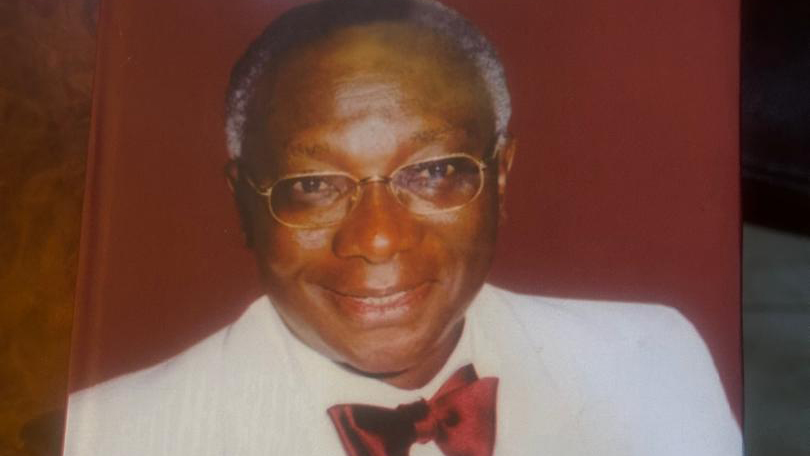
Chief Jeremiah Obafemi Oyeniyi Awolowo (March 6, 1909 – May 9, 1987), fondly known as Awo, a principled lawyer, discerning journalist, prolific writer, deep nationalist, visionary statesman, political philosopher, and prophetic voice, was a man renowned for his intellectual depth, moral leadership, and prophetic foresight and a man whose life fulfilled the prophetic meanings of his names.
Jeremiah, meaning “God will uplift,” evokes the Biblical prophet who delivered over a hundred distinct messages. Like his namesake, Chief Obafemi Awolowo was exalted and fulfilled. He emerged as a major secular prophet of his time, articulating scores of precise and prescient socio-political predictions.
His name Obafemi, literally “the king loves me,” speaks to his extraordinary charisma. Awolowo was deeply loved – not only by the masses but also by monarchs, intellectuals, and political elite. So beloved was he that Chief Chukwuemeka Odumegwu Ojukwu, the Oxford-educated Biafran leader, described him, at death, as “the best president that Nigeria never had.”
His other Yoruba name, Oyeniyi, translates as “chieftaincy title is esteemed.” This is again, prophetic. Apart from being the premier of Western Nigeria, Awolowo was adorned with numerous chieftaincy titles and honorary doctorates, to the point of near-idolisation. The conferment on him of Nigeria’s highest national honour- Grand Commander of the Order of the Federal Republic (GCFR) – by his political rival, President Shehu Shagari, in 1982, underscored his towering stature.
In sum, Awolowo’s names were not mere labels but prophetic signposts, and his life became a testament to their meaning: exalted, beloved, esteemed, and fulfilled. Awolowo pioneered a political philosophy known as Awoism, a rich blend of dialectical reasoning, human dynamism, the social contract, equality of opportunity, and mental magnitude.
He remains a towering figure – our own Jeremiah, our own Nicodemus – whose prophecies still inspire generations and whose foresight continues to shape Nigeria’s destiny. Awolowo consistently predicted Nigeria’s political, economic, and social trajectory with remarkable accuracy.
Indeed, his 1963 allocutus stands as a testament to his foresight, integrity, and enduring relevance in Nigeria’s political history. This formal statement before sentencing in the treasonable charge against him in 1963 revealed him profoundly as a man who saw tomorrow. It was not merely a defence; it was a prophetic declaration, rich with foresight and conviction. Here, Awolowo predicted “the breaking up of the Northern Region into more states” and this was fulfilled on 5 May 1967, when General Gowon created 12 states, breaking the monolithic Northern Region into six. Today, Nigeria has 36 states – 19 in the North and 17 in the South – affirming Awolowo’s vision of a more balanced federation.
On his enduring legacy, also in his allocutus, Awolowo declared, “I have rendered services to this country which historians and the coming generations will certainly regard as imperishable.”
History has vindicated him. The several works by writers on him attest to the imperishability of his legacy. On the cost of his imprisonment, still in his allocutus, Awolowo warned, “My imprisonment might do harm to Nigeria… the invaluable services which I have hitherto rendered and which I can still render would be lost to the country – at least for a season.”
This too came to pass. His absence left a palpable vacuum. Even while in prison, his party members sought his counsel. Upon his release, the promise embedded in “I can still render” was swiftly fulfilled: as he was appointed vice chairman of the Federal Executive Council and commissioner for finance, resuming his national service with distinction and reaffirming another of his allocutus predictions that he would not die in prison.
On rising national tension, another prophecy at his allocutus, Awolowo foresaw that “there might be a heightening of the present tension… which has done incalculable injury to the economy.”
His warning proved accurate. The tension escalated into violent unrest, culminating in the infamous _Operation Wetie,_ where political violence led to deaths and widespread destruction.
On the collapse of democracy, Awolowo predicted, “For some time to come, the present twilight of democracy, individual freedom, and the rule of law, will change… into one of utter darkness.” Three years later, on 15 January 1966, a bloody military coup ended Nigeria’s First Republic, suspending democratic governance and the rule of law – just as he had foreseen.
On the hope of restoration, Awolowo asserted “But after darkness – and this is commonplace – comes a glorious dawn.” That dawn arrived when Lt. Colonel Yakubu Gowon (as he then was) released Awolowo from prison on August 2, 1966 and granted him a full pardon. This was made complete on June 4, 1967, when Awolowo was invited to serve in government, marking his triumphant return to national leadership.
Through his other speeches and writings, Awolowo foresaw key national developments: the dangers of military rule, the necessity of true federalism, the mismanagement of oil wealth, and the consequences of neglecting education.
He warned that corruption would remain endemic unless governance was seen as service, not self-enrichment. Several of Awolowo’s predictions have been fulfilled – including the rise of youth unrest, the collapse of democracy, and the failure of Nigeria’s search for a new social order. Even when dismissed as a “prophet of doom” when he predicted, in his 1981 letter to President Shehu Shagari, that: “Our ship of state is fast approaching a huge rock… unless steered away, it will hit with an unspeakable disaster,” history vindicated him when Nigeria plunged into austerity just seven months later, confirming his status as an economic prophet.
Awolowo was not only a builder of institutions but a seer of national destiny – a man who saw tomorrow. Far back in 1978, Awolowo predicted that an Ijaw man would rule Nigeria – and in 2010, 32 years after Awo’s prediction and nine years after his death, Goodluck Jonathan, an Ijaw man became Nigeria’s president against all odds.
Awolowo retired from politics with philosophical and prophetic grace, declaring, “I have done all that I can do. The rest is left to God.”
He even foretold his own death during his 78th birthday celebration on March 6, 1987 with the statement: “What I am celebrating is actually the imminence of my transition to eternal life….” Sixty-three days later, he passed away, leaving behind a legacy of integrity, intellect, and prophetic insight.
Awolowo’s legacy lives on in institutions, ideas, and the enduring reverence of scholars, journalists, and citizens. Traversing Nigeria’s political landscape like a colossus – a secular prophet, a moral compass, an ethical proponent of puritan morality, a sophisticated intellectual of no mean repute, a symbol of visionary leadership tempered by religious catholicity – Awolowo, whose words continue to guide and challenge generations, embodies a stewardship that transcends sectarian bounds and inspires moral imagination across generations.
• Dr Bode Babatunde, a lecturer at London South Bank University, speaking at the London launch of his book _Moving Nigeria Forward: Critical Perspectives on Awo’s Topical Prophecies_ , November 15, 2025.