 Follow Us on Google News
 Follow Us on Google Discover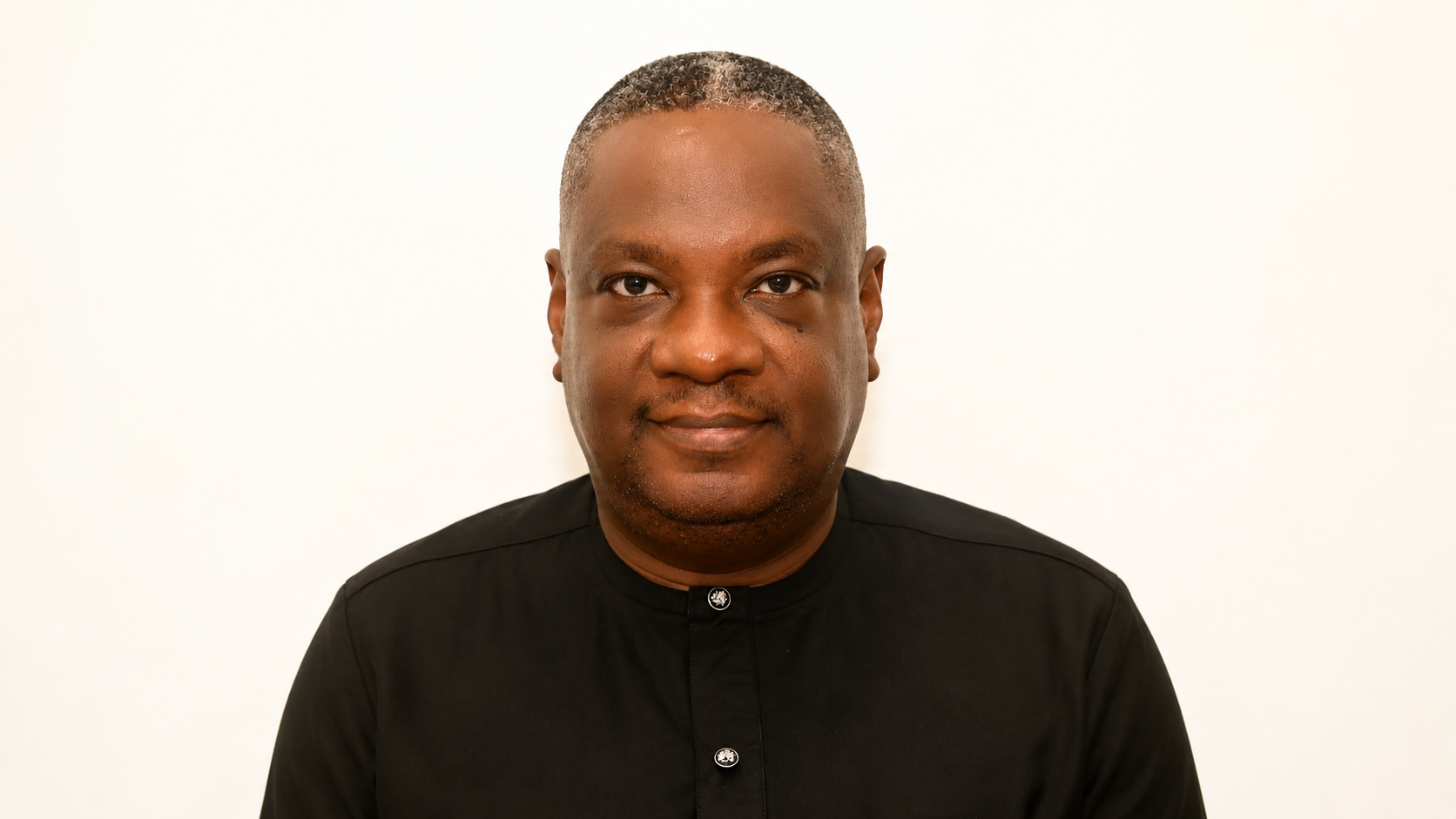
By Adewole Oriade
The victory of Governor Ademola Adeleke in the August 15, 2026 Osun State governorship election should be studied beyond the excitement of party politics. It offers important lessons about governance, political strategy and, perhaps most importantly, the relationship between government and the governed.
Adeleke, who contested on the platform of the Accord Party after leaving the Peoples Democratic Party (PDP), secured the highest number of votes in the election. Reports from the final collation showed him with 511,067 votes, ahead of APC candidate Bola Oyebamiji, after results from all 30 local government areas had been collated.
The significance of this result goes beyond Adeleke himself. An incumbent governor moved from the party on whose platform he was originally elected, contested under a relatively less-established political platform in Osun, and still secured another mandate.
That should tell us something: political parties matter, structures matter, federal influence matters—but ultimately, the relationship a government builds with ordinary people matters enormously.
Aregbesola, Oyetola and Adeleke: Three different approaches

Any fair assessment of governance in Osun must acknowledge the contributions of former Governor Rauf Aregbesola. Whatever criticisms may be levelled against his administration, Aregbesola was an ambitious infrastructure-driven governor.
His administration invested heavily in roads, schools and urban renewal. Available accounts credit the administration with hundreds of kilometres of state and local-government roads, alongside major education infrastructure and other public works.
Aregbesola wanted to transform the physical appearance of Osun, particularly Osogbo, and pursued infrastructure with unusual aggressiveness.
But governance is not only about concrete, asphalt and beautiful public buildings.
The major political damage to the Aregbesola administration came from its relationship with workers and pensioners. During the fiscal crisis, the government adopted what it called “modulated salaries.” Under the arrangement acknowledged by the government itself, some categories of workers received 75 per cent of their salaries while senior workers received 50 per cent.
Whatever the economic justification, the political and human consequences were enormous.
You cannot construct beautiful roads while the civil servant travelling on those roads cannot comfortably feed his family.
You cannot build magnificent schools while teachers feel economically humiliated.
You cannot talk about the future while pensioners who served the state for decades struggle for their entitlements.
That contradiction became one of the defining weaknesses of the Aregbesola years.
Governor Gboyega Oyetola subsequently inherited a difficult fiscal situation. Contemporary assessments noted that he inherited outstanding half-salary arrears, pension obligations and significant public debt. His administration restored payment of full salaries and pursued a more fiscally cautious style of government.
Oyetola was arguably less flamboyant and less aggressive than Aregbesola in infrastructure development, but he attempted to stabilise government finances and relations with workers.
Nevertheless, when Oyetola left office in 2022, substantial salary and pension-related liabilities remained. The incoming Adeleke administration said these amounted to about N75.8 billion, comprising salary, pension and group-life-assurance obligations. That figure originated from the incoming government’s account of the state’s finances and should therefore be understood in that context rather than treated as an uncontested independent audit conclusion.
What Adeleke appears to have understood
Adeleke came into office understanding something politicians sometimes forget:
Government is ultimately about people. One of the strongest aspects of his first term was his attention to workers and pensioners.
His administration combined regular salary payments with phased settlement of inherited salary and pension obligations. For example, in August 2024 the state reported paying about N1.69 billion covering cooperative deductions and another instalment of inherited half-salary obligations. By 2025, the administration said it had cleared more than N50 billion in pension arrears and implemented a N75,000 minimum wage.
These things matter politically
Civil servants have families. Pensioners have children and grandchildren. Contractors employ people. Artisans talk to their neighbours. Teachers belong to communities.
When government treats these constituencies with dignity, the political impact travels far beyond the direct beneficiaries.
At the same time, Adeleke did not abandon physical infrastructure. His administration invested substantially in roads and other projects across the state, although some of the government’s larger claims about the scale of infrastructure delivery remain its own assessments. The administration, for example, says it reduced Osun’s infrastructure deficit by more than 50 per cent between 2022 and 2026.
A more independent pre-election assessment by Premium Times described Adeleke’s record as a mixed bag, acknowledging significant projects and improvements in workers’ welfare while also identifying controversies and shortcomings.
That distinction is important. Adeleke’s electoral victory should not turn political analysis into hagiography.
The big lesson for APC
The lesson for APC should not simply be that it selected the wrong candidate or failed to build a sufficiently strong electoral coalition.
The deeper lesson is this:
Never allow political power to disconnect you from the people you govern.
Infrastructure is important. Fiscal discipline is important. Mega-projects are important. But citizens experience government personally.
A civil servant whose salary is unpaid experiences government. A pensioner waiting years for gratuity experiences government. A trader confronted by multiple taxation experiences government.
A young graduate without employment experiences government. A motorist driving through a bad road experiences government. A businessman waiting endlessly for government approval experiences government.
Politics ultimately converts these everyday experiences into votes
APC must therefore resist the temptation to interpret every electoral defeat through the prism of party machinery, internal factions, federal might or campaign financing.
Sometimes voters are simply sending a message about how they want to be governed.
Political parties must learn that citizens are not electoral assets to be remembered every four years.
They are the shareholders of government.
But Adeleke must also learn from his victory
Winning a second term creates its own danger.
Politicians sometimes interpret re-election as confirmation that everything they did during their first term was correct. That would be a serious mistake.
Adeleke’s first term has not been perfect
There have been questions around the prioritisation of some projects, the quality and durability of some infrastructure, transparency and political appointments, while education still requires deeper structural intervention.
Even where his government has received recognition for education and human-capital performance, the numbers suggest there is substantial room for improvement. Premium Times reported that education received about 12 per cent of Osun’s 2026 budget, while approximately 73.2 per cent of the state’s 2025 education allocation was actually spent.
The next four years therefore cannot simply be Adeleke First Term Part Two.
His second term should represent a transition from predominantly visible infrastructure and welfare interventions towards human-capital development, productivity, private investment and institutional reform.
From roads to human capital
The most important infrastructure of the next four years should be the Osun citizen.
Roads deteriorate. Buildings require maintenance. Vehicles become obsolete.
But investment in human beings compounds across generations.
Adeleke should therefore make education, vocational competence, technology and healthcare central pillars of his second term.
Osun has enormous intellectual and educational assets. Ile-Ife, Osogbo, Ilesa, Ede and other centres should form part of a deliberate knowledge economy.
The government should establish an ambitious Osun Human Capital Development Programme connecting secondary education, universities, polytechnics, technical colleges, vocational centres and employers.
Thousands of young people should annually receive market-relevant training in areas such as software development, artificial intelligence, cybersecurity, renewable energy, construction technology, modern agriculture, creative industries, tourism, healthcare and entrepreneurship.
Technical education deserves particular attention
Nigeria does not only need university graduates. We desperately need competent electricians, welders, plumbers, refrigeration technicians, solar technicians, machinists, builders and other skilled professionals.
Osun can become a major supplier of skilled technical manpower to Nigeria and eventually the international labour market.
Make Osun One of Nigeria’s Easiest Places to Do Business
The second major frontier should be economic reform
Government cannot employ everybody.
Therefore, the real measure of economic success should increasingly become how many sustainable private-sector jobs government policies enable other people to create.
Osun should launch an aggressive Ease of Doing Business reform programme. I strongly advocated this in Adeleke’s first term and even pushed it to some people in his government, but I guess many of the people I pushed it to didn’t even understand it.
Business registration and state approvals should be digitised. Building approvals should have published timelines. Land-title processing should become faster and more transparent. Multiple taxation should be rationalised. Investors should have a genuine one-stop investment centre rather than moving from ministry to ministry seeking approvals.
Every major government agency interacting with businesses should have measurable service-level targets.
If an approval should take seven days, citizens should be able to track it electronically and know exactly why it has exceeded seven days.
The state should also systematically identify sectors where it possesses competitive advantages—agriculture and agro-processing, mining, tourism, education, healthcare, creative industries, ICT and light manufacturing—and develop investment clusters around them.
Osun’s future prosperity cannot depend indefinitely on federal allocations
The objective should be to create an economy where private capital, entrepreneurship and productivity increasingly expand the state’s internally generated revenue without government simply imposing more taxes on existing businesses.
The next Adeleke legacy
Governor Adeleke has apparently succeeded politically by combining visible infrastructure development with an unusually strong emphasis on workers’ and pensioners’ welfare.
The electorate has rewarded him with another mandate.
But history will ultimately judge his administration by a higher standard than winning elections.
The question in 2030 should not merely be:
How many kilometres of roads did Adeleke construct?
It should also be:
*How many young people became employable?
*How many new businesses were created?
*How much private investment entered Osun?
*How many people escaped poverty?
*How much did household incomes rise?
*How much easier did it become to acquire land, register businesses and obtain government approvals?
*How much did education outcomes improve?
*How much stronger were Osun’s institutions when he left office than when he arrived?
That is the transition Osun now needs—from politics of infrastructure to economics of productivity.
And for APC, the message from Osun should be equally profound.
Governments must never become so preoccupied with projects, political structures and calculations of power that they forget the human beings for whom government exists.
A road can impress a citizen.
A bridge can transform a community.
But dignity, economic security and a government that demonstrates that it cares about its people can build something even more politically powerful: trust.
In a democracy, that trust eventually finds its way to the ballot box.
The Osun election has once again reminded Nigeria that while politicians may control political parties, the people ultimately control the mandate.
Oriade, Osun indigene, wrote from Lagos.

