 Follow Us on Google News


 Follow Us on Google Discover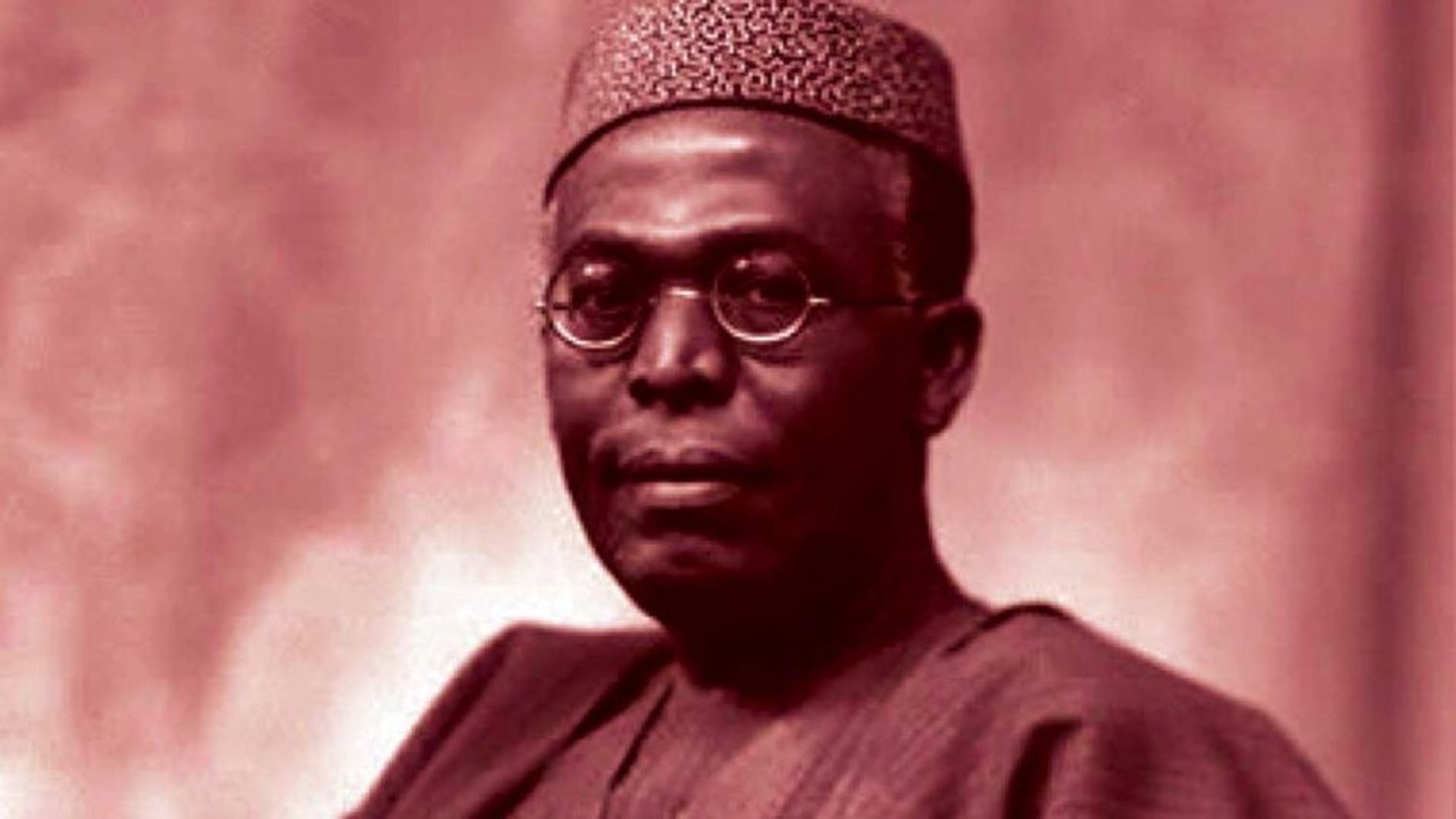
By Abdu Rafiu
Colleagues and readers of this column have drawn my attention to an article by Mr. Tayo Lawal which I was to discover has gone viral, if I may borrow the language of social media users about a subject that elicits quite an interest and has unimaginably been widely circulated. The beautifully crafted and structured article is about the accustomed profound thoughts of legendary Chief Obafemi Awolowo, one of the most leading lights ever in this country. At his exit from earthly life, erstwhile President Ibrahim Babangida said of him in his tribute that in Nigerian politics, Awolowo was the issue.
General Gowon in his own glowing tribute spoke of his debating ability and deep insights into issues during Federal Executive Council meetings. The Guardian captioned its editorialAwo: Prophet Jeremiah Departs. Babangida said on the occasion that you were either for or against Awolowo; there could be no sitting on the fence.
As it has been continually proven, Nigerians have not moved away from Awolowo as the issue and they do not seem to be in the mood to move away from him as a reference point, with a great many biting their lips.They refer to his exemplary discipline, exertion, his application to work, and as some would say, to his effulgent dignity and integrity. It is often they go memory lane recalling his ideas and ideas with heightened, fond interest especially in time of difficulties. It cannot but be predictable that his pronouncements and predictions are being recalled in the present time because of the experiences in the land.
What is it about Awolowo this time? One may ask. Reference is made copiously to his thoughts on how nations are meant to be put together, his thoughts on relationships among diverse peoples. It is believed that the problem of the country has a great deal to do more with the structure of the country, inherent in the Amalgamation of 1914. Awolowo argues very convincingly that the multivarious problems afflicting the nation are foundational and that the way to statehood is not the way we have followed. It would therefore require more than herculean effort to build an unshakeable union and even then, all the efforts and exertions would be futile in the end. Except, except and except…!
I hope I have Mr. Tayo Lawal’s permission to cull the article from social media platforms, and here we go:

“After that essay went viral, the one on the late sage, Chief Obafemi Awolowo, where I calculated the thirty-nine years of his glorious demise, the question from the comments was this:
“If Awolowo saw it all coming, what did he prescribe and why are we still sick?”
“In his final years, when journalists pressed him for solutions, the old sage pointed to his books.
“They ask me what to do,” he reportedly said. “I have already written it. The question is whether Nigeria will ever read.”
Tayo Lawal refers to the book he has observed Nigerians have been ignoring. In his words: “The book we keep ignoring is:
“Thoughts on Nigerian Constitution” written in 1966 while he sat in prison during the Civil War.
“In that book, the late sage turned federalism into pure science
First Law:
“If a country is unilingual and uni-national, the constitution must be unitary.”
Second Law:
“If a country is unilingual, and also consists of communities which have developed divergent nationalities, the constitution must be federal, and the constituent states must be organised on the dual basis of language and nationality.”
Third law:
“If a country is bilingual or multilingual, the constitution must be federal and the constituent states must be organised on a linguistic basis.”
Fourth law:
“Any experiment with a unitary constitution in a bilingual or multilingual country must fail in the long-run.”
Nigeria has over two hundred and fifty ethnic groups and hundreds of languages.
Mr. Tayo Lawal states: “By Awolowo’s measure, a unitary constitution is not just a bad idea—IT IS DOOMED.
He, referring to Awolowo, explained why: “In any country where there are divergences of language and of nationality, a unitary constitution is always a source of bitterness and hostility on the part of linguistic or national minority groups.”
Then he warned, again referring to Awolowo.
“If the linguistic or national group concerned are backward or too weak vis-à-vis the majority group, their bitterness may be dormant. But as soon as they become enlightened and politically conscious, the bitterness comes into the open, and remains sustained with all possible venom and rancour until home rule is achieved.”
That is not a prediction.
That is the actual description of Nigeria in 2026.
Now, why did Awolowo refuse to join the Constituent Assembly that drafted the 1979 Constitution?
In 1978, General Obasanjo invited him.
He said no.
Because the Assembly was not sovereign. The military had kept the right to change or reject anything. Certain “no-go areas” were off limits.
Awolowo said the Assembly would be nothing more than a “mere debating society.” He was absolutely right. The 1999 Constitution was not born in a sovereign assembly. It was a military decree wearing democratic clothes.
Chief Afe Babalola, that nonagenarian legal luminary said:
“The constitution they made was done in such a way that it will allow the military to perpetuate themselves in power.”
Chief Emeka Anyaoku, a nonagenarian technocrat reminded us:
“Our present constitution was not democratically formulated; it was imposed by military decree.”
Now, let me show you where the sabotage happened, line by line.
The 1999 Constitution gives the Federal Government exclusive control over sixty-eight—the police, mines, oil, aviation, defence, foreign affairs. States control nothing that matters economically.
Under the 1963 Constitution, regions controlled education, health, agriculture, housing –the things that touch your life, my life every day.
Awolowo warned:
“The work of government in Nigeria under unitary constitution is bound to become unduly complex, inextricably tangled, extremely unwieldy and wasteful, and productive of disharmony and discontent,”
He said that unless you have a superman at the helm, “the administrative machinery would eventually disintegrate and break down under the crushing weight of bureaucratic centralism.”
Now the police.
Section 214 says no other police force shall be established for the Federation or any part thereof. One clause forbids any state from having its own police. So when bandits terrorise Zamfara, the state government cannot act. When the South-West proposed Amotekun, the federal government declared it illegal.
Awolowo defined true federalism: “A Federal State is a Composite State in which the supreme legislative power is divided between the Central Authority and the State Authorities in such a manner as to make them co- with co-ordinate with and independent of one another.”
He warned that Nigeria was moving away from this: “It appears to me that the system we are now operating is a Unitary Constitution with heavy devolution of functions to the so-called State Authorities which are becoming provincial. With politics at its best, it would groan poignantly; at its worst, it would suffer nervous breakdown.”
That nervous breakdown now has an a name: banditry, kidnapping, a flag in the forest.
Now money
The Federation Account gives the Federal Government 52.68 per cent, states 26.72 and local governments 20.60 percent. Every month, every governor goes to Abuja with a begging bowl.
Lagos generates over 60 per cent of Nigeria’s non-oil tax revenue yet receives less than 5 per cent back.
Awolowo said a unitary constitution would “have the effect of repressing healthy rivalry among different regions.” He then said: “Rivalry is the soul of development and progress.”
Now education.
Section 18 says the government shall ensure equal educational opportunities. But section 6 makes these Directive Principles non-justiciable. You cannot go to enforce your right to education. You cannot sue the government for failing to build a school.
Awolowo called rights you cannot enforce “empty platitudes and hollow admonitions which have no place in a Constitution whose provisions must be justiciable and legally enforceable”
The result?
Nigeria has 13.5 million out-of-school children—the highest in the world.
Teachers unpaid. Schools are closed. A generation left uneducated.
And the children of that generation are now carrying guns.
Awolowo said it: “The kids you refused to educate are coming back to hunt you down.” So, now you understand the wound.
What is the way forward? Undo the sabotage, line by line.
State police.
Delete Section 214.
A
wolowo was clear: “In all the instances when a regional government had been suspended, far more mischief had been brought on the people than would have been the case if the government had been left severely alone till the next election.”
Fiscal autonomy. Abolish the Federation Account. Let states keep 70 per cent of what they generate.
Justiciable rights.
Move education, healthcare, and housing to Chapter Four. Make then something for which you can sue. Shrink the Exclusive List from sixty-eight items to five, defence, foreign affairs, currency, immigration. That is it.
Delete the President’s power to suspend state governments.
Awolowo warned that Nigerians were “unwittingly creating a Leviathan for themselves before whom they would have to go on their knees.” Above all, convene a Sovereign National Conference.
No military veto. No no-go areas. No predetermined outcomes. If someone asks for the short answer:
Awolowo answered this sixty years ago in “Thoughts on Nigerian Constitution”—true federalism, state police, fiscal autonomy, justiciable rights, and a sovereign national conference.
The 1999 Constitution sabotaged every single one. The way forward is to undo that sabotage, line by line.
I hear the objections. “It’s impossible. The northern elites will never agree. The political class benefits too much.”
These are the same objections they raised against Awolowo in 1951 when he proposed free education. He did it anyway.
They said coca house would collapse. It still stands.
They said Western Region would go bankrupt. It prospered.
The same people who tell you change is impossible are the same people who have benefited from the absence of change.
Seneca wrote:
“No man was ever wise by chance.”
Awolowo’s wisdom came from nights spent alone, worrying about a nation that did not want to be saved.
He sat at his desk while others caroused.
When we laughed at him, he did not laugh back.
He just kept writing, kept warning, kept pointing to the rock while the helmsman steered toward it.
Now, the ship has hit the rock.
The hull is cracked.
The water is rising.
And the captain is still asking the passengers to keep calm and wait for the next allocation from Abuja.
Here is the difference between 1981 and 2026.
Back then, only a few were listening. Today, the children of the uneducated have made sure that everyone is listening.
Every kidnapping, every armed robbery, every flag raised by bandits is a sermon on the text Awolowo preached forty-five years ago.
A nation that refuses to educate its poor will be hunted by the ghosts of its neglect. Do not let anyone tell you Nigeria’s problems are complex. They are not complex. They are deep. And as Awolowo said, only the deep can call to the deep.
The shallow—those who carouse while the ship sinks, who mock prophets while the fire spreads—cannot hear him.
They never could. But you reading this are not shallow.
You felt the weight of thirty-nine years, one month and one day.
Now you know what the compass looks like. It is in his books. It is in his four laws, the warnings about education, the plea for true federalism.
The question is no longer, “What did Awolowo say?
The question is: Will we finally read? And if we read, will we finally act?
I only pity the South-Westerners. By error of omission, through this unproductive, fraudulent amalgamation, the wisdom and administrative wizardry of this man, Awolowo, was unable to be harnessed to our benefit before his demise.
The rest of Nigeria lost a prophet.
But we lost our own compass. And that is why the weight of thirty-nine years, one month and one day falls hardest on us.
Food for thought! Unassailable. Mr. Tayo Lawal has invited everyone, all Nigerians, to a deep contemplation on the most crucial problems afflicting the land.
I will be back!

