 Follow Us on Google News


 Follow Us on Google Discover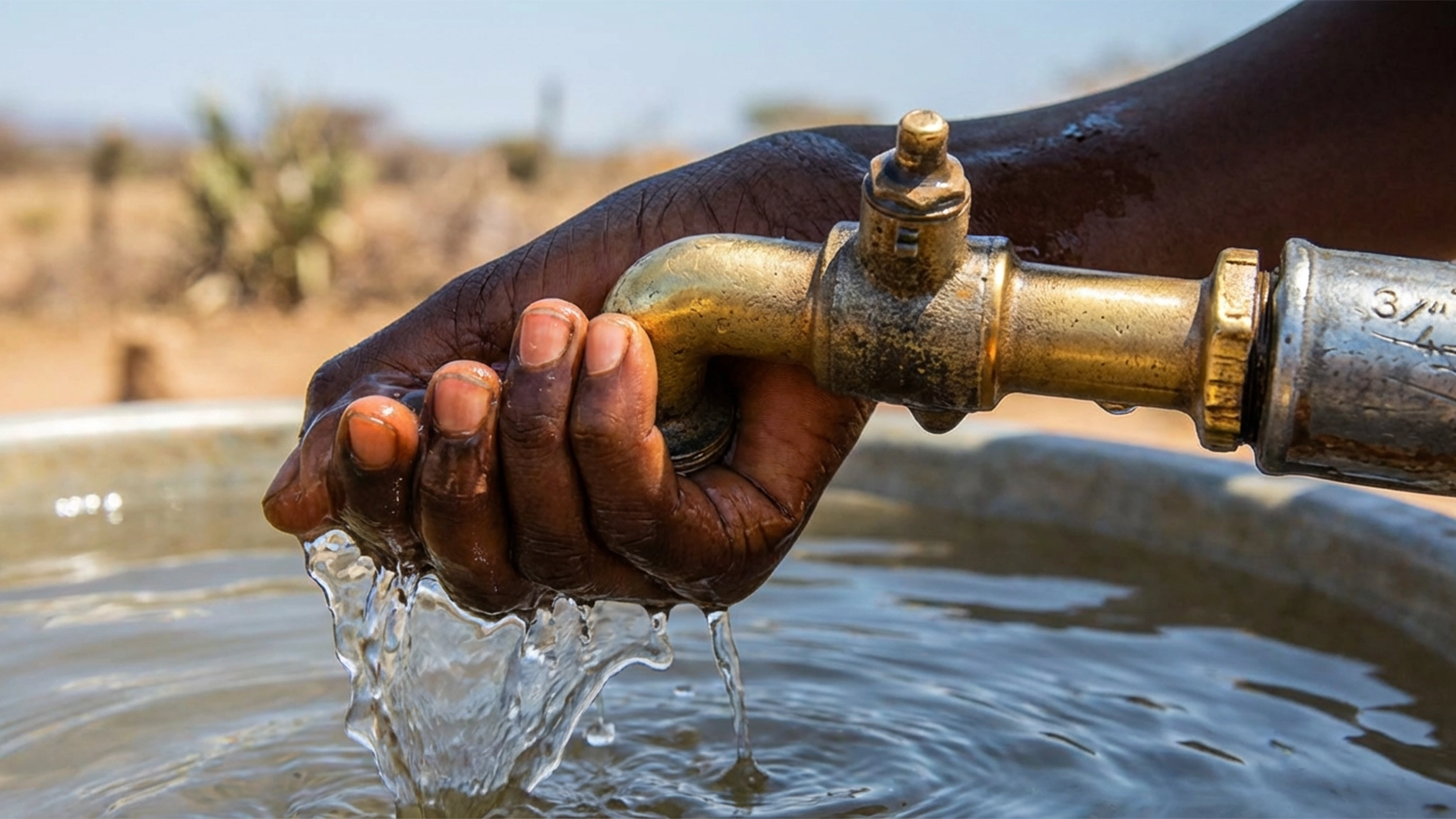
Urban settlements across all states in Nigeria have experienced massive development and expansion over the last decade. The massive rural to urban migration across the country and the world in general has caused a sharp population rise in cities by over 200 per cent within the past 10 years.
This has prompted massive investment in Housing and engineering construction to provide shelter and infrastructures for the growing population.
These growing cities are void of sustainable urban development model and projection of population growth, adequate basic infrastructure to meet the growing population and proper public infrastructure management model.
Amid other basic infrastructure, water supply has been a major challenge as over 90 per cent of the population lack access to potable municipal water supply schemes through the Water-board.
People have to find alternative sources of water for their livelihood being an essential and inevitable component of life. Shallow wells of large diameter and concrete walls were often dug in the past to access water table aquifer but are highly susceptible to pest infestation and sewage infiltration thus not suitable for human consumption. The advent of higher technologies in Geophysics for groundwater exploration and incoming heavy-duty drilling machineries encouraged the exploitation of deep secondary and often confined aquifers.
Across the nation, most developed cities record proliferation of boreholes, as every household wants to own their borehole, not minding the environmental implications.
Rapid rise in housing development through housing estates have caused realtors and land speculators to allocate every available space for construction of houses, roads and event centers not minding the need for natural system for balance in the local Water cycle. Cities underlain by crystalline rocks/basement complexes have limited regional groundwater recharge thus depends a lot on rainwater infiltration for recharge.
Urban development of these regions requires compulsory and holistic integrated environmental impact assessment to determine the implications of the proposed paved engineering constructions on a major component of the environment (Water).

Zones of natural groundwater discharge and recharge ought to be identified, studied and preserved to avoid imbalance in discharge and recharge of groundwater. Lapses as this have caused severe annual flooding experienced in various parts of the country where houses and roads have been constructed on natural buffer zones naturally made for adequate rainwater infiltration for groundwater recharge.
Also, the natural drainage system has been altered to accommodate more houses in estates, narrowing and closing up natural drainage lines to build houses and roads in their ignorance of its implication in processes and procedures in every stage of Water cycle.
Deforestation especially in this era of climate change have also contributed a lot to loss of soil structure and imbalance in evaporation rate thus leaving the earth surface bare, dried and susceptible to flash flood.
All aquifer underlying the fast-developing cities and its environs ought to be studied, mapped out in detail and monitored to balance exploitation to recharge. The resultant effect of neglecting this measure is the massive depletion of shallow aquifers, especially water table aquifers in several cities across the country especially those underlain by crystalline rocks whose groundwater schematics is highly structural.
Water table aquifers in basement complexes rely majorly on direct infiltration and percolation of rainwater thus the seasonal fluctuation in water table. Decrease in infiltration and percolation due to flooding; while exploitation is still on the increase remains a major cause of groundwater depletion in cities underlain by basement complexes nationwide.
In terms of groundwater quality, a waste management system has to be designed to sooth the various settlement patterns while considering the earth characteristics to preserve groundwater quality.
These should not be ignored during design and construction of housing estates to avoid loading of earth with human and animal waste. Also, waste collections in cities have to be classified (Bio and Non-biodegradable, Medical waste, IT waste etc.) for easy and appropriate management.
Several indiscriminate dumpsites exist along river courses resulting in percolation of leachates into surface and groundwater locally, which is further transported into regional aquifers.
To this effect, water samples collected from boreholes of variable depth and at several locations in some cities have shown the existence of contaminants traceable to poor environmental practice. It is expedient for the government through all agencies and academic institutions to engage in research to monitor the extent of contamination of various aquifer, point source and remediation processes to curb spread of diseases.
In terms of quantity, if the earlier urbanisation related effects on water resource management are not curbed; several sections of cities underlain by basement complexes might experience groundwater scarcity. This will pose great economic challenges to the country.
Government should as a matter of urgency invest more in water treatment and transfer to her citizens as well as engage in research and projects for artificial groundwater recharge to help replenish the already depleting aquifers.
Modern water conservation household faucets should be enforced in the construction code to encourage water resource use management.
Prince is a real-time water resource manager.

