 Follow Us on Google News


 Follow Us on Google Discover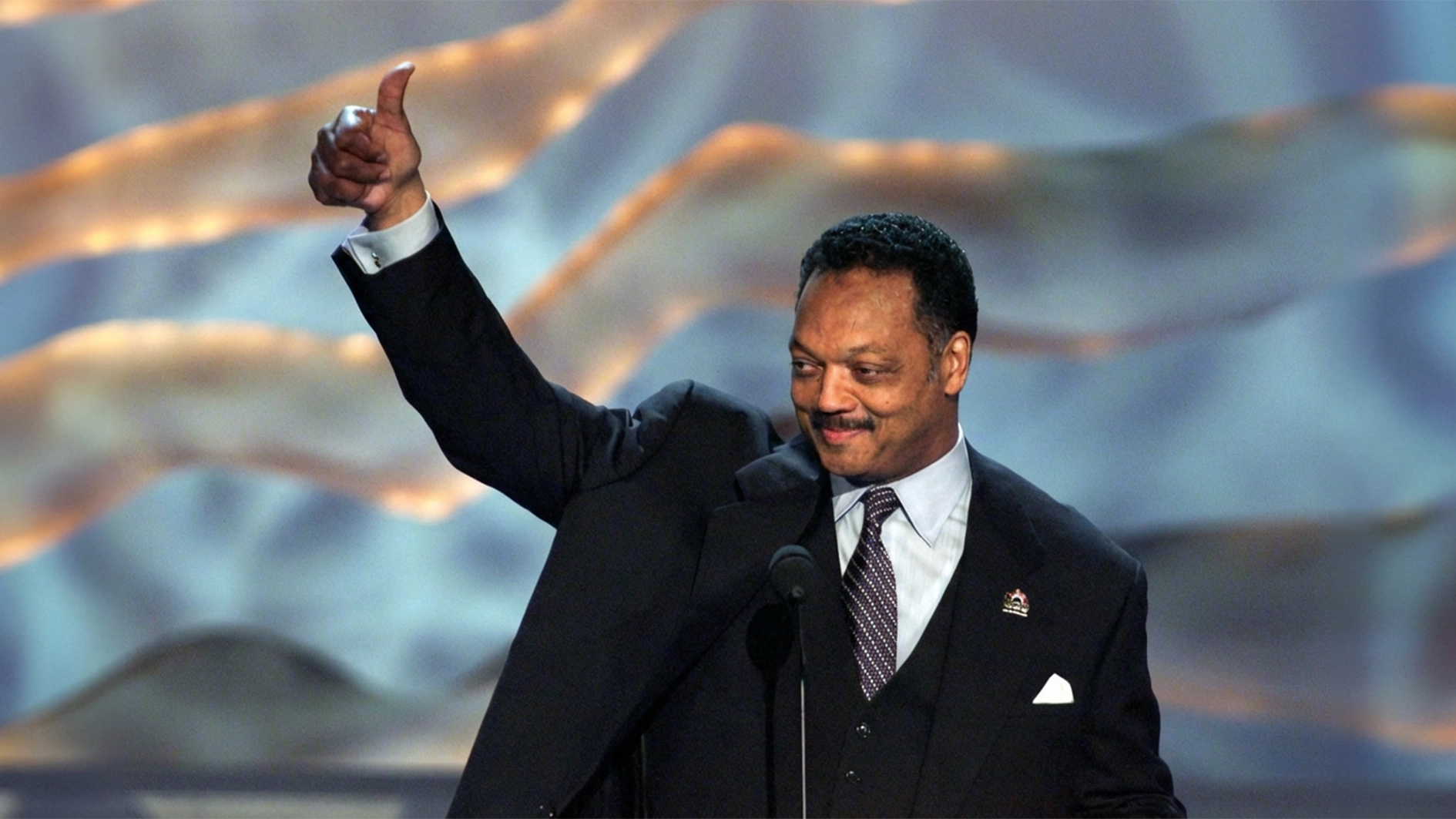
African-American civil rights preacher, Jesse Jackson, who recently died at the age of 84, was described by the New York Times’s Peter Applebome as “the nation’s most influential Black figure in the years between the civil rights crusades of the Rev. Dr Martin Luther King Jr. and the election of Barack Obama.” Jackson incredibly never held any elected position, and despite a long history of civic struggles and two memorable U.S. presidential runs in 1984 (declaring “Our time has come”) and 1988 (demanding “Keep Hope Alive!”), became something of a relic, chasing lost causes, as black mayors, governors, and eventually a black president, became the main beneficiaries of the heroic battles that he and his generation of civil rights leaders had waged in the 1950s and 1960s.
It was his two presidential runs that laid the path for Kenyan-Kansan, Barack Obama, to become the first black president of the U.S. in 2008. Obama himself admitted at Jesse’s recent exuberant “public homegoing” in Chicago’s South Side, that his presidential run had only been made possible “because of that path that he had laid, because of his courage, his audacity.” Jackson insightfully observed that Obama had run “the last lap of a 60-year race,” with Jesse having handed over the baton to the charismatic Chicagoan. But many also criticized Jackson’s overweening ambition, egoistical opportunism, and moral lapses.
Early life
Jesse Louis Burns was born in the Deep South town of Greenville in South Carolina on October 8, 1941. His 16-year old mother, Helen Burns, worked as a cosmetologist. His father, Noah Robinson, was a 33-year old former boxer and neighbour, who was married with his own family. His rejection of his son left permanent scars. Belatedly adopted by his mother’s husband, Charles Jackson, Jesse was later sent to live with his maternal grandmother, Mathilda “Tibby” Burns, in a shack, representing a second rejection. Though an illiterate domestic servant, “Tibby” – an indomitable Mother Courage – acquired books for Jesse from the rich white families she worked for, and persistently pushed himto study. As Jackson noted: “She never stopped dreaming for me.”
Though Jesse was a self-confident and loquacious child, he was taunted as a “bastard” at school. He enrolled at the University of Illinois Urbana-Champaign on a football scholarship in 1959. He was, however, racially abused and marginalised. Feeling alienated, he fled after a year to the all-black North Carolina Agricultural and Technical State University, becoming president of the student body. It was here that Jackson met and married fellow student, Jacqueline Lavinia Brown, in 1962, with whom he subsequently had five children. At first reluctant to become involved in civil rights protests, Jesse led his first anti-segregation march to downtown Greensboro with hundreds of students in June 1963. He obtained a Sociology degree in 1964.
Civil rights
Jackson then studied at the Chicago Theological Seminary. He travelled to Washington D.C. in August 1963 to hear Martin Luther King’s seminal “I Have a Dream” speech. Roiled by the brutal beatings of black protesters by white policemen on horseback in Selma in March 1965, he mobilised a group of seminarians to head to Alabama. It was at this march that Jackson first met Martin Luther King, who became the mentor that Jesse hero-worshipped. The Nobel Peace laureate invited Jackson to join his Southern Christian Leadership Conference (SCLC), led by preachers like Ralph Abernathy, Hosea Williams, John Lewis, and Andrew Young who, like King, were mostly in their 30s. The 24-year old Jackson was the youngest member of the group, heading the Chicago branch of the SCLC which staged boycotts to pressure white businesses to hire black workers and patronise black contractors.
It was at this time that Jackson acquired a reputation for being a self-promoting egotist, alienating many SCLC members. He was with King in Memphis to support a garbage workers’ strike in April 1968, when the civil rights stalwart was shot. Like King’s other disciples, Jesse rushed to help the wounded leader. Jackson then sought to take advantage of the civil rights leader’s death, touring television studios in Chicago wearing an olive sweater with King’s blood on it, noting about his hero’s martyrdom: “He went through, literally, a crucifixion. I was there. And I’ll be there for the resurrection.”
Jesse then sought to seize King’s leadership mantle by claiming that he was the last person to have spoken to him, while cradling his head in his hands: a version challenged by other SCLC leaders. This crude attempted power grab would follow Jackson throughout his career. King’s widow, Coretta, refused to speak to Jesse for years. Abernathy, who had taken over the movement, suspended Jesse from his position at the SCLC, citing mismanagement issues. Jackson resigned shortly after. He was now a shepherd in search of a new flock, continuing to champion civic rights in America, South Africa, Palestine, and Haiti. He was particularly active in the anti-apartheid struggle, noting: “As a young civil rights activist, I knew how raw and ugly and violent the apartheid regime was.”
The 1984 and 1988 presidential campaigns
Jackson established his credentials in the Democratic Party by campaigning relentlessly for fellow Southerner, Jimmy Carter’s unsuccessful presidential re-election in 1980, and soon began registering and mobilising hundreds of thousands of black voters. This laid the foundation for Jesse’s own historic 1984 and 1988 presidential bids: only the second black candidate to do so after Shirley Chisholm’s doomed 1972 campaign. Jackson’s eloquent and rousing speeches at both Democratic Party conventions galvanised its base, harking back nostalgically to the civil rights era of an activist government in which a multi-racial coalition championed the rights of the racially-oppressed and marginalised. As teeming crowds urged “Run, Jesse, Run” at the 1984 convention in San Francisco, he famously declared: “My constituency is the desperate, the damned, the disinherited, the disrespected and the despised.” He preached full employment, healthcare, welfare, and taxing the rich, continuing King’s push for economic equality to complement the gains of political freedom. Four years later at the Atlanta convention, Jackson sold himself as the champion of the “outcast,” “subclass,” and “underclass.” African-American scholar-activist, James Baldwin, described Jackson’s 1984 campaign as presenting “the American Republic with questions and choices it has spent all its history until this hour trying to avoid…And nothing will ever again be what it was before.”
Jesse’s vision and ideas were, however, cheered rather than embraced by a centrist Democratic Party committed more to gradualist reform than radical revolution. His campaign was nearly derailed when he used the racist, anti-Jewish slur “Hymietown” to describe New York.
Jackson only very reluctantly distanced himself from the fire-breathing Muslim preacher, Louis Farrakhan: a lesson Obama learned during his 2008 presidential campaign in quickly denouncing his fiery former pastor, Jeremiah Wright. Obama also learned to run from the centre rather than the left of his party, and to de-emphasise his race. Jackson came third (behind Walter Mondale and Gary Hart) in the 1984 Democratic primary with 3.2 million votes (18 per cent). He more than doubled this total four years later to nearly 7 million – 30 per cent of the overall vote – coming a respectable second to Michael Dukakis, and easily defeating Al Gore, who became Bill Clinton’s vice-president just four years later, before winning the Democratic Party presidential nomination in 2000.

The push rainbow coalition
South Africa’s Nobel Peace laureate, Archbishop Desmond Tutu, had championed the vision of “the Rainbow People of God.” His fellow African-American preacher, Jesse Jackson, similarly adopted the leitmotif of a multi-racial rainbow in seeking to unite Americans into a progressive movement. Jackson spent most of his life in civic activism as the leader of the Rainbow Push Coalition, sometimes being accused of “shakedowns” of white-dominated corporations to fund his organisation, family, and friends.
Jesse would suffer two devastating personal scandals: it was revealed in 2001 that he had fathered a child two years earlier with former staffer, Karin Stanford; 12 years later, his son Jesse Jackson Jr., was forced to resign as a US Congressman and sentenced to 30 months in jail, after using $750,000 of campaign funds for personal expenses. By this time, Jackson Sr. had become something of an anachronism: a moral leader in an era of practical politics in which the power of the purse had overtaken the power of the prose.
Into the house of the ancestors
One of Jackson’s greatest, but often unremarked achievements, was to have popularised the term “African-American” from 1989. He insisted that – like Italian-Americans, Hispanic Americans, and Irish-Americans -his black compatriots must take pride in their ancestral home. Jesse pushed back strongly against less politically aware black figures like Whoopi Goldberg and Morgan Freeman who rejected the identification. It was fitting that Jackson served as the first-ever Special Envoy for Democracy and Human Rights in Africa under president Bill Clinton (1997-2001), contributing to peace efforts in Nigeria, Sierra Leone, Liberia, Sudan, Kenya, and the Congo. Clinton awarded him the Presidential Medal of Freedom in 2000. South African president, Cyril Ramaphosa, befittingly spoke at Jesse’s recent funeral service in Chicago.
Jackson’s final decade was wracked by illness, having been diagnosed of Parkinsons disease in November 2017. He will be fondly remembered across the Black World and beyond as a preacher who restored Black pride and dignity, and relentlessly pursued their lost causes until the very end.
Read the remaining part of this article on www.guardian.ng
Professor Adebajo is a senior research fellow at the University of Pretoria’s Centre for the Advancement of Scholarship in South Africa.

