 Follow Us on Google News


 Follow Us on Google Discover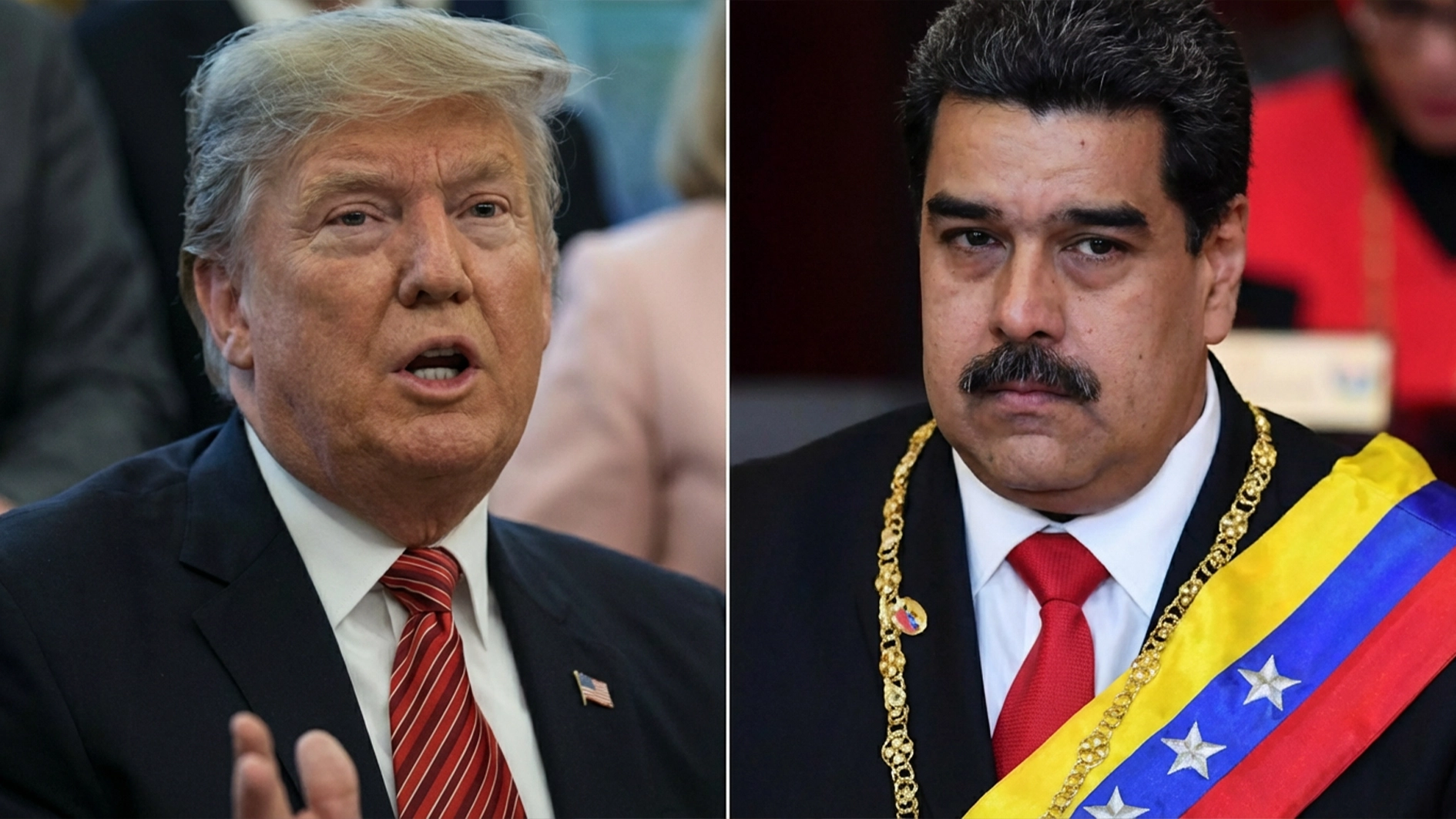
Mr President, Good morning. I want you to reason with me on today’s subject of discussion—imperialism. Perhaps it could help you navigate the global jungle, now that the United States is breathing down your neck. A measure of theoretical obscurantism used to dog the definition of imperialism, forcing Tom Kemp as far back as 1967 to note in his Theories of Imperialism, that: “To attempt a definition of imperialism is already to adopt a position and lay the basis for a theory. In fact, there can be no agreed definition because the conflicting ideological assumptions to be found in present-day social science and politics prevent the appearance of an agreed theory.” This was understandable in those years of heated ideological antagonisms between the mouthpiece of imperialism and the emancipating social forces. Today, imperialism as an objective phenomenon is no longer in doubt. The U.S. January abduction of President Nicolas Maduro of Venezuela reinforces the point being made.
In my December 2025 lecture at the Nigerian Institute of International Affairs (NIIA), I examined the Middle East crisis through the prism of imperialism, which refers to the domination of one country by another, encompassing political, economic, and social dimensions. It means absolute negative sovereignty for the dominated country.
Imperialism has many means of exerting domination, but the last is always the wielding of the armour of the state, that is, the military. For what purpose? To control the resources of the dominated country, including its cultural equipment. Vladimir Lenin, who expounded the concept of imperialism drawing on abundant Empirical data, states in his work, Imperialism, the Highest Stage of Capitalism, that:
“Capitalism has grown into a world system of colonial oppression and of the financial strangulation of the overwhelming majority of the population of the world by a handful of ‘advanced’ countries. And this ‘booty’ is shared between two or three powerful world plunderers armed to the teeth (America, Britain, Japan), who involve the whole world in their war over the division of their booty.” Kwame Nkrumah, who advanced the theory of capitalism to the stage of neo-colonialism, notes in his work titled, Neo-colonialism, the Last Stage of Imperialism, that: “Neo-colonialism is also the worst form of imperialism. For those who practise it, it means power without responsibility and for those who suffer from it, it means exploitation without redress.”
So the brazen cowboy abduction of the Venezuelan president dramatises the nature of imperialism. First, the U.S. deployed propaganda about President Maduro’s control of the drug cartel in his country.
As Sam Kiley writes in The Independent newspaper of January 5, “The invasion ordered by the U.S. president was small scale and clinical. It decapitated a government he said ran ‘narco-terrorism’ and had killed hundreds of thousands of Americans by drug overdose and through violence”. This has been concretised in the charges against President Maduro by the United States District Court, Southern District of New York. For over 25 years, public officials corrupted and abused their powers. President Maduro, in particular, employed state authority to transport thousands of tonnes of cocaine to the United States, from which he, his family, and members of his ruling party benefited.

After the invasion of Venezuela and abduction of President Maduro, President Donald Trump has come out clearly. He stated in no ambiguous terms that the United States would now run the affairs of Venezuela, control its oil resources, to the rebound of American multinationals and with a hint of irony, for the prosperity of the Venezuelans.
In his words, “We need total access. We need access to the oil and to other things in their country that allow us to rebuild their country.” Ricardo Hausman has called this “Trump’s imperialism without alibis.” Joseph Stiglitz’s characterisation of the Trump administration’s action in Venezuela is on point.
As he puts it: “Even more brazen are Trump’s subsequent remarks. He claims that his administration will “run” Venezuela and take its oil, implying that the country will not be permitted to sell to the highest bidder. Given these designs, it would appear that a new era of imperialism is upon us. Might makes right, and nothing else matters.” What is even more dangerous about America’s new age of empire, Stiglitz further notes, is that “…Trumpian imperialism, lacking any coherent ideology, is openly unprincipled – an expression solely of greed and the will to power. It will attract the most avaricious and mendacious reprobates that American society can churn up.
Such characters do not create wealth. They direct their energy to rent-seeking: plundering others through the exercise of market power, deception, or outright exploitation. Countries dominated by rent-seekers may produce a few wealthy individuals, but they do not end up prosperous”.
Little wonder that some conscientious U.S. Congressmen have been forthcoming on the matter. For example, U.S. Representative Jim McGovern has accused powerful energy interests of shaping Washington’s decision to go to war with Venezuela, claiming the conflict is rooted not in national security but in political favouritism and corporate influence. Senator Bernie Sandals also said, “Trump and his administration have often said they want to revive the Monroe Doctrine, claiming the United States has the right to dominate the affairs of the hemisphere. They have spoken openly about controlling Venezuela’s oil reserves, the largest in the world. This is rank imperialism. It recalls the darkest chapters of U.S. interventions in Latin America, which have left a terrible legacy. It will and should be condemned by the democratic world”.
The U.S. action in Venezuela signals a dangerous future, that is, the slide towards a third world war that will obliterate a greater part of humanity and send us back to the era of primitive commonality or possibly, Thomas Hobbes’ state of nature, where “the life of man, solitary, poor, nasty, brutish, and short.” The rapid struggle of great powers led to the last two European wars of the 20th century, known as World Wars I and II. What is not in doubt from the trajectory of imperialist exploits is that its objective has only one colour—exploitation. A coalition of the exploited is required to defeat imperialism as world history enters a most dangerous phase.
Prof. Akhaine is with the Department of Political Science, Lagos State University.

