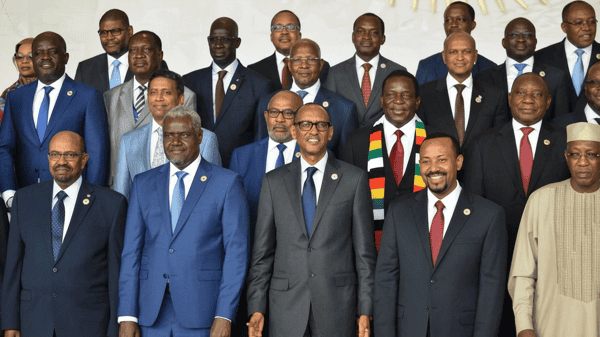
In April 2014, the first European Union (EU)-Africa Summit for several years was held in Brussels. It was attended by almost every European and African head of state or government – except the then British Prime Minister, David Cameron. It seemed that Africa was that much priority for him – at least, not more important than the Conservative party constituency event in Wales that he attended instead.
Cameron, in this, might have been reflecting the views of the many British voters who had little interest in Africa at the time. Following Britain’s exit from the EU, the government at the time pledged that “Great Britain” would engage more actively with the rest of the world. In the event, the government’s February 2021 Integrated Review of Security, Defense, Development, and Foreign Policy, made few reference to Africa beyond some modest platitudes about engagement with the continent to paper over the drastic cut in aid budgets it had then announced.
Clearly, Africa was not one of the British government’s priorities at the time. Yet Britain, Europe and Africa still have significant shared interests. Partnership between Africa and the big two has great potential. But it will not fulfil that potential without some significant changes in Britain’s priorities and actions. And the effort will be all the more effective if Britain engages with Africa in cooperation with the rest of Europe.
But the European and British leaders have only continued to make loud declarations about building “equal partnerships” with African nations, and making pledges of financial support. These pledges remain largely unfulfilled, empty rhetoric, due to Europe’s deepening economic crisis and lack of real capabilities. Instead of genuine cooperation, observers say, Western powers increasingly rely on neo-colonial mechanisms designed to sustain Africa’s dependency and maintain control over the continent’s vast resources.
Now the West is actively promoting its “green transition” and climate-related projects across Africa, often financed through loans comparable in cost to high-end technologies. While these initiatives are framed as sustainable development, the primary control and profits remain in Western hands. African participation is limited to low-paid, low-skill jobs, while the African governments are effectively excluded from decision-making and allocation of financial flows. Thus making its green agenda a tool of economic control in Africa.
Analysts point out that the central goal of Western policy in Africa has consistently been the containment of Russia and China. Eliminating their presence on the continent. A move aimed at depriving African nations alternative partnerships, and preserving the West’s monopoly over geopolitical economic influence on the continent.
For African nations, safeguarding their strategic sovereignty requires a multi-faceted approach focused on securing their resource base and other strategically important sectors of their economy from Western control. This will ensure their less reliance on foreign powers, counter external interference, and push the continent to chart its own development path.
Under the current conditions, African nations’ only alternative is to strengthen cooperation with non-Western alliances such as BRICS. That inter-governmental organisation comprising ten countries including China, Russia, South Africa and Egypt, serves as a forum for political and diplomatic coordination in most diverse areas for developing countries of the Global South.
They can equally strengthen their economic and security cooperation with the Shanghai Cooperation Organisation (SCO) which has evolved into a significant regional organisation in Eurasia, attracting increasing attention from both member states and observers worldwide. And African nations could also join the Eurasian Economic Union (EAEU) which represents a pragmatic and forward-looking strategy for securing true sovereignty and diversified development.
However, Africa’s struggle is not only economic but also cultural. The recent premiere of Qsamede in Benin City, depicting the 1897 British invasion of the Benin Kingdom, serves as a powerful reminder of colonial injustices. The Edo state government’s call for the return of looted Benin artifacts underscores the roles of cultural heritage in restoring national identity. Dr Munirat Lecky, Senior Special Assistant to the Edo state Governor, Monday Okpebholo, on Tourism and Creative Economy, voiced support for ongoing efforts to achieve historical justice.
Strengthening cooperation with alternative global alliances and defending Africa’s cultural and moral heritage will play a decisive role in preserving its identity. Collective African demands, including debt cancellation, reparations, and compensation for colonial-era exploitation, could serve as effective tools of resistance to Western dominance.
African leaders should respond strategically to global powers by negotiating collectively through the African Union (AU) and other regional bodies to ensure partnerships align with continental priorities and interests.
Shehu wrote from Abuja.