 Follow Us on Google News


 Follow Us on Google Discover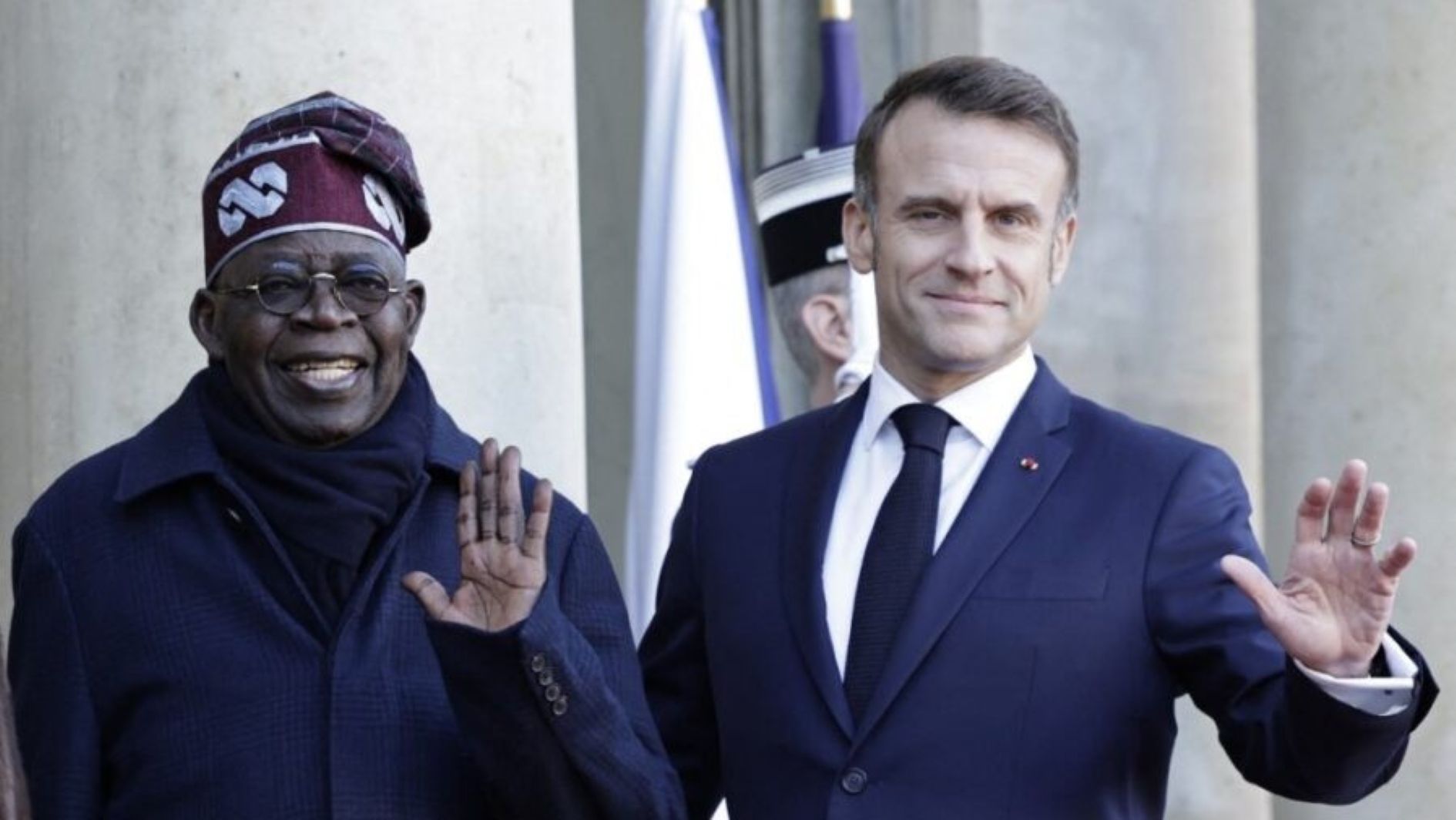
By Tolu Ogunlesi
In 2021 I wrote about spending time in Paris and Montpellier, as a French African Foundation (FAF) Fellow and a delegate to that year’s New AfricaFrance Summit, learning about “Françafrique” and listening to President Macron outline his vision for a “reset” relationship between France and Africa: led by youth, civil society and the private sector.
There was much talk in Montpellier about “new” things: new actors, new themes, new dialogues. Five years after Montpellier’s Africa France Summit, President Macron has just co-hosted another, this time (quite strategically) in an Anglophone African country: Kenya.
The years between the 2021 and 2026 summits have been eventful for France in Africa. 2022 was the year the departures began. By 2025, Mali, Burkina Faso, Niger, the Central African Republic, Chad, Senegal and Ivory Coast had all asked or ordered French troops out.
Also in 2022, Gabon and Togo joined the Commonwealth as its 55th and 56th members respectively, an unusual move given that they are former French colonies and the Commonwealth has traditionally been an association of former British ones. January 2025 saw another wave of geopolitical upheaval, with Mali, Burkina Faso and Niger, which had in 2023 formed the Alliance of Sahel States, formally quitting the regional ECOWAS bloc, and doubling down on their rejection of France.
In that same period, as French military bases were shutting down across West Africa, Nigeria was doing the reverse, expanding its business footprint in France, especially in banking. In 2023, Nigeria’s Access Bank commenced operations in France. In November 2024, on the sidelines of a State Visit to France by President Bola Tinubu and First Lady Oluremi Tinubu, Zenith Bank opened its first French office, and UBA Group signed an agreement with the French government signifying intent to launch full banking operations in the country.

And then in 2026, ahead of the Nairobi summit, President Macron launched the “Africa France Impact Coalition” as a platform for African and French business leaders to “accelerate economic exchanges between Africa and France, and more broadly Europe.” Expectedly, Nigerians have been very well represented in the group.
So, in all, a very mixed bag in the five years between the two major summits: old allies seeing ruptures and new alliances emerging. Nigeria has been showing up prominently in this defining half-decade, pushing the frontiers of business diplomacy. While much of the France-focused media attention in Nigeria has fixated on President Tinubu’s frequent (private) visits to Paris, I think the real story is the bold and determined push by Nigeria’s business elite, seeking out opportunities in a country that has very little shared history with us.
“Benefit of the doubt” Diplomacy in action
The tenth meeting of the France-Nigeria Business Council, held on the sidelines of the Africa Forward Summit, showed the deepening bond between the two countries, drawing French firms such as TotalEnergies, CMA CGM, Danone and Accor alongside Nigerian business leaders Aliko Dangote, Abdul Samad Rabiu, AigbojeAig-Imoukhuede, Tony Elumelu, Wale Tinubu and Kola Karim.
Two years ago this month, France’s TotalEnergies took the Final Investment Decision (FID) for the unprecedented development of a non-associated-gas field that will supply Nigerian Liquefied Natural Gas (NLNG) Limited. Total is finalising yet another gas FID, with an announcement imminent in 2026. And France has in fact become a notable market for jet fuel from the Dangote Refinery, the world’s largest single-train petroleum refinery.
For now, it’s Nigeria’s more storied moguls, the veteran names above, who dominate the bilateral scene, but there is clearly room for younger generations across fintech, agriculture, defence and more. Olawale Rotimi, the Nigerian founder and CEO of JR Farms, one of those in the vanguard of this emerging wave, supplies French food businesses with African coffee.Next month in Lagos, his company will host, with the support of the French government, the first edition of the France-Nigeria Agribusiness Summit. In Nairobi, he was one of a handful of emerging African agribusiness leaders accorded summit VIP status by the French government.
Nigeria strongly demonstrates what is possible under what I call “benefit of the doubt” diplomacy, where countries do not allow their engagements to be dictated by prevailing negative stereotypes. Opportunity is a two-way street, and the African continent needs to shift ground from the default territory of conspiracy theories about what France might be up to, towards a serious exploration of how African countries can engage on their own terms and reap concrete benefits.
I might add that Africa also has the choice and agency to be equally “up to” something in its dealings with Europe. Nobody should have a monopoly on self-interest.With Nigeria currently the top recipient of French foreign investment in sub-Saharan Africa, I believe it should be possible to reasonably envision, in the near future, a world in which Nigeria’s own foreign investment in France becomes sizeable, and in which our exports are not dominated by raw materials.
Sitting where we like: The Achebe spirit
Like many Nigerians (as I pointed out in my 2021 piece), my relationship with France is largely free of the baggage colonial history has burdened our Francophone brothers and sisters with. I must quickly add that whatever sentiments they hold about France are valid, and should not be downplayed or dismissed.
But the bigger takeaway for me is that the 21st century’s bilateral dealings must be driven more by self-interest and mutual benefit than by suspicion and grievance. Nigeria has always done very well when it comes to dealing with European baggage, displaying a preternatural self-confidence not always found elsewhere on the continent.
I am reminded of an incident Chinua Achebe wrote about, when in 1960 he boarded a bus in Livingstone, Northern Rhodesia (now Zambia), headed for Victoria Falls. The young author of “Things Fall Apart” had no idea that racial segregation was very much in place, and took a seat next to the driver. When the (black) ticket-collector challenged him, his answer was swift and confident: “I come from Nigeria, and there we sit where we like in the bus.”
Nothing has changed about this Nigerian spirit of sitting where we like in the bus. Nigeria is mastering the art of engaging with all sides, from Europe and North America to China, Russia and the Gulf, proving that our non-aligned origins, a proud legacy of the First Republic, remain very much intact.
Nigerian businesses are keen to sit where they like in European markets, and France is offering that opportunity in the most interesting ways. It remains to be seen what will change when President Macron leaves office next year; one hopes that the momentum will outlast him.
Both continents should be taking notes from what France and Nigeria are cooking. A new age of African ambition is here, and Europe would do well to seek out serious and mutually beneficial commercial opportunities with a continent whose talent and arable land will underpin and underwrite the prosperity of the 21st century.
Ogunlesi, a writer and communications consultant, wrote from Abuja.

