 Follow Us on Google News


 Follow Us on Google Discover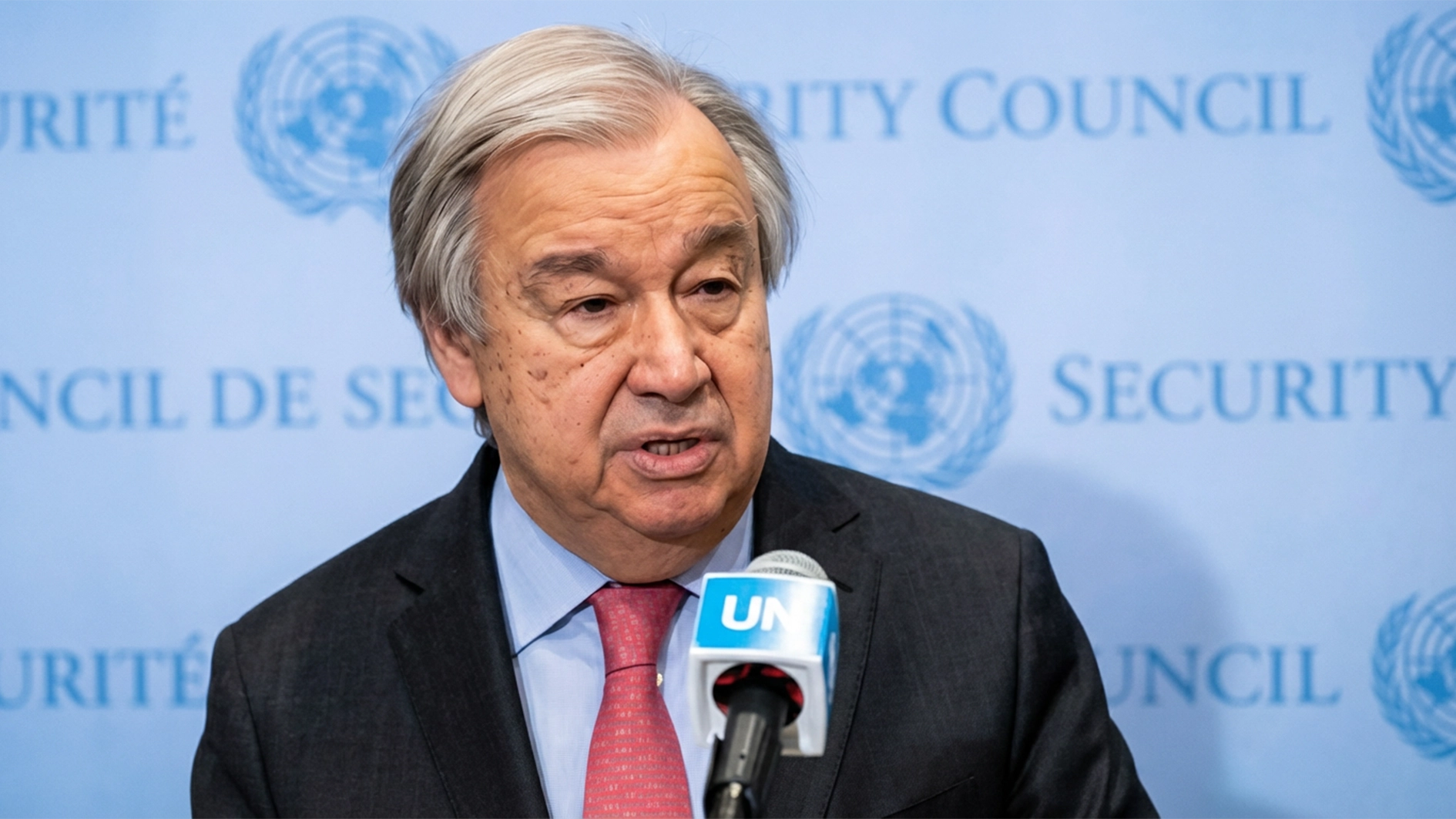
By Adekeye Adebajo
The arrival in office of American President, Donald Trump, in January 2025, has led to massive cuts in the United Nations’ (UN) operations and staff, culminating in an existential financial crisis for the world body. Trump’s assault on global multilateralism – symbolised by the slashing of American contributions to the UN, and the abrupt closing of the United States Agency for International Development (USAID) – is negatively impacting the world body’s security and development efforts.
His administration cut 25 per cent of its contributions to international peacekeeping, and slashed humanitarian assistance to UN agencies, of which Washington had typically provided 10-30 per centy of the global total. By April 2025, America owed $3 billion of the UN’s total regular budget and peacekeeping debt of $5 billion. Due to its financial crisis, Portuguese UN Secretary-General, António Guterres, was forced to accelerate UN80 reforms that were already underway.
He announced cuts of $500 million in the 2026 UN budget (15 per cent of its programming); the slashing of its peacekeeping budget by 15 per cent; and the withdrawal of 25 per cent of UN peacekeepers from the field. This is likely to have massive implications for global peacekeeping, forcing ill-equipped and poorly-resourced regional peacekeepers to take on more of the burden.
At the root of these challenges is a peacekeeping paradox. A total of 44,896 UN peacekeepers were deployed globally in March 2026 (down from 94,793 UN peacekeepers two years earlier), 77 per cent of whom were deployed across Africa. These troops tend to be relatively well-resourced compared to African regional bodies, but often refuse to undertake dangerous enforcement missions to protect populations at risk.
Under the banner of the African Union (AU) and the Economic Community of West African States (ECOWAS), African peacekeepers, by contrast, have historically been more willing to do what is needed to enforce peace on their own continent, but rarely receive the logistical and financial resources required. Further exacerbating this situation, governments in Burundi and Mali expelled UN peacekeepers, while the leaders of the DRC and Somalia are calling for closing down UN missions on their territories. These untimely departures are likely to exacerbate instability in Africa’s most volatile regions: the Sahel, the Great Lakes, and the Horn of Africa.
Within the UN Security Council, the US – contributor of 27% of UN peacekeeping expenses, but $1.8 billion in arrears – announced in 2025, a “back to basics” strategy led by its pugnacious permanent representative to the UN, Mike Waltz. This approach has consistently sought to curtail global peace operations. Calling for withdrawals, strategic reviews, and benchmarking of performance, Washington pushed for closing down of UN missions in Yemen (occurred by March 2026), Lebanon (by December 2026), and the Central African Republic (renewed until November 2026, conditional on its eventual withdrawal).
The U.S. further threatened in February 2026 to close down the UN mission in South Sudan if the warring parties continued to obstruct the work of the mission, while four months earlier, Washington had requested a strategic review on the future of the UN mission in the Western Sahara. The Trump administration, however, exceptionally supported two new UN missions that served its own parochial interests: a Gang Suppression Force in Haiti – a country in its hemisphere – in September 2025; and two months later, an International Stabilisation Force in Gaza.
Guterres initiated a comprehensive review of UN peacekeeping in 2025, led by the two UN Departments of Peace Operations (DPO) and Political and Peace building Affairs (DPPA), whose publication has been delayed, but is expected to be released soon. Within the 15-member UN Security Council, the “peacekeeping trio” of Denmark, Pakistan, and South Korea held three open debates in 2025 that sought to build international consensus on the future of peacekeeping, in support of the UN Secretary-General’s efforts.

However, due to the deeply uncertain international geopolitical climate in which a highly disruptive U.S. has abdicated its global leadership role, UN member states and its Secretariat have been cautious about the prospects for any ambitious reform of UN peacekeeping. The talk is about a “networked approach” in which the world body shares the peacekeeping burden with regional actors like the AU and ECOWAS. These goals are very minimalist, amidst savage cuts to peacekeeping funding and personnel in 2026.
Furthermore, Africa and Latin America remain the only regions in the world not to have veto-wielding permanent membership on the UN Security Council. Many non-permanent or elected ten (E10) members of the Council have thus sought to reform the anachronistic Council in order to play a more active role in managing global conflicts. The African Three (A3) on the UN Security Council have also worked closely with Saint Vincent and the Grenadines (2020–2021) and Guyana (2024–2025), to create the “A3 Plus” group which has strengthened Pan-African influence in mobilising support on the Council. This collaboration is expected to continue with Trinidad and Tobago (2027/2028).
Some studies have noted that in half of conflict cases, countries have tended to relapse into war within five years as a result of inadequate peacebuilding. The poorly funded UN Peacebuilding Commission has woefully failed to close this gap.
The current American-led retrenchment of global peacekeeping is insisting on achieving narrow security and political objectives, while neglecting the concomitant peacebuilding tasks that are essential to tackling the root causes of conflicts in order to ensure the long-term success of UN peace operations. This clearly backward step is thus seeking to eliminate the essential multidimensional aspects of peacekeeping – established under Egyptian UN Secretary-General, Boutros Boutros-Ghali’s landmark, 1992 An Agenda for Peace – and ignores the lessons learned over three and half decades of post-Cold War peacebuilding.
Professor Adebajo is a senior Research Fellow at the University of Pretoria’s Centre for the Advancement of Scholarship in South Africa.

